
Soccer Trivia: 30 Wild World Cup Heists, 149–0 Scorelines, Three-Yellow-Card Blunders & True Football Lore
Beyond basic league tables—explore 30 outrageous, 100% true soccer stories of stolen trophies, fog-abandoned goalkeepers, and scorpion-kick saves.

1.Who sniffed out the stolen World Cup trophy under a London hedge in 1966?
Correct Answer: B. A collie named Pickles
Explanation: Four months before England hosted the 1966 FIFA World Cup, thieves slipped past guards at a public stamp exhibition in Westminster Central Hall and vanished with the solid-gold Jules Rimet Trophy, plunging Scotland Yard into a frantic nationwide manhunt.
One week later, on March 27, 1966, Thames lighterman David Corbett was walking his four-year-old black-and-white collie mix named Pickles in Beulah Hill, South London, when Pickles began frantically scratching at a tightly wrapped newspaper parcel tucked beneath a neighbor's garden hedge. Corbett peeled back the newsprint and stared straight into the golden face of the missing World Cup!
Pickles became an instant international hero: he received a silver medal from the National Canine Defence League, a year's supply of dog food, a starring role in a spy comedy film, and an invitation to England's official World Cup victory banquet—where he happily licked the players' plates clean.
2.Why did Madagascar's AS Adema defeat SO l'Emyrne by an absurd 149–0 scoreline?
Correct Answer: A. Opponents scored own goals
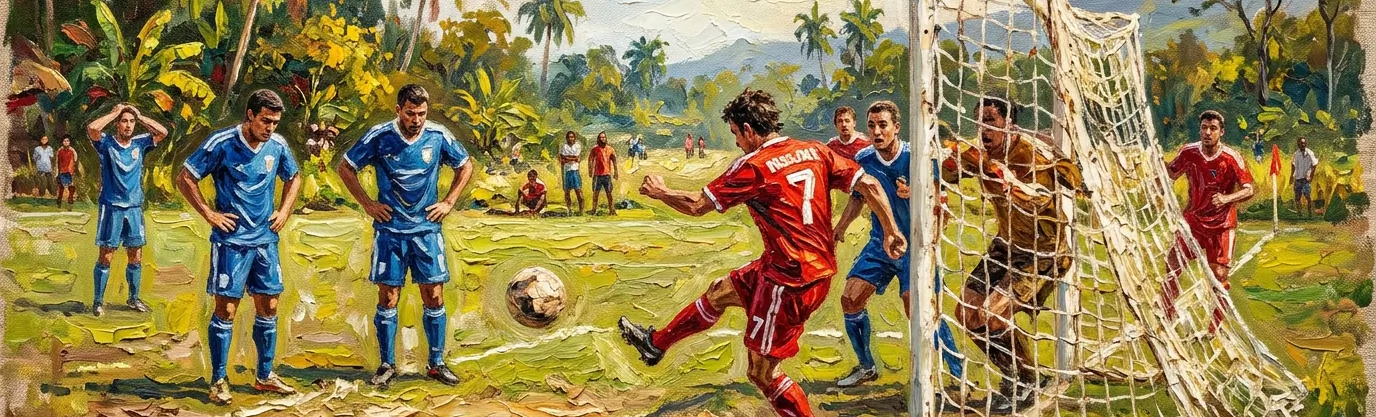
Explanation: On October 31, 2002, in the Guinness World Record-holding highest-scoring soccer match in top-flight history, Madagascar's AS Adema crushed reigning champions Stade Olympique de l'Emyrne (SOE) by the surreal final score of 149–0—without a single AS Adema player ever touching the ball to score!
SOE had been eliminated from title contention in their previous playoff match after a disputed late penalty decision by a referee. Boiling with frustration, SOE coach Ratsimandresy Ratsarazaka ordered his team to stage a bizarre on-field protest from the opening kickoff.
After every single kickoff for 90 straight minutes, SOE players sprinted straight backward and hammered the ball into their own net—averaging an own goal roughly every 36 seconds—while bewildered AS Adema players stood motionless at midcourt watching the scoreboard spin like a slot machine.
3.How many yellow cards did referee Graham Poll show Josip Šimunić in 2006?
Correct Answer: A. Three yellow cards
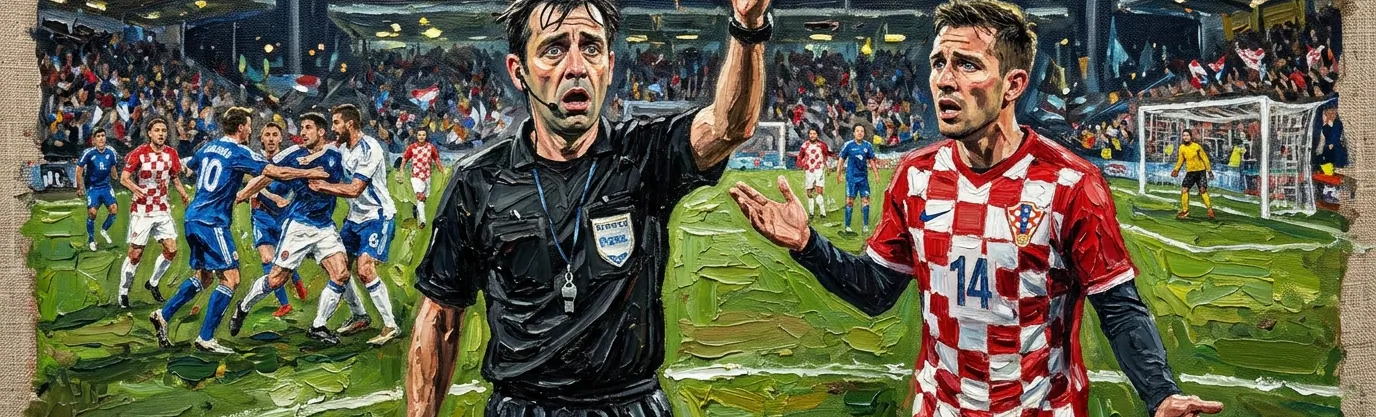
Explanation: During a fiery 2006 FIFA World Cup group-stage clash between Australia and Croatia in Stuttgart, respected English referee Graham Poll committed one of the most infamous officiating blunders in World Cup history—forgetting to send off Croatian defender Josip Šimunić after showing him a second yellow card!
Poll first booked Šimunić in the 61st minute, then flashed a second yellow card in the 90th minute—yet accidentally wrote down the number of Australian player Craig Moore (who also wore #3) in his notebook instead of Šimunić's, letting the Croatian defender keep playing for three more minutes!
Deep into stoppage time, Šimunić pushed Poll in frustration after the final whistle, prompting the referee to finally pull out a third yellow card followed by a red card. Poll was immediately sent home from the tournament and soon retired from international officiating.
4.Why did Brazil permanently abandon its white jerseys for canary yellow after 1950?
Correct Answer: B. Heartbreaking Maracanazo defeat
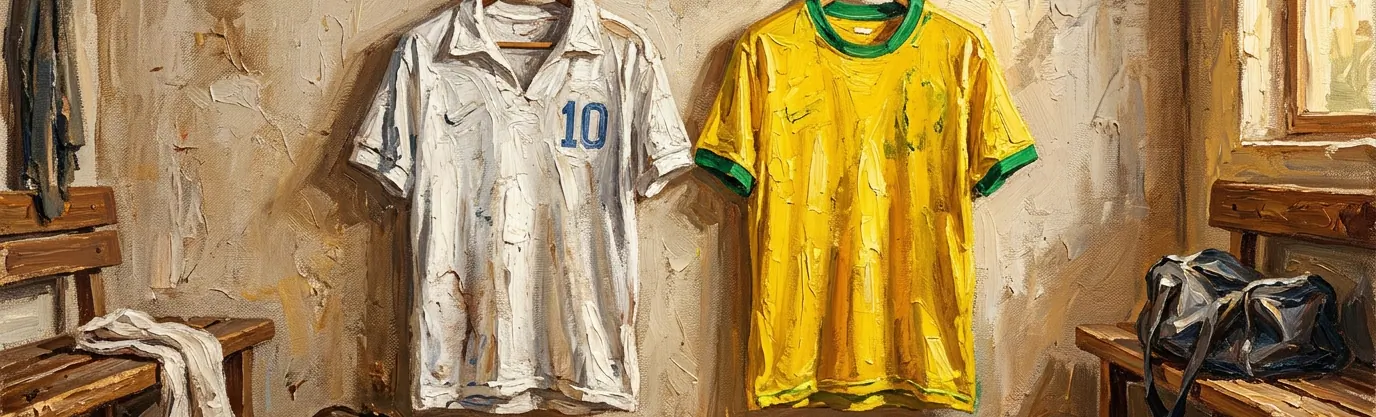
Explanation: Today, Brazil's radiant canary-yellow jersey with emerald green trim—the Seleção's iconic Canarinha—is the most recognizable uniform in global sports. Yet for the first four decades of Brazilian soccer, the national team actually wore plain white shirts with blue collars!
Everything changed on July 16, 1950, when Uruguay shocked Brazil 2–1 in front of nearly 200,000 silent spectators at Rio de Janeiro's Maracanã Stadium in the decisive World Cup match—a national trauma forever remembered as the "Maracanazo." Superstitious fans and sports editors immediately declared the old white jerseys cursed and lacking national spirit.
In 1953, the Rio newspaper Correio da Manhã hosted a national design contest requiring all four colors of the Brazilian flag. Nineteen-year-old illustrator Aldyr Garcia Schlee won with his yellow shirt, green trim, blue shorts, and white socks—a kit Brazil has worn to five World Cup titles.
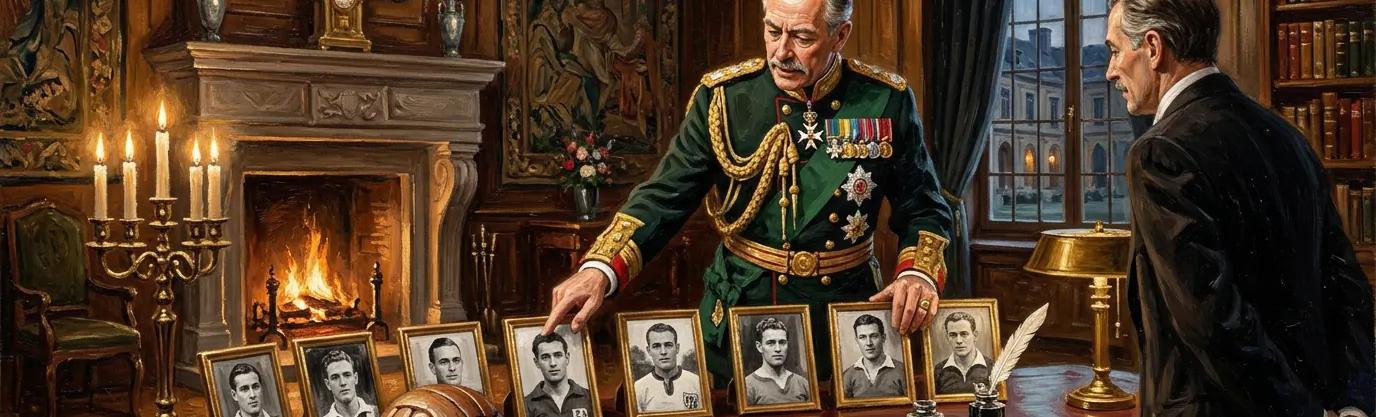
5.Who personally handpicked Romania's entire national soccer squad for the 1930 World Cup?
Correct Answer: C. King Carol II
Explanation: When FIFA invited European nations to sail across the Atlantic to Uruguay for the inaugural 1930 World Cup, most countries declined due to the Great Depression and the grueling three-week steamship voyage. Romania, however, had a secret weapon: its newly crowned, soccer-obsessed monarch, King Carol II!
Determined to see Romania represented on the global stage, King Carol II bypassed the federation's coaching committee and personally selected every single player on the 1930 roster himself. Even more impressively, when employers threatened to fire players for missing two months of work, the King personally negotiated with British oil companies and local factories to guarantee every player a three-month paid leave of absence and job security upon their return.
Romania's royal squad sailed to Montevideo aboard the SS Conte Verde alongside the French and Belgian teams—and defeated Peru 3–1 in their very first World Cup match.
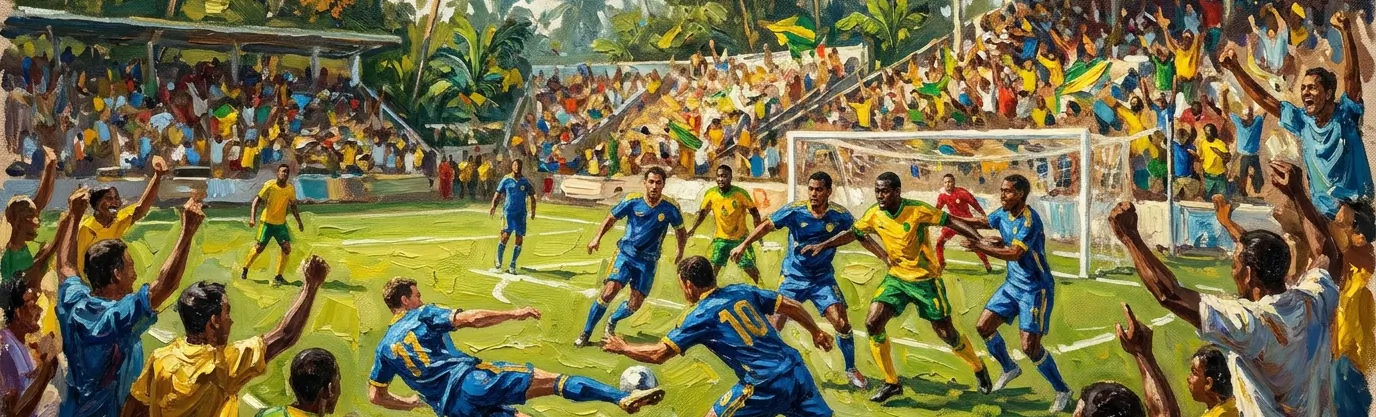
6.Why did Barbados intentionally defend their opponent's goal during a 1994 Caribbean Cup match?
Correct Answer: D. Bizarre double-value golden goal
Explanation: The 1994 Caribbean Cup qualifier between Barbados and Grenada produced the most brain-melting five minutes of soccer logic ever played—all thanks to a bizarre tournament rule stating that any sudden-death "golden goal" scored in extra time counted as TWO goals!
Entering the match, Barbados needed to beat Grenada by at least two goals to advance. Leading 2–1 with just three minutes left, Barbados realized they were unlikely to score a third goal in regular time—so they deliberately kicked the ball into their OWN net to tie the score 2–2 and force extra time, where a single golden goal would count as two and give them the 4–2 victory!
Realizing the trick immediately, Grenada realized that scoring in EITHER net—Barbados's goal OR their own goal—would end the game in regular time with a one-goal difference and eliminate Barbados! For the final three minutes, Barbados's players fiercely guarded BOTH goals at once to stop Grenada from scoring an own goal—successfully forcing extra time and winning 4–2 on a golden goal.

7.Who invented soccer's red and yellow penalty cards after stopping at London traffic lights?
Correct Answer: A. English referee Ken Aston
Explanation: Before 1970, soccer referees had no colored cards—they simply scribbled cautions in a pocket notebook and shouted instructions, creating utter confusion whenever players and officials spoke different languages! During the chaotic 1966 World Cup quarterfinal between England and Argentina, neither fans nor Argentine captain Antonio Rattín understood that he had been sent off until nine minutes of frantic translation passed.
Driving home down Kensington High Street in London shortly afterward, FIFA Referees Committee chairman Ken Aston stopped at a glowing traffic light and experienced a eureka moment: "Yellow—take it easy. Red—stop, you're off!"
Aston pitched the universal color-coded system to FIFA, and yellow and red cards made their official World Cup debut at Mexico 1970—transforming sports officiating across rugby, volleyball, and athletics worldwide.

8.What priceless prize did FIFA official Ottorino Barassi hide in a shoebox during WWII?
Correct Answer: B. Jules Rimet trophy
Explanation: Because Italy had won the 1938 FIFA World Cup, the Italian Football Federation was the official custodian of the solid-gold Jules Rimet Trophy when World War II engulfed Europe. Knowing that occupying Nazi forces were systematically looting gold and national treasures across Rome, Italian FIFA vice-president Dr. Ottorino Barassi took matters into his own hands.
Barassi secretly withdrew the priceless golden trophy from a Rome bank vault, carried it home to his modest apartment, placed it inside an ordinary cardboard shoebox, and slid it quietly beneath his bed!
When German soldiers actually raided Barassi's home searching for the trophy, they ransacked closets and drawers but never bothered looking inside the dusty shoebox under the mattress—preserving the World Cup safely until international tournaments resumed in 1950.
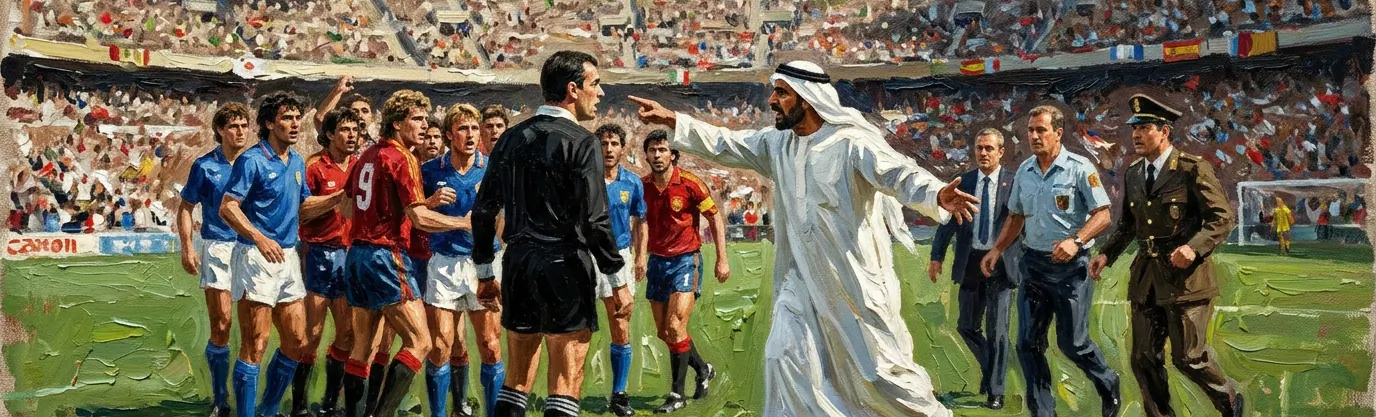
9.Why did Kuwait's Sheikh Fahad walk onto the pitch during the 1982 World Cup?
Correct Answer: C. Protesting a crowd whistle
Explanation: During the 1982 World Cup group match between France and Kuwait in Valladolid, Spain, French midfielder Alain Giresse dribbled through a suddenly frozen Kuwaiti defense to score France's fourth goal. Moments earlier, a spectator in the stands had blown a loud referee's whistle, tricking the Kuwaiti defenders into stopping dead in their tracks!
Furious that Soviet referee Miroslav Stupar allowed the goal to stand, Kuwait Football Association president Sheikh Fahad Al-Ahmad Al-Sabah—brother of the Emir of Kuwait—descended from the VIP box in flowing traditional robes, strode directly onto the pitch, and threatened to pull his entire team off the field.
In a scene never repeated before or since in World Cup history, Stupar actually reversed his decision after a seven-minute debate and disallowed France's goal! France went on to win 4–1 anyway, while FIFA fined Sheikh Fahad £8,000 and suspended Stupar from international refereeing.
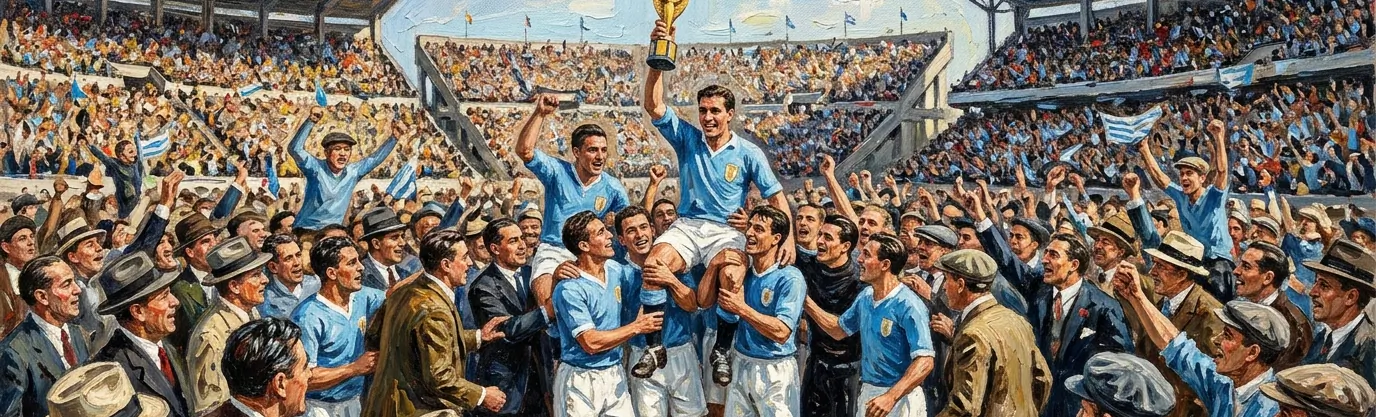
10.Which South American country won the very first FIFA World Cup tournament in 1930?
Correct Answer: C. Uruguay
Explanation: Awarded hosting rights to celebrate both the 100th anniversary of its constitution and its back-to-back Olympic soccer gold medals in 1924 and 1928, Uruguay welcomed 13 nations to Montevideo for the inaugural 1930 FIFA World Cup.
To host the event, Uruguayan workers raced against heavy winter rains to construct the monumental Estadio Centenario in just eight months. On July 30, 1930, 68,346 fans packed the arena to watch Uruguay face neighboring rival Argentina in the first World Cup Final.
Despite trailing 2–1 at halftime, Uruguay roared back with three unanswered second-half goals—capped by one-armed striker Héctor Castro's header—to win 4–2, prompting the Uruguayan government to declare the following day a national holiday.
11.Why did Argentina and Uruguay use two different match balls in the 1930 Final?
Correct Answer: D. Neither trusted rival's ball
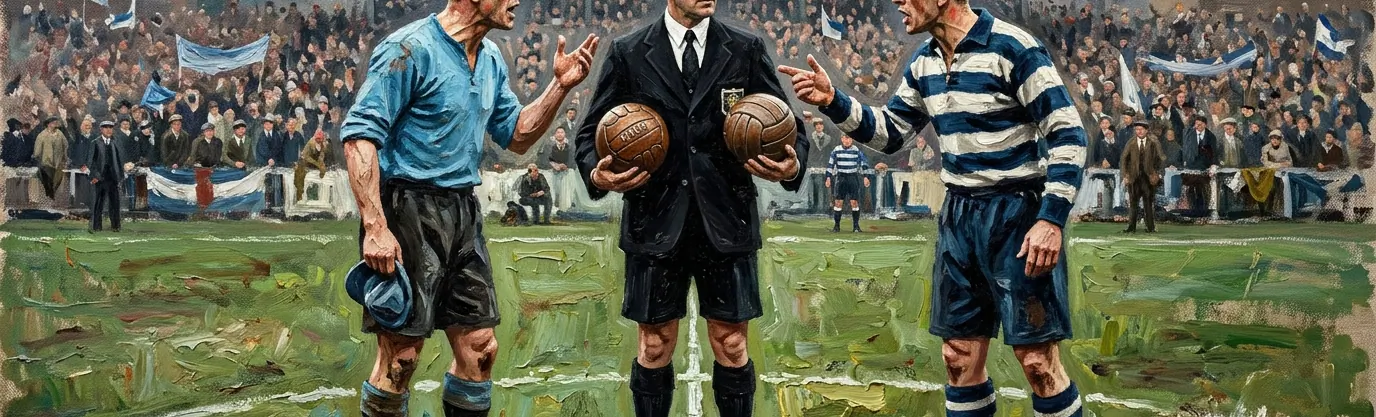
Explanation: Tensions ran so sky-high before kickoff of the inaugural 1930 World Cup Final in Montevideo that Belgian referee John Langenus refused to step onto the grass until FIFA provided him with life insurance and a getaway boat waiting in the harbor!
Just minutes before kickoff, the two fierce Rio de la Plata rivals deadlocked over a surprising dispute: which country's leather soccer ball would be used! Argentina insisted on playing with their own "Tiento" stitched ball, while Uruguay demanded their slightly heavier "T-Model" ball.
FIFA settled the standoff with a Solomonic coin toss: Argentina's ball was used for the first half—and Argentina led 2–1 at the break! For the second half, Uruguay switched in their own T-Model ball, promptly scored three straight goals, and won the World Cup 4–2.
12.How did goalkeeper José Luis Chilavert make soccer history for Vélez Sarsfield in 1999?
Correct Answer: A. Scored a hat-trick
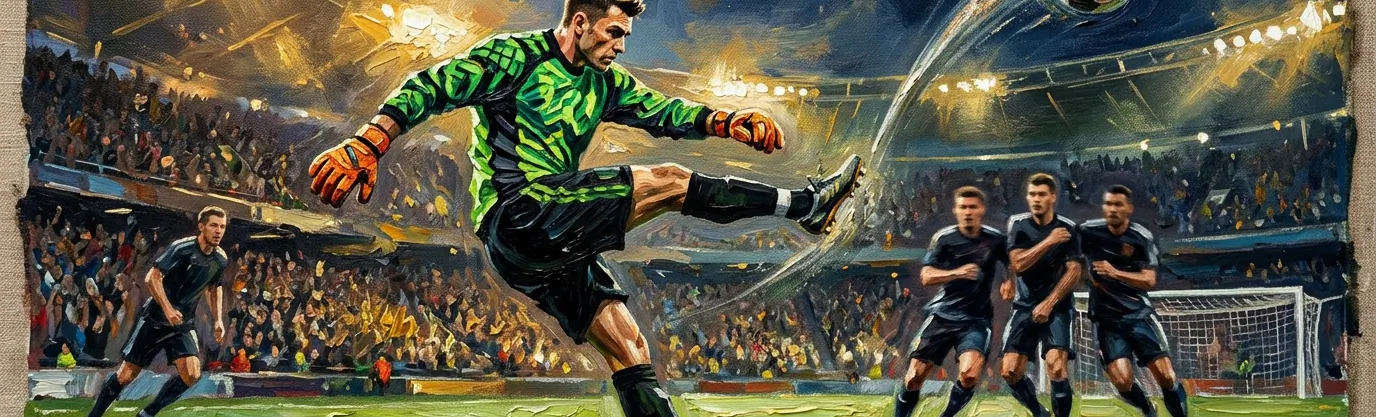
Explanation: While most goalkeepers spend their entire careers hoping never to concede a goal, fiery Paraguayan icon José Luis Chilavert was one of the deadliest dead-ball strikers of the 1990s—stepping out of his penalty box to curl thunderous left-footed free kicks and penalties past helpless opposing goalies!
On November 28, 1999, while playing for Argentine club Vélez Sarsfield in a 6–1 rout of Ferro Carril Oeste, Chilavert became the only goalkeeper in professional soccer history to score a hat-trick in a single match, converting three separate penalty kicks with ice-cold precision.
Across his legendary club and international career, Chilavert netted an astonishing 67 official goals—including 8 goals for the Paraguayan national team—and remains a three-time IFFHS World's Best Goalkeeper.
13.Which legendary Brazilian forward won three FIFA World Cup titles as a player?
Correct Answer: C. Pelé
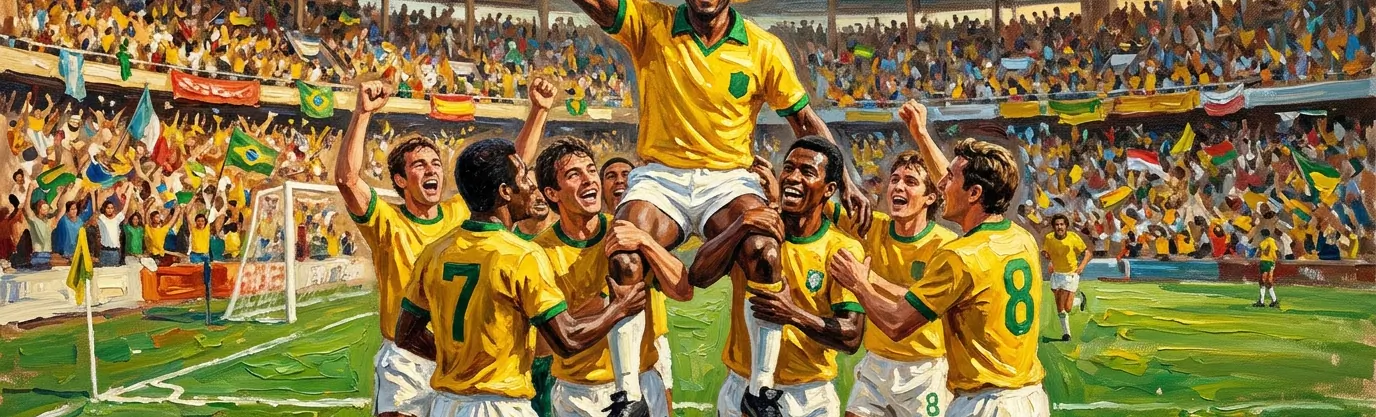
Explanation: Edson Arantes do Nascimento—known across every corner of Planet Earth simply as Pelé—remains the only player in history to lift three FIFA World Cup trophies (1958, 1962, and 1970).
Bursting onto the global stage in Sweden in 1958 as a dazzling 17-year-old prodigy, Pelé scored a hat-trick in the semifinal against France and two unforgettable goals in the final against the hosts—including a sublime sombrero flick over a Swedish defender's head before volleying home.
After injury sidelined him midway through Brazil's 1962 triumph in Chile, Pelé returned in Mexico 1970 to orchestrate arguably the greatest team in soccer history, scoring the towering opening header in the 4–1 final victory over Italy and delivering the iconic no-look assist for Carlos Alberto's thunderbolt.

14.Why did goalkeeper Sam Bartram stand guard alone on a pitch for fifteen minutes?
Correct Answer: B. Dense London fog
Explanation: On Christmas Day 1937, Charlton Athletic visited Chelsea at Stamford Bridge as a thick, pea-soup London fog rolled rapidly over the Thames and swallowed the stadium. Midway through the second half, visibility dropped to just a few feet, forcing the referee to abandon the match and send both teams back to the warm dressing rooms.
Standing at the far end of the pitch, Charlton's legendary goalkeeper Sam Bartram never heard the referee's whistle over the muffled roar of the crowd! For 15 freezing minutes, Bartram paced his goal line flexing his gloved fingers and squinting into the ghostly white haze—quietly proud that his teammates were pinning Chelsea deep in their own half.
Finally, a stadium policeman emerged out of the mist and gasped, "What on earth are you doing here, lad? The game was stopped a quarter of an hour ago—the field's completely empty!"
15.Who became the oldest World Cup goalscorer at forty-two with a corner dance?
Correct Answer: D. Roger Milla
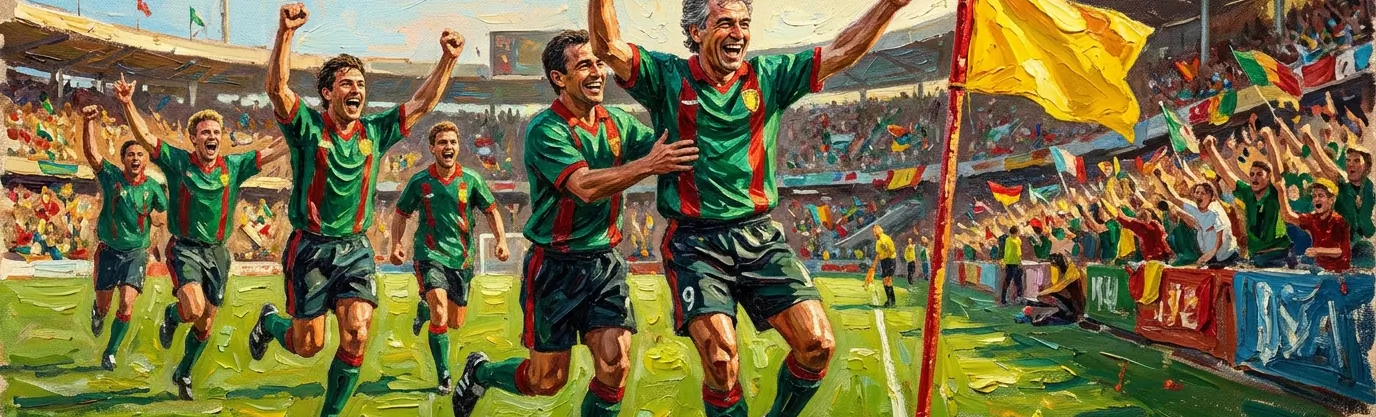
Explanation: Cameroonian striker Roger Milla had already retired to the island of Réunion in 1990 when Cameroon's President Paul Biya personally telephoned him and begged the 38-year-old veteran to rejoin the Indomitable Lions for the World Cup in Italy. Milla scored four goals, led Cameroon to become the first African quarterfinalist, and captivated the planet with his joyful Makossa hip-wiggle dance around the corner flag.
Four years later, at the 1994 World Cup in the United States, Milla came off the bench against Russia at Stanford Stadium and slotted home a calm finish—becoming the oldest goalscorer in FIFA World Cup history at 42 years and 39 days old!
More than three decades later, Milla's record as the oldest World Cup scorer still stands unbroken, and his joyous corner-flag dance remains one of soccer's most beloved celebrations.
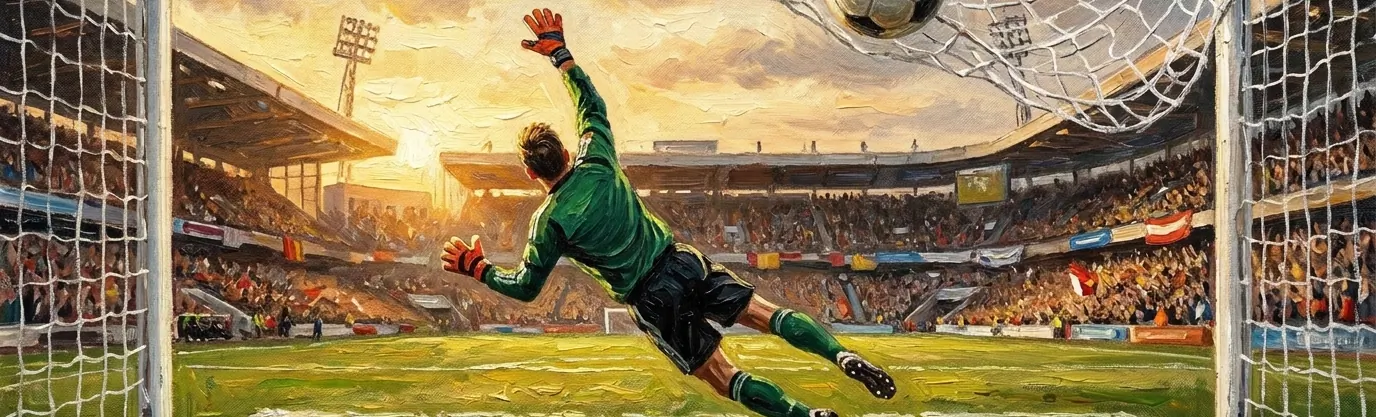
16.What infamous play did Diego Maradona nickname the "Hand of God" in 1986?
Correct Answer: C. A punching header goal
Explanation: During the emotionally charged 1986 FIFA World Cup quarterfinal between Argentina and England at Mexico City's Estadio Azteca, 5-foot-5 Argentine captain Diego Maradona leaped against towering 6-foot-1 English goalkeeper Peter Shilton for a looping ball inside the penalty box—and discreetly punched the ball into the net with his raised left fist!
Tunisian referee Ali Bin Nasser missed the handball and awarded the goal. Asked by reporters after the match whether he had used his hand, Maradona delivered the most famous quote in soccer lore: the goal was scored "a little with the head of Maradona, and a little with the hand of God."
Remarkably, just four minutes later in the exact same match, Maradona silenced every critic by dribbling 60 yards past five English defenders and Shilton to score the officially voted FIFA "Goal of the Century" in Argentina's 2–1 win.
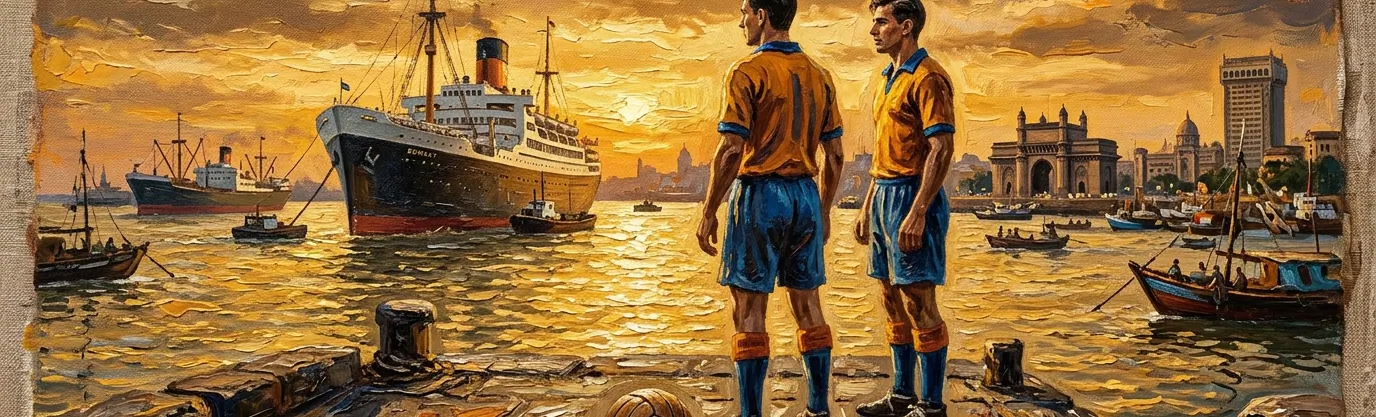
17.Why did India actually withdraw from playing in the 1950 FIFA World Cup?
Correct Answer: B. Travel costs and preparation
Explanation: For decades, one of soccer's most widely repeated urban legends claimed that India qualified for the 1950 World Cup in Brazil but withdrew because FIFA refused to let Indian players compete barefoot—as several had done at the 1948 London Olympics.
While FIFA did require boots, historical archives and interviews with 1950 Indian team captain Sailen Manna revealed the real reason: the All India Football Federation (AIFF) simply viewed the Olympic Games as far more prestigious than the fledgling World Cup and decided not to spend scarce post-independence funds on the costly sea voyage, team selection disagreements, and lack of practice time.
Ironically, Brazil had even offered to subsidize most of India's travel expenses—making India's 1950 withdrawal one of international soccer's greatest "what-if" moments.
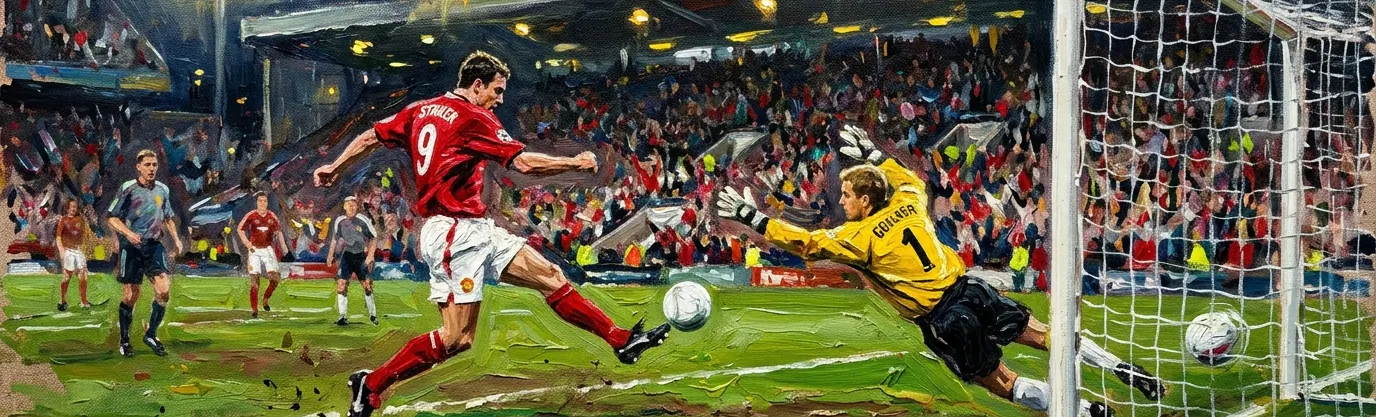
18.How quickly did Hakan Şükür score the fastest goal in World Cup history?
Correct Answer: B. Eleven seconds
Explanation: At the 2002 FIFA World Cup third-place playoff in Daegu, co-hosts South Korea kicked off the match—and trailed 1–0 before thousands of fans had even found their seats!
Immediately from the opening whistle, Turkish forward İlhan Mansız pressured Korean defender Hong Myung-bo, dispossessed him outside the box, and slipped a quick pass to veteran striker Hakan Şükür, who drilled a crisp left-footed finish into the bottom corner just 10.89 seconds (officially recorded as 11 seconds) into the game!
Şükür's lightning strike shattered Czechoslovakian Vaclav Masek's 40-year-old record of 16 seconds from 1962 and sparked Turkey's thrilling 3–2 win to claim third place—their best World Cup finish ever.
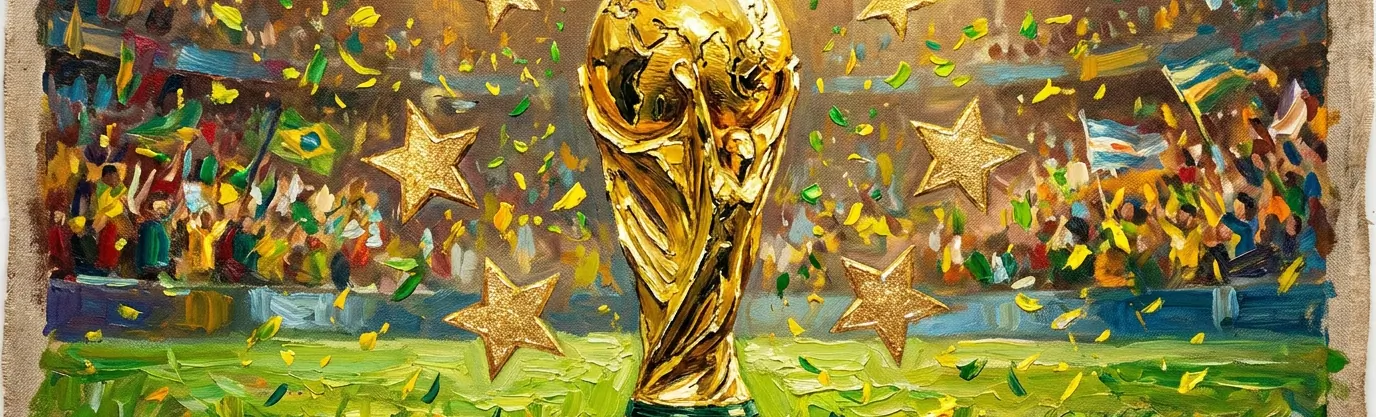
19.Which country holds the all-time record with five FIFA Men's World Cup trophies?
Correct Answer: D. Brazil
Explanation: Brazil stands alone atop the FIFA Men's World Cup mountain with five championships—captured across four different continents in 1958 (Sweden), 1962 (Chile), 1970 (Mexico), 1994 (United States), and 2002 (South Korea & Japan)—putting five golden stars above the CBF crest.
Brazil is also the only nation on Earth to have qualified for and played in every single FIFA World Cup tournament since the inaugural competition in 1930, never once missing a finals!
Trailing right behind Brazil's five crowns are four-time champions Germany and Italy, followed by three-time winners Argentina (who captured their third title in 2022).
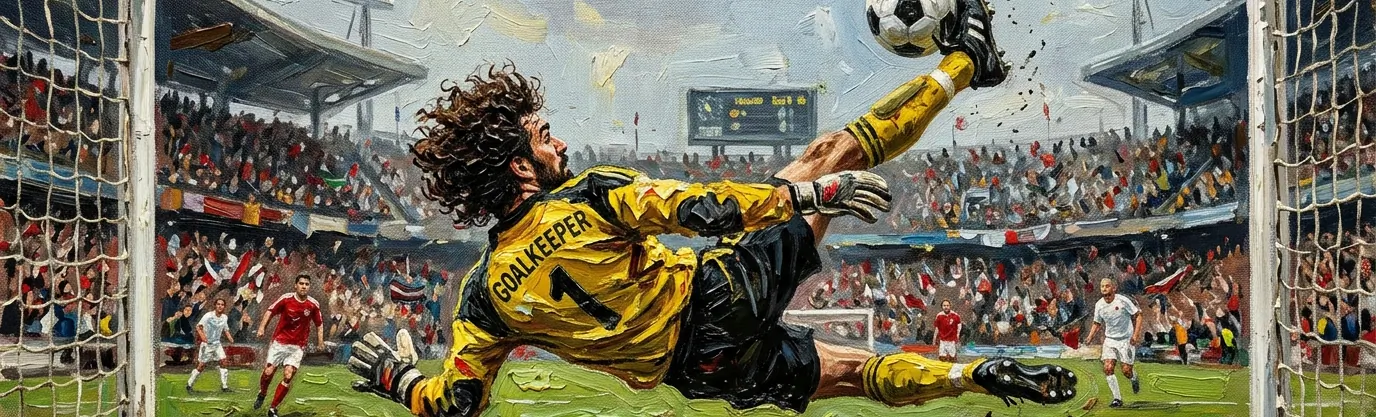
20.What acrobatic save did Colombian goalkeeper René Higuita invent at Wembley in 1995?
Correct Answer: A. Scorpion kick clearance
Explanation: Nicknamed "El Loco" (The Madman) for his fearless habit of dribbling past opposing strikers far outside his penalty box, Colombian goalkeeper René Higuita stunned 20,000 fans at London's historic Wembley Stadium during a September 1995 friendly against England with the most audacious save ever caught on film.
When England midfielder Jamie Redknapp floated a dipping, mishit cross straight toward the crossbar, Higuita ignored an easy two-handed catch. Instead, he planted his feet, flung himself headfirst forward in mid-air like a gymnast, arched his spine, and kicked the ball clear over his head with the heels of both boots—inventing the legendary "Scorpion Kick"!
Years later, Higuita revealed that he had practiced the circus-like stunt for years after filming a television commercial with children, though he waited for a moment when he thought the linesman's offside flag had already gone up.
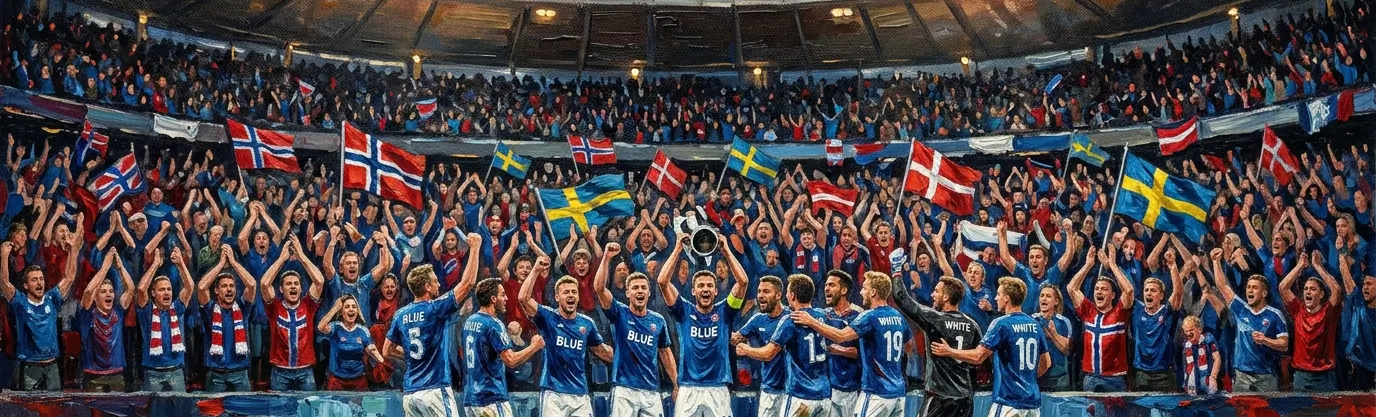
21.Which tiny island nation of 330,000 people reached the Euro 2016 quarterfinals on debut?
Correct Answer: D. Iceland
Explanation: With a total national population smaller than Tampa, Florida or Coventry, England, Iceland became the ultimate Cinderella story of UEFA Euro 2016 in France—going unbeaten in their group before pulling off a seismic 2–1 upset over soccer birthplace England in the Round of 16!
Coached jointly by Swedish tactician Lars Lagerbäck and part-time Icelandic dentist Heimir Hallgrímsson, the squad was built on an extraordinary grassroots investment: after 2000, Iceland constructed dozens of heated indoor artificial turf halls ("football houses") and trained hundreds of UEFA-licensed youth coaches so children could play year-round despite subarctic winters.
Nearly 10% of Iceland's entire population traveled to France to cheer the team on, introducing the world to their spine-tingling "Viking Thunder Clap" chant.
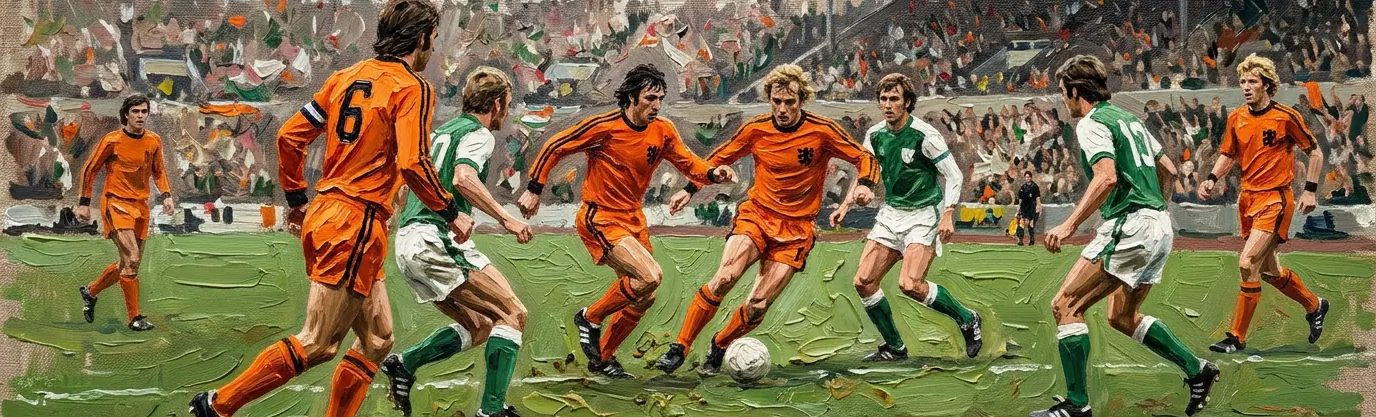
22.What nickname belongs to the legendary 1974 Dutch style where players swapped every position?
Correct Answer: C. Total Football
Explanation: Pioneered by visionary Ajax and Netherlands coach Rinus Michels and conducted on the pitch by genius playmaker Johan Cruyff, "Total Football" (Totaalvoetbal) shattered soccer's rigid traditional positions at the 1974 FIFA World Cup in West Germany.
Under Total Football's fluid spatial philosophy, any outfield player could seamlessly step into any other teammate's role—defenders surged forward as wingers, strikers dropped back to cover fullback spaces, and all ten outfield players swarmed opponents in synchronized high-pressing traps.
Even though West Germany edged the Dutch 2–1 in the 1974 Final, Total Football permanently transformed modern soccer tactics, directly inspiring Barcelona's Tiki-Taka dynasty and Pep Guardiola's positional play.

23.Which English club pulled off a 5,000-to-1 miracle to win the 2016 Premier League?
Correct Answer: A. Leicester City
Explanation: Entering the 2015–16 English Premier League season after barely escaping relegation the previous spring, British bookmakers priced Leicester City at 5,000-to-1 to win the title—giving them worse odds than Elvis Presley being found alive or the Loch Ness Monster being captured!
Managed by genial Italian veteran Claudio Ranieri—who famously promised his squad free pizza whenever they kept a clean sheet—the Foxes stunned England's billionaire superclubs with blistering counterattacks powered by former factory worker Jamie Vardy, magician Riyad Mahrez, and tireless midfielder N'Golo Kanté.
Clinching the trophy with two games to spare and finishing ten points clear of Arsenal, Leicester City's triumph is widely hailed as the greatest long-shot championship in modern sports history.
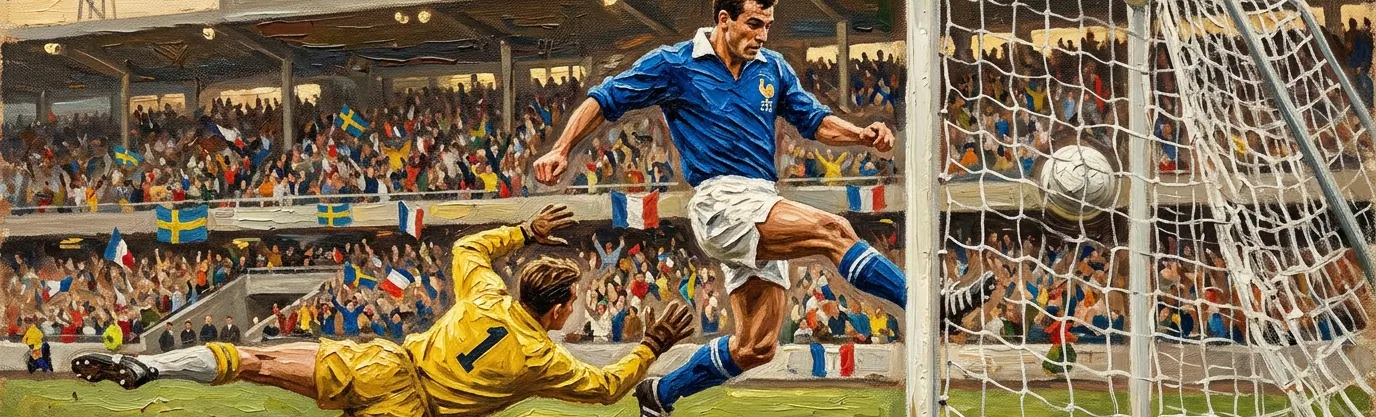
24.Who holds the record for most goals scored in a single World Cup tournament?
Correct Answer: C. Just Fontaine
Explanation: At the 1958 FIFA World Cup in Sweden, French striker Just Fontaine wasn't even supposed to start—he was only thrust into France's lineup after starting forward René Bliard injured his ankle in training, and Fontaine even had to borrow a teammate's spare pair of soccer boots after his own tore!
Wearing borrowed boots, Fontaine erupted for an untouchable 13 goals in just 6 matches—scoring a hat-trick against Paraguay, two against Yugoslavia, one against Scotland, two against Northern Ireland, one against Pelé's Brazil, and four in the third-place win over West Germany!
More than six decades later, no player has come close to breaking Fontaine's 13 goals in a single World Cup—and he achieved it in the only World Cup tournament he ever played.
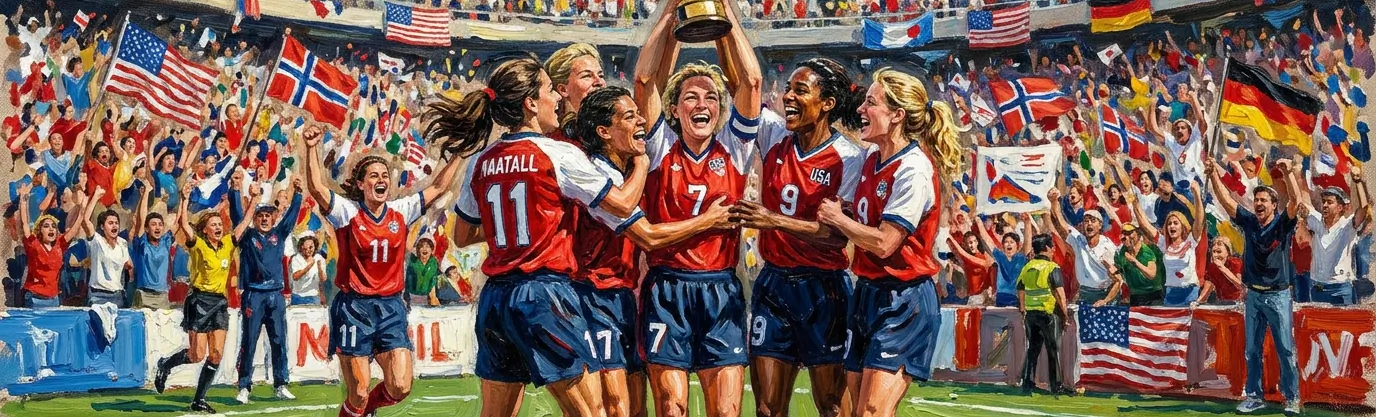
25.Which country won the very first FIFA Women's World Cup in China in 1991?
Correct Answer: D. United States
Explanation: In November 1991, twelve national teams gathered in Guangdong, China for the inaugural FIFA Women's World Cup—then officially titled the 1st FIFA World Championship for Women's Football for the M&M's Cup—with matches played over 80 minutes instead of 90.
Powered by the unstoppable "Triple-Edged Sword" attacking trio of Michelle Akers, Carin Jennings, and April Heinrichs, the United States stormed through all six matches undefeated, outscoring opponents 25–5 along the way.
In front of 63,000 cheering fans at Tianhe Stadium in Guangzhou on November 30, 1991, Michelle Akers netted two goals—including a dramatic 78th-minute winner—to defeat Norway 2–1 and launch the United States women's national team dynasty.

26.Why did goalkeeper Jens Lehmann pull a crumpled note from his sock in 2006?
Correct Answer: A. Penalty kick cheat sheet
Explanation: When Germany and Argentina deadlocked 1–1 after 120 tense minutes in the 2006 FIFA World Cup quarterfinal in Berlin, television cameras captured German goalkeeper Jens Lehmann reaching down inside his right sock before every single Argentine penalty kick to squint at a tiny, sweat-stained slip of hotel stationery!
Scribbled in pencil by German goalkeeping coach Andreas Köpke after analyzing years of match footage, the "cheat sheet" listed seven Argentine takers and their favorite corner tendencies—such as "Ayala: long wait, long run-up, right."
The psychological mind-game worked like magic: Lehmann dove the correct direction on all four Argentine kicks, parrying shots by Roberto Ayala and Esteban Cambiasso to send Germany into the semifinals—and that crumpled piece of paper later fetched €1 million at a charity auction for a German history museum!
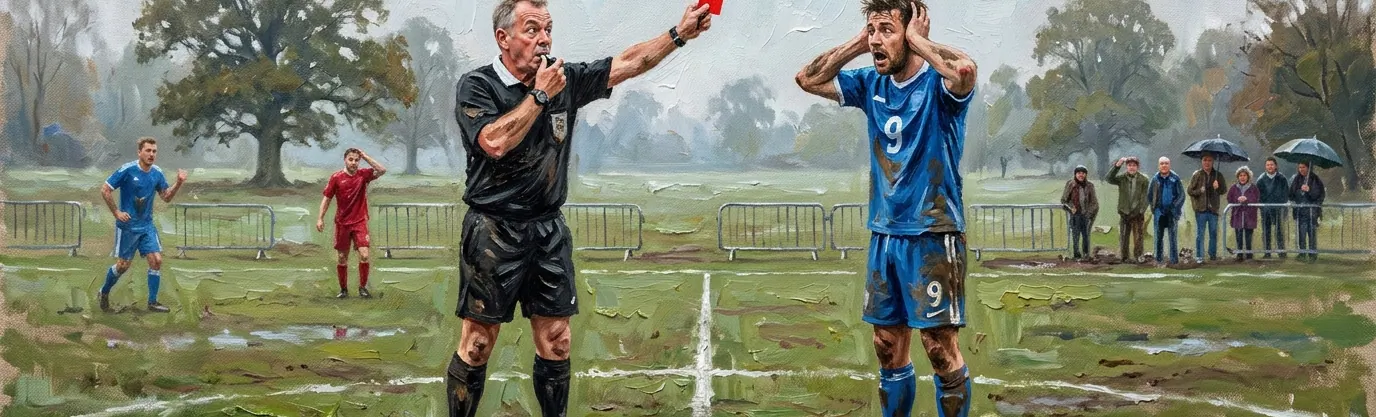
27.Which soccer player received a red card just two seconds after kickoff in 2000?
Correct Answer: A. Lee Todd
Explanation: On October 15, 2000, Cross Farm Park Celtic striker Lee Todd earned an immortal—if deeply embarrassing—entry in the Guinness World Records for the fastest red card in soccer history: sent off exactly 2 seconds into an English Sunday League match against Taunton East Reach Wanderers!
Standing right beside the referee with his back turned as the match began, Todd was completely startled by the ear-splitting blast of the opening kickoff whistle right next to his ear, blurting out an involuntary two-word profanity: "F*** me, that was loud!"
The referee didn't hesitate for a heartbeat, instantly brandishing a straight red card for foul and abusive language before Todd had even taken a single step or touched the soccer ball.

28.What two-toned geometric pattern made Adidas's 1970 Telstar ball famous on black-and-white TV?
Correct Answer: C. Black pentagons, white hexagons
Explanation: Before 1970, soccer balls were usually solid brown or plain white leather with long rectangular strips—making them nearly invisible blurs on 1960s black-and-white television screens! Ahead of Mexico 1970, the first World Cup broadcast live worldwide via satellite, Adidas unveiled a revolutionary 32-panel truncated icosahedron design: 12 black pentagons stitched seamlessly among 20 white hexagons.
Named "Telstar" (short for "Star of Television") after the famous round black-and-white communications satellite launched into orbit in 1962, the high-contrast monochrome pattern popped crisply on black-and-white TVs and made the spin of curling free kicks visually unmistakable.
Although modern World Cup balls have evolved into thermally bonded high-tech spheres, the 1970 Telstar's black-pentagon and white-hexagon design remains the universal emoji and artistic symbol of soccer around the globe.

29.Which World Cup final ended with Lionel Messi winning his first title in 2022?
Correct Answer: D. Argentina versus France
Explanation: Widely acclaimed as the greatest final in FIFA World Cup history, the December 18, 2022 showdown between Argentina and defending champions France at Lusail Stadium in Qatar delivered Hollywood-level drama for 120 unforgettable minutes.
Argentina cruised to a 2–0 lead through Lionel Messi and Ángel Di María before French superstar Kylian Mbappé stunned the world by scoring twice in 97 seconds to force extra time! Messi tapped in a go-ahead goal in the 108th minute, only for Mbappé to complete the first World Cup final hat-trick since 1966 to level the match at 3–3.
After Argentine goalkeeper Emiliano Martínez produced a miraculous 123rd-minute outstretched left-leg save on Randal Kolo Muani, Argentina triumphed 4–2 in the penalty shootout—crowning Lionel Messi a World Cup champion at age 35.
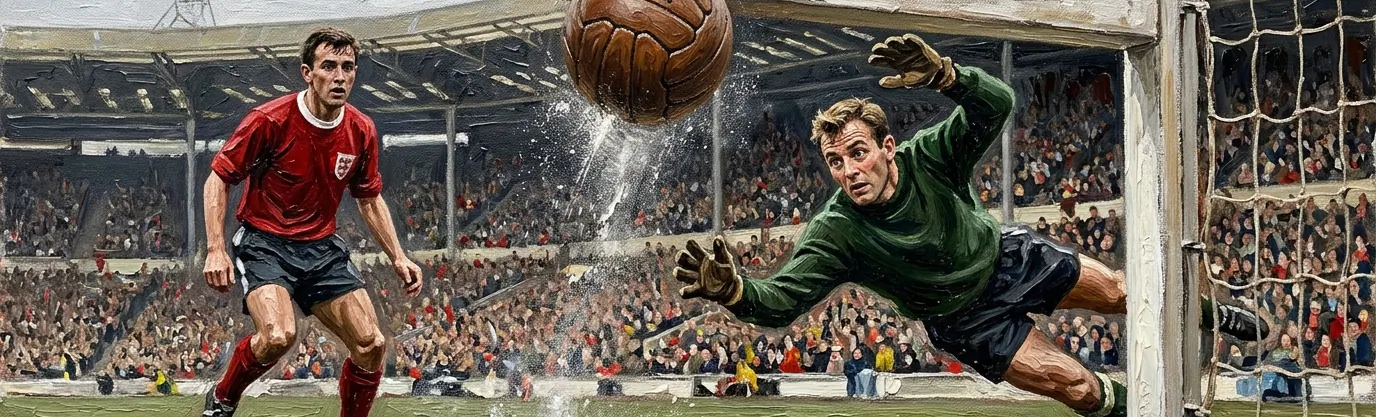
30.Why does Geoff Hurst's 1966 World Cup final goal still spark fierce debate?
Correct Answer: B. Crossbar bounce goal line
Explanation: With the 1966 World Cup Final between England and West Germany locked 2–2 in extra time at Wembley Stadium, English striker Geoff Hurst smashed a rising right-footed shot that crashed violently against the underside of the crossbar, bounced straight down near the white chalk goal line, and spun back into play!
Swiss referee Gottfried Dienst had no clear view, so he trotted over to consult Azerbaijani linesman Tofiq Bahramov—who emphatically nodded that the entire circumference of the ball had crossed the line, giving England a 3–2 lead on the way to a 4–2 victory (and Hurst's hat-trick).
For decades, German fans bitterly called it the "Wembley-Tor" (Wembley Goal), while Oxford University engineers in 1995 and Sky Sports virtual-reality analysts in 2016 reached opposite conclusions—fueling FIFA's eventual adoption of electronic Goal-Line Technology in 2014.