
World History Trivia: The Wild Side of the Past
Forget memorizing treaty dates—explore 31 jaw-dropping global history stories spanning meteoric pharaoh daggers, silk-armored Mongols, and ships hauled over mountains.
Most world history quizzes put you to sleep asking what year the Roman Empire fell or who signed the Magna Carta. Real global history is infinitely more entertaining: a 3,770-year-old Babylonian clay tablet furiously complaining about low-grade copper ingots, a Persian army that conquered an Egyptian fortress by carrying live cats into battle, and a West African emperor who handed out so much free gold in Cairo that he crashed the Mediterranean economy for twelve years.
From Cleopatra living closer in time to the Apollo Moon landing than to the building of the Great Pyramid and China's First Emperor pumping rivers of liquid mercury through his tomb to the 38-minute Anglo-Zanzibar War, test your knowledge with 31 short, punchy, and verified World History Trivia Questions & Answers below!
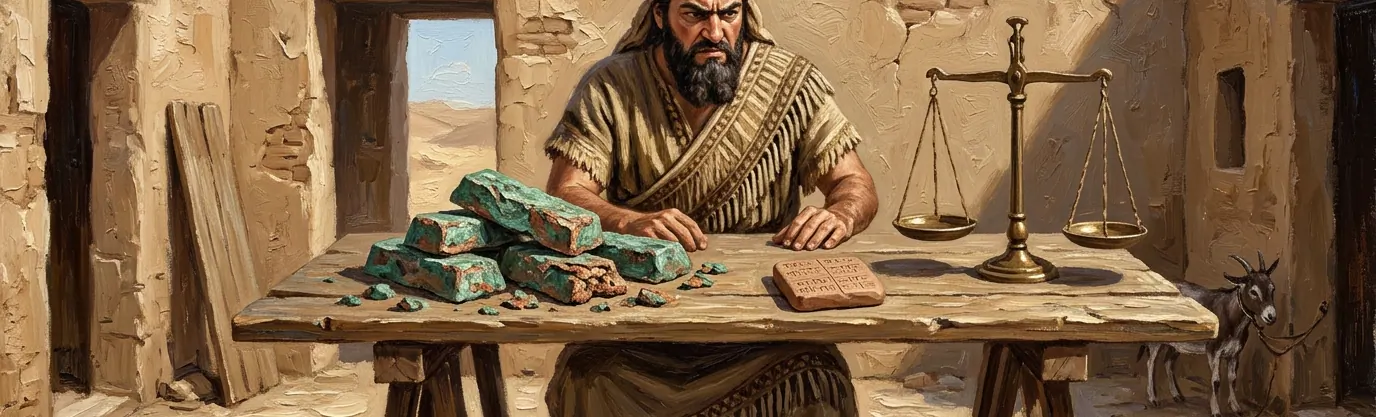
1.What does the world's oldest known customer complaint tablet gripe about?
Show Answer & Explanation
Correct Answer: C. Substandard copper ingots
Explanation: Housed in the British Museum in London is a six-inch baked clay tablet carved in Akkadian cuneiform around 1750 BC in the ancient Mesopotamian city-state of Ur. Known as the Complaint Tablet to Ea-nāṣir, it is officially recognized by Guinness World Records as the oldest written customer complaint in human history!
In the tablet, a disgruntled buyer named Nanni writes furiously to a Mesopotamian merchant named Ea-nāṣir who had traveled to the Persian Gulf to buy metal. Nanni accuses Ea-nāṣir of delivering low-grade copper ingots, refusing to issue a refund, and rudely telling Nanni's messenger: "If you want to take them, take them; if you do not want to take them, go away!"
Even funnier, when archaeologists excavated the ruins of Ea-nāṣir's actual house in Ur in the 1920s, they found an entire room filled with multiple cuneiform tablets from other furious customers complaining about his terrible copper and shady business practices—meaning Ea-nāṣir kept a literal archive of his own one-star reviews!
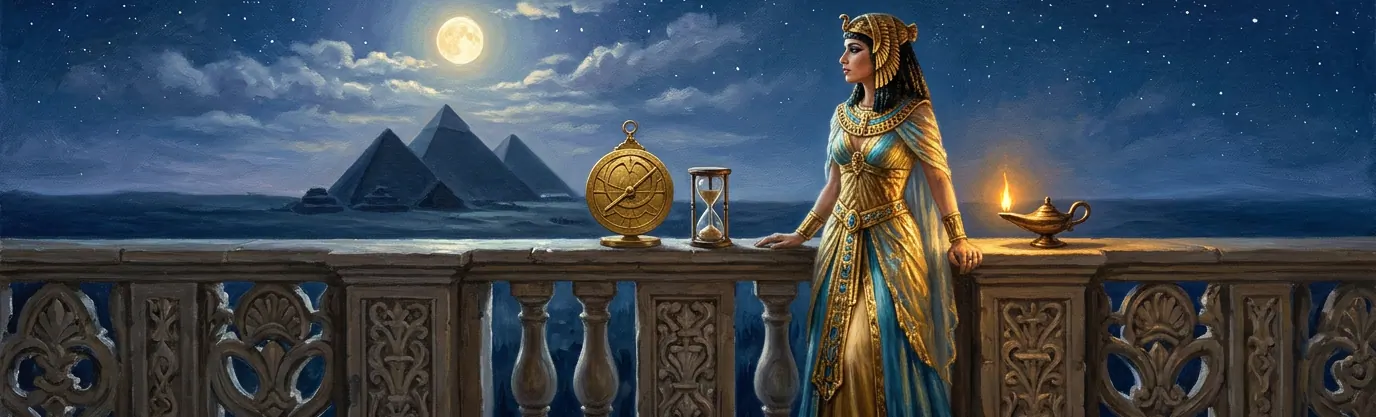
2.Cleopatra lived closer in time to which event than Giza's construction?
Show Answer & Explanation
Correct Answer: B. The Apollo Moon landing
Explanation: Because ancient Egypt is often taught as a single chapter in school history books, it is easy to picture Queen Cleopatra VII and the builders of the Great Pyramid of Giza as neighbors in time. In reality, ancient Egyptian civilization lasted so mind-bogglingly long that the pyramids were already ancient ruins to Cleopatra!
Pharaoh Khufu's Great Pyramid of Giza was completed around 2560 BC during Egypt's Old Kingdom. Cleopatra VII—the last active ruler of the Ptolemaic Kingdom of Egypt—was born in 69 BC and died in 30 BC, roughly 2,530 years after the Great Pyramid's capstones were laid!
By contrast, Neil Armstrong and Buzz Aldrin stepped onto the Moon during Apollo 11 in July 1969—just 1,999 years after Cleopatra's death, putting Cleopatra more than five centuries closer to astronauts walking on the Moon (and the invention of the iPhone!) than to the building of Giza's Great Pyramid.
3.What toxic liquid did China's First Emperor pump through his tomb?
Show Answer & Explanation
Correct Answer: A. Shimmering liquid mercury
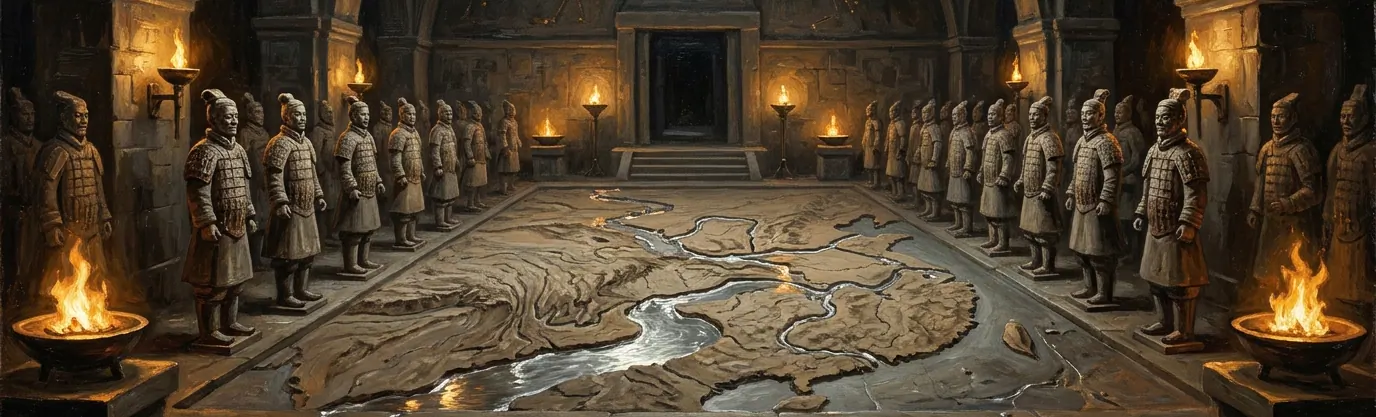
Explanation: When Qin Shi Huang—the ruthless founder of the Qin dynasty who unified warring China, standardized weights and writing, and connected the early Great Wall—died in 210 BC, he was buried inside a subterranean palace complex near Xi'an guarded by more than 8,000 life-sized painted Terracotta Warriors.
While the Terracotta Army pits have been excavated, the Emperor's central burial mound remains unopened to this day. According to the ancient Chinese historian Sima Qian writing a century after the Emperor's death, 700,000 laborers sculpted a miniature relief map of the Chinese Empire on the tomb floor and used mechanical bronze pumps to circulate a hundred flowing rivers and oceans of shimmering liquid mercury!
For centuries, scholars assumed Sima Qian was exaggerating—until modern geophysicists tested the soil directly atop Qin Shi Huang's unexcavated burial mound and detected dangerously high concentrations of volatile mercury vapor seeping through the earth in the exact geographic shape of China's major rivers!
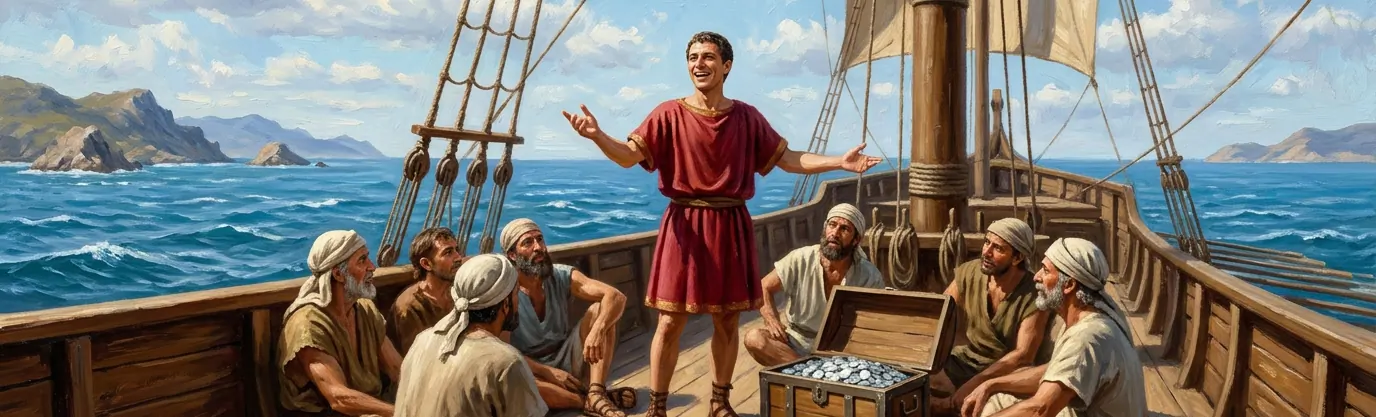
4.Why did young Julius Caesar scold his Cilician pirate captors in 75 BC?
Show Answer & Explanation
Correct Answer: D. They set his ransom too low
Explanation: In 75 BC, while sailing across the Aegean Sea to study rhetoric on the island of Rhodes, twenty-five-year-old Roman nobleman Julius Caesar was kidnapped by ferocious Cilician pirates near the island of Pharmacusa.
When the pirates demanded a ransom of twenty talents of silver (roughly 1,200 pounds of silver bullion) for his release, Caesar burst out laughing in their faces, scolded them for not knowing how important a man they had captured, and insisted they raise his own ransom to fifty talents!
For the next thirty-eight days while his servants raised the silver, Caesar treated the murderous pirates like his personal staff—shushing them whenever he wanted to take a nap, forcing them to listen to his homemade poetry and speeches, calling them "illiterate savages" if they didn't applaud loudly enough, and cheerfully promising he would return to crucify every single one of them. The pirates thought the cocky youth was joking—until Caesar was freed, raised a naval fleet that same night, captured the pirate island, and kept his promise to the letter!
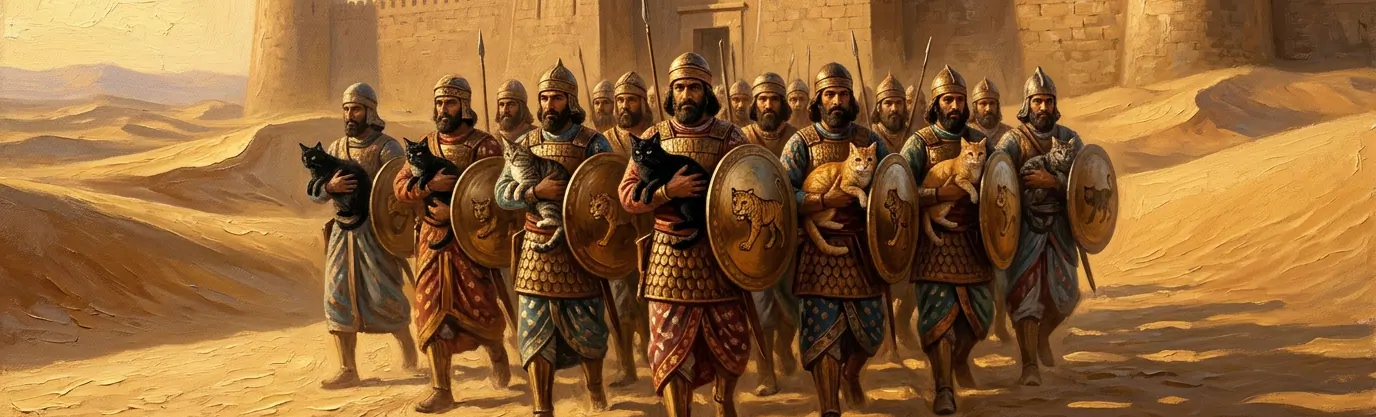
5.What did Persian soldiers carry at Pelusium so Egyptians wouldn't shoot?
Show Answer & Explanation
Correct Answer: B. Live cats and ibises
Explanation: In 525 BC, Persian King Cambyses II marched his army across the Sinai Peninsula to conquer Egypt, confronting Pharaoh Psamtik III at the heavily fortified border city of Pelusium near the eastern mouth of the Nile Delta.
Knowing that ancient Egyptians revered cats as sacred living embodiments of the goddess Bastet—and that accidentally killing a cat in Egypt was a religious crime punishable by death—Cambyses devised one of the most cunning psychological warfare tactics in ancient history.
According to the second-century Macedonian historian Polyaenus, Cambyses ordered his front-line Persian soldiers to paint the image of Bastet on their shields and march toward the city walls holding live cats, dogs, sheep, and sacred ibises in front of their armor! Terrified of striking a sacred animal with an arrow or spear, the Egyptian archers held their fire, allowing the Persian army to storm Pelusium and conquer the Nile Valley.
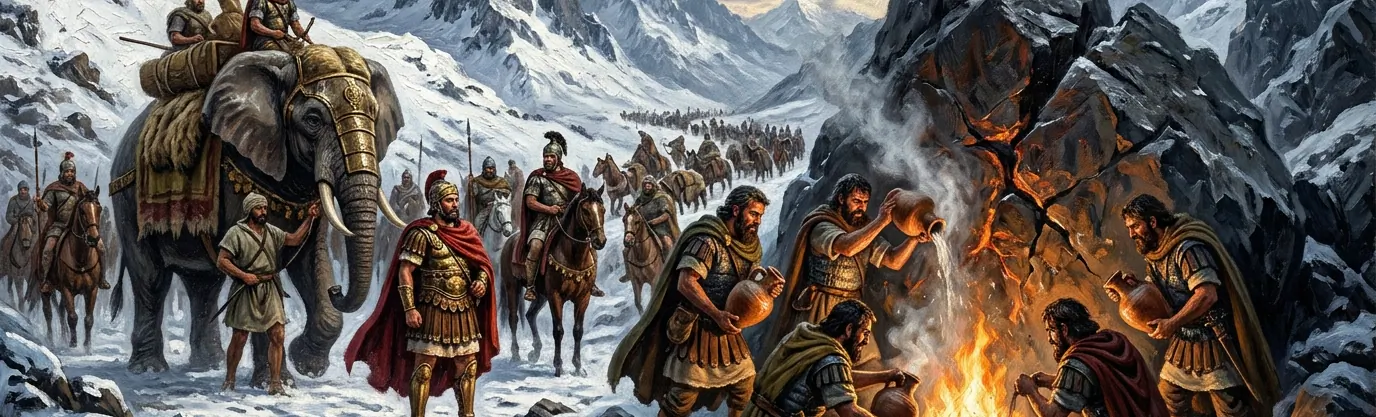
6.How did Hannibal's engineers reportedly crack giant Alpine boulders blocking his elephants?
Show Answer & Explanation
Correct Answer: A. Bonfires and sour wine
Explanation: During the Second Punic War in October 218 BC, Carthaginian general Hannibal Barca stunned the Roman Republic by marching an army of 38,000 infantry, 8,000 cavalry, and 37 African war elephants over the freezing, snow-choked passes of the Alps into northern Italy.
On the treacherous descent down the Italian side of the Alps, a fresh landslide blocked the narrow mountain ledge with a sheer limestone boulder cliff—wide enough for horses to edge past, but completely impassable for Hannibal's broad war elephants!
According to the Roman historian Livy and Greek historian Polybius, Hannibal's engineers felled massive pine trees around the blocking rock, built a towering bonfire against the stone face until the limestone glowed red-hot, and then poured amphorae of sour wine (acetic-acid vinegar) across the scorching rock! The violent thermal shock combined with acid reaction cracked the boulder into brittle rubble that soldiers chipped away with iron picks, opening a gentle ramp for the elephants in four days.
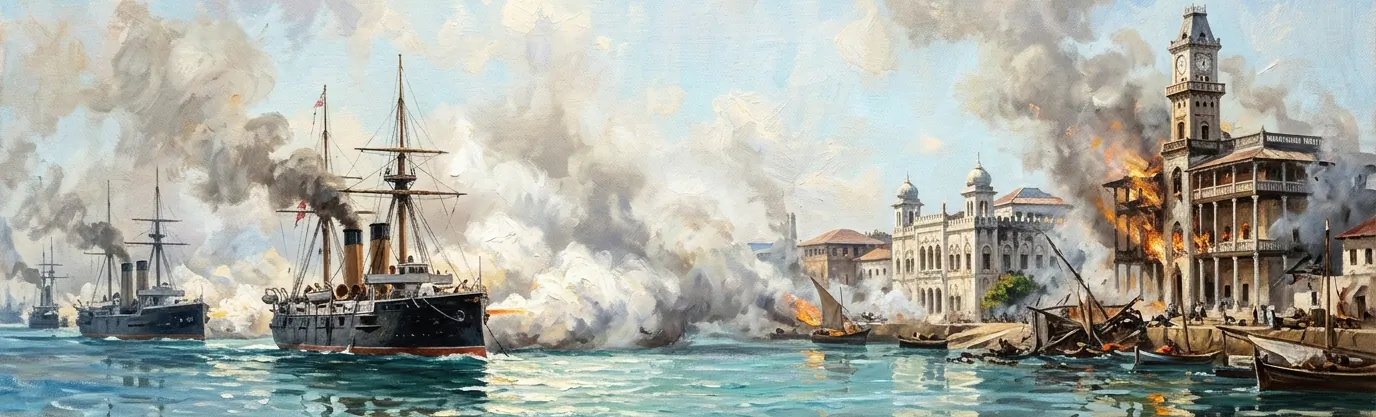
7.How long did history's shortest recorded war in Zanzibar last?
Show Answer & Explanation
Correct Answer: C. Thirty-eight minutes
Explanation: On August 25, 1896, following the sudden death of the pro-British Sultan Hamad bin Thuwaini of Zanzibar, his nephew Khalid bin Bargash seized the waterfront Beit al-Hukm Palace without British approval and barricaded himself inside with nearly 3,000 palace guards, artillery batteries, and the royal armed yacht HHS Glasgow.
Rear Admiral Harry Rawson of the Royal Navy anchored five warships in Zanzibar Harbor directly in front of the palace and issued an ultimatum: lower the flag and evacuate the palace by 9:00 AM on August 27, or face naval bombardment. At 8:00 AM, Khalid sent back a defiant reply declaring he had no intention of lowering his flag.
At 9:02 AM sharp, the British cruisers opened fire. Within minutes, the Sultan's wooden palace complex caught fire, the royal yacht was sunk in the shallow harbor, and Khalid fled through a back door to the German consulate. By 9:40 AM, the palace flag was shot down and the guns fell silent—ending the Anglo-Zanzibar War in just 38 minutes!
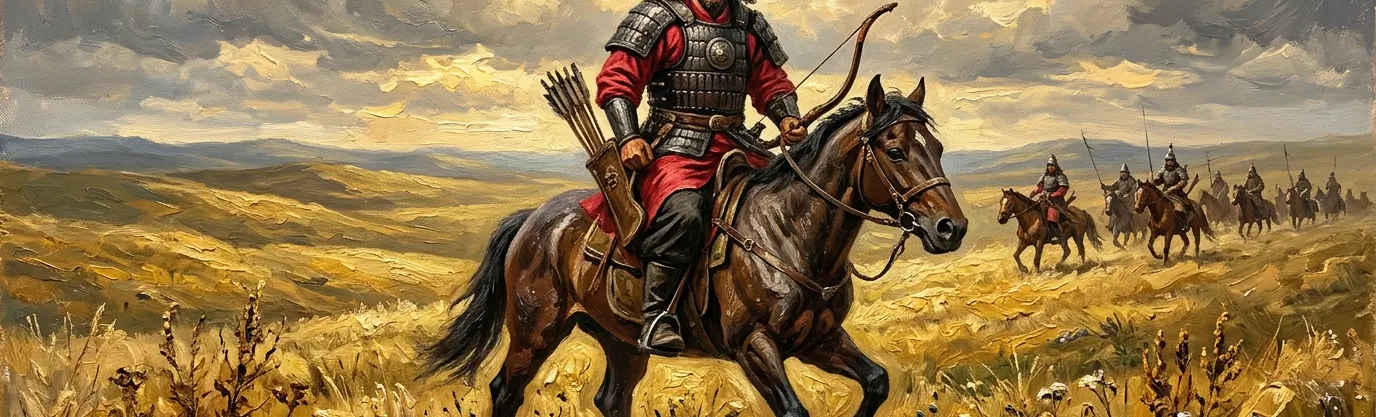
8.Why did Mongol warriors wear tightly woven raw silk undershirts in battle?
Show Answer & Explanation
Correct Answer: D. To pull barbed arrows out cleanly
Explanation: Under Genghis Khan in the thirteenth century, the Mongol cavalry conquered the largest contiguous land empire in human history. While heavy European knights relied on forty-pound suits of chainmail and plate steel, Mongol horsemen stayed lightning-fast by wearing lamellar leather armor over a tightly woven raw-silk undershirt!
Raw silk possesses extraordinary tensile strength—strand for strand stronger than steel wire of the same diameter. When an enemy arrow lost momentum at long range and pierced a Mongol rider's outer coat, the barbed iron arrowhead could penetrate the skin, but it rarely tore through the tough, slippery fibers of the silk shirt.
Instead, the uncut silk fabric wrapped snugly around the arrowhead like a glove as it entered the wound! Rather than slicing open the soldier's flesh or yanking a barbed arrowhead backward (which caused fatal internal bleeding and infection), Mongol medics simply gently tugged the open edges of the silk shirt—popping the spinning arrow cleanly out of the wound intact!
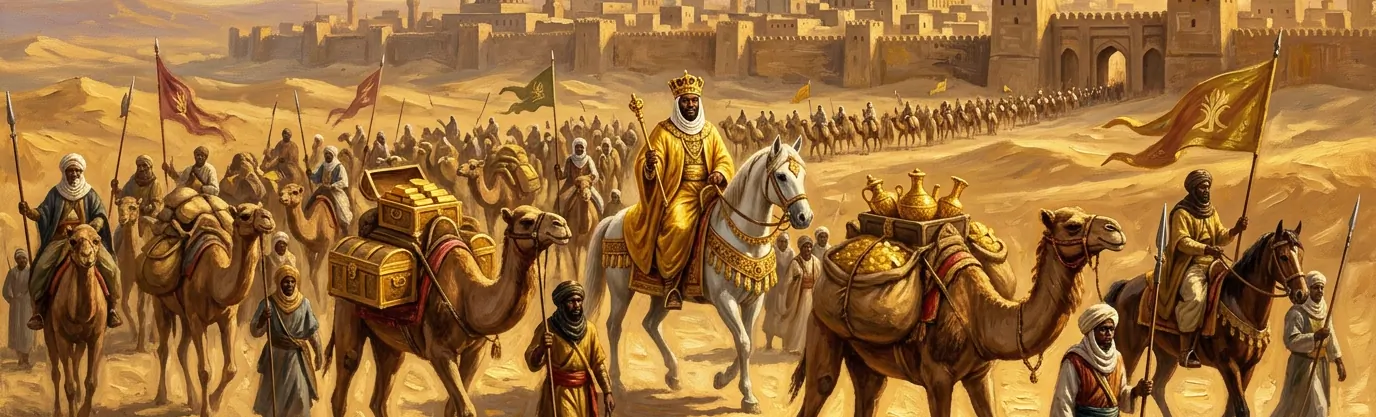
9.Whose lavish 1324 pilgrimage handed out so much gold Cairo's economy crashed?
Show Answer & Explanation
Correct Answer: A. Emperor Mansa Musa
Explanation: In 1324, Mansa Musa—the tenth ruler of the West African Mali Empire, which controlled the fabulously rich gold mines of Bambuk, Bure, and Wangara along the Niger River—set out on a 4,000-mile Hajj pilgrimage across the Sahara Desert to Mecca.
Mansa Musa did not travel light: his glittering procession included 60,000 men, 12,000 royal attendants dressed in Persian silk brocade carrying four-pound gold staffs, and a train of eighty camels each hauling up to 300 pounds of pure gold dust!
When his caravan arrived in Cairo, Egypt in July 1324, Mansa Musa gifted thousands of gold ingots to the Mamluk Sultan, tipped every merchant way above market price, and handed out gold dust on street corners. He flooded Cairo, Medina, and Mecca with so many tons of bullion that the price of gold plummeted by up to 25%, triggering twelve years of severe currency depreciation and inflation across the Middle East!
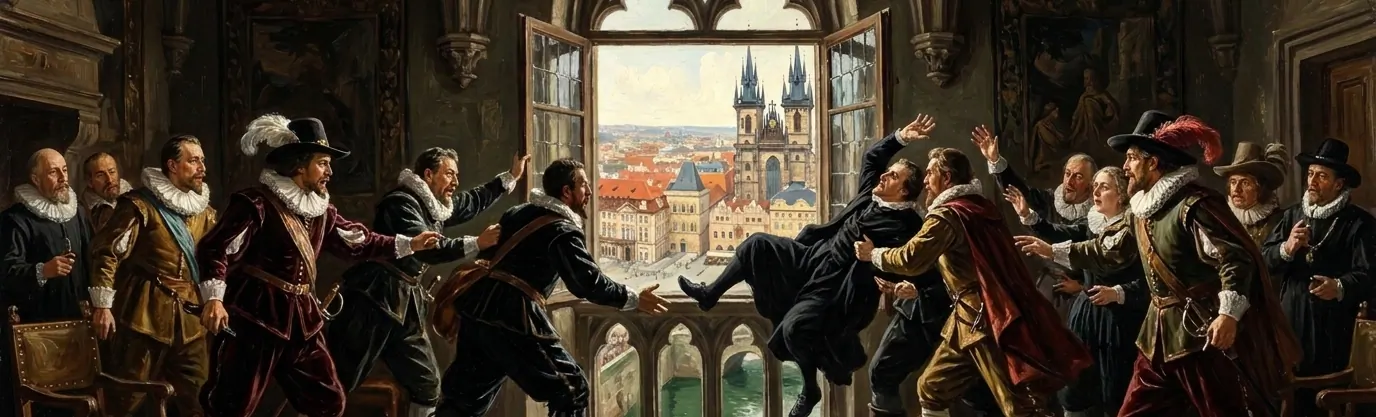
10.What did Protestants say cushioned Catholic officials thrown 70 feet in Prague?
Show Answer & Explanation
Correct Answer: B. A castle moat dung heap
Explanation: The city of Prague has witnessed not one, not two, but three famous "Defenestrations" (the act of throwing someone out of a window—from the Latin de- + fenestra, "window"). The most consequential occurred on May 23, 1618, sparking the devastating Thirty Years' War across Europe.
Furious that Habsburg Emperor Ferdinand II had ordered the closure of Protestant chapels in Bohemia, a crowd of armed Protestant nobles marched up to the Chancellery of Prague Castle, put two imperial Catholic regents—Jaroslav Bořita of Martinice and Vilém Slavata of Chlum—along with their secretary Philip Fabricius on an impromptu trial, and tossed all three men headfirst out a third-floor window 70 feet (21 meters) above the stone castle moat!
Astonishingly, all three men survived the 70-foot plunge! Catholic chroniclers immediately proclaimed that the Virgin Mary and angels had caught them in midair, while Protestant pamphleteers countered with a much earthier explanation: the officials had landed squarely in a massive pile of horse manure and kitchen refuse dumped at the bottom of the dry castle ditch!
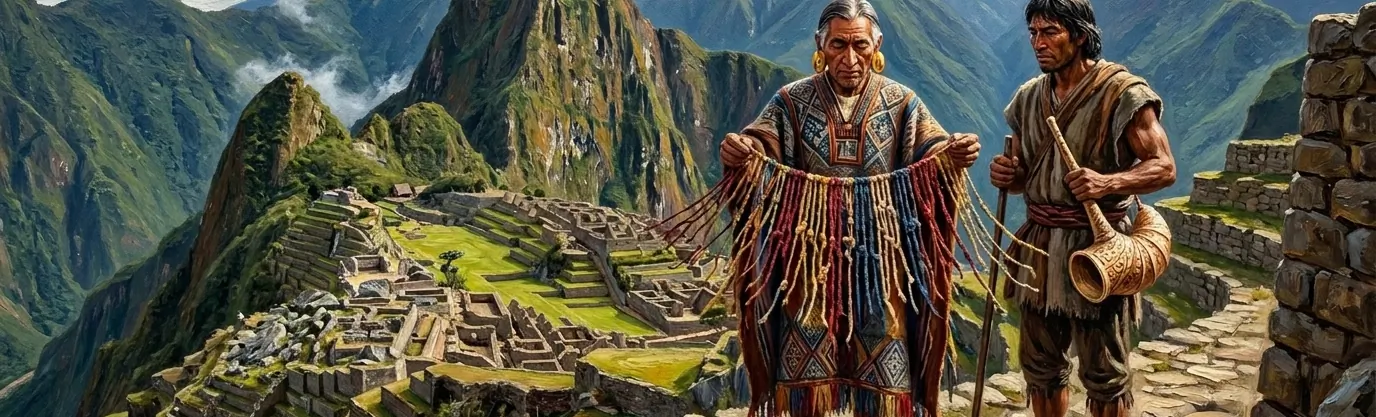
11.How did the Inca Empire record taxes and censuses without writing?
Show Answer & Explanation
Correct Answer: B. Knotted colored strings
Explanation: At its peak in the early sixteenth century, the Inca Empire (Tawantinsuyu) governed more than ten million people across 2,500 miles of the rugged Andes Mountains—all without wheels, iron tools, or a conventional written alphabet!
Instead of writing on paper or clay, Inca master accountants known as quipucamayocs ("keepers of the knots") recorded population censuses, troop supplies, llama herds, and grain tribute using intricate bundles of dyed cotton and camelid-wool strings called quipus (khipus).
Hanging from a horizontal primary cord were hundreds of pendant strings dyed in dozens of color combinations, where the exact type of knot (single knots, figure-eight knots, and long multi-turn knots) and its vertical height along the string encoded numbers in a base-10 positional decimal system—complete with an empty space on the cord representing zero! Relay runners (chasquis) sprinted along mountain rope bridges carrying quipus across the empire in days.
12.Which single flower bulb cost more than an Amsterdam canal house?
Show Answer & Explanation
Correct Answer: D. Semper Augustus tulip
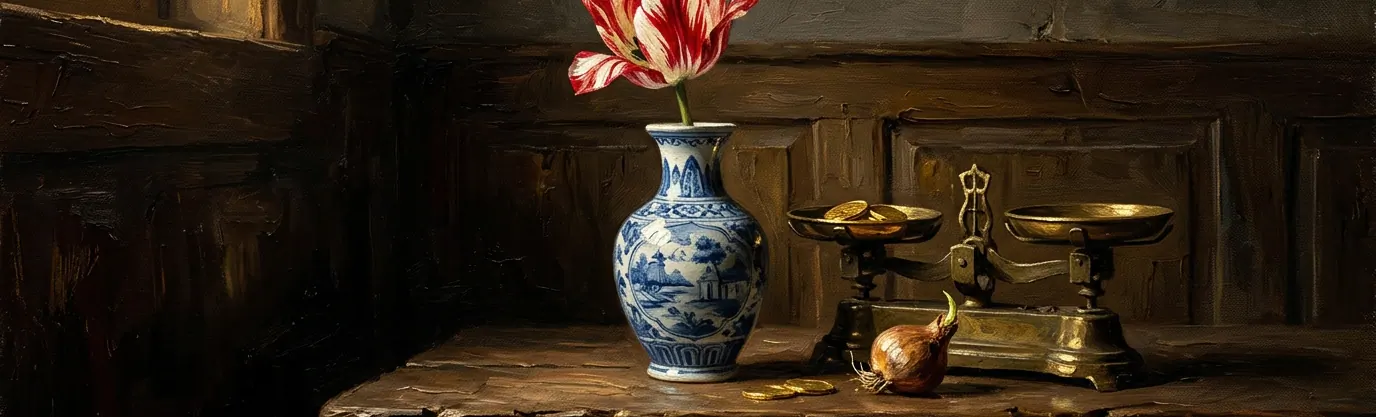
Explanation: During the Dutch Golden Age in the winter of 1636–1637, the Netherlands was swept by "Tulip Mania"—history's first recorded speculative financial bubble, when merchants, weavers, and aristocrats traded futures contracts on rare tulip bulbs in smoky Haarlem and Amsterdam taverns.
While ordinary solid-colored tulips sold for pennies, buyers went wild for "broken" tulips whose petals displayed dazzling, flame-like streaks of crimson and violet over pure white (an effect scientists learned centuries later was actually caused by a tulip-breaking mosaic virus transmitted by peach aphids!).
The most coveted bulb in the entire republic was the legendary Semper Augustus ("Always Imperial"). At the height of the frenzy in early 1637, a single Semper Augustus bulb was priced at 5,500 to 10,000 guilders—more than thirty times a skilled craftsman's annual salary, and enough to buy one of the grandest merchant mansions on Amsterdam's Herengracht canal, complete with a coach house and garden!
13.Why did Erik the Red name an icy island 'Greenland' around 985?
Show Answer & Explanation
Correct Answer: A. A PR trick for settlers
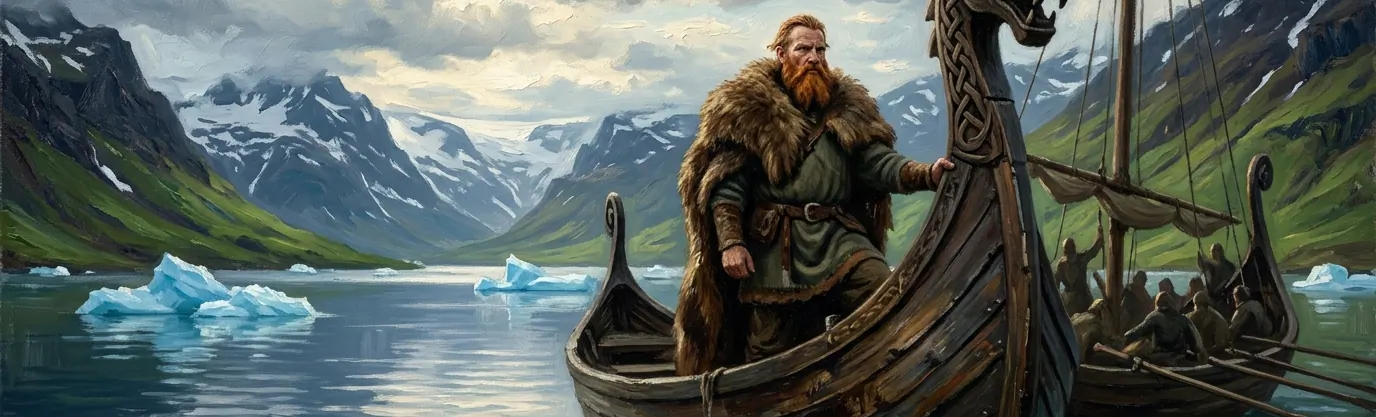
Explanation: Exiled from Iceland for three years in 982 AD after a deadly feud with a neighbor over a landslide, the red-bearded Norse chieftain Erik Thorvaldsson—famous to history as Erik the Red—sailed west across the Denmark Strait to explore a vast, glacier-covered landmass where more than 80% of the surface lies buried under a two-mile-thick ice sheet.
After spending three summers scouting the sheltered southwestern fjords (which enjoyed mild summer pastures during the Medieval Warm Period), Erik returned to Iceland in 985 AD determined to recruit hundreds of Norse families to sail back with him and establish a colony.
According to the medieval Icelandic Saga of Erik the Red (Eiríks saga rauða), Erik deliberately named the frozen island Grœnland ("Greenland") as a tenth-century real-estate marketing ploy—explaining that "people would be much more tempted to go there if the land had an attractive name!" The slogan worked: twenty-five longships packed with settlers immediately set sail with him.
14.How many sea snails did ancients crush for one gram of dye?
Show Answer & Explanation
Correct Answer: C. Nearly ten thousand snails
Explanation: Look at the national flags of the world today and you will notice that almost none of them feature the color purple. For thousands of years across the ancient Mediterranean, authentic colorfast purple fabric—"Tyrian purple" or "Imperial purple"—was literally worth multiple times its weight in solid gold!
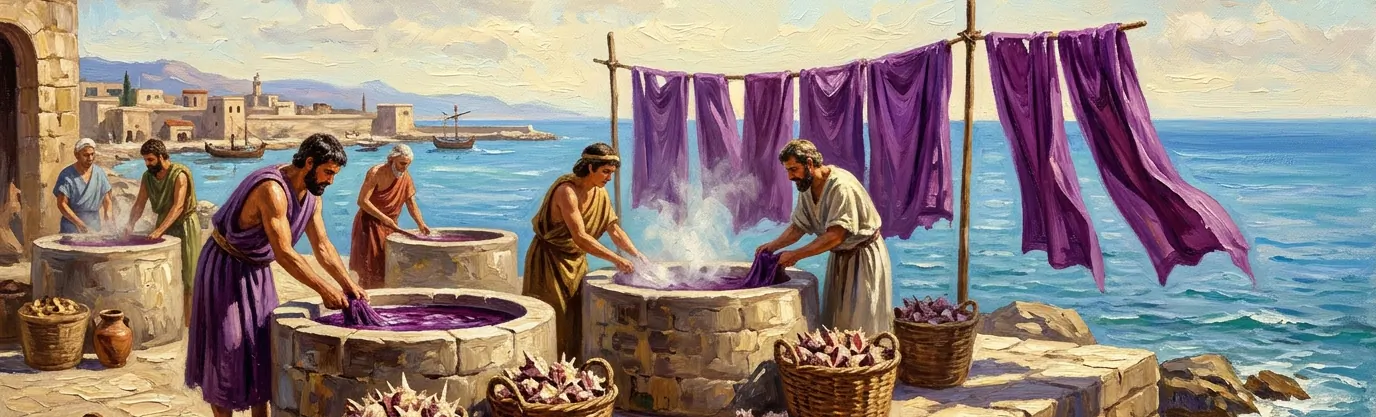
Manufactured by the Phoenicians of the coastal city of Tyre (in modern-day Lebanon), the dye could only be extracted drop by tiny drop from the hypobranchial mucus gland of predatory marine rock snails (Bolinus brandaris and Hexaplex trunculus).
To produce a single gram of pure Tyrian purple dye—barely enough to color the trim of one Roman senator's toga—Phoenician dyers had to harvest, crack open, and boil roughly 9,000 to 12,000 murex sea snails in lead vats for ten days! The process smelled so overpoweringly of rotting garlic and fish that ancient Roman law granted wives automatic grounds for divorce if their husbands worked as purple-dyers.

15.How did Aztec farmers grow abundant crops across swampy Lake Texcoco?
Show Answer & Explanation
Correct Answer: B. Artificial floating garden islands
Explanation: When the Mexica (Aztec) people founded their island capital of Tenochtitlan in 1325 in the middle of shallow, marshy Lake Texcoco in the Valley of Mexico, they had very little solid dry farmland to feed a burgeoning metropolis that soon surpassed 200,000 residents.
To turn the swamp into an agricultural powerhouse, Aztec engineers perfected the chinampa system (often nicknamed "floating gardens"): they staked out rectangular enclosures up to 300 feet long in the shallow lakebed using woven wattle fences, layered them with alternating mats of aquatic reeds, decaying vegetation, and nutrient-rich lake mud, and planted Ahuejote willow trees along the borders whose roots anchored the soil walls in place.
Because the porous garden beds wicked water continuously from the surrounding canals and were fertilized with dredged canal muck, Aztec chinampas yielded up to seven harvests a year of maize, beans, squash, tomatoes, amaranth, and chili peppers!
16.Why did Song Dynasty merchants invent the world's first paper banknotes?
Show Answer & Explanation
Correct Answer: D. Metal coins were too heavy
Explanation: While Europe didn't issue permanent paper banknotes until Sweden's Stockholms Banco printed them in 1661, merchants in Sichuan province during China's Song Dynasty invented paper money (known as Jiaozi) more than six centuries earlier around the year 1000 AD!
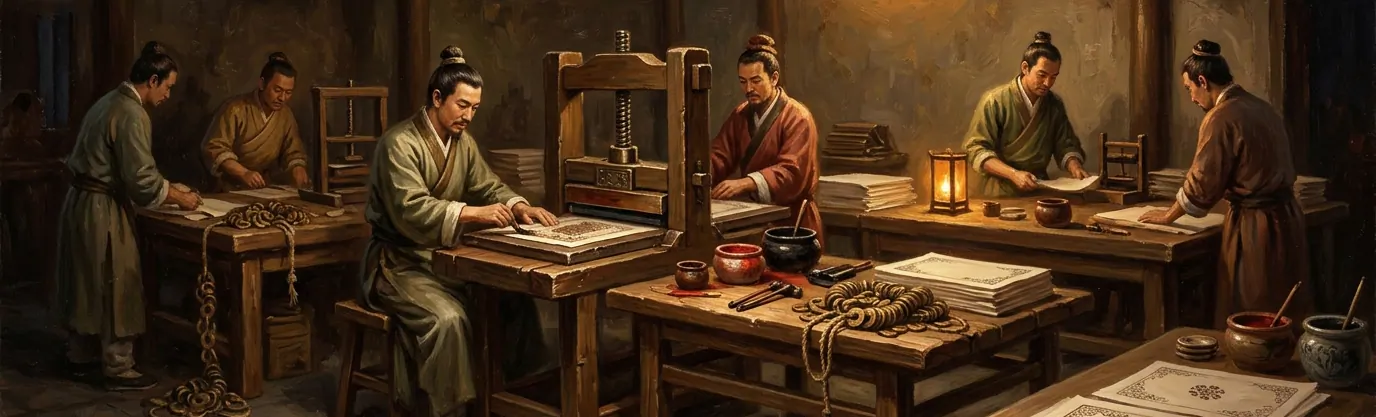
In tenth-century Sichuan, the local government minted coins out of heavy iron rather than copper so that valuable copper wouldn't flow out to rival northern kingdoms. Because iron coins had such low value, buying a single bolt of fine silk required hauling nearly 130 pounds of metal coins on ox carts!
Tired of lugging carts of iron cash through mountain passes, sixteen wealthy Chengdu merchant houses began issuing woodblock-printed mulberry-bark paper deposit receipts stamped with secret multi-color anti-counterfeiting ink designs. By 1024 AD, the Song imperial government nationalized the system—creating the world's first official state-backed paper currency, which Marco Polo marveled at two centuries later as "imperial alchemy"!
17.How did Pope Clement VIII respond when urged to ban 'Satan's drink'?
Show Answer & Explanation
Correct Answer: A. He blessed and drank it
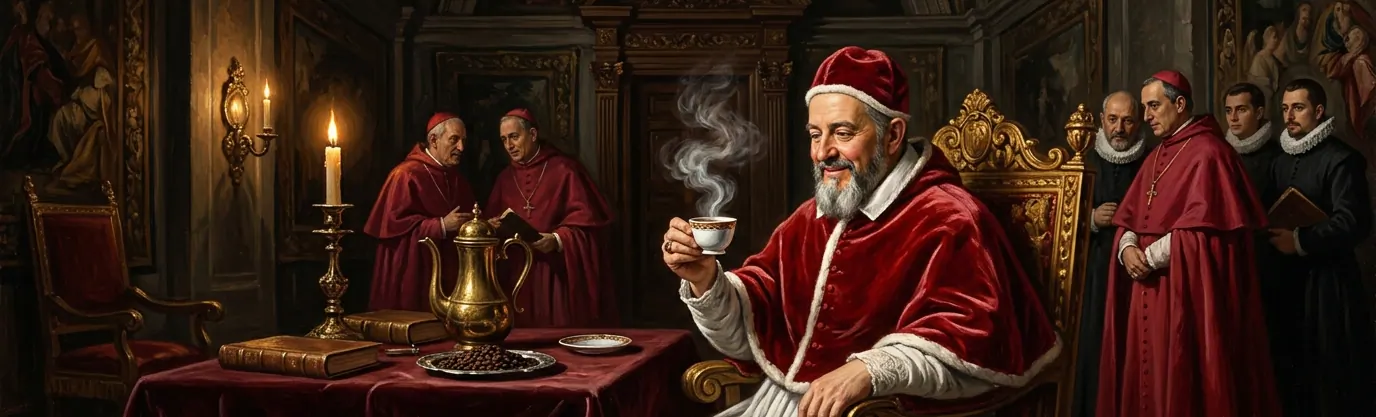
Explanation: When Venetian trade galleys first began importing sacks of dark roasted coffee beans from the Ottoman Empire into Italy in the late 1500s, conservative churchmen in Rome panicked. Seeing that the stimulating black beverage came from Muslim lands and kept drinkers wide awake like wine without intoxication, advisors begged Pope Clement VIII to outlaw coffee as "the bitter invention of Satan."
Before issuing a papal bull around 1600, Pope Clement VIII insisted on examining—and tasting—a freshly brewed cup of the mysterious "infidel beverage" for himself.
Taking a sip of the fragrant hot coffee, the Pope smiled and allegedly declared: "Why, this Satan's drink is so delicious that it would be a pity to let the infidels have exclusive use of it! We shall fool Satan by baptizing it and making it a truly Christian beverage." With papal approval secured, coffeehouses soon mushroomed across Venice, Vienna, Paris, and London!
18.How did Ottoman Sultan Mehmed II bypass Constantinople's giant harbor chain?
Show Answer & Explanation
Correct Answer: B. Hauled warships over greased hills
Explanation: During the 1453 siege of Constantinople, twenty-one-year-old Ottoman Sultan Mehmed II faced a seemingly impenetrable obstacle: the Byzantine defenders had stretched a massive, quarter-mile-long wrought-iron chain supported by wooden pontoons across the mouth of the Golden Horn harbor, blocking the Ottoman fleet from attacking the city's weaker northern sea walls.
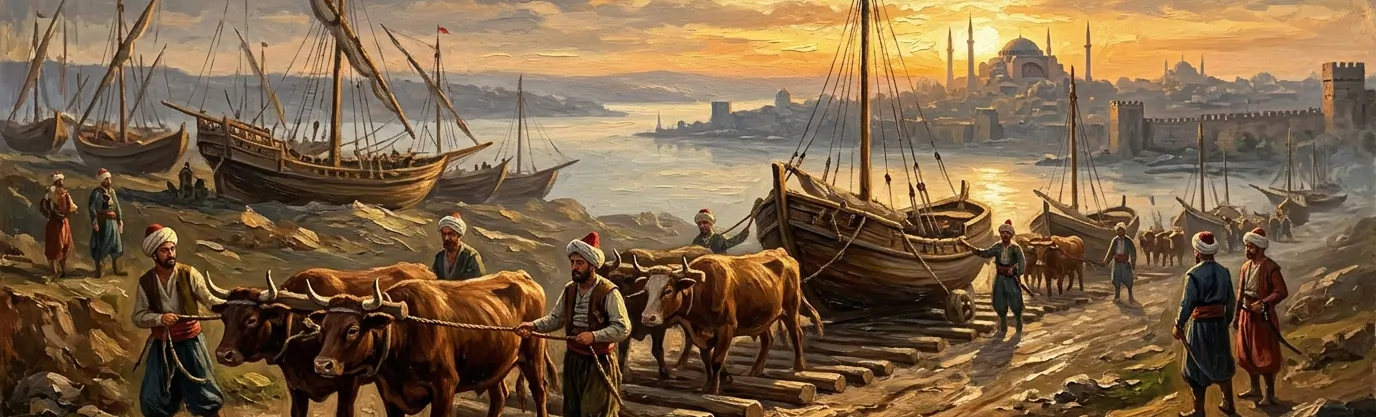
Rather than wasting weeks trying to break the boom chain under heavy Genoese and Byzantine cannon fire, Mehmed ordered his engineers to build a secret overland wooden road from the Bosphorus straight over the steep, 200-foot-high hills of Galata behind Pera!
On the night of April 21–22, 1453, thousands of Ottoman workmen greased timber log rollers with sheep tallow and olive oil, hitched teams of oxen to seventy Ottoman war galleys with their sails unfurled in the wind, and dragged the entire naval fleet over the mountain ridge—When Byzantine sentries woke at dawn, an Ottoman armada was floating inside their locked harbor!
19.Why did burning down King Ashurbanipal's palace accidentally save his royal library?
Show Answer & Explanation
Correct Answer: C. Fire baked the clay tablets hard
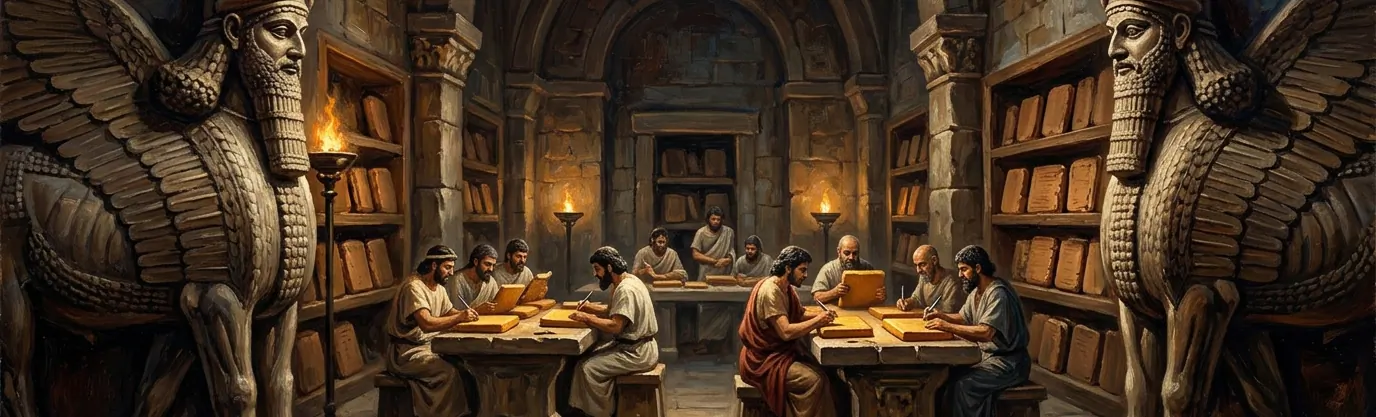
Explanation: In the seventh century BC, Assyrian King Ashurbanipal—a ruthless conqueror who boasted that unlike earlier kings, he could read and write rare Sumerian and Akkadian cuneiform—assembled the ancient world's first systematically organized royal library inside his palace at Nineveh (in modern-day northern Iraq).
Whereas the famous Library of Alexandria was later written on fragile papyrus scrolls and parchment that vanished into smoke when burned, Ashurbanipal's scribes incised more than 30,000 texts—including the Epic of Gilgamesh and the Enuma Elish creation myth—onto tablets of sun-dried clay.
When a coalition of Babylonians and Medes sacked Nineveh in 612 BC and torched the royal palace, the raging inferno collapsed the cedar roofs onto the library rooms. Instead of destroying the books, the 2,000-degree palace fire acted like a giant brick kiln—baking the soft clay tablets into ceramic stone that survived underground for 2,460 years until archaeologists unearthed them in 1849!

20.Why was Isaac Newton stuck at his family farm in 1665?
Show Answer & Explanation
Correct Answer: A. Bubonic plague closed Cambridge
Explanation: In the summer of 1665, the Great Plague of London—England's last major outbreak of bubonic plague—spread across the country, prompting Trinity College at the University of Cambridge to shut its doors and send students home to practice seventeenth-century social distancing.
Twenty-two-year-old student Isaac Newton retreated to his family's quiet limestone farmhouse, Woolsthorpe Manor in Lincolnshire, where he spent nearly two years working in quarantine with no professors, no lectures, and only his notebooks and glass prisms.
Historians call Newton's plague quarantine his Annus Mirabilis ("Year of Wonders"): sitting in his mother's orchard watching apples fall from the branches, Newton developed differential and integral calculus, discovered that white sunlight is composed of the entire spectrum of rainbow colors, and formulated the law of universal gravitation—all before turning twenty-five!
21.What did British and German soldiers spontaneously play on Christmas 1914?
Show Answer & Explanation
Correct Answer: D. Football in No Man's Land
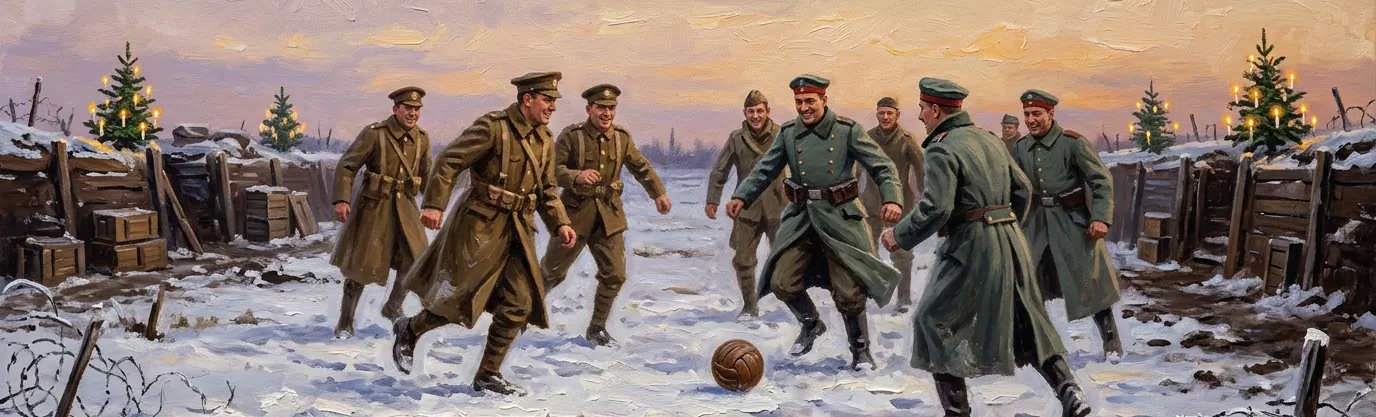
Explanation: Five months into the brutal trench warfare of World War I, on Christmas Eve 1914 along the Western Front near Ypres, Belgium, British soldiers peering across the frozen mud of No Man's Land were stunned to see German troops placing tiny candlelit Christmas trees along their trench parapets and singing "Stille Nacht" ("Silent Night").
British troops answered by singing "The First Noel" in English, and on Christmas morning, unarmed German and British soldiers climbed out of their trenches into No Man's Land calling out "Merry Christmas!" Across dozens of sectors involving roughly 100,000 troops, the two armies shook hands, exchanged chocolate, rum rations, plum puddings, and uniform buttons, and helped bury each other's fallen comrades.
In several sectors, soldiers produced leather footballs (or improvised balls kicked from bully-beef tins and bundled straw) and played spirited pickup football matches across the frozen shell craters of No Man's Land before high commands on both sides strictly banned future truces.
22.Where did French soldiers stumble across the Rosetta Stone in 1799?
Show Answer & Explanation
Correct Answer: B. Built into an old fort wall
Explanation: For fourteen centuries after the last Egyptian temple scribes died out in the fifth century AD, no living person on Earth could read ancient Egyptian hieroglyphs—leaving the monuments of the Nile a complete mystery.
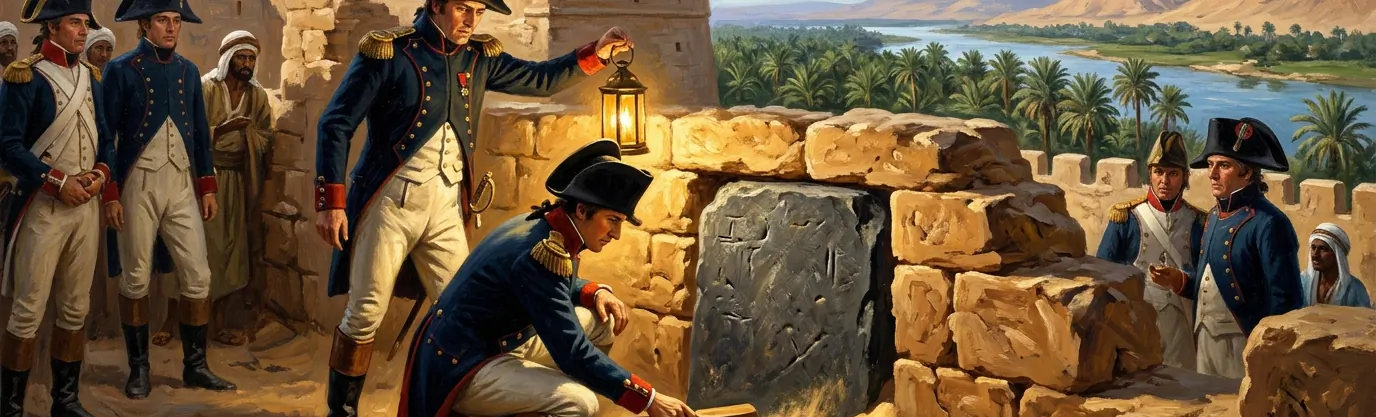
Then on July 15, 1799, during Napoleon Bonaparte's campaign in Egypt, French army engineers led by Lieutenant Pierre-François Bouchard were demolishing an old medieval wall to strengthen Fort Julien near the Nile Delta port town of Rashid (Rosetta) when they spotted a 1,680-pound slab of dark granodiorite recycled right inside the fort's stonework as ordinary building rubble!
Bouchard immediately realized the stone was extraordinary because it bore the exact same royal decree issued in 196 BC by Pharaoh Ptolemy V carved in three scripts: Ancient Greek at the bottom, Demotic in the middle, and sacred Hieroglyphs at the top—allowing Jean-François Champollion to finally crack the hieroglyphic code in 1822!
23.What were the counter-top terracotta jars in Pompeii's street snack bars?
Show Answer & Explanation
Correct Answer: C. Ancient hot fast-food warmers
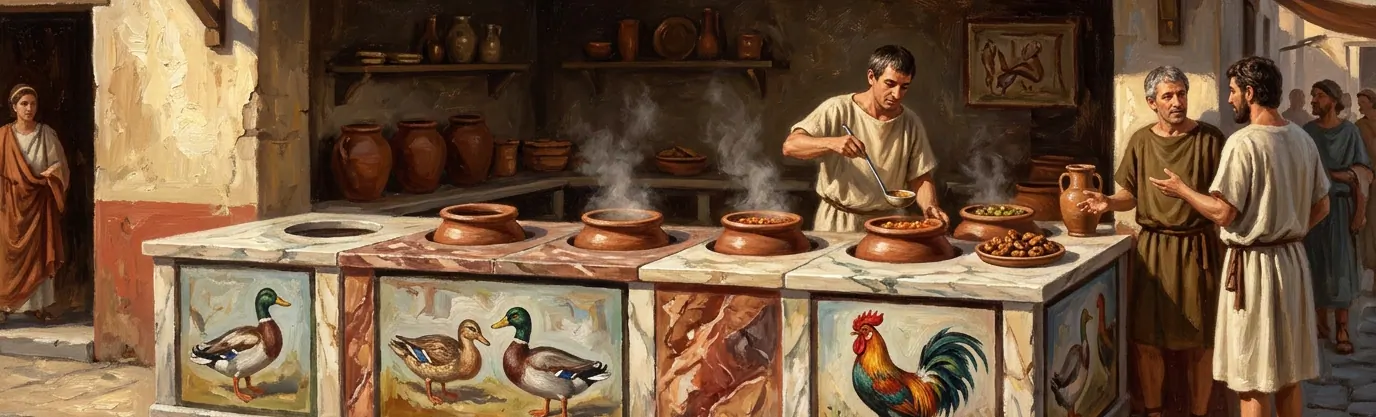
Explanation: Most working-class residents of ancient Roman apartment buildings (insulae) did not have private kitchens or ovens at home because open cooking fires in crowded wooden upper floors were a constant fire hazard. Instead, ordinary Romans grabbed breakfast, lunch, and dinner on the go at neighborhood street-corner snack counters called thermopolia (literally "places where something hot is sold")!
Archaeologists excavating Pompeii—preserved under volcanic ash from Mount Vesuvius in 79 AD—have uncovered more than eighty thermopolia lining the city's stone streets. Each shop features an L-shaped masonry counter with deep earthenware jars (dolia) recessed directly into the marble countertop like a modern buffet steam table!
In 2020, archaeologists excavated a remarkably intact thermopolium in Pompeii's Regio V decorated with vibrant menu frescoes of a Nereid riding a seahorse, mallard ducks, and a rooster—and inside the terracotta counter jars, they found actual 2,000-year-old remnants of pork, duck, snails, goat stew, and fava-bean-spiced wine!
24.Where did the iron in King Tutankhamun's tomb dagger originate?
Show Answer & Explanation
Correct Answer: A. A fallen space meteorite
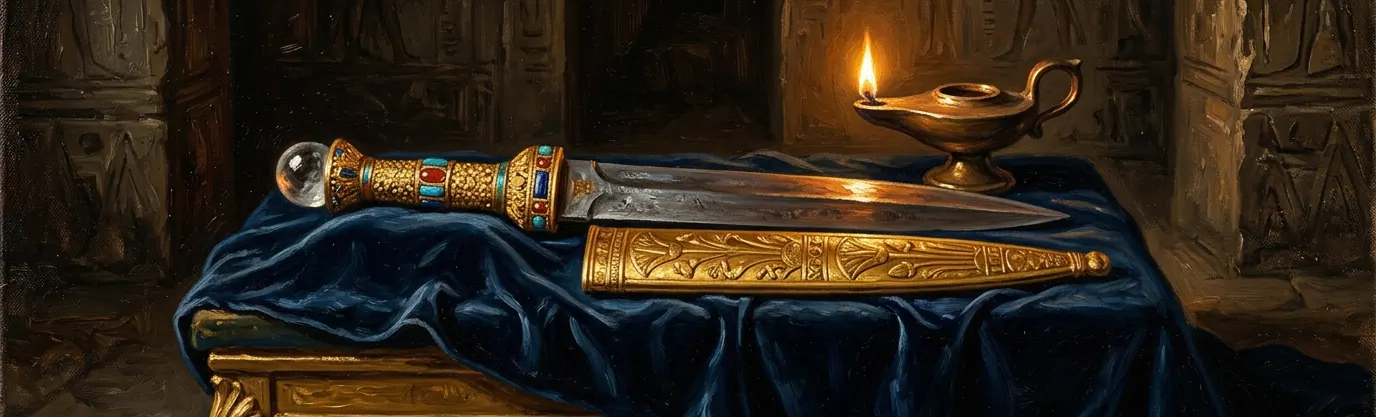
Explanation: When British archaeologist Howard Carter unwrapped the mummy of young Pharaoh Tutankhamun (who died around 1323 BC during the Late Bronze Age) inside his Valley of the Kings tomb in 1925, he found two ornate daggers tucked into the golden wrappings along the boy king's right thigh: one with a blade of solid gold, and a second with a gleaming, rust-free blade of homogeneous iron!
That iron blade baffled historians for nearly a century, because ancient Egypt in the fourteenth century BC had not yet mastered the high-temperature smelting of terrestrial iron ore—making unrusted iron rarer and more precious than gold.
In 2016, Italian and Egyptian scientists analyzed Tutankhamun's dagger blade using non-invasive portable X-ray fluorescence spectrometry. They discovered the metal contained 10.8% nickel and 0.58% cobalt—the unmistakable chemical fingerprint of an extraterrestrial iron meteorite that had fallen from space! Even more remarkably, Egyptian hieroglyphs from that era literally called iron bi-A-n-pt: "iron from the sky."

25.Which Indonesian volcano caused New England snowstorms in June of 1816?
Show Answer & Explanation
Correct Answer: D. Mount Tambora
Explanation: In April 1815, Mount Tambora on the island of Sumbawa in modern-day Indonesia unleashed the most powerful volcanic eruption in recorded human history (a Volcanic Explosivity Index of 7)—blasting 37 cubic miles of rock and ash into the stratosphere and blowing off 4,000 feet of the mountain's summit!
More than 60 million tons of sulfur dioxide gas formed a reflective sulfate aerosol veil in the upper stratosphere that circled the globe and dimmed sunlight worldwide, dropping Northern Hemisphere temperatures and turning 1816 into the infamous "Year Without a Summer" (or "Eighteen Hundred and Froze to Death").
In June 1816, a foot of snow blanketed Quebec and New England, lakes in Pennsylvania stayed frozen in July, killing frosts wiped out harvests from Virginia to Ireland, and endless freezing rain trapped Mary Shelley indoors at Lake Geneva in Switzerland—where a ghost-story contest inspired her to write Frankenstein!
26.What prize crowned victorious athletes at the original ancient Greek Olympics?
Show Answer & Explanation
Correct Answer: B. Wild olive branch wreaths
Explanation: At the modern Olympic Games, top finishers stand on a three-tiered podium to receive gold, silver, and bronze medals. At the original ancient Olympic Games—held every four years at the sanctuary of Olympia in Greece from 776 BC to 393 AD—there was no second or third place at all!
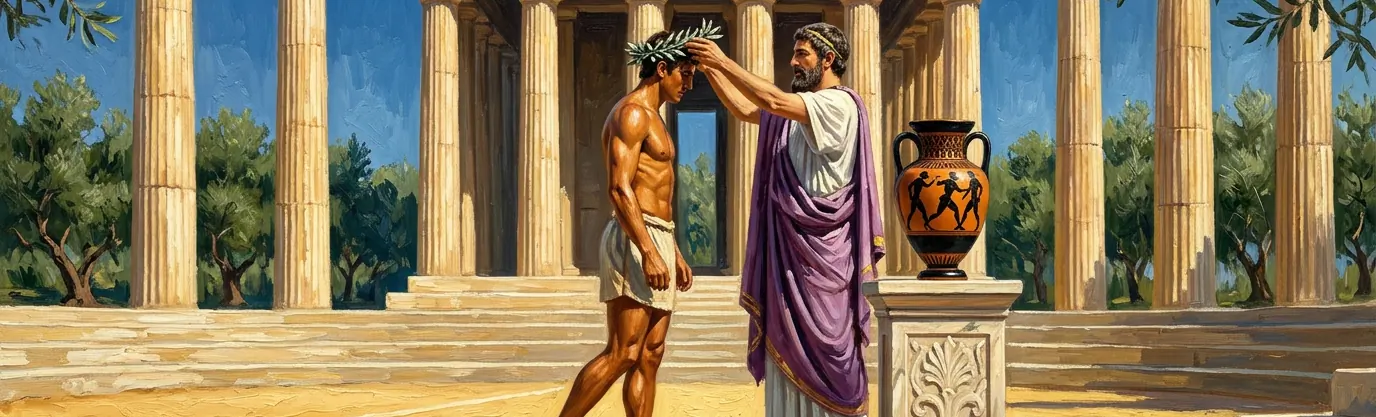
Only the single champion of each event was honored, and instead of gold or silver, the winner was crowned with a kotinos: a simple circular wreath woven from the silver-green leaves of a sacred wild olive tree (Elaia Kallistephanos) growing behind the Temple of Zeus, which Greek legend said Heracles himself had planted!
While the olive wreath itself had no monetary value, an Olympic champion returned to his home city-state as a living hero—often rewarded by his hometown with a massive cash pension, free meals at the public hall for life, front-row theater seats, tax exemptions, and bronze statues!
27.How far did Sweden's top-heavy warship Vasa sail before sinking in 1628?
Show Answer & Explanation
Correct Answer: C. Less than one nautical mile
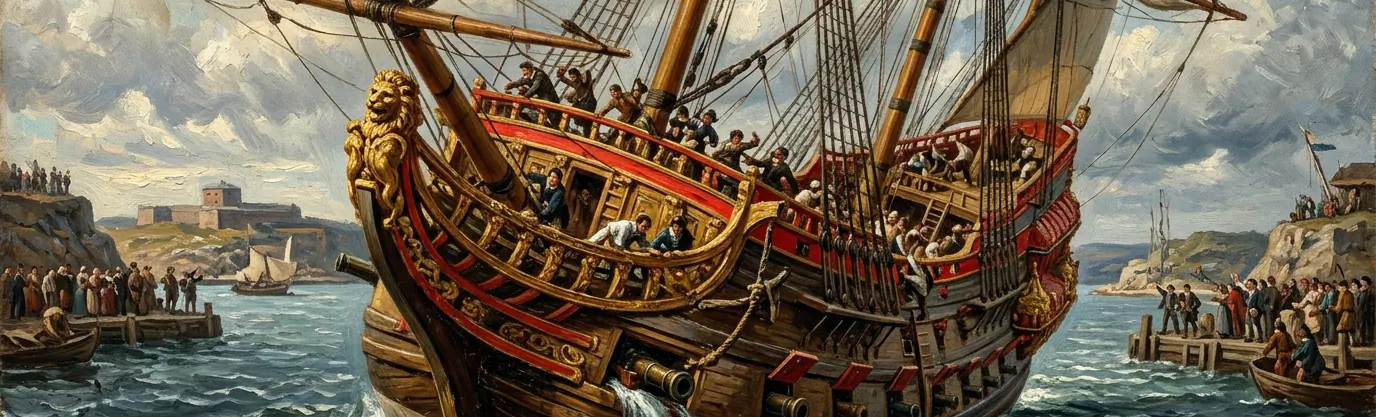
Explanation: On August 10, 1628, crowds of thousands of citizens and foreign ambassadors lined the quays of Stockholm Harbor to cheer the maiden voyage of the Vasa—the pride of King Gustavus Adolphus's Swedish Navy, glittering with hundreds of gilded wooden sculptures and packing 64 heavy bronze cannons across two full gun decks.
Unfortunately, the King had insisted on adding a second heavy upper deck of 24-pounder cannons after construction had already begun, leaving the narrow hull dangerously top-heavy with far too little space in the keel for stone ballast!
After warping out from the royal palace dock and setting four sails, the Vasa sailed barely 1,300 meters (less than one nautical mile!) across calm Stockholm Harbor before a light afternoon gust of wind tipped the ship onto its port side. Water poured through the open lower gunports, and the mighty flagship sank to the harbor floor in full view of the horrified crowd—where brackish Baltic water preserved it almost completely intact for 333 years until it was raised in 1961!
28.How did sixth-century monks smuggle China's closely guarded silkworms to Constantinople?
Show Answer & Explanation
Correct Answer: A. Inside hollow bamboo canes
Explanation: For more than three thousand years, Imperial China guarded the secret of sericulture—how shimmering silk thread was spun by the caterpillars of the domesticated Bombyx mori moth fed on white mulberry leaves—under penalty of death for anyone caught smuggling silkworms or their eggs out of the empire.
Meanwhile, the Byzantine Empire in Constantinople was draining mountains of gold treasury coins buying luxury silk through Persian middlemen along the Silk Road. Around 552 AD, two Nestorian Christian monks who had traveled to Central Asia and China approached Byzantine Emperor Justinian I with a daring espionage proposal.
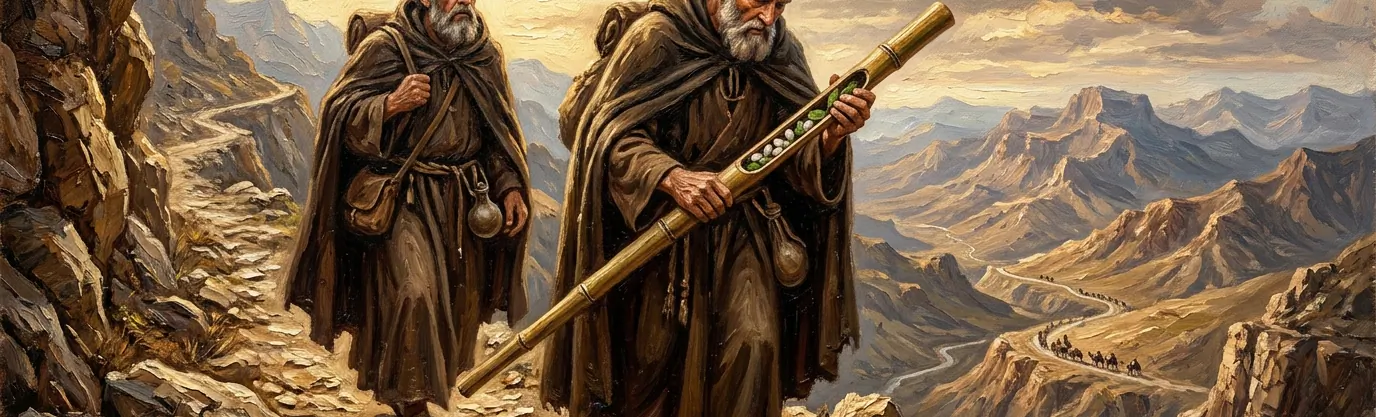
According to the sixth-century Byzantine historian Procopius, the two monks trekked thousands of miles back from China carrying hollow bamboo walking staves packed with thousands of tiny silkworm eggs insulated in dried manure! Those smuggled eggs hatched in Constantinople and launched the entire European and Mediterranean silk industry.
29.How did ninth-century Baghdad's Caliph al-Ma'mun pay scholars who translated scientific books?
Show Answer & Explanation
Correct Answer: D. The book's weight in gold
Explanation: During the Islamic Golden Age in the ninth century AD, Abbasid Caliph al-Ma'mun expanded Baghdad's legendary Bayt al-Hikmah ("House of Wisdom") into the greatest scientific academy, observatory, and translation center on Earth—where Muslim, Christian, and Jewish scholars worked side by side translating Greek, Persian, and Sanskrit treatises on mathematics, medicine, astronomy, and philosophy into Arabic.
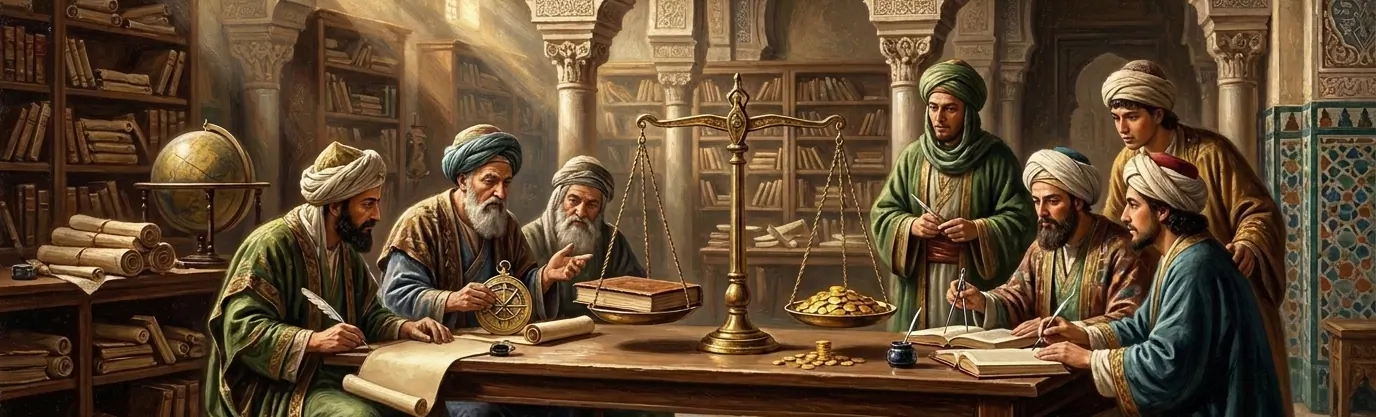
To incentivize master polyglot translators like the famed Nestorian Christian physician Hunayn ibn Ishaq, Caliph al-Ma'mun instituted an extraordinary royal reward: according to tenth-century bibliographer Ibn al-Nadim, whenever Hunayn completed the translation of an ancient scientific or medical volume, the Caliph placed the finished manuscript on a brass scale and paid him the book's literal weight in pure gold dinars!
Not surprisingly, historical accounts joke that Hunayn ibn Ishaq deliberately commissioned the thickest, heaviest paper in Baghdad and instructed his scribes to write in large, generously spaced calligraphy with extra-wide margins!
30.How did Antoine Parmentier trick suspicious French peasants into eating potatoes?
Show Answer & Explanation
Correct Answer: B. Posted guards around his patch
Explanation: Although Spanish conquistadors brought the humble potato back to Europe from the Andes in the 1500s, for two centuries French farmers refused to touch it—believing the lumpy nightshade tuber caused leprosy and was fit only for hogs, to the point that the French Parliament actually banned potato cultivation in 1748!
French army pharmacist Antoine-Augustin Parmentier changed everything after surviving on potatoes while held as a prisoner of war in Prussia during the Seven Years' War. Determined to end France's recurring wheat famines, Parmentier obtained 54 acres of sandy land at Sablons outside Paris from King Louis XVI in 1787 and planted a massive patch of potatoes.
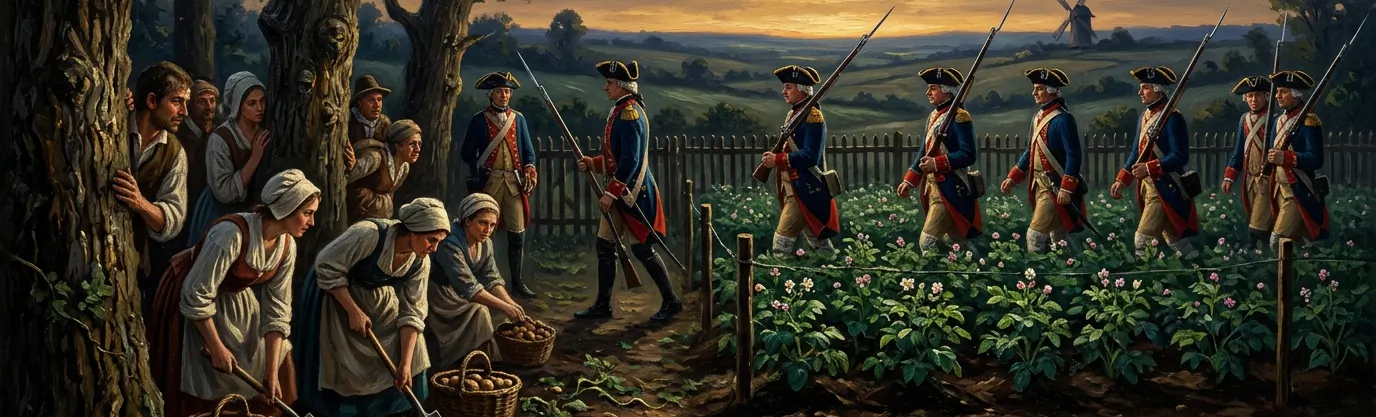
Knowing that people always crave what they aren't allowed to have, Parmentier stationed armed royal soldiers in full uniform around his potato field all day long—and secretly instructed the guards to go home at nightfall and ignore any bribes! Convinced the heavily guarded crop must be a priceless royal delicacy, French peasants snuck in after dark, "stole" the potatoes, and planted them in their own gardens across France!
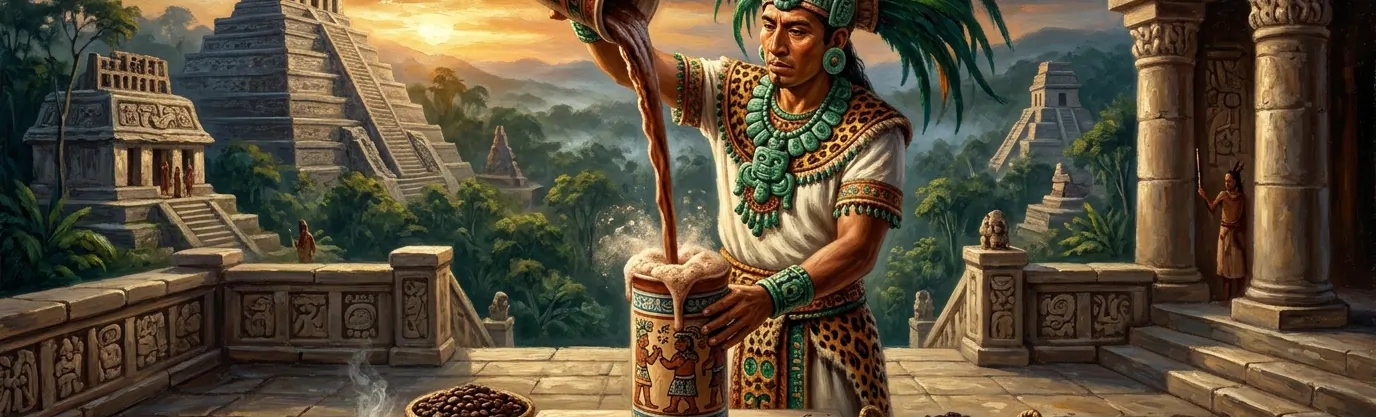
31.What did the Aztecs and Maya use cacao beans as besides drinks?
Show Answer & Explanation
Correct Answer: C. Everyday pocket currency
Explanation: Long before Europeans added milk and cane sugar to make solid chocolate candy bars in the nineteenth century, the ancient Maya and Aztecs of Mesoamerica revered the seeds of the cacao tree (Theobroma cacao, literally "food of the gods")—roasting and grinding them with chili peppers, vanilla, and maize into a frothy, bitter ceremonial drink for nobles and warriors.
Because cacao trees only grew in humid tropical lowlands and had to be carried hundreds of miles on porters' backs to the highland markets of Tenochtitlan, cacao beans literally functioned as everyday pocket money across the Aztec Empire!
Sixteenth-century Spanish colonial price lists from 1545 record the exact buying power of cacao beans in Aztec marketplaces: a single ripe tomato or a large tamale cost 1 cacao bean, a freshly laid turkey egg cost 3 cacao beans, a plump rabbit cost 30 beans, and a live turkey hen cost 100 cacao beans—so valuable that dishonest merchants were occasionally caught counterfeiting money by filling empty cacao shells with wax or clay!
Did You Know? Fascinating Facts
- Queen Cleopatra VII of Egypt (died 30 BC) lived closer in time to the 1969 Apollo 11 Moon landing (1,999 years later) than to the completion of the Great Pyramid of Giza around 2560 BC (2,530 years earlier)!
- Carved around 1750 BC in ancient Ur, the Complaint Tablet to Ea-nāṣir is the oldest known customer complaint in human history—a furious cuneiform message accusing merchant Ea-nāṣir of delivering substandard copper ingots and treating the buyer's servant with contempt.
- During his 1324 pilgrimage to Mecca, Emperor Mansa Musa of Mali distributed so many tons of pure gold dust to citizens and merchants in Cairo that gold's value plummeted and triggered twelve years of runaway inflation across Egypt.