
World Firsts Trivia: 38 Wild Breakthroughs, Accidental Inventions & Historic Milestones
Forget dry dates—explore 38 hilarious, accidental, and groundbreaking 'firsts' that reshaped science, technology, and everyday life.
1.What everyday appliance did Cambridge scientists monitor using the world's first webcam in 1991?
Correct Answer: C. A laboratory coffee pot
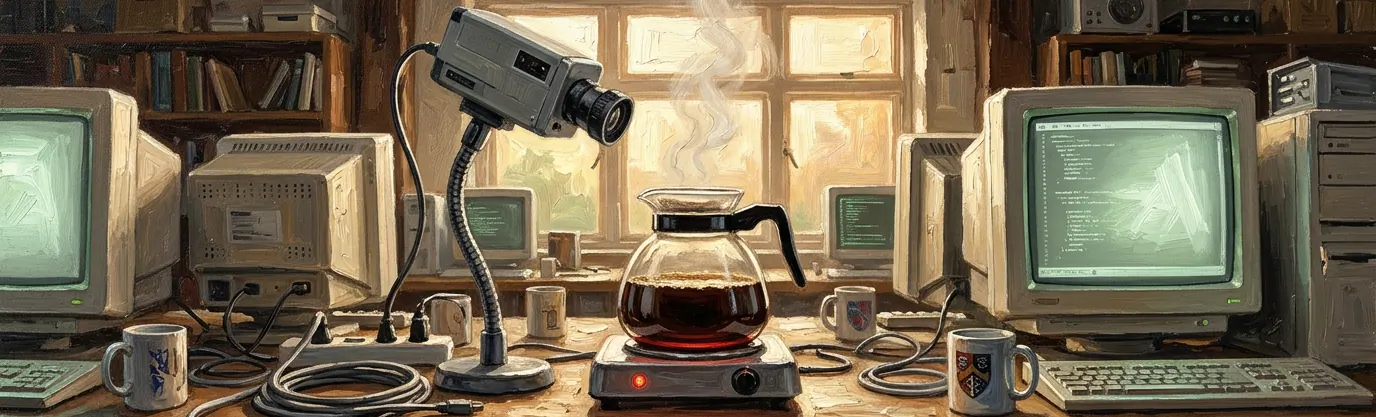
Explanation: In 1991, computer scientists working at the University of Cambridge shared a single filter coffee machine located in the "Trojan Room" corridor of the Old Addenbrooke's building. Researchers working on upper floors frequently trudged down several flights of stairs for a fresh cup of coffee, only to find the glass carafe completely empty.
To end the heartbreak of wasted trips, researchers Quentin Stafford-Fraser and Paul Jardetzky mounted a grayscale camera on a retort stand pointed directly at the coffee pot and wired it to a frame-grabber card on the laboratory's local network. A tiny 128-by-128-pixel window on their desktop monitors updated three times a minute so everyone could see the coffee level in real time.
When web browsers gained the ability to display images in November 1993, the Trojan Room Coffee Pot went live on the World Wide Web—becoming an international internet sensation until the camera was finally switched off in August 2001.
2.Which three backyard animals rode aboard the Montgolfier brothers' first hot-air balloon in 1783?
Correct Answer: A. Sheep, duck, and rooster
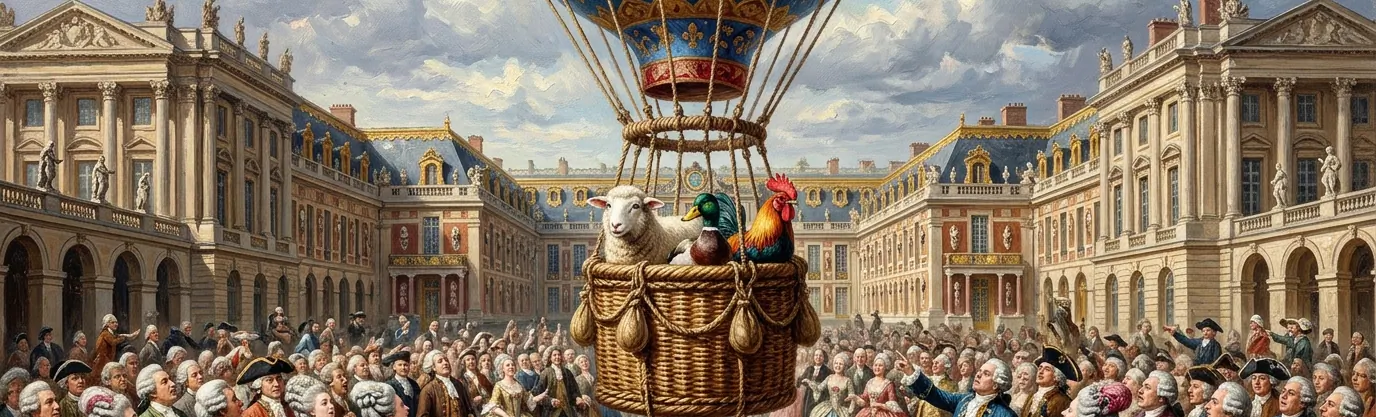
Explanation: Before any human dared ascend into the sky, French papermakers Joseph-Michel and Jacques-Étienne Montgolfier staged a royal test flight at the Palace of Versailles on September 19, 1783, in front of King Louis XVI, Queen Marie Antoinette, and 130,000 spectators. Because doctors feared high-altitude air might be fatal to terrestrial lungs, the brothers loaded a wicker basket with three farmyard volunteers: a sheep named Montauciel ("Climb-to-the-Sky"), a duck, and a rooster.
Each passenger served a specific scientific purpose. The sheep was chosen as a close approximation of human physiology; the high-flying duck served as the experimental control; and the low-flying rooster tested how altitude affected birds unaccustomed to the upper atmosphere.
The ornate blue-and-gold balloon rose roughly 1,500 feet and drifted two miles over eight minutes before landing safely in the Vaucresson woods—with all three pioneers unharmed, apart from a slight bruise on the rooster's wing where the sheep accidentally stepped on him before liftoff!
3.What happened to the world's first electric-era traffic light outside London's Parliament in 1868?
Correct Answer: D. Exploded from leaking gas
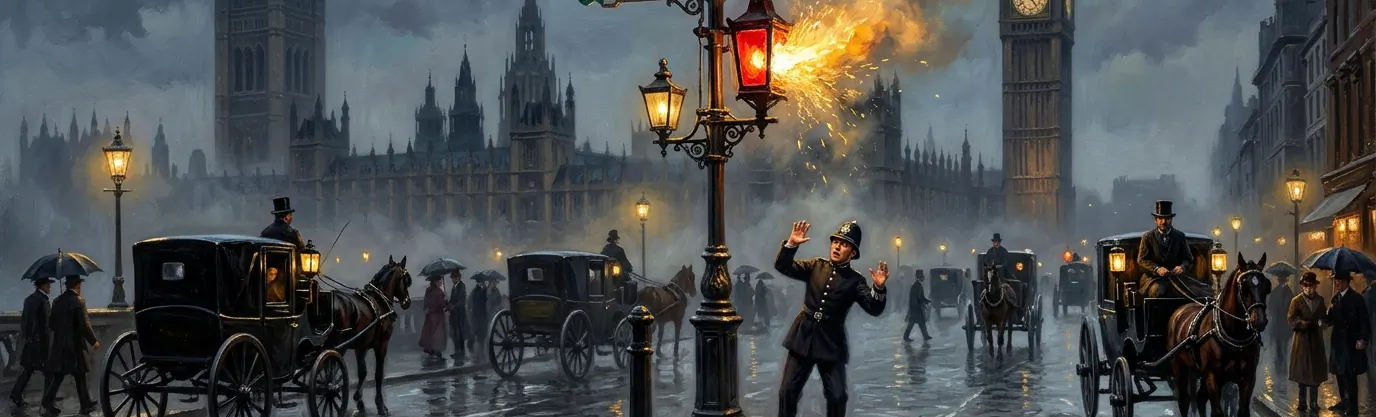
Explanation: On December 9, 1868, railway engineer John Peake Knight installed the world's very first road traffic signal at the busy intersection of Bridge Street and Great George Street just outside the Houses of Parliament in London. Towering 22 feet high, the cast-iron pillar used mechanical semaphore arms by day and red-and-green revolving lanterns fueled by coal gas at night.
A uniformed Metropolitan Police constable stood at the base operating a lever to halt horse-drawn carriages so Members of Parliament could cross safely. For its first three weeks, the invention was hailed as a triumph of Victorian street safety.
Unfortunately, on January 2, 1869, a leaking underground gas main beneath the pavement filled the hollow iron post with volatile fumes. The traffic lamp exploded in a violent fireball right in the operating policeman's face, prompting London authorities to abandon street traffic lights for the next fifty years.
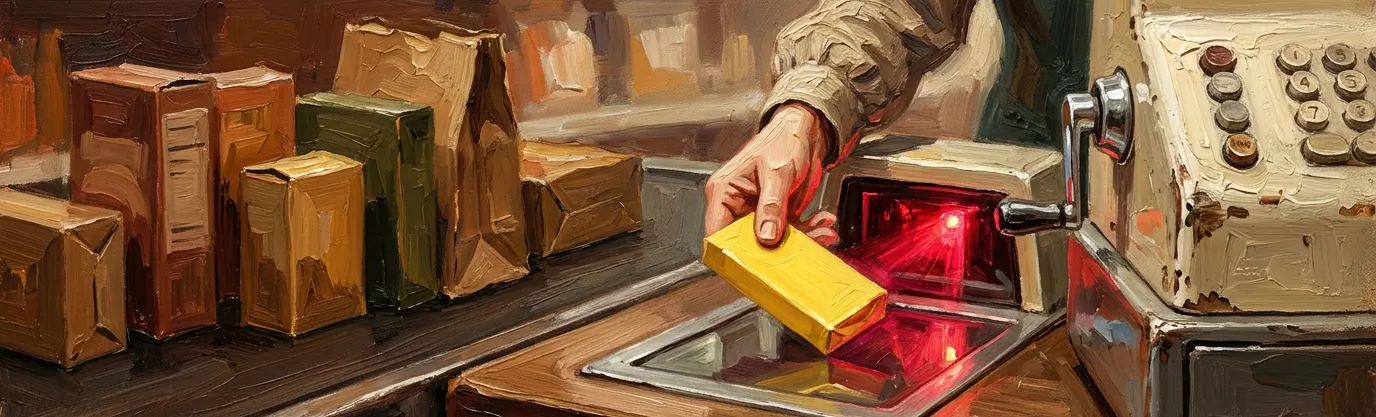
4.What everyday pack of gum became the first barcode-scanned grocery item in 1974?
Correct Answer: B. Wrigley's Juicy Fruit
Explanation: At 8:01 a.m. on June 26, 1974, inside a Marsh Supermarket in Troy, Ohio, cashier Sharon Buchanan slid a ten-pack of Wrigley's Juicy Fruit chewing gum across a Spectra-Physics optical laser scanner built by NCR. With a crisp electronic beep, the cash register rang up 67 cents—marking the world's very first commercial Universal Product Code (UPC) barcode transaction.
Why a tiny pack of chewing gum? Until the 1970s, engineers doubted that a linear barcode could be printed small enough to fit on tiny items like gum packets without smudging, so starting with a ten-pack of Juicy Fruit was a deliberate flex of the new technology's precision.
Today, a replica of that historic pack of Juicy Fruit and an original NCR scanner are displayed at the Smithsonian Institution's National Museum of American History.
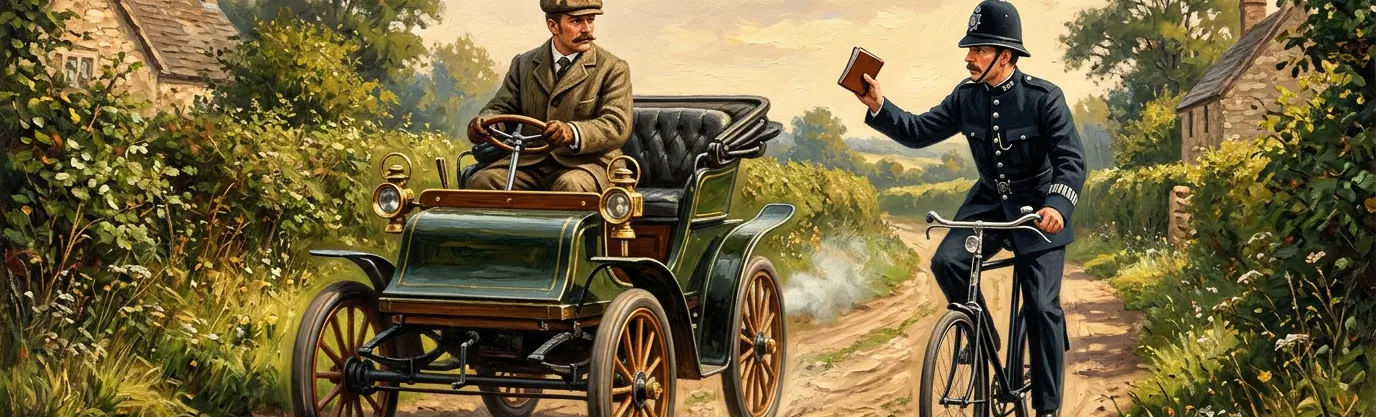
5.Why was the first speeding ticket issued in 1896 at just eight miles hourly?
Correct Answer: A. Four times the 2-mph limit
Explanation: On January 28, 1896, Walter Arnold of East Peckham, Kent, England, earned the dubious honor of receiving the world's first speeding fine for motoring through Paddock Wood in his Arnold Benz carriage at a blistering 8 miles per hour (13 km/h). Under Britain's strict Locomotive Acts, the legal speed limit inside towns was a mere 2 miles per hour—and cars were legally required to have a crewman walking ahead waving a red flag!
Spotting Arnold tearing down the lane at four times the speed limit without a flag bearer, a local police constable leaped onto his pedal bicycle, pedaled furiously in hot pursuit for five miles, and finally pulled the reckless motorist over.
Arnold was hauled before the Tunbridge Wells magistrates and fined one shilling plus court costs. Ironically, just months later Parliament repealed the 2-mph rule and raised the national speed limit to 14 mph—celebrated by motorists with the first London-to-Brighton Emancipation Run, in which Arnold himself won a gold medal!
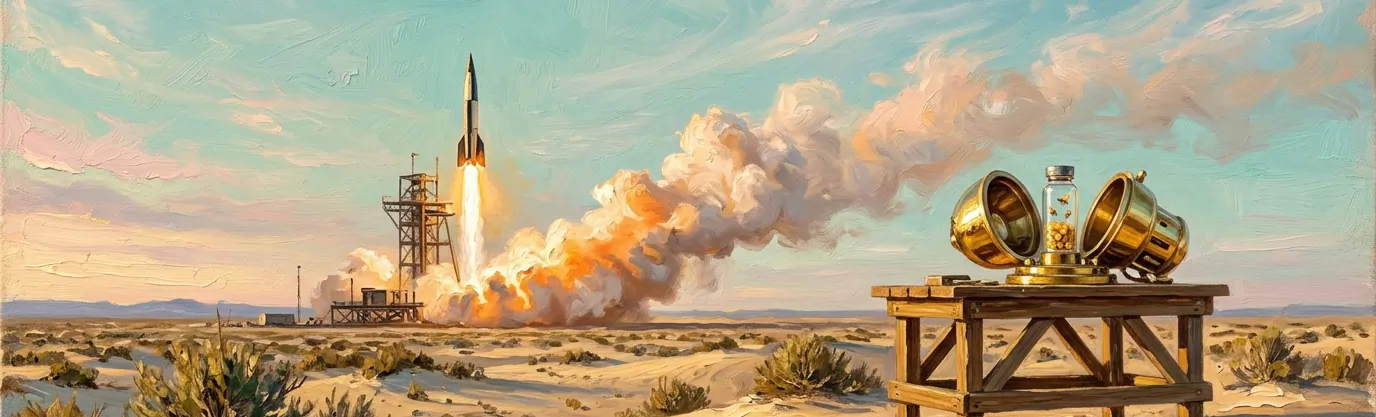
6.Which tiny creatures became the very first living earthlings launched into space in 1947?
Correct Answer: C. Fruit flies aboard V-2
Explanation: Long before Soviet dog Laika or American astrochimp Ham, the very first Earth creatures to cross the 100-kilometer Kármán line into outer space were humble fruit flies (Drosophila melanogaster). On February 20, 1947, U.S. scientists at White Sands Missile Range in New Mexico packed a vial of fruit flies—along with a handful of corn seeds to feed on—inside the nosecone of a captured WWII German V-2 rocket.
The mission aimed to test whether high-altitude cosmic radiation at the edge of space would cause dangerous genetic mutations in living tissue—a critical question before human astronauts could ever be launched.
The V-2 rocket soared to an altitude of 109 kilometers (68 miles) in just over three minutes before ejecting its Blossom parachute capsule. When scientists pried open the landed canister in the desert, every single fruit fly buzzed out alive and unmutated!
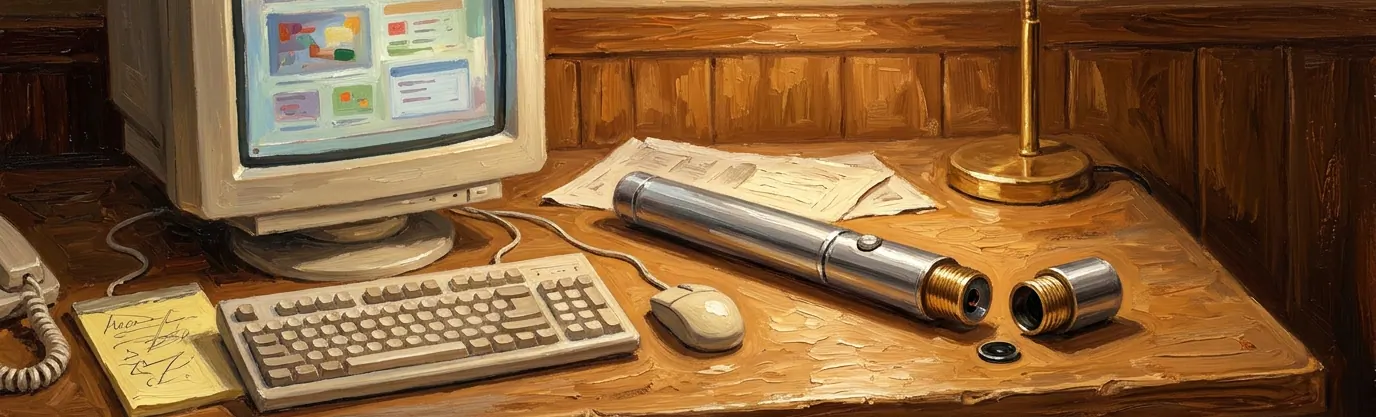
7.What was the very first item ever sold on eBay back in September 1995?
Correct Answer: D. A broken laser pointer
Explanation: Over Labor Day weekend in September 1995, 28-year-old computer programmer Pierre Omidyar wrote the code for an experimental online auction website called AuctionWeb—later renamed eBay. To test whether his new code actually worked, Omidyar listed a broken laser pointer sitting on his desk with an opening bid of $1.00.
To his astonishment, a bidding war broke out and the non-working gadget sold for $14.83 to Canadian programmer Mark Fraser. Worried that the buyer hadn't read the listing carefully, Omidyar emailed Fraser to double-check: "You do understand that the laser pointer is broken, right?"
Fraser wrote back with the legendary reply that proved an online marketplace for anything was viable: "I'm a collector of broken laser pointers."
8.Why did the world's first alarm clock invented in 1787 frustrate light sleepers?
Correct Answer: B. Only rang at 4 a.m.
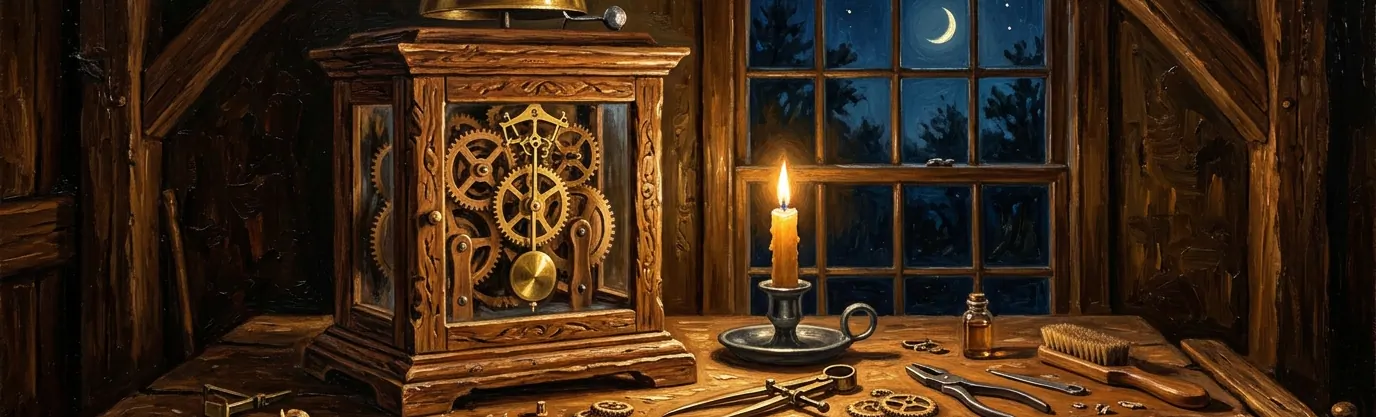
Explanation: In 1787, American clockmaker Levi Hutchins of Concord, New Hampshire, invented the first mechanical alarm clock in modern history. A devoted early riser, Hutchins followed an unwavering personal rule to wake up before sunrise every single morning of the year, yet struggled to wake on dark winter mornings.
Installing a small brass gear mechanism inside a 29-inch pine cabinet clock, Hutchins positioned a single fixed pin on the inner dial wheel. Whenever the hour hand reached the pin, it tripped a lever that rang a loud bell.
There was just one catch: Hutchins never bothered to make the alarm adjustable! Because he only ever wanted to wake up at 4:00 a.m., his clock could only ring at 4:00 a.m. An adjustable alarm clock that let sleepers pick their own wake-up time wasn't patented until French inventor Antoine Redier built one sixty years later in 1847.
9.Which snack food melted in Percy Spencer's pocket to inspire the first microwave oven?
Correct Answer: A. A peanut cluster bar
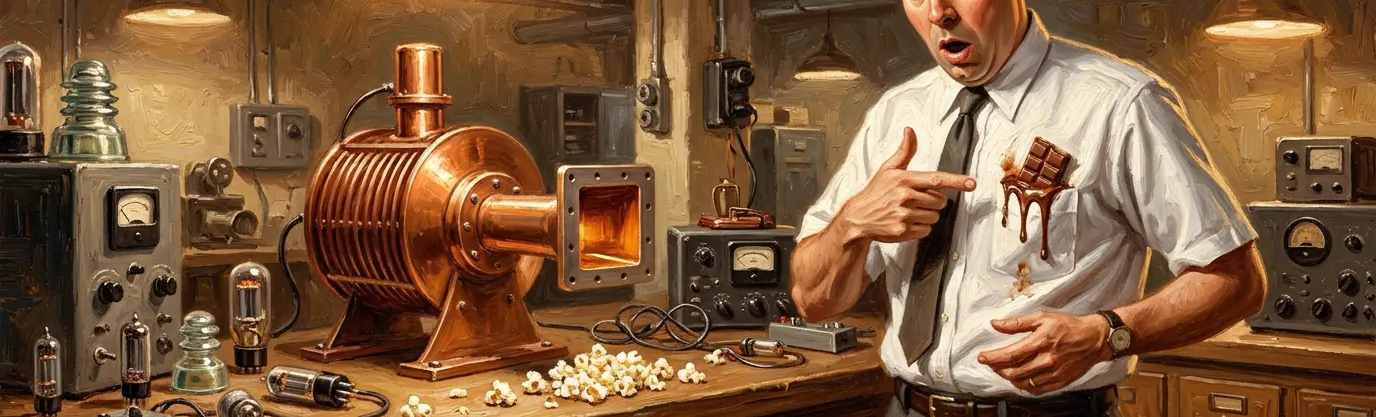
Explanation: In 1945, self-taught Raytheon engineer Percy Spencer was testing high-powered vacuum tubes called cavity magnetrons—the core technology behind Allied WWII radar sets. While standing in front of an active radar set, Spencer noticed a strange warm sensation in his trouser pocket and reached inside to find that his Mr. Goodbar peanut cluster candy bar had melted into a gooey mess.
Curious why low-level microwave radiation had liquefied his snack so quickly, Spencer sent an assistant for unpopped corn kernels and held them near the magnetron waveguide; within seconds, hot popcorn began ricocheting across the lab floor. Next, he placed a raw egg inside a kettle over the emitter, which promptly exploded in a colleague's face.
Realizing microwaves agitated water molecules inside food directly, Raytheon filed a patent in October 1945 and debuted the 1.8-meter-tall, 340-kilogram "Radarange" commercial microwave oven in 1947.
10.What unusual distinction belonged to the first movie ever copyrighted in America in 1894?
Correct Answer: C. Filmed a man sneezing
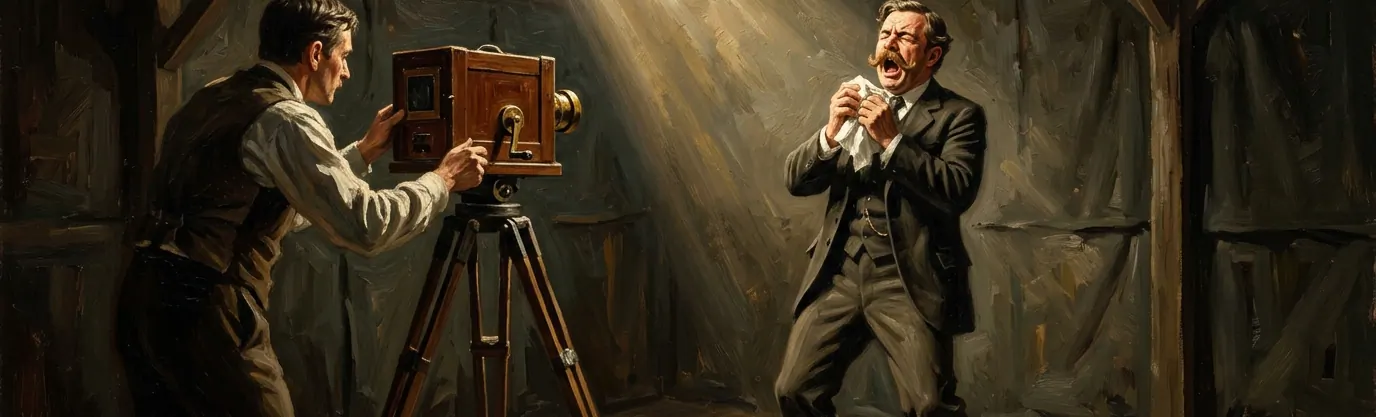
Explanation: On January 9, 1894, inside Thomas Edison's tar-paper-covered "Black Maria" studio in West Orange, New Jersey, pioneer filmmaker William K.L. Dickson pointed his Kinetograph motion-picture camera at shiny-mustached Edison assistant Fred Ott. At Dickson's cue, Ott took a pinch of snuff tobacco and let loose a theatrical, full-body sneeze.
Lasting just five seconds (45 frames at 16 frames per second), Fred Ott's Sneeze—officially titled Edison Kinetoscopic Record of a Sneeze—was commissioned by Harper's Weekly magazine to illustrate an article on the new Kinetoscope peep-show machine.
Because U.S. copyright law in 1894 had no category for motion pictures, Dickson printed all 45 frames onto a single sheet of photographic paper and registered it as a still photograph with the Library of Congress—making a five-second sneeze the oldest surviving copyrighted movie in history.
11.Which sovereign nation became the first in history to grant all women voting rights?
Correct Answer: D. Self-governing New Zealand
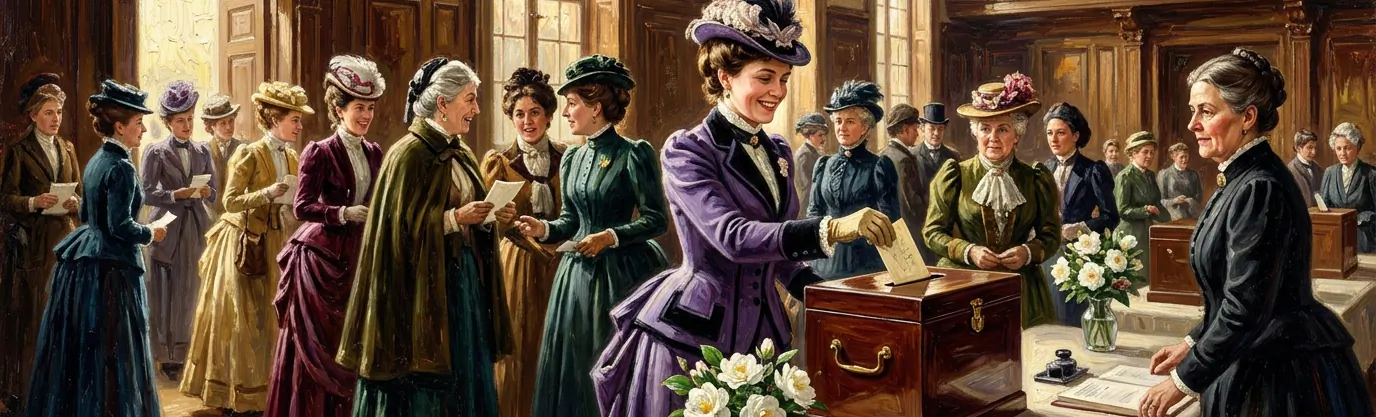
Explanation: On September 19, 1893, Governor Lord Glasgow signed a historic new Electoral Act into law, making New Zealand the first self-governing country in the world in which all adult women—including indigenous Māori women—won the right to vote in parliamentary elections.
The victory crowned years of tireless campaigning led by suffragist Kate Sheppard and the Women's Christian Temperance Union. In 1893 alone, Sheppard and her fellow organizers rode bicycles and horses across towns and remote farms to gather nearly 32,000 signatures—almost a quarter of the entire adult European female population of New Zealand—pasted onto a giant 270-meter paper roll unspooled down the aisle of Parliament.
Just ten weeks after the law passed, 65 percent of all New Zealand women registered and cast ballots in the November 1893 general election. Today, Kate Sheppard's portrait graces New Zealand's ten-dollar banknote.
12.What happened when inventors sent the very first ARPANET internet message in October 1969?
Correct Answer: B. Crashed after typing 'LO'
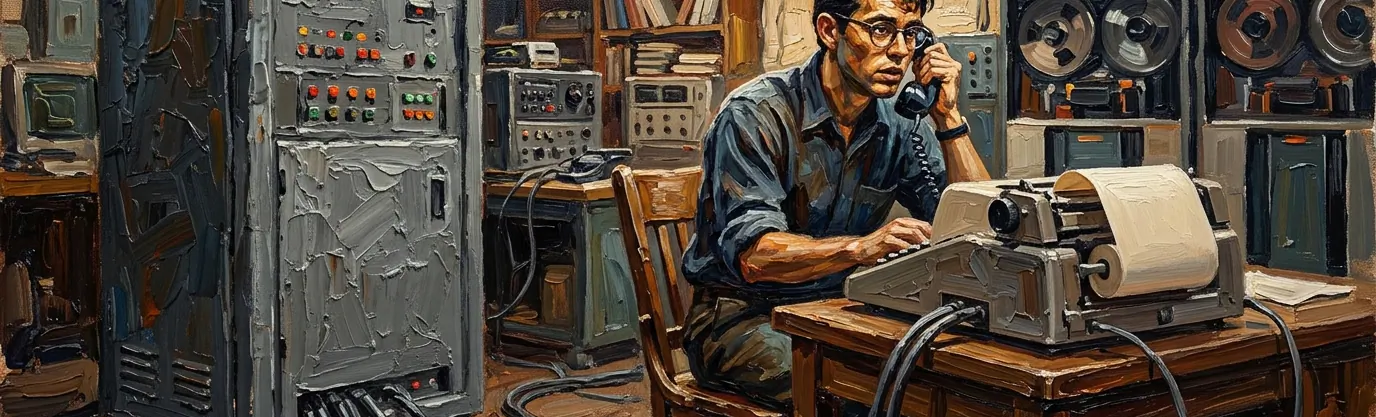
Explanation: At 10:30 p.m. on October 29, 1969, UCLA professor Leonard Kleinrock and student programmer Charley Kline sat at a teletype terminal in Boelter Hall Room 3420 to send the first-ever host-to-host message across ARPANET—the packet-switched ancestor of the modern internet—to researcher Bill Duvall 350 miles away at the Stanford Research Institute.
Speaking over a telephone handset to verify each keystroke, Kline intended to type the five-letter command "LOGIN." He pressed "L" and asked, "Did you get the L?" "Got the L," Duvall replied. Kline pressed "O." "Got the O." Then Kline pressed "G"—and the Stanford SDS Sigma 7 mainframe computer immediately crashed!
Because the SRI terminal automatically auto-completed the three-letter command "LOG" into "LOGIN" while UCLA's machine expected all five letters typed manually, the buffer overflowed—meaning the very first message transmitted across the internet was the prophetic two-letter interjection: "LO."

13.Why did riders of the 1817 first bicycle propel themselves without any pedals?
Correct Answer: A. Pushed along with boots
Explanation: Invented by German civil servant Baron Karl von Drais in Mannheim in 1817, the world's first two-wheeled steerable vehicle—originally called the Laufmaschine ("running machine") and later dubbed the "Draisine" or "dandy horse"—had no pedals, no chain, and no gears whatsoever. Riders straddled a padded wooden beam between two inline wooden wagon wheels and propelled themselves by kicking the ground with their boots like a modern toddler's balance bike.
Why did von Drais invent a human-powered substitute for horses in 1817? Two years earlier, the catastrophic 1815 eruption of Mount Tambora in Indonesia had triggered the "Year Without a Summer," ruining European oat harvests and forcing thousands of starving carriage horses to be slaughtered.
On his maiden 1817 test ride, von Drais covered 13 kilometers (8 miles) in less than an hour—more than triple normal walking speed—launching the mechanical evolution that led to the modern pedal bicycle.
14.Which 2150 BCE Mesopotamian epic stands as humanity's oldest surviving work of literature?
Correct Answer: C. The Epic of Gilgamesh
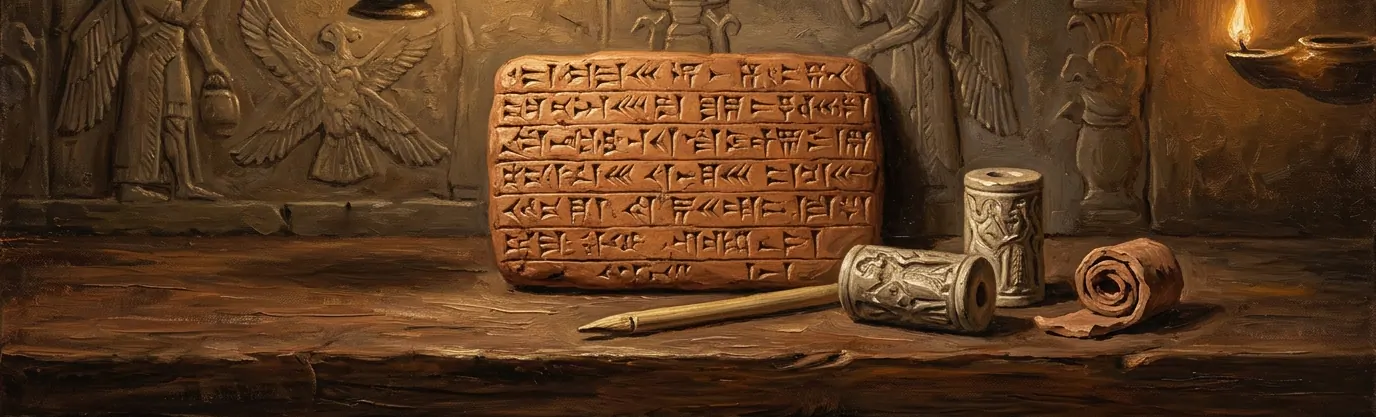
Explanation: Inscribed in wedge-shaped cuneiform script onto clay tablets in ancient Mesopotamia more than 4,000 years ago (around 2150–1800 BCE), the Epic of Gilgamesh is the oldest surviving great work of heroic literature in human history—predating Homer's Iliad and Odyssey by more than a millennium.
The poem chronicles the adventures of Gilgamesh, the historical demi-god King of Uruk, and his wild, beast-raised companion Enkidu as they battle the forest guardian Humbaba and confront the terrifying reality of mortality. Heartbroken after Enkidu's death, Gilgamesh embarks on a perilous quest to the ends of the earth to seek the secret of eternal life from Utnapishtim, survivor of a great global flood.
Rediscovered in 1853 among the ruins of the Royal Library of Ashurbanipal at Nineveh in modern-day Iraq, the twelve clay tablets stunned Victorian scholars when translator George Smith deciphered its ancient flood narrative in 1872.
15.What did the world's first 1956 hard disk drive weigh while storing five megabytes?
Correct Answer: B. Over one full ton
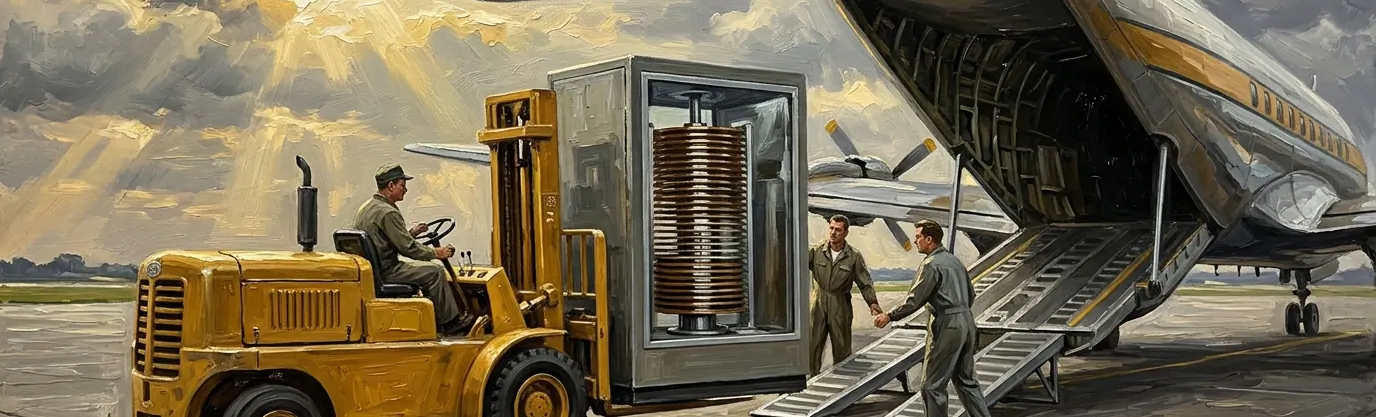
Explanation: In September 1956, IBM unveiled the IBM 305 RAMAC (Random Access Method of Accounting and Control), featuring the IBM 350 Disk Storage Unit—the world's very first commercial computer hard disk drive. Measuring the size of two large side-by-side kitchen refrigerators, the unit weighed over 2,000 pounds (nearly one full ton) and had to be moved by forklifts and cargo planes.
Inside its glass-paneled cabinet spun a vertical stack of fifty 24-inch aluminum platters coated in magnetic iron oxide—the same rust pigment used to paint the Golden Gate Bridge—rotating at 1,200 revolutions per minute.
Despite its colossal footprint and a steep monthly rental fee of $3,200 (equivalent to over $35,000 a month today), the entire 50-platter tower held just 5 megabytes of data—roughly the size of a single modern smartphone photo!
16.Why did Harrods install a brandy dispenser beside London's first moving escalator in 1898?
Correct Answer: D. Reviving dizzy nervous shoppers
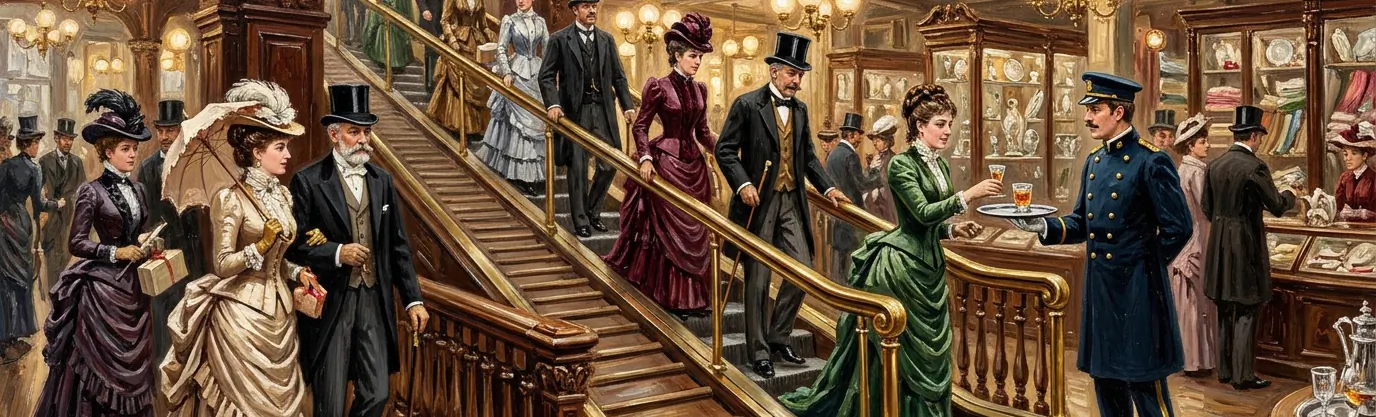
Explanation: On November 16, 1898, the luxury Knightsbridge department store Harrods unveiled Britain's first "moving staircase" to the public. Unlike modern stepped escalators, this contraption was a continuous 40-foot woven leather conveyor belt gliding upward between polished mahogany handrails, carrying up to 4,000 customers per hour from the ground floor to the first-floor galleries.
For Victorian shoppers who had never stood on a floor that moved beneath their boots, the sensation of rising effortlessly through the air proved overwhelming—newspaper accounts described customers trembling with vertigo and "nervous prostration."
To soothe shaken nerves, Harrods stationed liveried store attendants at the top landing armed with silver trays of complimentary smelling salts and crystal glasses of fine cognac brandy to revive any gentleman or lady overcome by the futuristic ride!
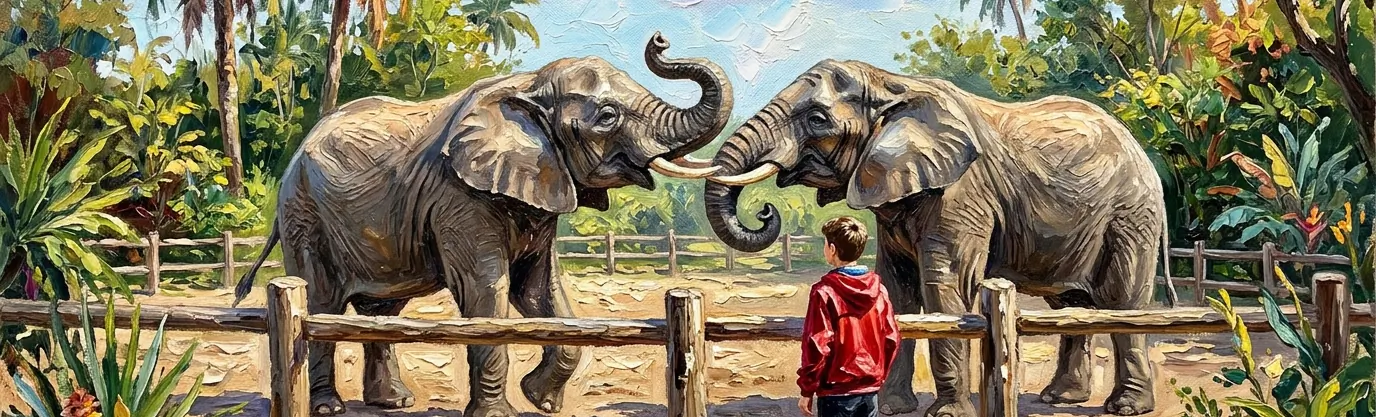
17.What was the subject of the world's first nineteen-second YouTube video uploaded in 2005?
Correct Answer: A. Elephants at the zoo
Explanation: At 8:27 p.m. on April 23, 2005, twenty-five-year-old YouTube co-founder Jawed Karim uploaded a low-resolution, 19-second video clip titled "Me at the zoo"—the very first video ever posted to YouTube. Filmed by his high school friend Yakov Lapitsky at the San Diego Zoo, the clip shows Karim standing in a red-and-black windbreaker right in front of the elephant enclosure.
With two elephants swinging their long trunks behind him, Karim casually delivers a deadpan observation to the camera: "All right, so here we are in front of the elephants. The cool thing about these guys is that they have really, really, really long trunks, and that's, that's cool. And that's pretty much all there is to say."
That unscripted 19-second test clip launched the age of user-generated online video and has since accumulated over 340 million views.

18.Which French inventor captured the world's oldest surviving camera photograph from his window in 1826?
Correct Answer: C. Joseph Nicéphore Niépce
Explanation: In the summer of 1826 (or 1827), French inventor Joseph Nicéphore Niépce placed a camera obscura fitted with a pewter plate on the upper-story windowsill of his country estate, Le Gras, in Saint-Loup-de-Varennes, Burgundy. He coated the polished metal plate with Bitumen of Judea—a naturally occurring Syrian asphalt that hardens permanently when exposed to sunlight.
Because the asphalt coating was extraordinarily insensitive to light, Niépce had to leave his camera shutter open for at least eight continuous hours (and according to modern reconstructions, possibly several days). As the sun arced across the sky, sunlight illuminated both the left and right walls of his courtyard buildings simultaneously in the final image.
After washing away the unhardened bitumen with lavender oil and white petroleum, Niépce revealed View from the Window at Le Gras—humanity's oldest surviving permanent camera photograph.
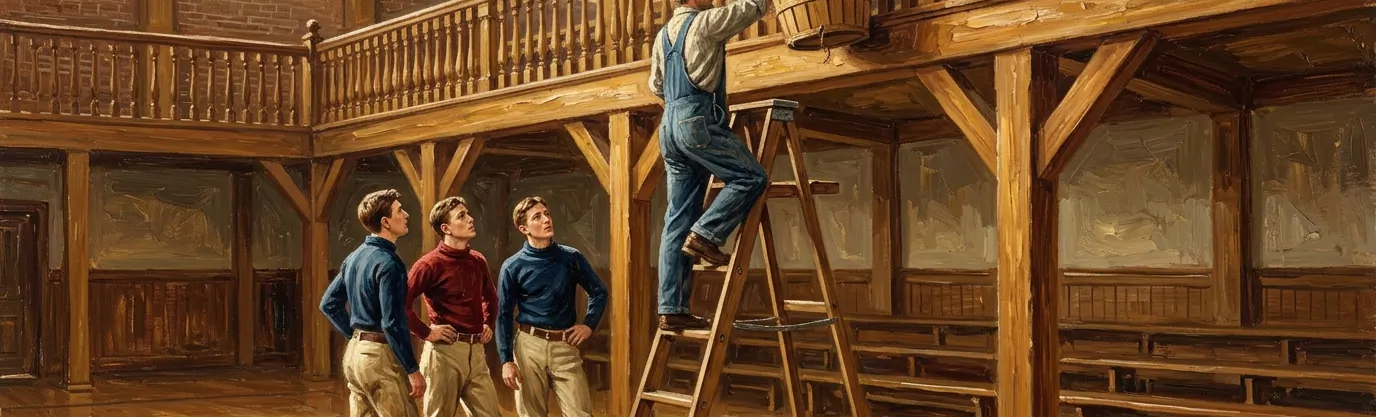
19.Why did players in the first 1891 basketball game need a stepladder after scoring?
Correct Answer: B. Closed-bottom wooden peach baskets
Explanation: In December 1891, during a freezing New England winter in Springfield, Massachusetts, YMCA physical education instructor Dr. James Naismith was given fourteen days to invent an indoor game that would keep his rowdy students active without the brutal tackling of rugby or football. Naismith asked the school janitor for two 18-inch square boxes to nail to the 10-foot gymnasium balcony railing as elevated goals.
The janitor didn't have boxes, so he handed Naismith two wooden half-bushel peach baskets from the storeroom instead. Because the peach baskets still had their solid wooden bottoms intact, every time a player tossed the leather soccer ball into the basket, play had to stop while the janitor climbed a tall stepladder to fish the ball out!
The game's very first 1891 matchup ended with a grand total of just one basket scored, and open-bottomed nets weren't officially adopted until 1906.
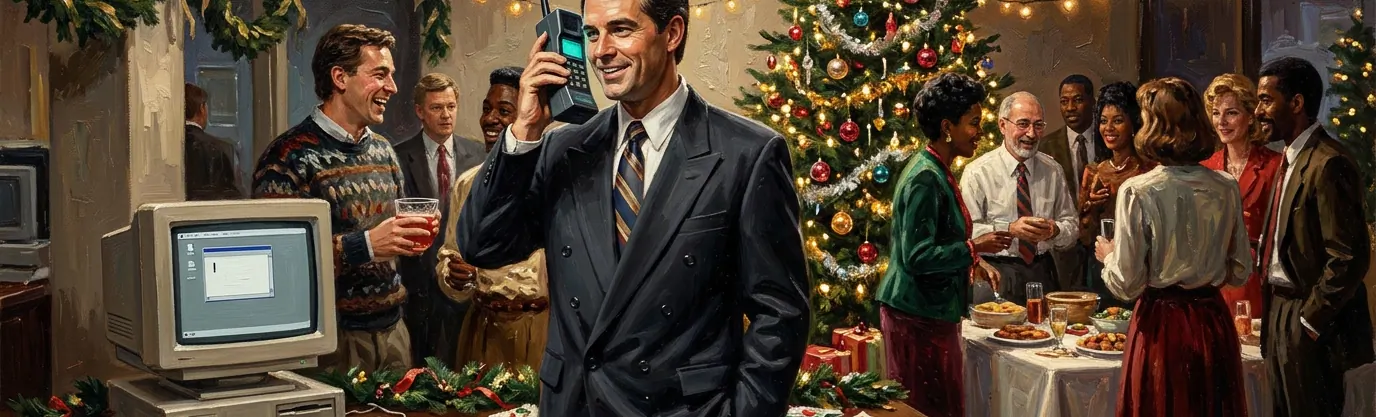
20.What festive two-word greeting was sent in the world's first SMS text in 1992?
Correct Answer: D. 'Merry Christmas'
Explanation: On December 3, 1992, 22-year-old British software engineer Neil Papworth sat at a desktop personal computer in Newbury, Berkshire, and sent the world's very first Short Message Service (SMS) text message across the Vodafone GSM cellular network to company director Richard Jarvis, who was attending a corporate holiday party.
Because early mobile phones did not yet have alphanumeric keypads capable of typing text, Papworth typed the 15-character greeting on his computer keyboard: "Merry Christmas." Moments later, the message flashed onto the screen of Jarvis's hefty 2.1-kilogram Orbitel 901 mobile phone handset.
At the time, telecom executives viewed SMS merely as a niche paging tool for alerting executives to check their voicemail—never suspecting that texting would soon eclipse voice calls across the globe.
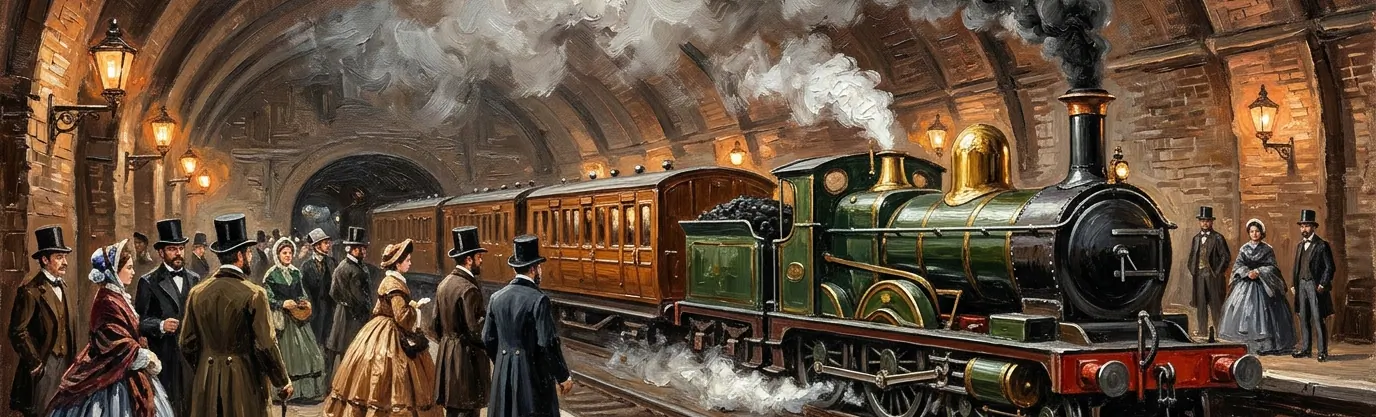
21.Which country opened the world's first subterranean steam-powered passenger subway line in January 1863?
Correct Answer: A. Victorian England in London
Explanation: On January 9, 1863, the Metropolitan Railway opened the world's first underground passenger railway in London, running 3.75 miles beneath congested city streets between Paddington and Farringdon Street. Using "cut-and-cover" construction, crews dug deep trenches down the middle of thoroughfares, built brick-arched tunnels, and roofed the streets back over.
Because electric traction locomotives were still decades away, the original London Underground trains were pulled by coal-fired steam locomotives fitted with special condensing tanks designed to trap steam and smoke inside the tunnels.
Despite critics warning that tunnels would collapse under houses or suffocate riders, 38,000 eager Londoners rode the gas-lit wooden carriages on opening day alone—and over 9.5 million passengers commuted on the line during its very first year!
22.Why did ancient Chinese alchemists accidentally invent gunpowder in the ninth century CE?
Correct Answer: C. Searching for immortality elixirs
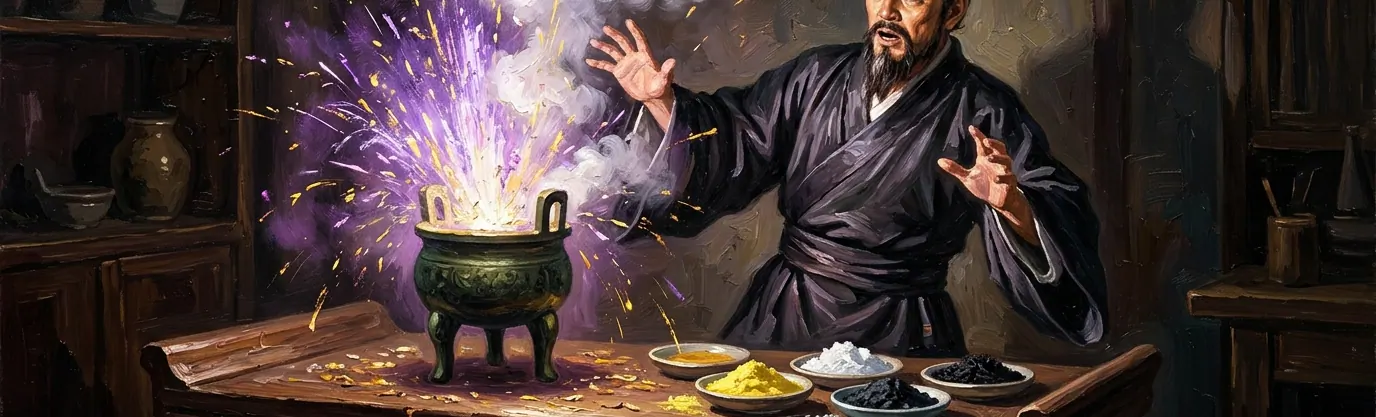
Explanation: Arguably the greatest irony in the history of chemistry occurred in 9th-century Tang Dynasty China, when Taoist alchemists experimenting in imperial court laboratories accidentally created gunpowder—the world's first chemical explosive—while trying to brew a potion for eternal life!
Sponsored by emperors obsessed with longevity, Taoist monks heated mixtures of potassium nitrate (saltpeter), sulfur, and honey or charcoal in bronze crucibles, believing these transformative minerals could purify the human spirit. Instead, the volatile mixture violently deflagrated in flashes of purple flame and thick smoke.
An 850 CE Taoist text titled Classified Essentials of the Mysterious Tao explicitly warned fellow alchemists not to mix the ingredients over fire because prior experimenters "have had their hands and facesaji singed, and even the whole house where they were working burned down." In Chinese, gunpowder is still called huoyao—literally "fire medicine."

23.What unusual prize awaited the winner of the very first Tour de France in 1903?
Correct Answer: B. Twenty thousand gold francs
Explanation: In 1903, struggling French sports newspaper L'Auto—printed on distinctive yellow paper—launched a grueling 2,428-kilometer (1,509-mile) six-stage bicycle race around France as a desperate publicity stunt to boost circulation. Each stage averaged an astonishing 400 kilometers (250 miles), forcing riders to pedal through the dead of night on unpaved dirt roads using heavy single-speed steel bicycles with spare inner tubes draped around their shoulders.
To entice riders to survive such torture, race director Henri Desgrange offered a rich grand prize pool of 20,000 gold francs—with 3,000 francs (roughly six times an average French factory worker's annual wage) going to winner Maurice Garin, a former chimney sweep known as "The Little Chimney Sweep."
Garin won the inaugural Tour by nearly three hours—the largest margin of victory in Tour de France history—while L'Auto's newspaper circulation more than doubled overnight.
24.Which surgical milestone did South African doctor Christiaan Barnard perform in December 1967?
Correct Answer: D. Human-to-human heart transplant
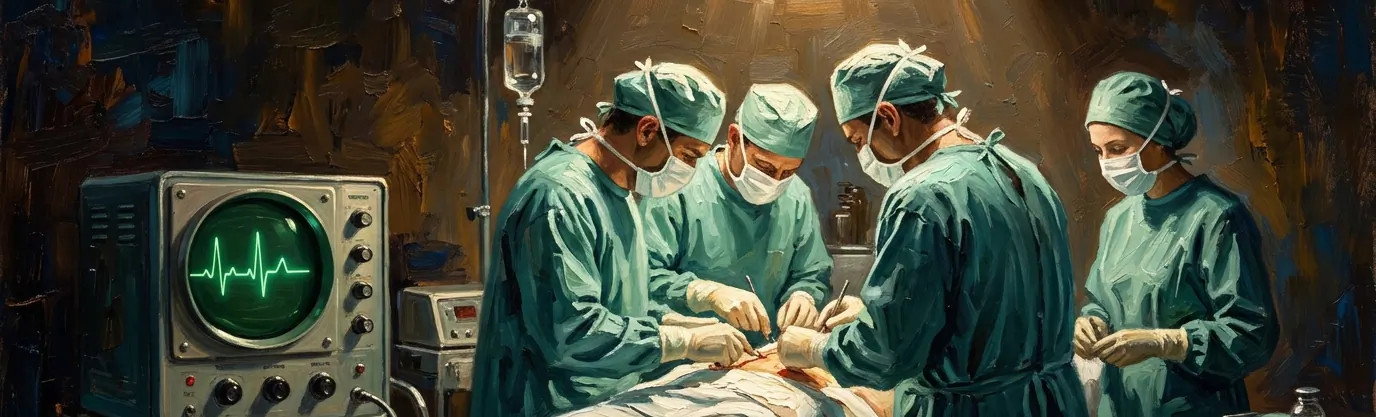
Explanation: In the early hours of December 3, 1967, at Groote Schuur Hospital in Cape Town, South Africa, cardiac surgeon Dr. Christiaan Barnard and a 30-person medical team performed the world's first successful human-to-human heart transplant. During a tense five-hour operation, Barnard transplanted the healthy heart of 25-year-old accident victim Denise Darvall into 53-year-old grocer Louis Washkansky, who was dying of irreversible heart failure.
When Barnard applied electrodes to the transplanted heart inside Washkansky's chest and watched it begin beating rhythmically on its own, he exclaimed in Afrikaans, "Dit gaan werk!" ("It's going to work!").
Although Washkansky tragically succumbed to pneumonia 18 days later due to heavy immunosuppressant drugs, Barnard's subsequent patient, dentist Philip Blaiberg, lived for more than 19 months—ushers in the modern era of life-saving organ transplantation.
25.Why did the world's first 1769 steam-powered automobile crash into a stone wall?
Correct Answer: A. Heavy nose lacked brakes
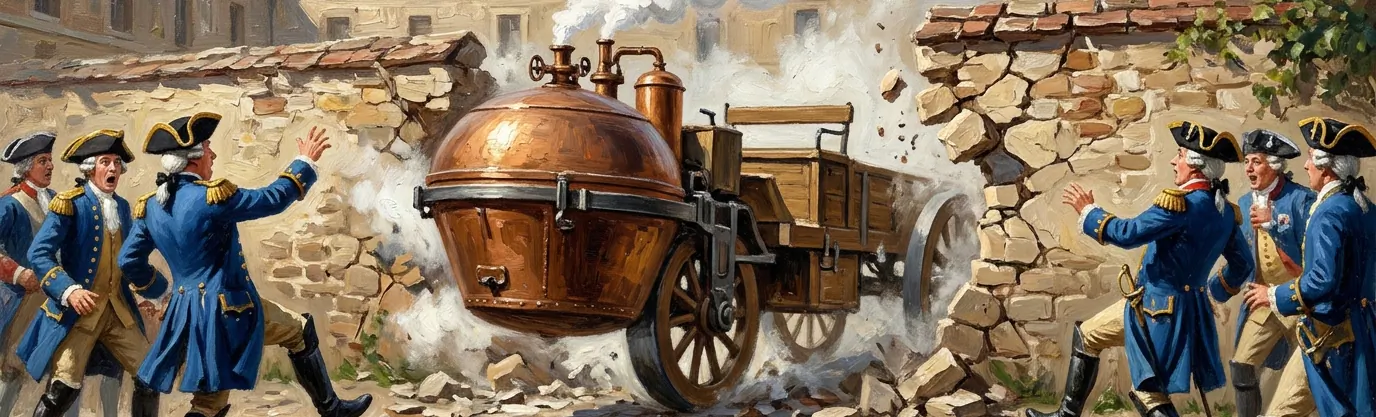
Explanation: More than a century before Karl Benz built his gasoline motorcar, French military engineer Nicolas-Joseph Cugnot constructed the world's very first full-scale self-propelled mechanical road vehicle in 1769: the fardier à vapeur ("steam dray"). Designed to haul heavy cannons for the French Army, the massive timber tricycle carried a bulbous copper steam boiler overhanging its single front wheel.
While lumbering along at a top speed of 2.5 miles per hour (4 km/h), the heavy front-mounted boiler made the tiller almost impossible to steer, and Cugnot had omitted any effective braking mechanism.
During a demonstration run in 1771, the multi-ton steam wagon lost control and smashed straight through a stone brick wall in the Paris Arsenal—simultaneously recording humanity's first automobile and humanity's very first motor vehicle accident! The original 1770 vehicle still survives in the Musée des Arts et Métiers in Paris.
26.What was the first product ever advertised on an American television broadcast in 1941?
Correct Answer: C. Bulova wristwatches
Explanation: At 2:29 p.m. on July 1, 1941—the very first day the Federal Communications Commission authorized commercial television broadcasting in the United States—New York station WNBT (now WNBC) aired the world's first legal, paid television commercial just before a baseball game between the Brooklyn Dodgers and the Philadelphia Phillies.
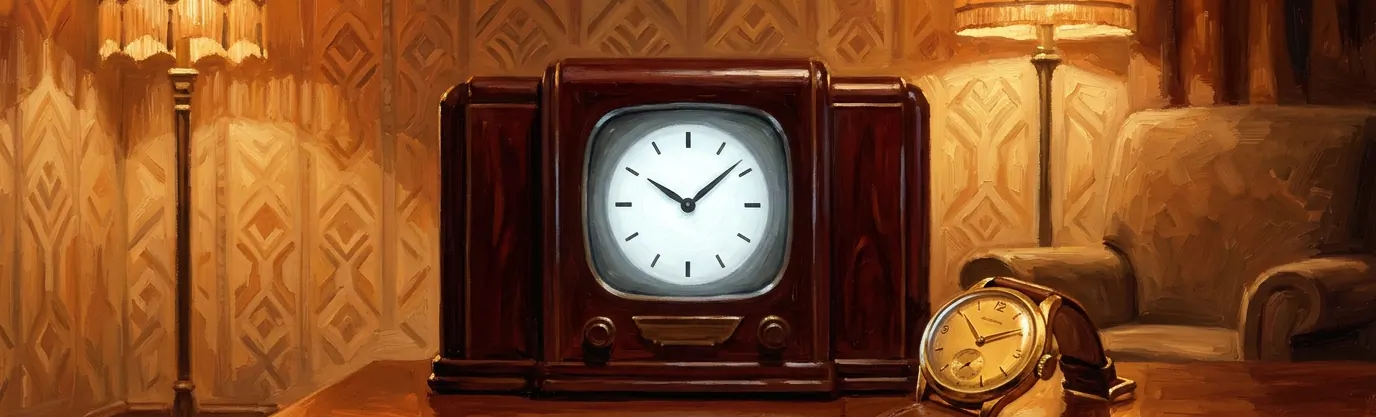
The ten-second spot showed a simple black-and-white test pattern shaped like a map of the United States with a Bulova clock face superimposed in the center. As the second hand ticked for ten seconds, an off-screen announcer spoke five words: "America runs on Bulova time."
How much did Bulova pay to launch the multi-billion-dollar television advertising industry? A grand total of $9.00 ($4.00 for airtime plus $5.00 in station fees) to reach the roughly 4,000 television sets then operating in New York City!
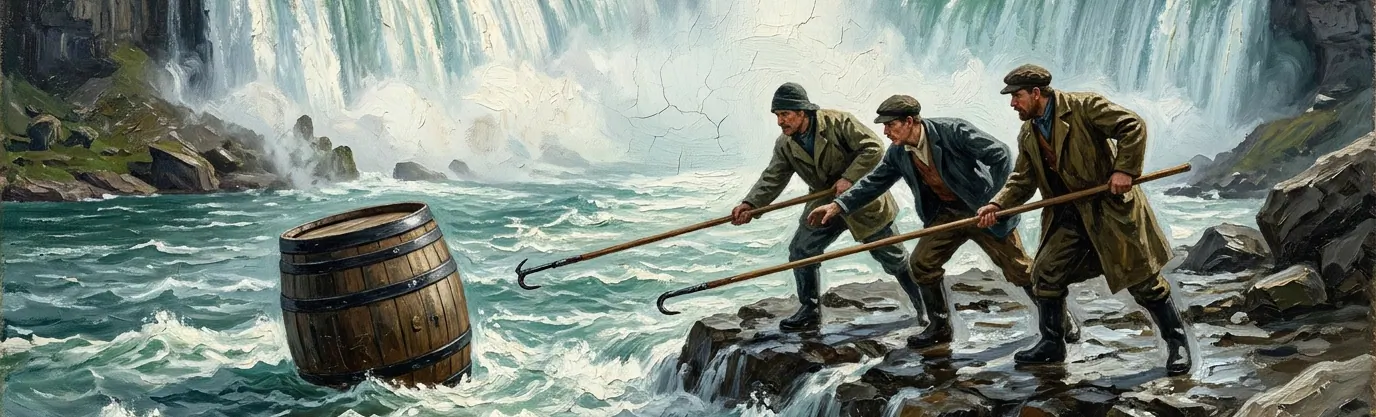
27.Which fearless 63-year-old schoolteacher became the first person to survive Niagara Falls in 1901?
Correct Answer: B. Annie Edson Taylor
Explanation: On October 24, 1901—her 63rd birthday—widowed Michigan schoolteacher and dance instructor Annie Edson Taylor climbed inside a custom-built, pickle-brine-cured Kentucky oak barrel padded with mattresses and a 200-pound iron anvil bolted to the bottom for ballast. Hoping to win fame and pay off her mounting debts, Taylor had her assistants pump compressed air into the barrel with a bicycle pump before setting her adrift above Niagara's roaring Horseshoe Falls.
Two days earlier, Taylor had tested the barrel by sending a domestic cat over the 167-foot cataracts; the cat emerged shaken but completely unharmed. Taylor's own plunge took less than twenty minutes from launch to recovery in the churning lower river.
When rescuers sawed open the barrel, Taylor stepped out alive with only a small gash on her head—and immediately gave reporters some timeless advice: "Nobody ought ever to do that again."
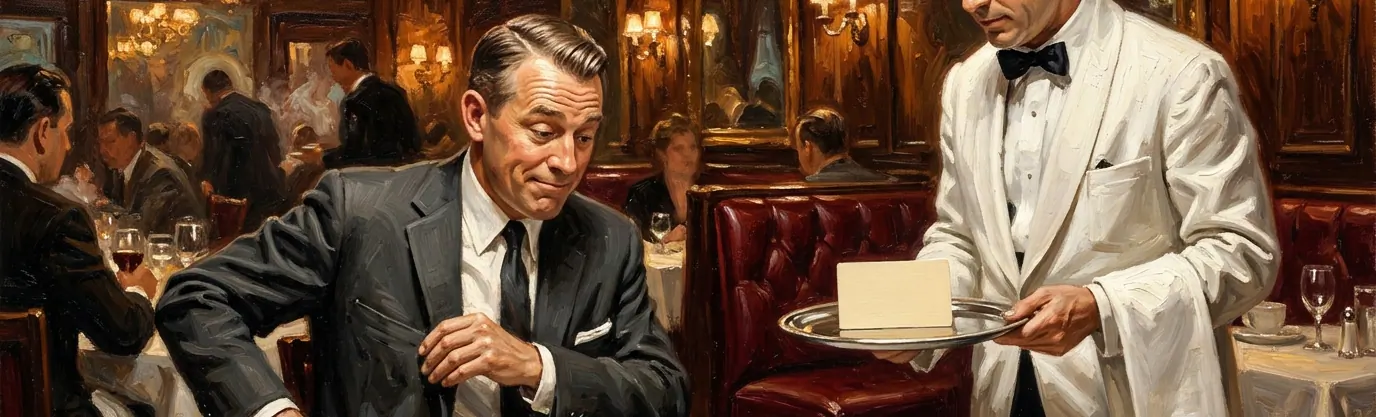
28.What inspired Frank McNamara to create the world's first Diners Club card in 1950?
Correct Answer: D. Forgetting his wallet at dinner
Explanation: In 1949, businessman Frank McNamara was hosting clients for lunch at Major's Cabin Grill, a popular steakhouse near the Empire State Building in Manhattan. When the waiter presented the check at the end of the meal, McNamara reached into his suit coat and realized in horror that he had switched suits that morning and left his wallet at home—forcing him to call his wife to drive into the city with cash.
Vowing never to suffer that embarrassment again, McNamara teamed up with his attorney Ralph Schneider and returned to Major's Cabin Grill on February 8, 1950. When the bill arrived, McNamara paid using a small rectangular cardboard membership card and signed a paper tab—a historic meal dubbed "The First Supper."
That cardboard Diners Club card became the world's first multi-purpose charge card, accepted at 27 Manhattan restaurants and growing to 42,000 cardholders within its first twelve months.
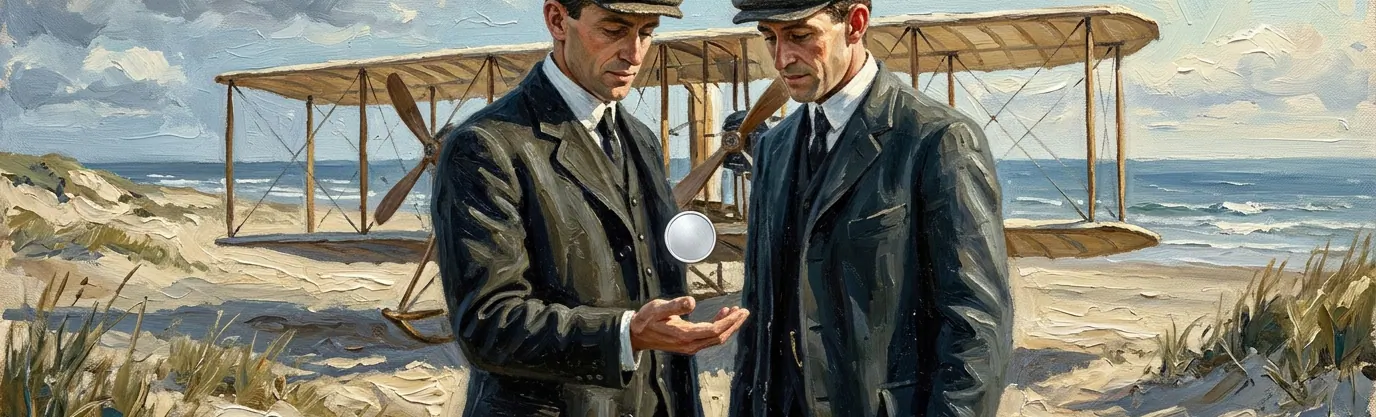
29.Why did the Wright brothers flip a coin on December 14, 1903 at Kitty Hawk?
Correct Answer: A. Deciding who flew first
Explanation: Because brothers Wilbur and Orville Wright shared equal credit for every single sketch, wind-tunnel calculation, and bicycle-shop part on their 1903 Wright Flyer, they decided the only fair way to choose who would attempt the world's first powered airplane flight at Kill Devil Hills, North Carolina, was a simple coin toss.
On December 14, 1903—three days before their famous December 17 triumph—older brother Wilbur won the coin toss and climbed onto the lower wing of the Flyer launched from a downhill wooden monorail track. Eager to climb, Wilbur pulled up too sharply on the front elevator; the biplane stalled after 3.5 seconds in the air and settled into the sand, cracking the front rudder frame.
Once repairs were finished on the freezing morning of December 17, 1903, it was Orville's turn in the rotation—making Orville Wright the pilot of history's first sustained, controlled, powered heavier-than-air flight of 12 seconds and 120 feet!
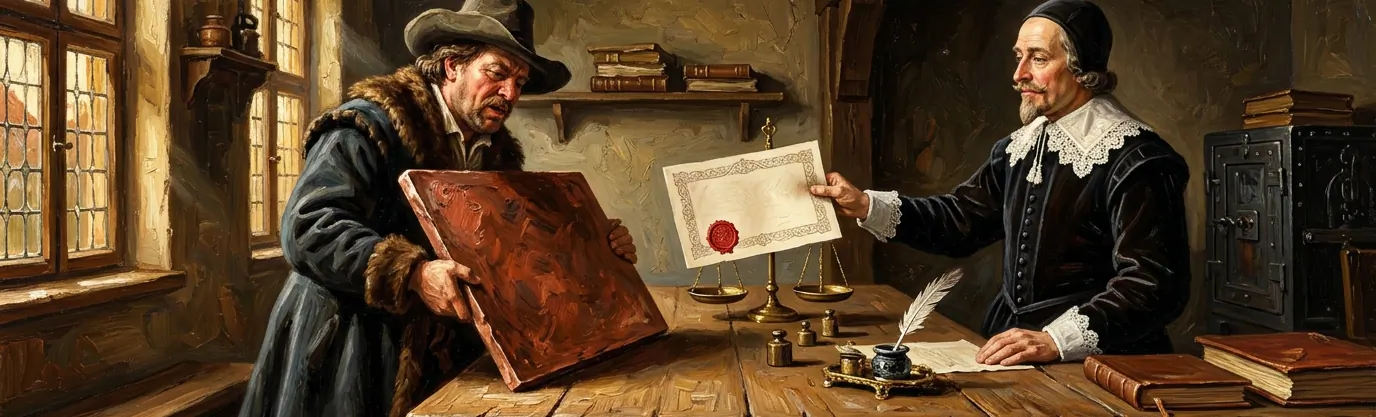
30.Which Nordic nation introduced the world's first paper banknotes across Europe in 1661?
Correct Answer: C. Copper-burdened Sweden
Explanation: While Tang and Song Dynasty China pioneered paper money in Asia centuries earlier, the first country in Europe to issue official paper banknotes was Sweden in July 1661—and the reason was literally too heavy to carry. In the 17th century, the Swedish Empire possessed vast copper mines at Falun and minted its currency as rectangular slabs of stamped copper known as plåtmynt ("plate money").
Because copper was far less valuable than gold or silver, a single 10-daler copper coin weighed an absurd 19.7 kilograms (43 pounds)! Merchants had to hire horse-drawn carts just to go shopping, and burglars literally left the money behind because they couldn't lift it.
To spare citizens backaches, Johan Palmstruch, founder of Stockholms Banco, began issuing lightweight printed paper deposit certificates called Kreditivsedlar in 1661—creating Europe's very first paper banknotes and founding the world's oldest central bank, Sveriges Riksbank.
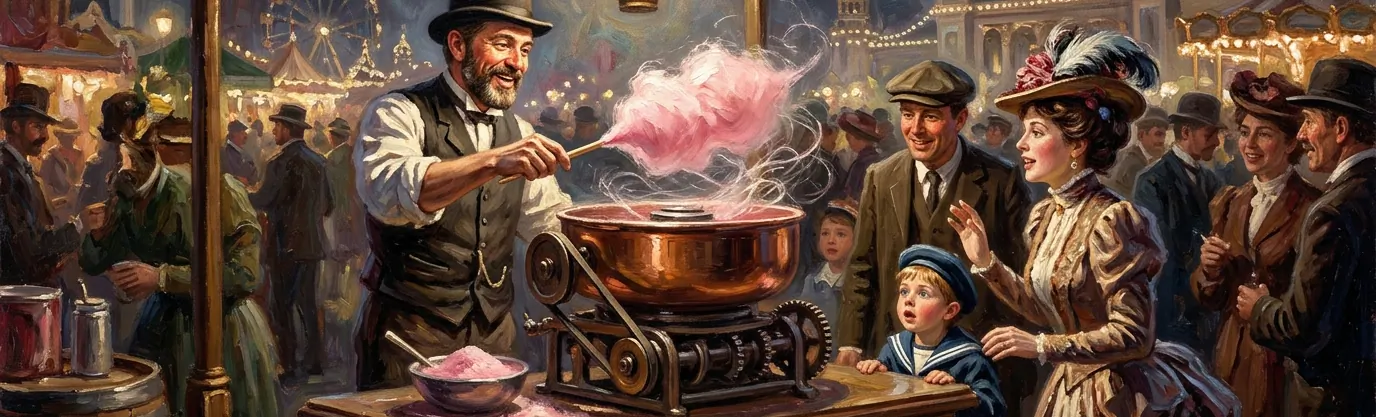
31.What surprising profession did the inventor of the world's first cotton candy machine practice?
Correct Answer: B. A practicing family dentist
Explanation: In one of culinary history's most delightful ironies, electric-spun cotton candy was co-invented in 1897 by Dr. William Morrison—a respected family dentist in Nashville, Tennessee, who also served as president of the Tennessee State Dental Association! Teaming up with confectioner John C. Wharton, Morrison patented an electric-heated centrifugal spinning machine that melted granulated sugar and forced it through tiny mesh holes into airy gossamer threads.
Morrison and Wharton debuted their creation at the 1904 St. Louis World's Fair under the whimsical name "Fairy Floss," packing the fluffy pink clouds into wooden boxes for 25 cents apiece—half the price of admission to the entire fair.
Fairgoers went wild for the dentist's sugary invention, purchasing 68,655 boxes worth over $17,000! In 1921, another enterprising dentist—Dr. Josef Lascaux of New Orleans—patented an improved machine and coined the modern name "cotton candy."
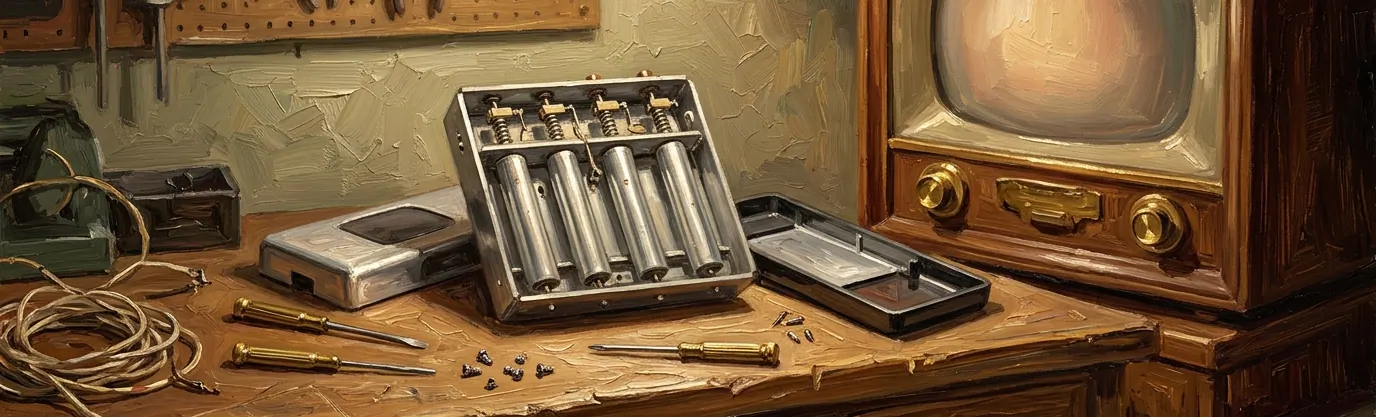
32.Why did the first 1956 television remote control emit high-frequency chimes without batteries?
Correct Answer: D. Tiny mechanical aluminum hammers
Explanation: After early wired remotes tripped viewers across living room carpets and Zenith's 1955 "Flash-Matic" light-gun remote kept changing channels whenever morning sunlight hit the TV screen, Austrian-born engineer Robert Adler invented the Zenith "Space Command" in 1956—the world's first practical wireless television remote control.
Remarkably, the Space Command required zero batteries, zero transistors, and zero radio waves. Instead, it was a purely mechanical ultrasonic instrument! Inside the handheld case sat four precision-cut lightweight aluminum rods of slightly different lengths.
Whenever a viewer pressed a button for channel up, channel down, mute, or power, a spring-loaded internal hammer struck one of the aluminum rods like a miniature tuning fork, emitting a high-frequency 40-kilohertz ultrasonic chime inaudible to human ears (though family dogs often perked up) that a microphone inside the TV decoded—inspiring the nickname "the clicker."

33.Which explorer led the expedition that completed the first circumnavigation of Earth in 1522?
Correct Answer: A. Juan Sebastián Elcano
Explanation: Although Portuguese explorer Ferdinand Magellan organized and commanded the Spanish Armada de Molucca when five ships and 270 crewmen sailed from Seville in 1519 to find a western route to the Spice Islands, Magellan never completed the journey around the world. After discovering the Strait of Magellan and crossing the Pacific, Magellan was killed in April 1521 during the Battle of Mactan in the Philippines.
Command of the sole surviving vessel—the battered, leaking carrack Victoria—fell to Basque navigator Juan Sebastián Elcano. Facing starvation, scurvy, and hostile Portuguese patrols, Elcano made the bold decision to sail west across the Indian Ocean and around Africa's Cape of Good Hope without stopping.
On September 6, 1522, Elcano and just 17 emaciated European survivors limped into Sanlúcar de Barrameda, Spain—completing humanity's first circumnavigation of the globe. King Charles I awarded Elcano a coat of arms bearing a globe and the Latin motto Primus circumdedisti me ("You went around me first").

34.What was the world's first genetically cloned mammal born in Scotland in July 1996?
Correct Answer: C. Dolly the Finn-Dorset sheep
Explanation: On July 5, 1996, at the Roslin Institute near Edinburgh, Scotland, embryologists Ian Wilmut and Keith Campbell welcomed a white-faced Finn-Dorset lamb code-named "6LL3"—soon famous worldwide as Dolly the Sheep, the very first mammal ever cloned from an adult somatic body cell rather than an embryo.
Using somatic cell nuclear transfer, researchers extracted the nucleus from an udder (mammary gland) cell of a six-year-old ewe, fused it with an unfertilized egg cell using an electric pulse, and after 277 painstaking attempts, implanted the resulting embryo into a surrogate Scottish Blackface mother.
Because her DNA came from a mammary gland cell, laboratory technicians jokingly named her after country music icon Dolly Parton! Dolly lived at the Roslin Institute for over six years and gave birth to six healthy lambs of her own.
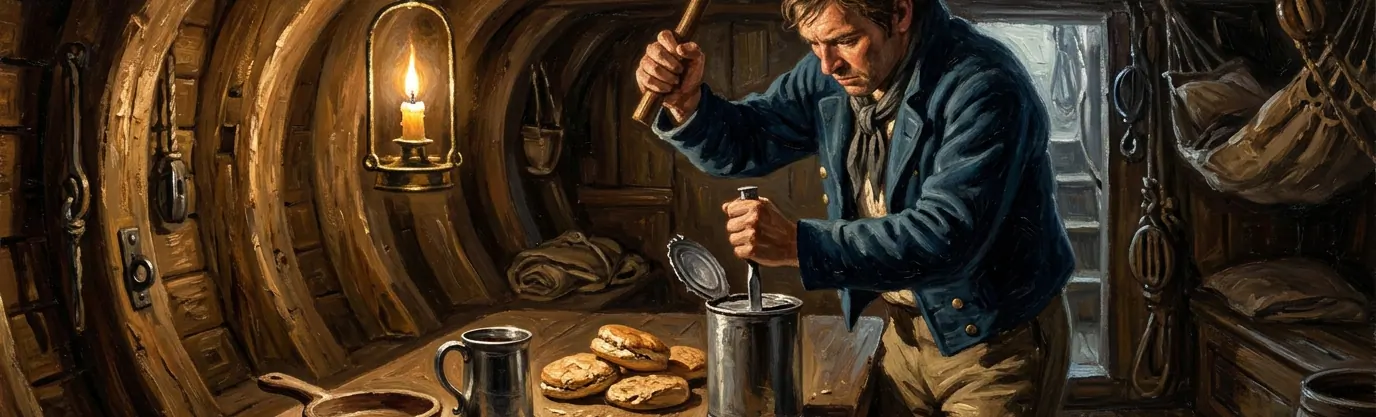
35.Why were tin cans invented in 1810 opened with hammers and chisels for decades?
Correct Answer: B. Can openers came 45 years later
Explanation: In 1810, British merchant Peter Durand patented the cylindrical tin-plated wrought-iron food can, adapting French confectioner Nicolas Appert's method of heat-sterilizing food in sealed vessels to supply the Royal Navy. Early cans were thick, heavy iron canisters that sometimes weighed more than the roast veal or pea soup sealed inside them.
Amazingly, no one bothered to invent a dedicated can opener for another 45 years! Throughout the early 19th century, British soldiers and Arctic explorers had to hack their rations open using bayonets, cold chisels, and hammers—or even shoot them open with musket balls. Printed instructions on an 1824 tin of roast veal literally read: "Cut round on the top near to the outer edge with a chisel and hammer."
Only when thinner steel cans arrived in the 1850s did British inventor Robert Yeates (1855) and American Ezra Warner (1858) patent the first lever-style claw can openers.
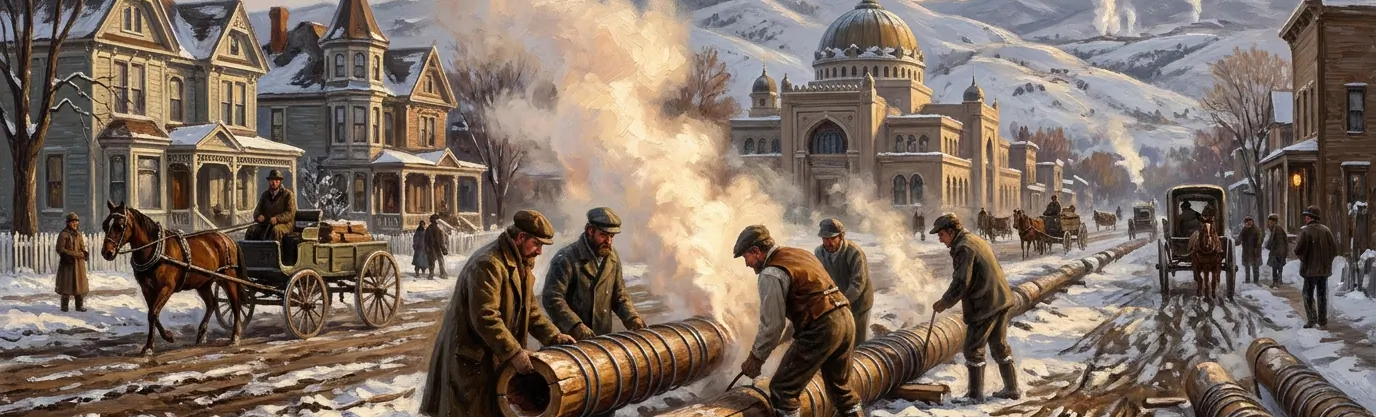
36.Which city switched on the world's first geothermal district heating system in 1892?
Correct Answer: D. Boise, Idaho
Explanation: More than thirty years before Reykjavik, Iceland, built its famous municipal geothermal grid in 1930, entrepreneurs in Boise, Idaho, drilled two 400-foot wells near the foothills of Table Rock in 1890 and struck an underground reservoir of naturally heated 170°F (77°C) water flowing at 800,000 gallons a day.
In 1892, local pioneers piped that steaming subterranean water through wooden mains down Warm Springs Avenue to heat the grand Moorish-style Natatorium indoor swimming pool alongside Victorian mansions and downtown businesses—creating the world's very first geothermal district heating system.
Remarkably, the Boise Warm Springs Water District still operates continuously more than 130 years later, circulating natural geothermal water to heat hundreds of homes and historic buildings every winter!
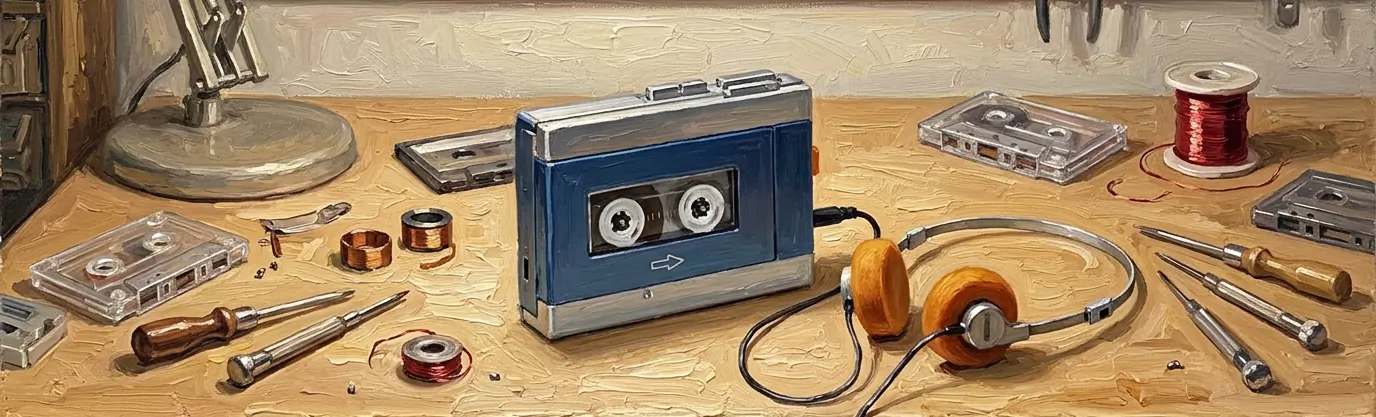
37.What did Sony remove from a tape recorder to create the first Walkman in 1979?
Correct Answer: A. The recording head and speaker
Explanation: In early 1979, 70-year-old Sony co-founder Masaru Ibuka grew tired of lugging Sony's heavy TC-D5 portable cassette recorder onto long transpacific flights just to listen to opera music. Walking into the office of co-founder Akio Morita, Ibuka asked the audio division to modify a compact Pressman journalist's voice recorder (the TCM-100) by stripping out its recording circuitry and built-in monaural speaker, replacing them with a stereo playback amplifier and a pair of ultra-lightweight 45-gram foam headphones.
Sony's marketing department initially protested that no consumer would ever buy a tape player that couldn't record—and felt embarrassed by the "Japanlish" name Walkman. Morita overruled them and promised to resign as chairman if the blue-and-silver TPS-L2 didn't sell 30,000 units.
Launched in Tokyo on July 1, 1979, the Walkman sold out within weeks and went on to sell more than 400 million portable music players worldwide.

38.Which rugged landscape became the world's very first designated National Park in March 1872?
Correct Answer: C. Geyser-rich Yellowstone
Explanation: On March 1, 1872, U.S. President Ulysses S. Grant signed the Yellowstone National Park Protection Act into law, setting aside over two million acres of geothermal wilderness across Wyoming, Montana, and Idaho as "a public park or pleasuring-ground for the benefit and enjoyment of the people"—establishing the world's very first National Park.
Wait—didn't Abraham Lincoln sign the Yosemite Grant eight years earlier in 1864? While the 1864 Yosemite Grant preserved Yosemite Valley and the Mariposa Grove under California state management, Yellowstone was the first territory placed directly under national protection as a National Park because Wyoming was still a federal territory rather than a state.
Stunning landscape paintings by Thomas Moran and photographs by William Henry Jackson from the 1871 Hayden Geological Survey convinced skeptical U.S. senators that Yellowstone's erupting geysers, rainbow hot springs, and boiling mud pots actually existed!