
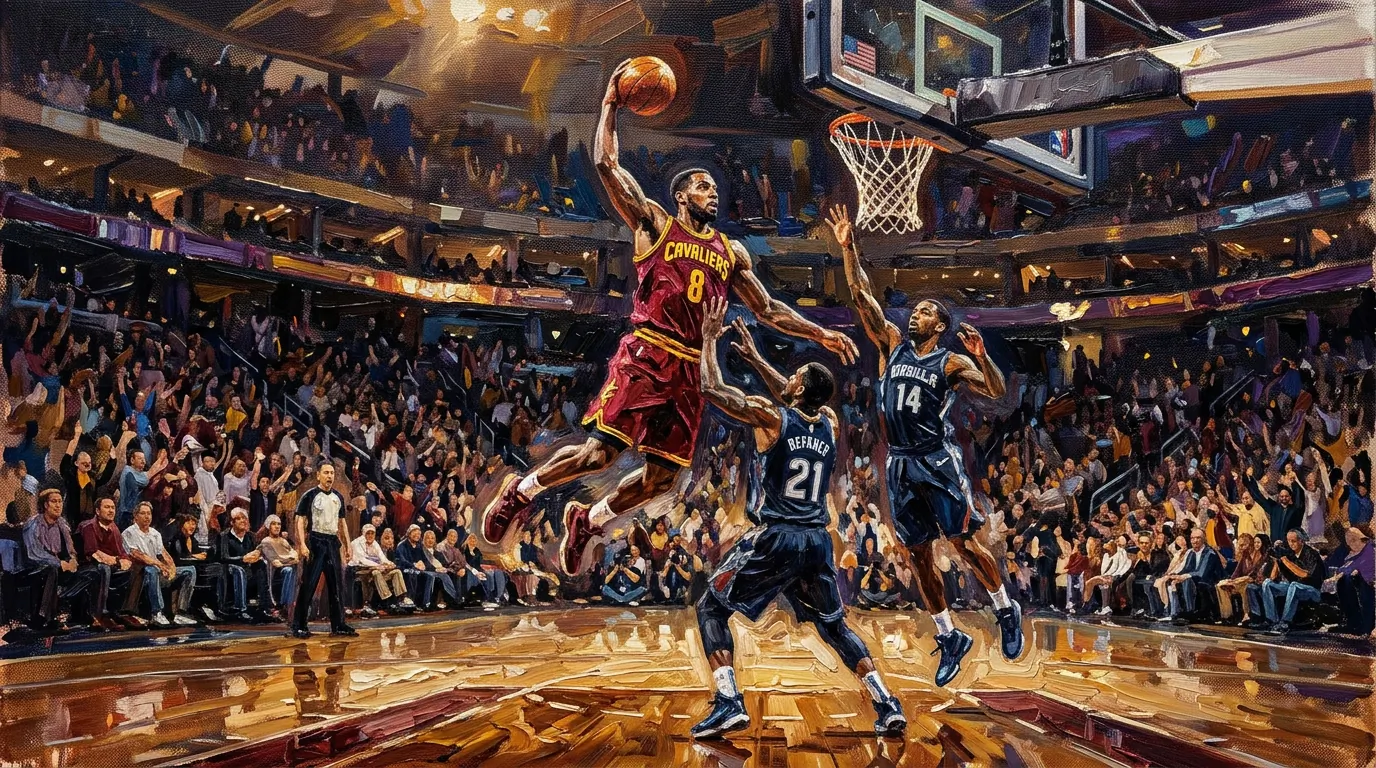
Basketball Trivia: 37 Wild NBA Records, 19–18 Stall Games, Shattered Backboards & True Hoops Lore
Step beyond basic box scores—test your wits on 37 wild, 100% true basketball stories of chicken-wire cages, stolen #23 jerseys, and shattered glass backboards.
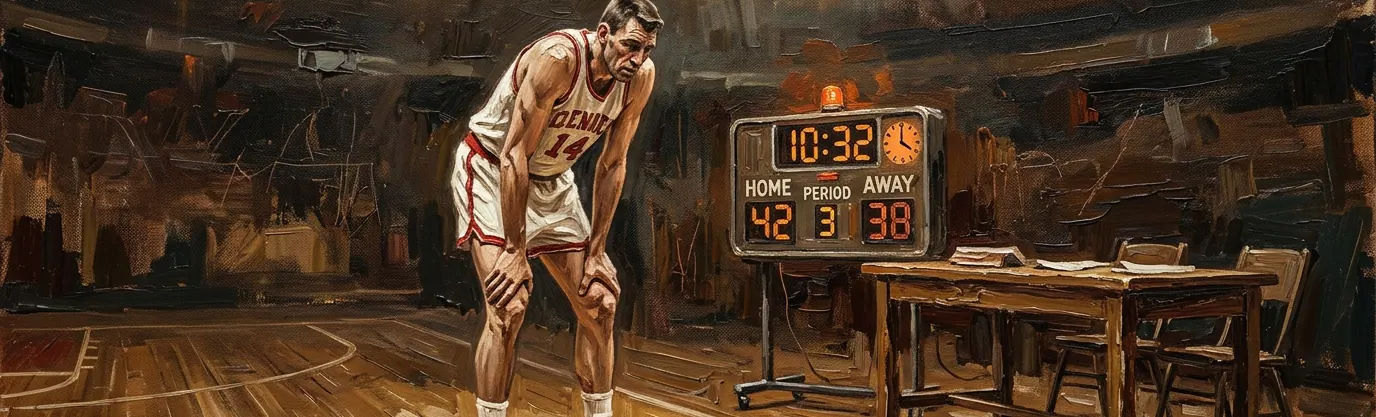
1.How did Wilt Chamberlain average 48.5 minutes during forty-eight-minute games in 1962?
Correct Answer: B. Playing every overtime minute
Explanation: During the legendary 1961–62 NBA season—the same campaign in which he averaged 50.4 points per game—Philadelphia Warriors center Wilt Chamberlain set a statistical record that defies common sense at first glance: he averaged 48.5 minutes played per game across an 80-game regular season, even though a regulation NBA game is only 48 minutes long!
The secret behind the impossible-looking math was Chamberlain's superhuman stamina combined with overtime periods. Across all 80 games that season, the Warriors played ten overtime periods across seven different games, and Chamberlain never stepped off the floor for a single breather—except for eight minutes in one game when he was ejected after receiving two technical fouls.
In total, Wilt logged 3,882 out of a possible 3,890 team minutes all season long, a feat of ironman endurance that no modern load-managed superstar will ever approach.
2.Why did early pro basketball games surround the court with chicken-wire cages?
Correct Answer: A. Protecting players from fans
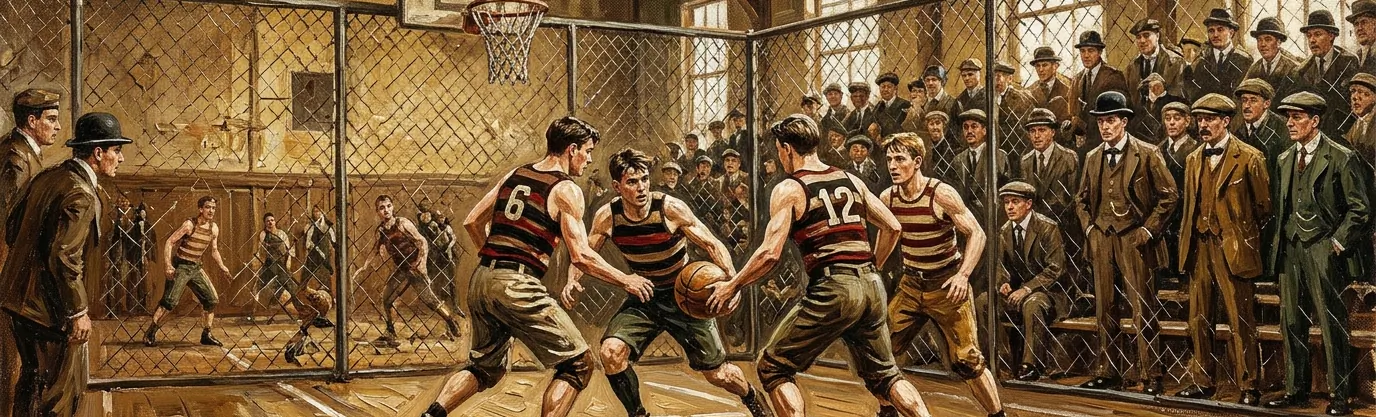
Explanation: Long before velvet courtside seats existed, professional basketball players were literally called "cagers"—a nickname born in 1896 when the Trenton Masonic Temple installed a 12-foot-high enclosure of heavy wire mesh and rope netting completely around the court.
Originally designed to speed up games by preventing the ball from rolling into the bleachers and eliminating out-of-bounds stoppages, the chicken-wire cages quickly served a second, grittier purpose: shielding players from rowdy spectators who routinely jabbed opposing players with hatpins, threw cigar butts, or tripped runners along the sidelines.
Because players violently body-checked each other against the taut metal mesh like hockey players against the boards, post-game locker rooms were filled with bleeding grid-patterned wire scrapes until rope netting and open boundary lines finally replaced cages in the late 1920s.
3.Who became the only NBA player to score for both teams in one game?
Correct Answer: A. Eric Money
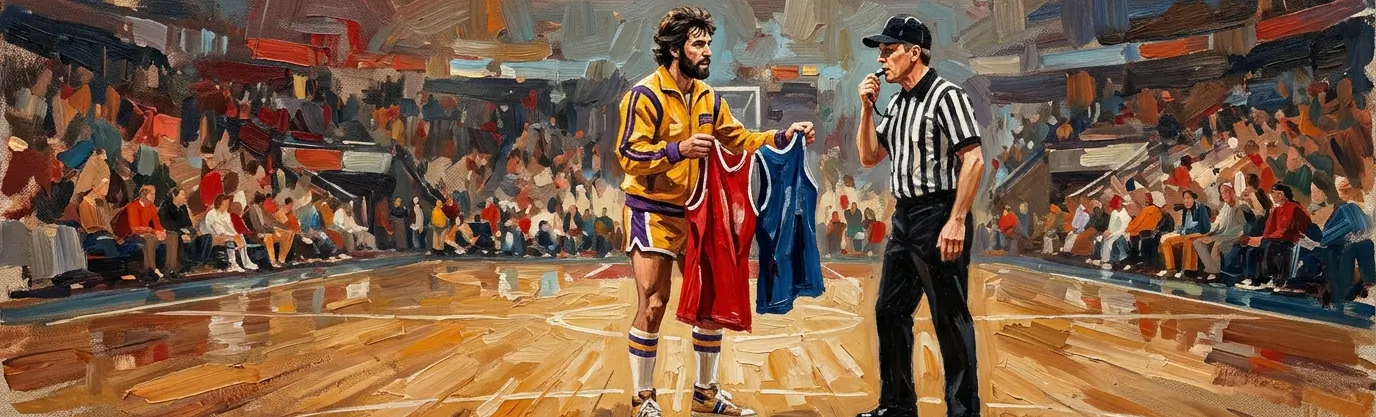
Explanation: On November 8, 1978, New Jersey Nets guard Eric Money scored 23 points against the Philadelphia 76ers in a double-overtime thriller in Piscataway. During the third quarter, however, referees slapped Nets forward Bernard King and coach Kevin Loughery with three technical fouls—one more than league rules permitted—prompting NBA Commissioner Larry O'Brien to uphold a protest and order the final 17 minutes replayed on March 23, 1979.
In the four months between the November tip-off and the March replay, the Nets traded Eric Money, Ralph Simpson, and Harvey Catchings directly to the Philadelphia 76ers in exchange for Wilson Washington, Al Skinner, and cash!
When the suspended game resumed in the third quarter on March 23, Eric Money stepped onto the floor wearing a 76ers jersey and scored 4 more points against his former teammates—making him the first player in NBA history to officially score for both teams in the exact same box score.
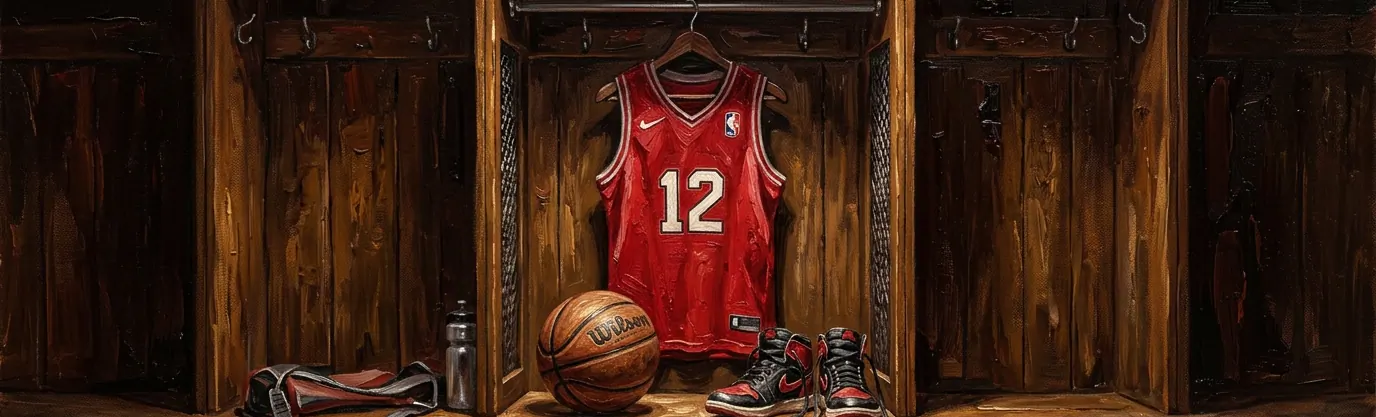
4.Why did Michael Jordan wear emergency jersey number 12 in Orlando in 1990?
Correct Answer: B. Thief stole his jersey
Explanation: On Valentine's Day, February 14, 1990, the Chicago Bulls arrived at the Orlando Arena for a road game against the expansion Orlando Magic, only to discover during pregame warmups that someone had snuck into the visitors' locker room and stolen Michael Jordan's iconic red #23 jersey right out of his stall.
Security guards scrambled through the arena and even tried fitting Jordan into a fan's replica #23 jersey from the souvenir stand, but it was far too small. With no backup #23 in the equipment trunk, Jordan had to pull on a nameless emergency red spare road jersey bearing the number 12.
Annoyed by the theft, a "nameless" #12 Jordan torched the Magic for 49 points in 47 minutes—and to this day, the culprit who lifted the original #23 jersey through the locker room's drop ceiling has never been officially caught.
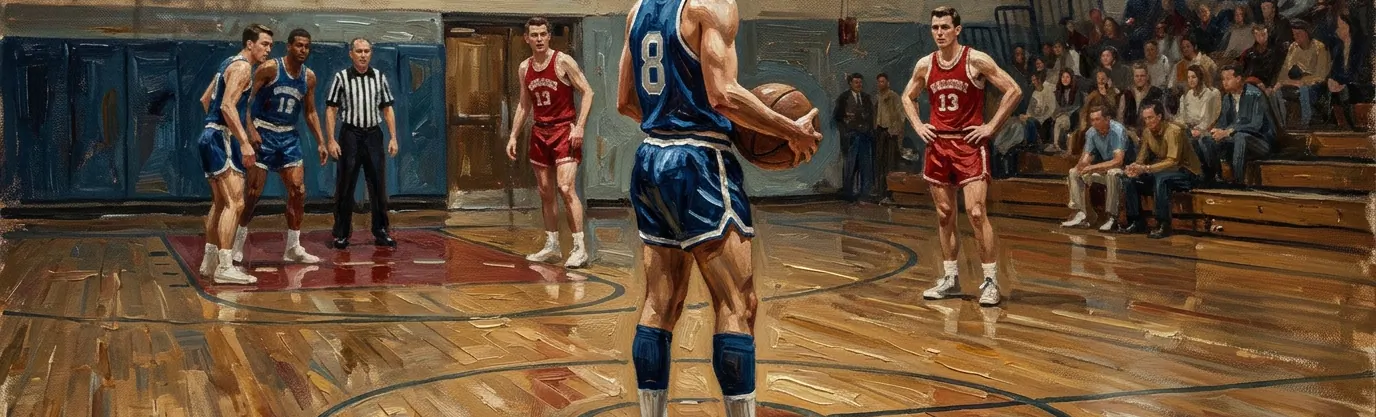
5.What caused the lowest-scoring NBA game in history to end 19–18 in 1950?
Correct Answer: C. No shot clock existed
Explanation: On November 22, 1950, the Fort Wayne Pistons visited the two-time defending champion Minneapolis Lakers, terrified of Minneapolis's dominant six-foot-ten center George Mikan. Because the NBA had no shot clock at the time, Pistons coach Murray Mendenhall ordered his players to grab a tiny lead and simply freeze the ball at midcourt for hours.
Players stood motionless with the leather basketball tucked on their hips while 7,021 furious Minneapolis fans booed, read newspapers, and chanted for action. The entire teams combined to make just 8 field goals all night (4 by Fort Wayne, 4 by Minneapolis), with Fort Wayne sneaking out a 19–18 victory when Larry Foust tapped in a last-second shot.
In the fourth quarter alone, the two teams combined for a grand total of 3 points—a spectacle so boring that it directly catalyzed the invention of the 24-second shot clock four years later in 1954.
6.Why did Ricky Davis intentionally shoot at his own team's basket in 2003?
Correct Answer: B. Chasing a tenth rebound
Explanation: With 6.1 seconds remaining in a blowout victory over the Utah Jazz on March 16, 2003, Cleveland Cavaliers guard Ricky Davis had 28 points, 12 assists, and 9 rebounds—just one rebound shy of the first triple-double of his NBA career.
When Davis caught an inbound pass in the backcourt, instead of dribbling out the clock toward Utah's hoop, he turned around, dribbled to his own defensive basket, tossed the ball lightly off the bottom of the opponent's rim, and grabbed it with both hands to claim his tenth "rebound."
Infuriated Utah guard DeShawn Stevenson immediately fouled Davis hard across the court, while veteran Jazz coach Jerry Sloan vowed he would have knocked Davis into the stands himself. Worse yet for Davis, NBA rulebook section VII states that a shot must be a legitimate attempt to score at the proper basket to produce a rebound—so official scorekeepers wiped it out and fined him for unsportsmanlike conduct.
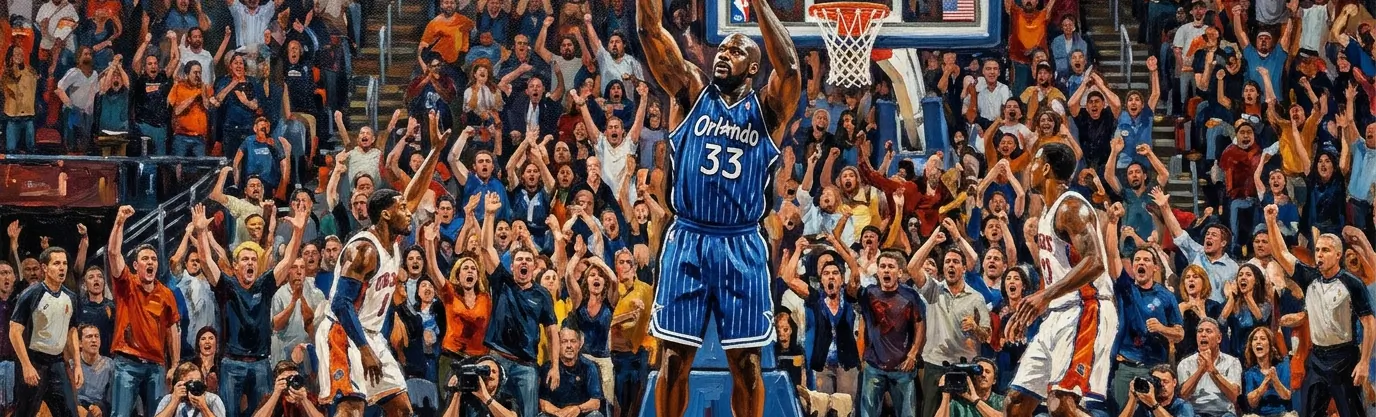
7.How many regular-season three-pointers did Shaquille O'Neal make across nineteen NBA seasons?
Correct Answer: D. Exactly one
Explanation: Across 1,207 regular-season games and 28,596 career points, 7-foot-1 Hall of Fame center Shaquille O'Neal attempted 22 shots from beyond the three-point arc and made exactly one—giving him a career three-point percentage of 4.5%.
That lone miracle occurred on February 16, 1996, when Shaq's Orlando Magic led the Milwaukee Bucks at the end of the first quarter. With two seconds left on the clock, Dennis Scott fired an inbound pass to O'Neal outside the three-point arc; spinning around in mid-air like a shot-putter, Shaq banked a one-handed heave high off the glass and straight through the net at the buzzer.
Laughing as he jogged back to the bench, O'Neal later joked that his one-legged turnaround bank shot looked just like fellow Hall of Famer Larry Bird's jumper.
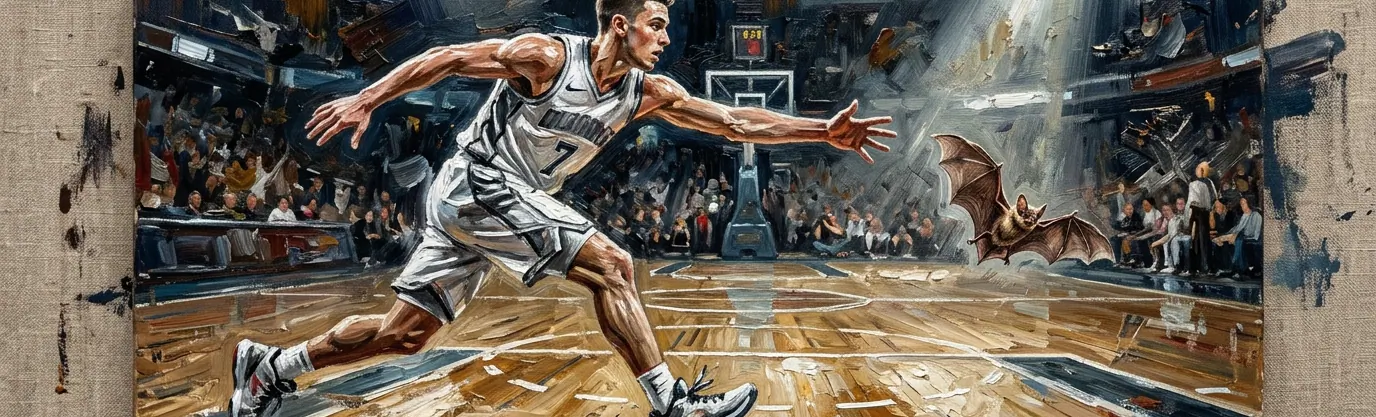
8.What flying creature invaded a San Antonio Spurs game before Manu Ginóbili swatted it?
Correct Answer: C. Halloween bat
Explanation: Fittingly taking place on Halloween night—October 31, 2009—a live Mexican free-tailed bat swooped down from the rafters of San Antonio's AT&T Center during the first quarter of a matchup between the Spurs and the Sacramento Kings, forcing referees to halt play as players ducked for cover.
As the bat circled low across the lane for a third pass, fearless Argentine guard Manu Ginóbili tracked its flight path like a perimeter defender, timed his step, and swatted the bat cleanly out of mid-air with his bare left hand! He then calmly scooped the stunned creature off the hardwood and handed it to arena staff to thunderous applause.
While fans chanted "Manu! Manu!" and compared him to Batman, Ginóbili later revealed the less glamorous aftermath of his highlight play: he had to endure a full precautionary round of painful rabies shots.
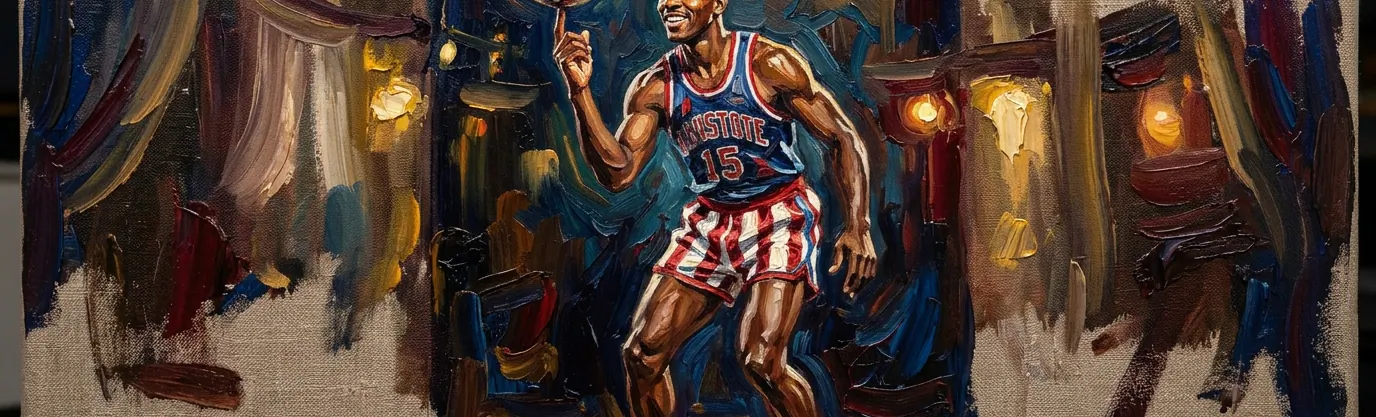
9.Which NBA legend toured with the Harlem Globetrotters before his rookie season?
Correct Answer: A. Wilt Chamberlain
Explanation: In 1958, after dominating college basketball at the University of Kansas, 7-foot-1 sensation Wilt Chamberlain grew frustrated with boring triple-teams and stalling tactics and decided to leave school a year early. However, NBA rules at the time strictly barred teams from drafting any player until his four-year college class had officially graduated.
With a year to kill before he could legally suit up for the Philadelphia Warriors in 1959, Chamberlain signed with Abe Saperstein's world-famous Harlem Globetrotters for a jaw-dropping $50,000 ($10,000 more than NBA MVP Bob Cousy was making!).
Despite being seven feet tall, "The Big Dipper" frequently played point guard and meadowlark comedic lead for the Globetrotters, touring the Soviet Union in 1959 where the team met Premier Nikita Khrushchev inside the Kremlin—and in 2000, the Globetrotters retired Wilt's #13 jersey.
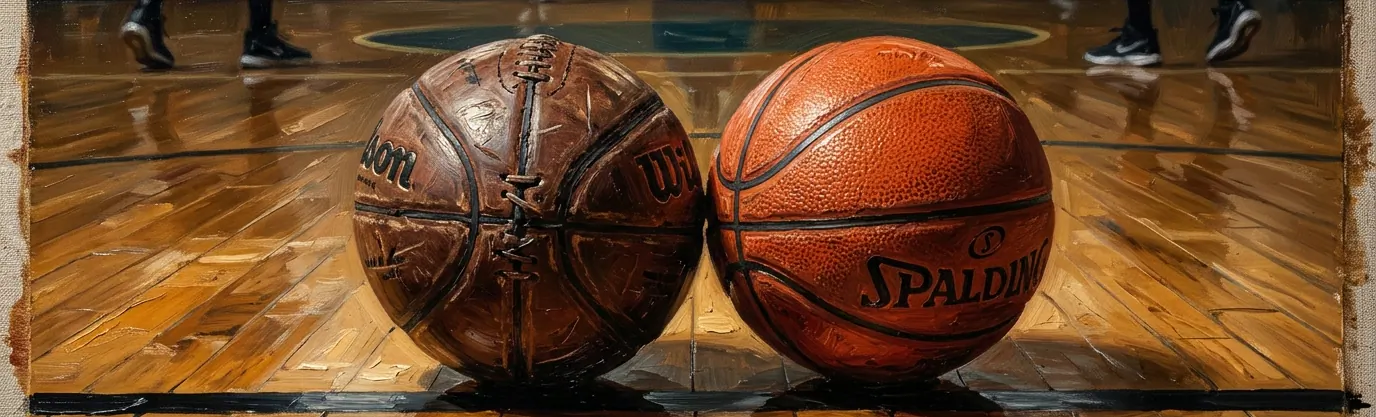
10.What color were all official basketballs before Tony Hinkle introduced orange in 1957?
Correct Answer: B. Dark leather brown
Explanation: For the first 66 years of basketball history, every official basketball was stitched from natural dark brown leather—virtually identical in shade to the varnished oak and maple gym floors players dribbled on! Under dim 1950s gymnasium lights and early black-and-white television broadcasts, fans in the upper deck could barely track passes.
In 1957, longtime Butler University head coach Paul "Tony" Hinkle teamed up with the Spalding sporting goods company to engineer a high-visibility basketball. After rejecting white and yellow dyes because they scuffed easily and stained from sweaty palms, they settled on a rich burnt-orange leather pigment.
Hinkle tested the prototype burnt-orange ball at the 1958 NCAA Final Four in Louisville, Kentucky between Kentucky and Seattle. Players and fans loved the instant visual contrast so much that both college basketball and the NBA adopted the orange ball permanently the very next season.
11.Why did college basketball outlaw the slam dunk for ten years in 1967?
Correct Answer: A. Lew Alcindor's dominance
Explanation: Following the 1966–67 college basketball season, in which UCLA sophomore center Lew Alcindor (later known as Kareem Abdul-Jabbar) led the Bruins to an undefeated 30–0 national championship while shooting a blistering 66.7% from the field, the NCAA Rules Committee abruptly outlawed the slam dunk—declaring that no player could stuff the ball downward directly through the cylinder.
Although committee officials claimed the ban was meant to prevent bent rims and goal-tending controversies, every sportswriter in America immediately dubbed it the "Lew Alcindor Rule." Ironically, taking away the dunk only made Alcindor deadlier: under coach John Wooden, he perfected his unstoppable, ambidextrous skyhook shot and won two more consecutive NCAA titles anyway.
The NCAA finally repealed the dunk ban in 1976, ushering in the high-flying college eras of "Phi Slama Jama" in Houston and Michael Jordan at North Carolina.
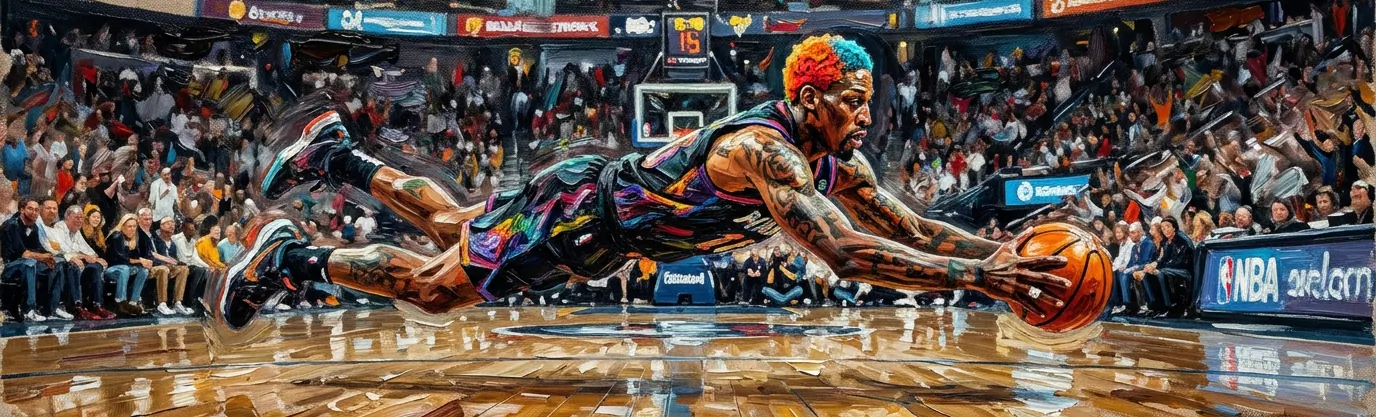
12.How many points did Dennis Rodman score while grabbing twenty-eight rebounds in 1993?
Correct Answer: D. Zero points
Explanation: On December 1, 1993, San Antonio Spurs forward Dennis "The Worm" Rodman delivered the ultimate tribute to pure, unselfish hustle during a 92–88 road win over the Charlotte Hornets: he played 45 minutes, pulled down a staggering 28 rebounds (10 offensive and 18 defensive), and finished the night with exactly 0 points!
Rodman attempted just five shots the entire evening—missing all five—and never once stepped to the free-throw line. Whenever he snagged an offensive board among Charlotte's trees, he immediately whipped the ball back out to teammate David Robinson rather than forcing a putback layup.
Remarkably, that wasn't even a one-time fluke for the seven-time NBA rebounding champion: across his Hall of Fame career, Rodman recorded seven different games in which he grabbed 20 or more rebounds without scoring a single point.
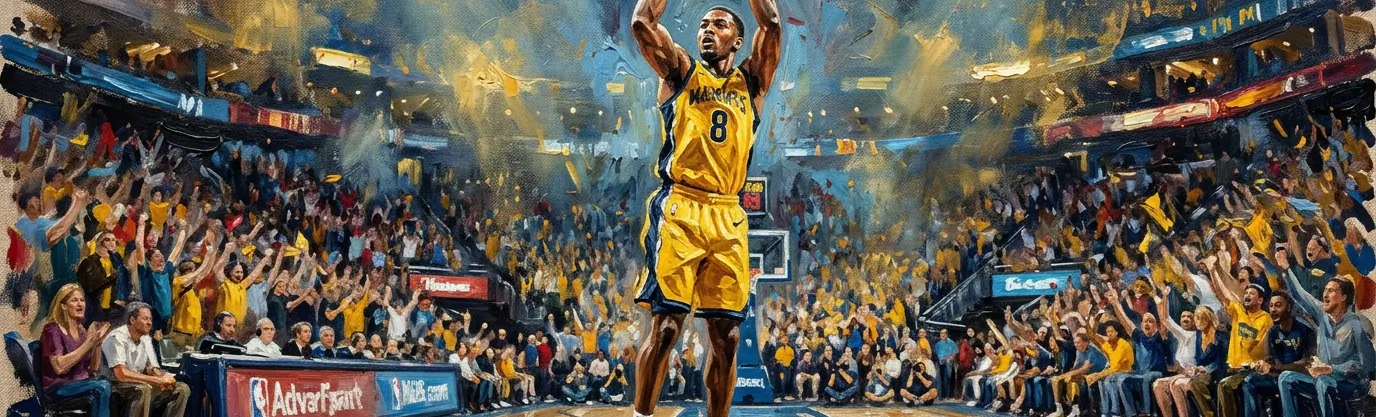
13.Which NBA sharpshooter scored eight points in nine seconds against the Knicks in 1995?
Correct Answer: A. Reggie Miller
Explanation: Trailing the rival New York Knicks 105–99 with just 18.7 seconds left in Game 1 of the 1995 Eastern Conference Semifinals at Madison Square Garden, Indiana Pacers guard Reggie Miller pulled off the most stunning solo comeback in playoff history—scoring 8 points in an span of 8.9 seconds.
Miller first drained a deep wing three-pointer with 16.4 seconds left to cut the lead to three. On the ensuing inbound play, he intercepted Anthony Mason's pass, dribbled two steps backward behind the three-point arc in one fluid motion, and buried a game-tying triple with 13.3 seconds remaining!
After Knicks guard John Starks missed two free throws and Patrick Ewing's putback rimmed out, Miller grabbed the defensive rebound, drew a foul, and calmly sank both free throws with 7.5 seconds left to seal a jaw-dropping 107–105 Pacers heist.
14.Where was the first Olympic men's basketball gold-medal game played in 1936?
Correct Answer: B. Muddy outdoor tennis court
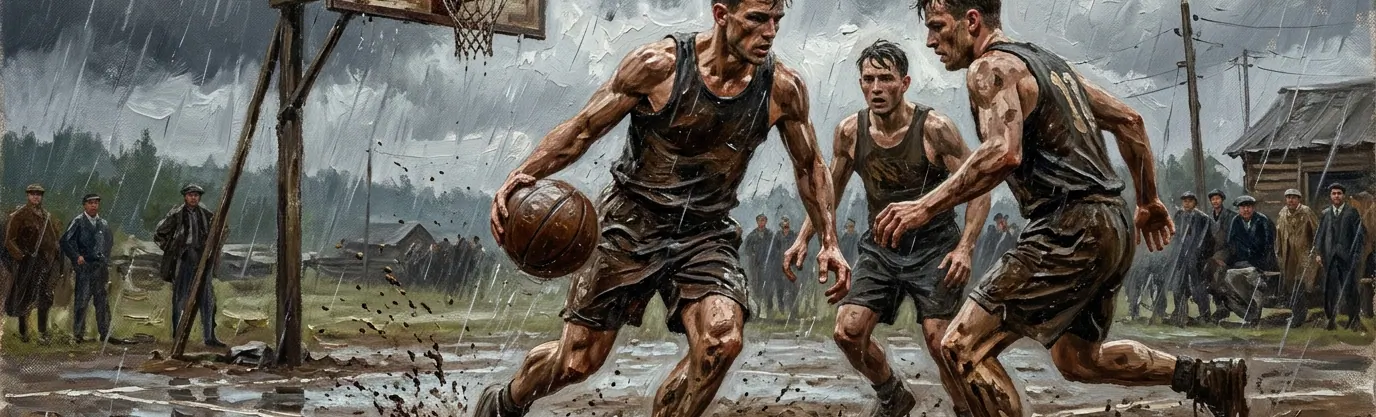
Explanation: When basketball made its official medal debut at the 1936 Summer Olympics in Berlin—with its 74-year-old inventor, Dr. James Naismith, in attendance to toss up the opening ceremonial jump ball—organizers staged the entire tournament outdoors on converted clay-and-sand lawn tennis courts!
The arrangement worked passably until the gold-medal showdown between the United States and Canada on August 14, 1936, when a torrential downpour turned the clay tennis court into a quagmire of ankle-deep mud and standing puddles. Players couldn't dribble the waterlogged, heavy leather ball without it sticking flat in the muck like a bowling ball.
Forced to pass the slippery ball from player to player while sliding in soaked wool uniforms before 1,000 umbrella-huddled fans, Team USA defeated Canada by the football-like score of 19–8, with 6-foot-8 center Joe Fortenberry scoring a game-high 8 points.
15.Why did the NBA threaten Michael Jordan with five-thousand-dollar fines in 1984?
Correct Answer: C. Banned black-and-red sneakers
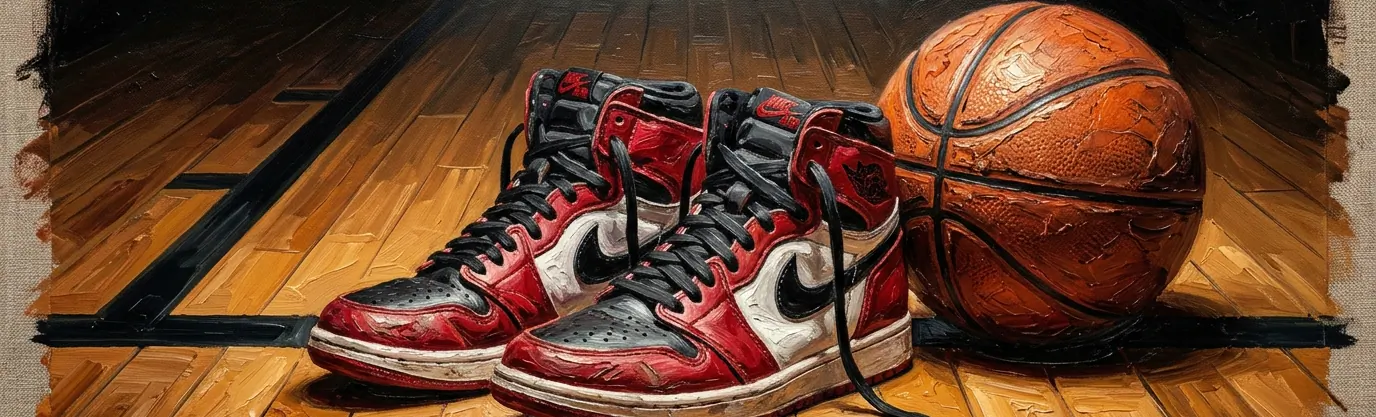
Explanation: In the autumn of 1984, the NBA enforced a strict "51 percent rule" requiring every player's sneakers to be at least 51% white and match the shoes worn by his teammates. When Chicago Bulls rookie Michael Jordan laced up a bold black-and-red Nike prototype during an October 1984 preseason game at Madison Square Garden, league officials sent a formal warning letter banning the colorway.
Nike's marketing team immediately recognized advertising gold. They launched a famous national television commercial showing the camera panning down Jordan's body to his black-and-red Air Jordan 1s while a voiceover declared: "On October 15th, Nike created a revolutionary new basketball shoe. On October 18th, the NBA threw them out of the game. Fortunately, the NBA can't keep you from wearing them."
Projected to earn $3 million over the first four years, the "Banned" Air Jordan 1 instead generated $126 million in its very first year alone, permanently launching modern sneaker culture.
16.Who set the unbreakable single-season NBA record with forty-one technical fouls in 2001?
Correct Answer: C. Rasheed Wallace
Explanation: During the 2000–01 NBA season, Portland Trail Blazers All-Star power forward Rasheed Wallace—famous for his booming catchphrase "Ball don't lie!" whenever an opponent missed a disputed free throw—racked up an astonishing 41 technical fouls in 77 games, breaking his own record of 38 set the year before!
Averaging better than one technical foul every two games, Wallace got whistled for everything from staring silently at referee Ron Garretson (who ejected him for prolonged eye contact) to tossing towels and arguing block-charge calls.
Why will Wallace's record of 41 single-season technical fouls never be broken? Because in 2006, the NBA instituted a mandatory rule suspending a player for one game upon his 16th technical foul of a season, plus an additional one-game suspension for every two technicals thereafter—meaning a player today would be suspended for nearly 14 games before ever reaching 41!
17.How tall was Muggsy Bogues, the shortest player in NBA history?
Correct Answer: C. Five feet three inches
Explanation: Standing just 5 feet 3 inches (160 cm) tall and weighing 136 pounds, Tyrone "Muggsy" Bogues didn't merely make an NBA roster as a novelty—he was selected 12th overall in the 1987 NBA Draft out of Wake Forest and enjoyed a stellar 14-year NBA career as one of the league's most feared point guards!
With a low center of gravity, a 44-inch vertical leap, and lightning-quick hands that picked pockets before taller guards could complete a single dribble, Bogues became the Charlotte Hornets' franchise leader in assists and steals, averaging 10.8 points and 10.1 assists per game at his peak in 1993–94.
Even more remarkably, despite giving up nearly two feet of height to NBA centers, Bogues blocked 39 shots in his NBA career—including a famous clean block on 7-foot New York Knicks Hall of Fame center Patrick Ewing in 1993!
18.Which seven-foot-seven NBA center finished his career with more blocked shots than points?
Correct Answer: D. Manute Bol
Explanation: Born in Sudan and possessing an astonishing 8-foot-6 wingspan—the longest in NBA history—7-foot-7 center Manute Bol is the only player in NBA history (with significant playing time) to retire with more career blocked shots (2,086) than total points scored (1,599)!
As a rookie with the Washington Bullets in 1985–86, Bol swatted 397 shots—an average of 5.0 blocks per game—and once blocked four consecutive shots by three different Orlando Magic players within a span of just six seconds on a single defensive possession.
Later in his career with the Golden State Warriors and Philadelphia 76ers, coaches unleashed a fan-favorite surprise weapon: letting the gangly 7-foot-7 shot-blocker spot up behind the arc, culminating in a famous 1993 half in Phoenix where Bol drained six three-pointers against his former teammate Charles Barkley.
19.Which NBA legend won Finals MVP in 1969 despite playing for the losing team?
Correct Answer: A. Jerry West
Explanation: When the NBA introduced the Finals Most Valuable Player Award in 1969, Los Angeles Lakers guard Jerry West—the very player whose dribbling silhouette inspired the official NBA logo—became the first winner and remains the only player in league history to capture Finals MVP while playing on the losing team!
Across the epic seven-game 1969 Finals against Bill Russell's Boston Celtics, West averaged a heroic 37.9 points, 4.7 rebounds, and 7.4 assists per game, opening the series with 53 points in Game 1. Because Boston was trailing entering the fourth quarter of Game 7 in Los Angeles (where Lakers owner Jack Kent Cooke had already hung thousands of celebratory balloons in the Forum rafters), media voters cast their MVP ballots slightly early for West.
Even when Boston rallied to win Game 7 by two points (108–106), West's performance—42 points, 13 rebounds, and 12 assists on a torn hamstring—was so transcendent that his Finals MVP stood unchallenged.
20.How many points did Kobe Bryant drop in his legendary 2006 game against Toronto?
Correct Answer: B. Eighty-one points
Explanation: On January 22, 2006, at the Staples Center in Los Angeles, the Lakers trailed the Toronto Raptors by 18 points early in the third quarter before Kobe Bryant ignited the greatest modern scoring eruption in basketball history—pouring in 81 points in a 122–104 comeback victory.
After scoring a "modest" 26 points in the first half, the Black Mamba exploded for 27 points in the third quarter and 28 more in the fourth, outscoring the entire Toronto Raptors team 55–41 after intermission! He shot 28-of-46 from the floor, 7-of-13 from three-point range, and 18-of-20 from the foul line in 42 minutes.
Bryant's 81-point masterpiece stands second only to Wilt Chamberlain's 100-point game in 1962—and accounts for exactly two-thirds of the Lakers' total points that evening.
21.Why did coach Jason Kidd tell his player to spill soda in 2013?
Correct Answer: D. Getting a free timeout
Explanation: Trailing the Los Angeles Lakers 96–94 with 8.3 seconds left on November 27, 2013, rookie Brooklyn Nets head coach Jason Kidd faced a crisis: Lakers guard Jodie Meeks had just sunk a free throw, and Brooklyn had zero timeouts remaining to advance the ball or draw up a game-tying play!
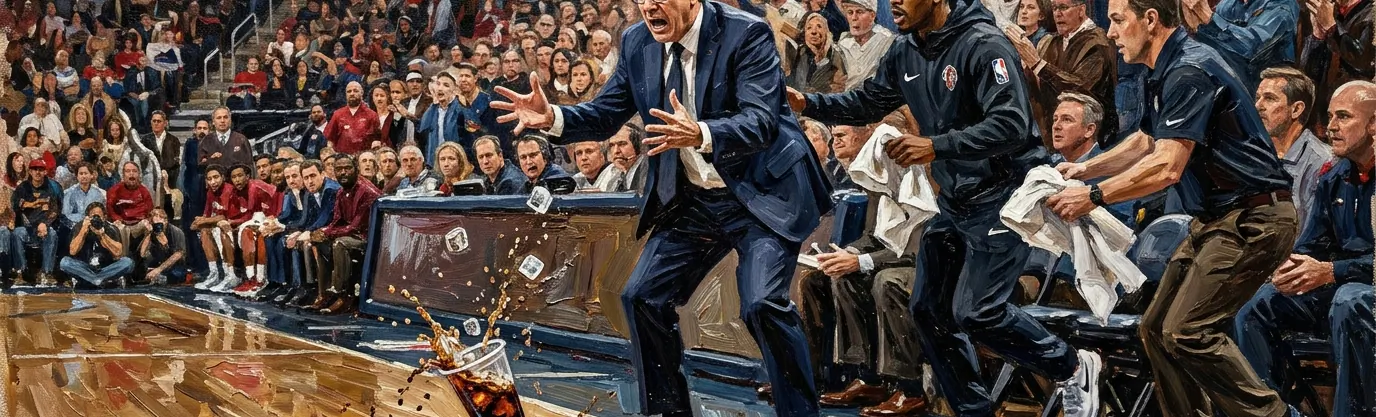
Holding a plastic cup of soda and ice along the sideline, Kidd looked directly at reserve guard Tyshawn Taylor—who was walking toward the bench—and was caught on high-definition broadcast cameras mouthing the two-word instruction: "Hit me." Taylor obligingly bumped into Kidd's shoulder, sending soda splashing across the hardwood floor.
While arena attendants spent two minutes mopping up the sticky spill, Nets assistant coaches huddled the players and drew up a three-point play on a whiteboard! Although Brooklyn missed the final shot and the NBA fined Kidd $50,000 the next morning, the "Soda Gate" ploy entered basketball folklore.
22.How did Syracuse owner Danny Biasone calculate the exact 24-second shot clock in 1954?
Correct Answer: D. Dividing game seconds by shots
Explanation: By 1954, the fledgling NBA was losing fans in droves because leading teams simply held the ball and refused to shoot for the entire fourth quarter, triggering endless foul-fests. Syracuse Nationals owner Danny Biasone realized the game desperately needed a time limit on each possession—but how many seconds should it be?
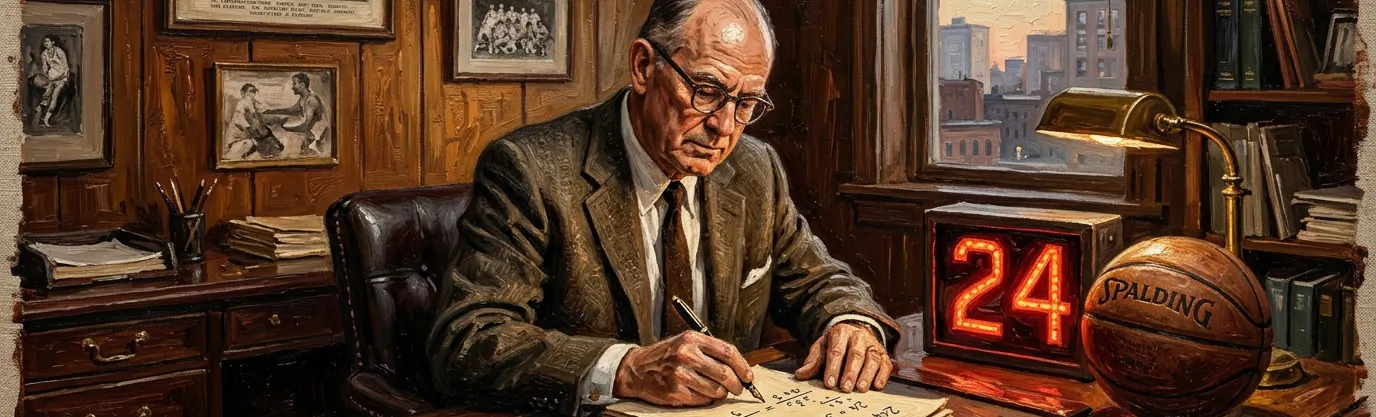
Sitting at his desk with a stack of box scores from fast-paced, entertaining NBA games that lacked stalling, Biasone noticed that in a well-played game, each team attempted roughly 60 field goals—for a combined total of 120 shots.
He then multiplied 48 minutes by 60 seconds to get 2,880 total seconds in an NBA game, and divided 2,880 seconds by 120 shots. The answer came out to exactly 24 seconds! Tested at a scrimmage in Blodgett Vocational High School in Syracuse in August 1954, the 24-second clock instantly saved professional basketball.
23.Which powerhouse center shattered two glass backboards in three weeks during 1979?
Correct Answer: C. Darryl Dawkins
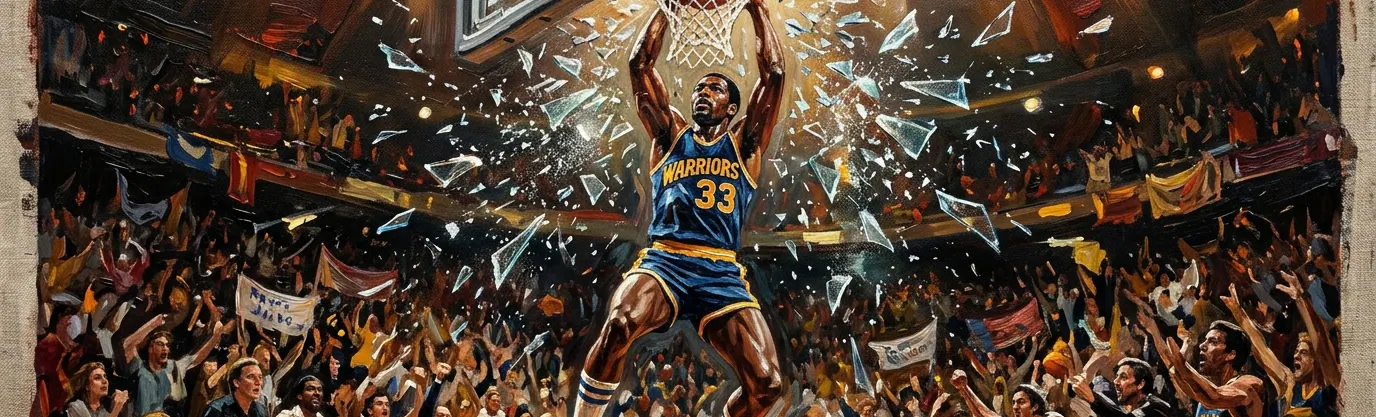
Explanation: Standing 6-foot-11 and 251 pounds, Philadelphia 76ers center Darryl "Chocolate Thunder" Dawkins turned rim-rattling dunks into performance art in the autumn of 1979 by obliterating two tempered-glass NBA backboards within a span of just 22 days!
The first explosion occurred on November 13, 1979, in Kansas City against the Kings, when Dawkins threw down a ferocious two-handed slam over Bill Robinzine that rained glass across the paint—a dunk he poetically christened the "Chocolate-Thunder-Flying, Robinzine-Crying, Teeth-Shaking, Glass-Breaking, Rump-Roasting, Bun-Toasting, Wham-Bam, Glass-Breaker-I-Am-Jam."
Just three weeks later on December 5 in Philadelphia, Dawkins shattered a second backboard against the San Antonio Spurs. The NBA immediately outlawed shattering backboards as a finable technical foul and engineered spring-loaded "breakaway" rims that flex downward and snap back into place.
24.Which NBA franchise drafted Olympic sprinter Carl Lewis despite him never playing college basketball?
Correct Answer: D. Chicago Bulls
Explanation: The 1984 NBA Draft is famous for producing four Hall of Fame basketball titans—Hakeem Olajuwon (#1), Michael Jordan (#3), Charles Barkley (#5), and John Stockton (#16)—but in the tenth round with the 208th overall pick, the Chicago Bulls drafted a man who had never played a single minute of college basketball: track-and-field legend Carl Lewis!
At the University of Houston, Lewis was busy winning NCAA titles in the 100-meter dash and long jump (and just weeks after the NBA Draft, he won four gold medals at the 1984 Los Angeles Olympics). Bulls general manager Rod Thorn was so dazzled by Lewis's world-record speed and 30-foot horizontal leap that he burned a late draft pick on the off chance Lewis wanted to try guarding NBA point guards.
Lewis never signed an NBA contract, though he is one of only two athletes in history—alongside fellow 1984 draftee Ron Brown—to be drafted by both an NBA team and an NFL team (the Dallas Cowboys) without playing either sport professionally.
25.Which sharpshooter broke the NBA career three-point record at Madison Square Garden in 2021?
Correct Answer: A. Stephen Curry
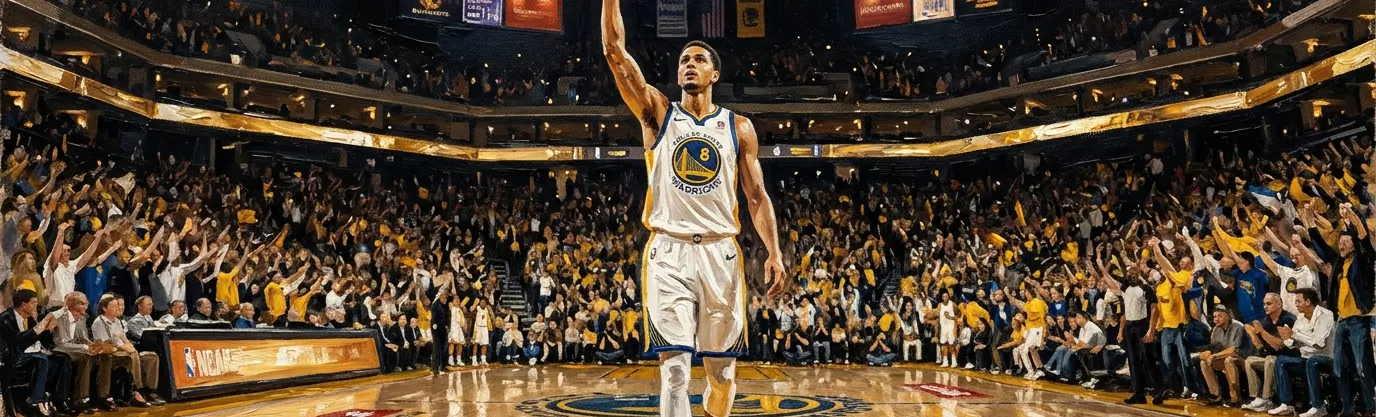
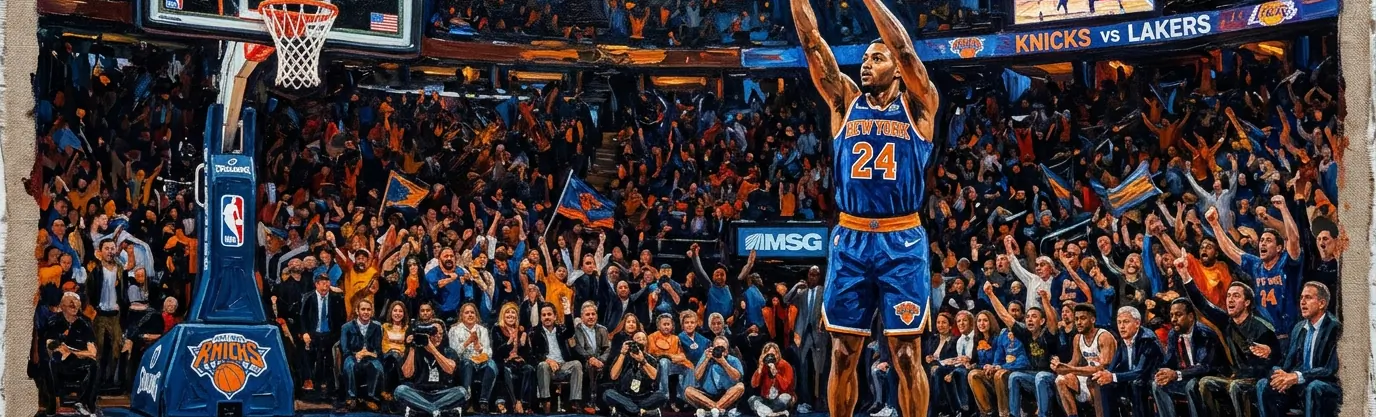
Explanation: On December 14, 2021, Golden State Warriors guard Stephen Curry stepped onto the floor at New York's Madison Square Garden needing just two three-pointers to pass Hall of Famer Ray Allen's all-time NBA regular-season record of 2,973 career triples.
With 7:33 remaining in the first quarter, Curry caught a pass from Andrew Wiggins on the right wing and swished his 2,974th career three-pointer in just his 789th regular-season game—shattering a mark that had taken Ray Allen 1,300 games to reach!
The Knicks called a timeout so Curry could celebrate at midcourt with both Ray Allen and previous record-holder Reggie Miller, who stood side by side in the front row holding up commemorative jerseys as Curry gifted the game ball to his father, former NBA sharpshooter Dell Curry.
26.How many dribbles did Klay Thompson take while scoring sixty points in 2016?
Correct Answer: B. Eleven dribbles
Explanation: On December 5, 2016, Golden State Warriors guard Klay Thompson delivered the most ruthlessly efficient catch-and-shoot clinic in basketball history, dropping a career-high 60 points against the Indiana Pacers in just 29 minutes of playing time—before sitting out the entire fourth quarter!
Even more mind-boggling than scoring 60 points in 29 minutes was NBA player-tracking data from Second Spectrum: across the entire game, Thompson touched the basketball for a cumulative total of just 90 seconds (an average of 1.73 seconds per touch) and took only 11 dribbles on his scoring plays!
Fifty-two of his 60 points came without putting the ball on the hardwood even once—just constant off-ball sprinting around screens, catching passes in rhythm, and releasing his picture-perfect jumper before defenders could blink.
27.Which NBA defensive star legally changed his name to Metta World Peace in 2011?
Correct Answer: C. Ron Artest
Explanation: In September 2011, a Los Angeles Superior Court judge approved Los Angeles Lakers small forward and former NBA Defensive Player of the Year Ron Artest's petition to legally change his name to Metta World Peace—giving NBA jersey makers the most uplifting surname in sports history.
Explaining the name change, the 2010 NBA champion noted that "Metta" is a traditional Buddhist Pali word meaning loving-kindness, friendliness, and goodwill toward all living beings, while "World Peace" was chosen so that fans around the globe would literally cheer for "World Peace" every time he checked into an arena.
Later in 2020, after retiring from the NBA and getting married, he updated his legal name once again to Metta Sandiford-Artest, combining his wife Maya Sandiford's surname with his original family name.
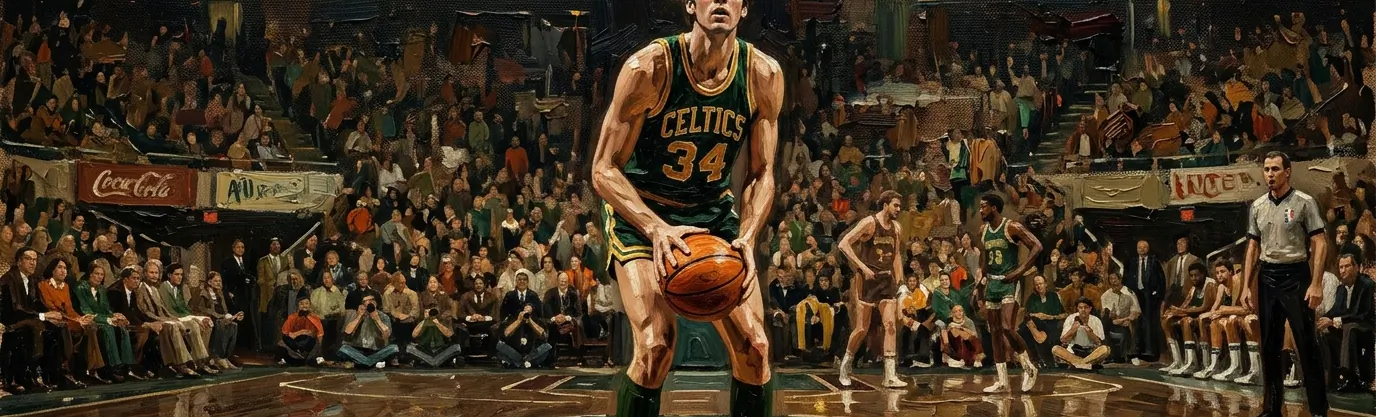
28.Which Hall of Famer shot underhand "granny-style" free throws to hit ninety percent?
Correct Answer: D. Rick Barry
Explanation: While almost every modern basketball player refuses to shoot free throws underhanded out of fear of looking uncool, Hall of Fame forward Rick Barry embraced the two-handed "granny shot" with zero shame—and retired with a blistering .900 career NBA free-throw percentage, leading the league in foul shooting seven times!
Encouraged by his father, a youth basketball coach, Barry held the ball down between his knees with relaxed wrists and swung his arms upward in a smooth pendulum motion. Biomechanical physicists have repeatedly confirmed that the underhand pendulum release creates a softer, higher entry angle with superior backspin compared to a one-handed overhand push.
In his final NBA season (1979–80), Barry missed only 9 free throws all year long (shooting 94.7%), and he famously convinced Wilt Chamberlain to try the underhand method in 1962—which Wilt used when he went 28-for-32 from the line during his 100-point game before abandoning it out of embarrassment!
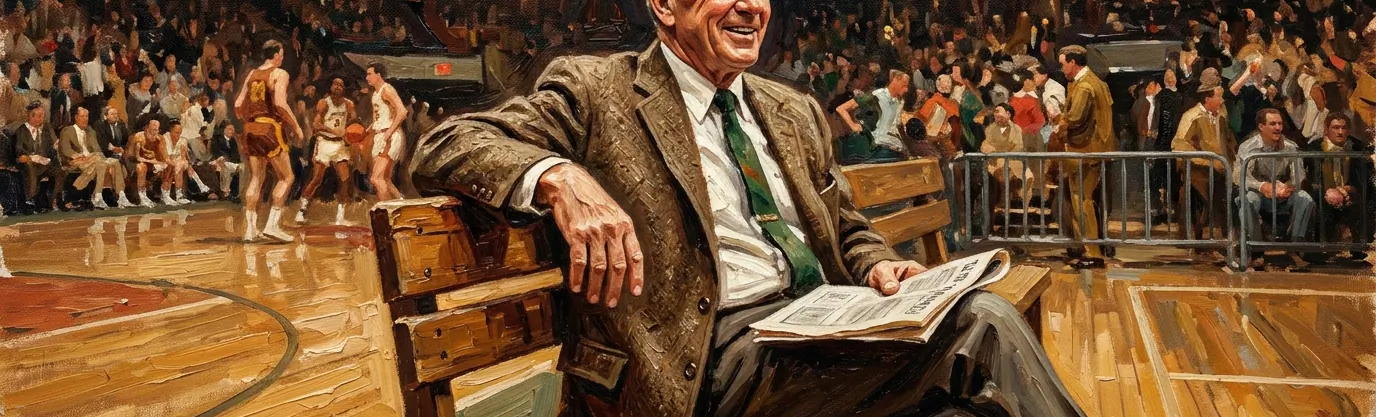
29.What did Boston Celtics patriarch Red Auerbach famously light on the bench before victories?
Correct Answer: A. A victory cigar
Explanation: Across nine NBA championships as head coach and seven more as general manager and team president of the Boston Celtics, Arnold "Red" Auerbach created the ultimate psychological taunt in professional sports: leaning back on the team bench and lighting a fragrant Hoyo de Monterrey cigar whenever he decided the game was out of reach!
Opposing coaches and road crowds despised the ritual so deeply that rival arena managers in Cincinnati and Syracuse tried passing local fire-marshal ordinances banning smoking on the court—and once handed out 5,000 cigars to home fans to puff in Auerbach's face when Boston lost.
When journalists asked Auerbach why he risked inspiring opposing comebacks by lighting up with two minutes still left on the clock, he grinned through a cloud of smoke and replied that in his entire coaching career, he had never once lost a game after lighting a victory cigar.
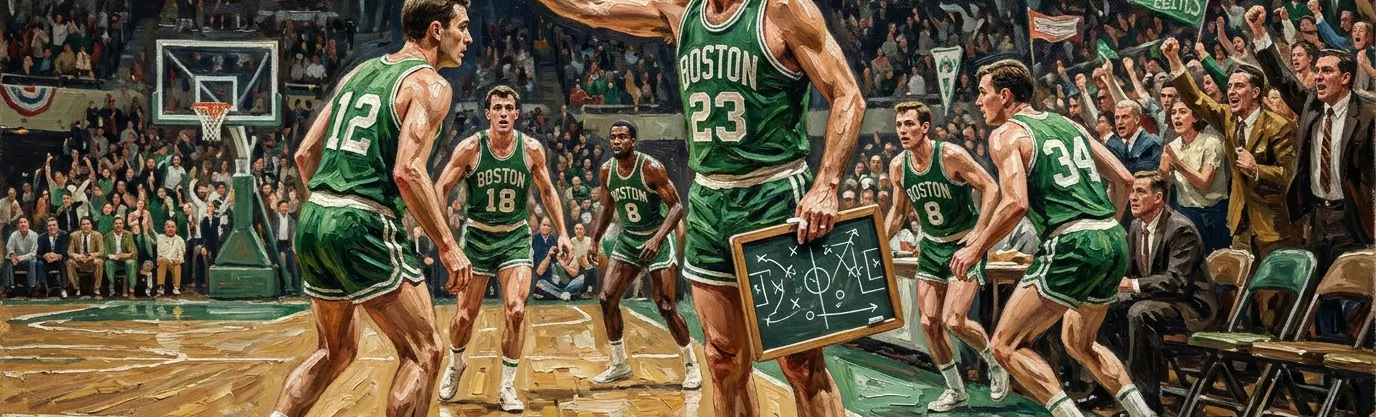
30.Who became the first Black head coach in NBA history while still playing center?
Correct Answer: B. Bill Russell
Explanation: In April 1966, after guiding the Boston Celtics to eight straight NBA championships, Red Auerbach retired from coaching and handed the whistle to his 32-year-old team captain, five-time NBA MVP center Bill Russell—making Russell the first Black head coach in the history of any major North American professional sports league!
Even more remarkably, Russell didn't hang up his sneakers to stand on the sideline in a suit: for three full seasons (1966–1969), he served simultaneously as Boston's starting center and head coach, calling timeouts from the low post, running team practices, and anchoring the defense for 40+ minutes a night.
As a player-coach, Russell led the Celtics to back-to-back NBA championships in 1968 and 1969—capping his 13-year playing career with an unmatched 11 championship rings.
31.How many points did Wilt Chamberlain score in Hershey, Pennsylvania on March 2, 1962?
Correct Answer: C. One hundred points
Explanation: On the snowy Friday night of March 2, 1962, inside the cozy Hershey Sports Arena in Hershey, Pennsylvania—with just 4,124 fans in the seats and zero television cameras present—Philadelphia Warriors center Wilt Chamberlain scored an immortal 100 points in a 169–147 victory over the New York Knicks.
Chamberlain scored 23 points in the first quarter, 18 in the second, 28 in the third, and 31 in the fourth, shooting 36-of-63 from the field and a shockingly accurate 28-of-32 from the free-throw line (shooting underhanded!). In the final minutes, the Knicks intentionally fouled every Warrior except Wilt while Philadelphia fouled New York right back just to get the ball into Chamberlain's hands.
When Wilt slammed home his 100th point on a lob pass from Joe Ruklick with 46 seconds remaining, hundreds of fans stormed the court so jubilantly that the final 46 seconds were never even played—and Warriors PR director Harvey Pollack quickly scribbled "100" on a sheet of typing paper for photographer Paul Vathis's iconic locker-room snapshot.
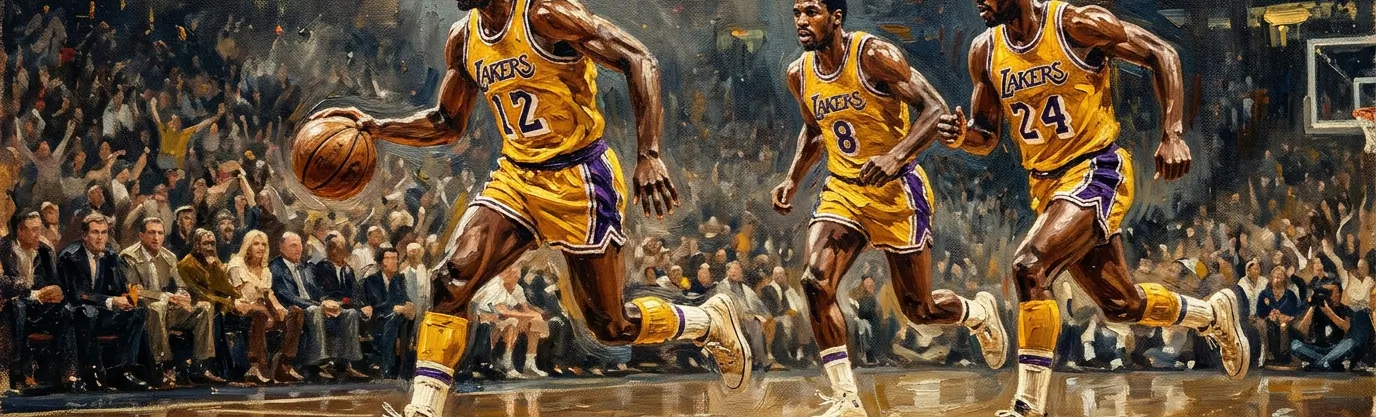
32.Which NBA team holds the longest winning streak in history with thirty-three straight victories?
Correct Answer: D. 1972 Los Angeles Lakers
Explanation: Between November 5, 1971, and January 7, 1972, the Los Angeles Lakers—led by Jerry West, Wilt Chamberlain, Gail Goodrich, and coach Bill Sharman—won 33 consecutive regular-season games, the longest winning streak in the history of the NBA and all major North American team sports!
For two full calendar months (including a perfect 16–0 December), the Lakers didn't lose a single game, crushing opponents by an average margin of 16.0 points per contest as Chamberlain anchored the defense and ignited fast breaks with his outlet passes.
The streak finally ended on January 9, 1972, in Milwaukee when Kareem Abdul-Jabbar dropped 39 points to lead the defending champion Bucks to a 120–104 win—before the Lakers went on to finish 69–13 and capture the 1972 NBA championship.
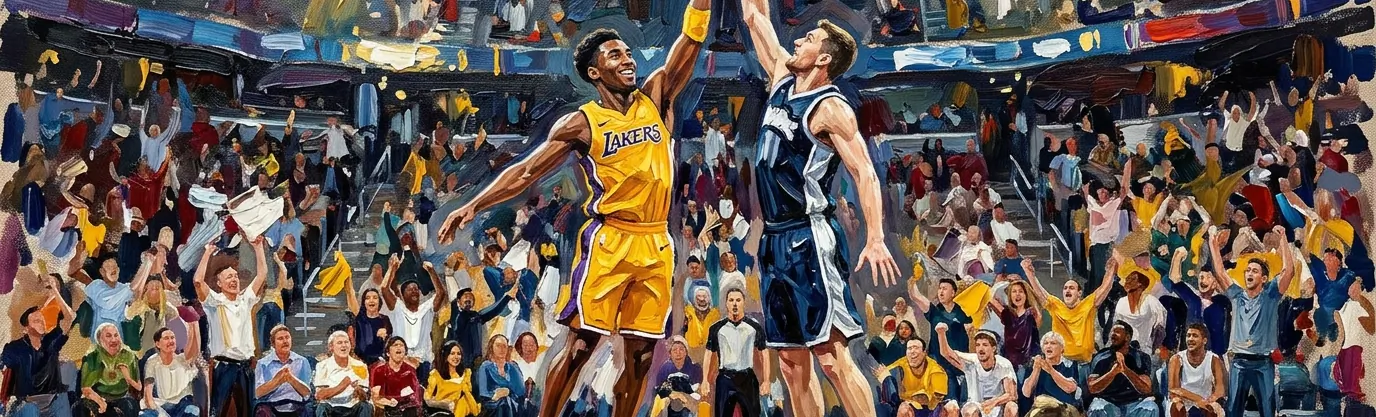
33.Which rookie point guard started at center to clinch the 1980 NBA Finals?
Correct Answer: A. Magic Johnson
Explanation: Leading the Philadelphia 76ers 3–2 in the 1980 NBA Finals, the Los Angeles Lakers suffered a devastating blow when six-time league MVP center Kareem Abdul-Jabbar severely sprained his ankle in Game 5 and had to stay behind in Los Angeles as the team flew to Philadelphia for Game 6.
Boarding the team plane, head coach Paul Westhead asked 20-year-old rookie point guard Earvin "Magic" Johnson—standing 6-foot-9—to sit in Kareem's reserved first-class seat and informed him he would be starting Game 6 at center!
On May 16, 1980, Magic jumped center for the opening tip and proceeded to play every single position on the floor—center, power forward, small forward, shooting guard, and point guard—finishing with 42 points, 15 rebounds, 7 assists, and 3 steals while shooting 14-for-14 from the foul line to clinch the championship.
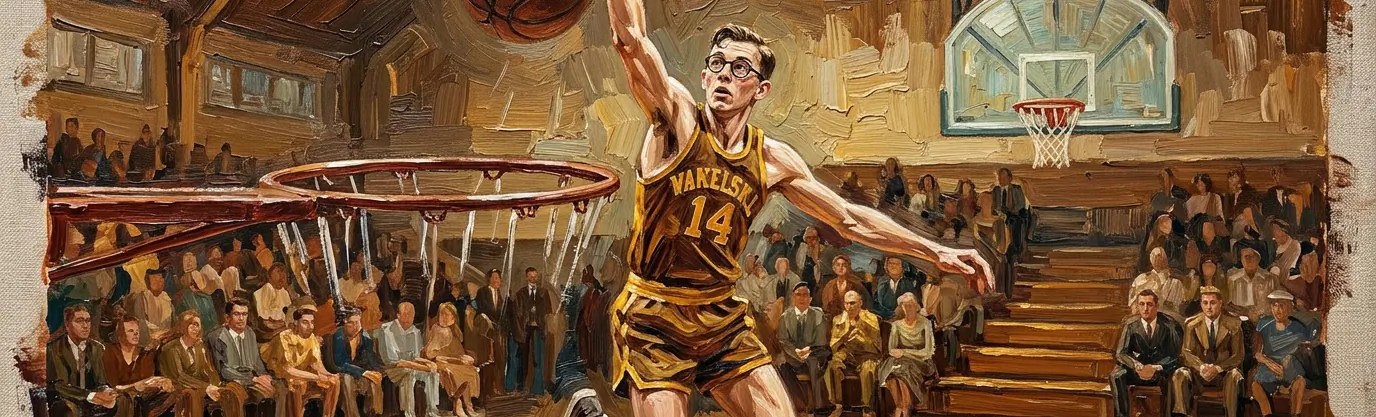
34.Which bespectacled giant forced basketball to outlaw defensive goaltending in 1944?
Correct Answer: B. George Mikan
Explanation: Before the 1940s, prevailing wisdom held that men well over six feet tall were too clumsy and uncoordinated to play basketball. That myth was shattered at DePaul University by 6-foot-10 center George Mikan—basketball's first true superstar—after coach Ray Meyer put him through months of jump-rope, ballet, and boxing drills.
With thick wire-rimmed spectacles and impeccable timing, Mikan stationed himself directly beneath his own basket, waited until opponents' high-arcing shots began descending toward the hoop, and simply reached above the 10-foot rim to swat the ball out of the cylinder like a volleyball blocker!
Because nobody could score over a 6-foot-10 human umbrella camping at the rim, the NCAA officially banned defensive goaltending in 1944—forbidding defenders from touching any shot on its downward flight toward the basket.
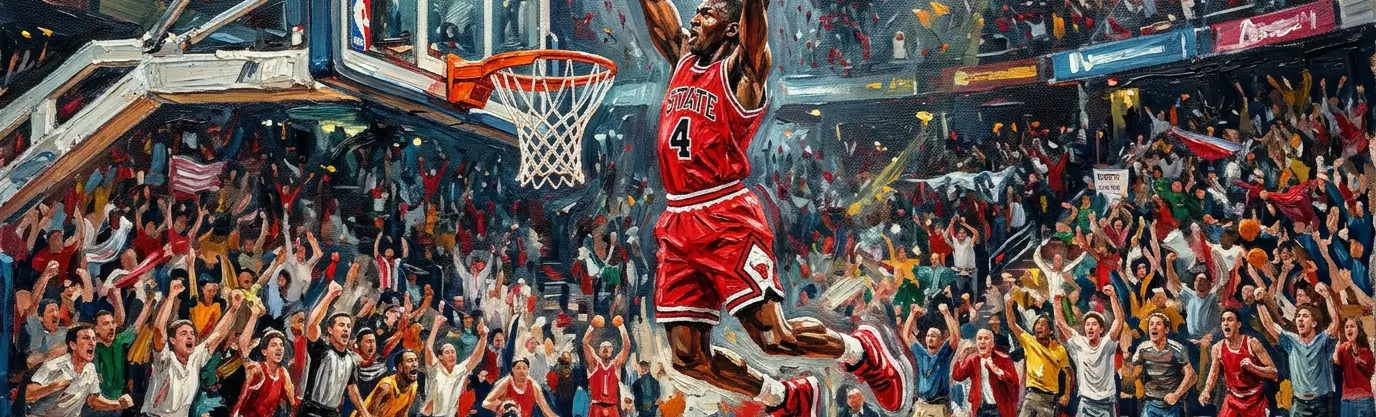
35.Which NBA player won the 1986 Slam Dunk Contest standing just five feet seven?
Correct Answer: C. Spud Webb
Explanation: When 5-foot-7 Atlanta Hawks rookie guard Anthony "Spud" Webb entered the 1986 NBA Slam Dunk Contest during All-Star Weekend in his hometown of Dallas, Texas, even his own Hawks teammate—reigning dunk champion Dominique "The Human Highlight Film" Wilkins—admitted he had never seen Webb dunk a basketball in practice!
Possessing an explosive 46-inch vertical leap that propelled the top of his head above the 10-foot rim, Webb stunned the Reunion Arena crowd with an elevator double-pump slam, a one-handed 360-degree spin dunk, and a Perfect-50-point reverse two-handed catch off a self-lobbed bounce pass.
In the final round, Webb defeated the 6-foot-8 Wilkins by earning two consecutive perfect 50 scores, remaining the shortest Slam Dunk Contest champion in NBA history.
36.What unusual free-throw routine did Karl Malone perform before every single charity shot?
Correct Answer: B. Whispering a secret mantra
Explanation: Across 19 NBA seasons, Utah Jazz Hall of Fame power forward Karl "The Mailman" Malone attempted 13,188 regular-season free throws—more than any other player in NBA history—and before every single one, television cameras zoomed in on his lips as he held the basketball under his chin and whispered a mysterious five-second incantation to himself.
The routine was so famously hypnotic and time-consuming that opposing arenas counted the seconds aloud to try to trigger a 10-second free-throw violation, while lip-readers across America spent two decades trying to decode his secret words.
Malone guarded the mystery throughout his playing career, finally revealing only after retirement that the whispered mantra was a quiet personal prayer and dedication to his family and hometown roots in Summerfield, Louisiana.
37.Which four-time NBA champion was drafted 57th overall before becoming a Spurs legend?
Correct Answer: D. Manu Ginóbili
Explanation: At the 1999 NBA Draft, 56 players heard their names called before the San Antonio Spurs used the penultimate pick of the entire draft—57th overall—to select a relatively unknown 21-year-old Argentine left-handed guard playing in the Italian league named Emanuel "Manu" Ginóbili.
Ginóbili wasn't even watching the draft; he was asleep in a hotel room in Brazil with the Argentine national team when he woke up to the news. After staying in Europe for three more years to win a EuroLeague championship and MVP, he arrived in San Antonio in 2002 and revolutionized NBA perimeter play with his fearless, contorting Eurostep layups and no-look passes.
Alongside Tim Duncan and Tony Parker, the 57th overall pick won four NBA championships (2003, 2005, 2007, and 2014), led Argentina to the 2004 Olympic Gold Medal over Team USA, and was inducted into the Naismith Basketball Hall of Fame in 2022.