

Canada Trivia: 37 Maple Syrup Heists, Rat Patrols, Unlocked Polar Bear Cars & Wild True Facts
Beyond hockey and maple leaves—explore 37 wild, 100% true Canadian stories of $18M syrup heists, UFO landing pads, and low-gravity bays.

1.Which Canadian province stayed completely free of wild rats for over seventy years?
Correct Answer: B. Alberta
Explanation: Since 1950, Alberta has operated one of the world's most fiercely defended biological borders: a 600-kilometer-long, 29-kilometer-wide Rat Control Zone along its eastern boundary with Saskatchewan. Armed with traps, bait stations, and binocular-toting inspectors, the provincial "Rat Patrol" systematically intercepts every Norway rat attempting to hitchhike westward across the prairies.
Protected by the icy Rocky Mountains to the west, dense boreal forest to the north, and arid shortgrass Montana plains to the south, Alberta realized early on that rats could only invade from the east. Keeping the province rat-free is strictly enforced by law—even keeping a domesticated pet fancy rat without a special research permit can land an Albertan a hefty fine.
Whenever a stray rodent sneaks aboard a grain truck or moving van into Calgary or Medicine Hat, provincial pest specialists respond like a tactical SWAT team, tracking the intruder until the infestation is eliminated and Alberta's legendary rat-free streak remains intact.
2.What sweet heist saw thieves steal three thousand tons of Quebec's strategic reserve?
Correct Answer: C. Maple Syrup
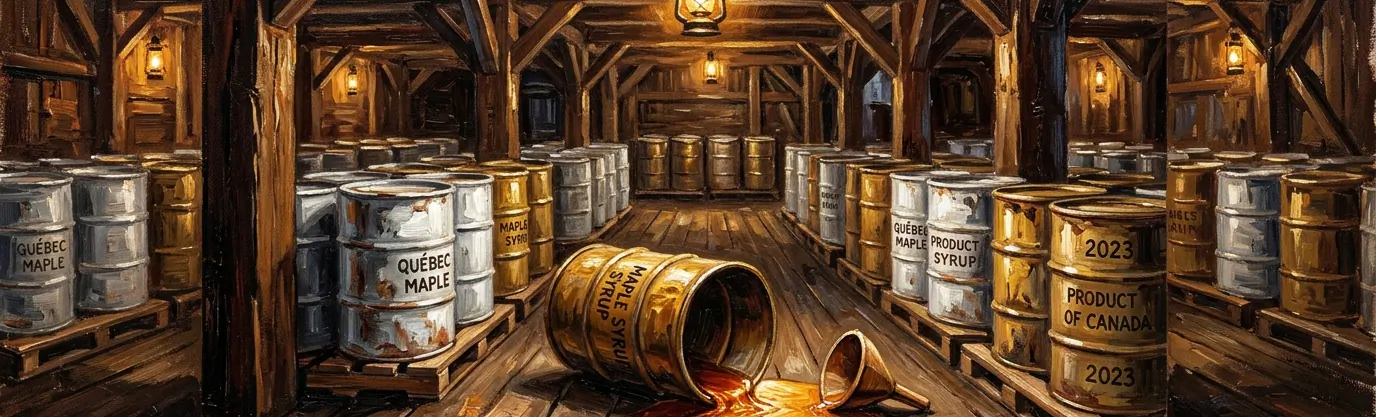
Explanation: Between 2011 and 2012, audacious thieves pulled off the "Great Canadian Maple Syrup Heist," siphoning nearly 3,000 metric tons of golden Grade-A syrup—worth $18.7 million CAD—from a strategic reserve warehouse in Saint-Louis-de-Blandford, Quebec. The Federation of Quebec Maple Syrup Producers maintains this real-world "OPEC of syrup" to stabilize global supply during poor harvest years.
Renting space inside the lightly guarded facility, the culprits quietly drained 9,571 white barrels, refilled them with plain water so they would feel heavy during routine checks, and trucked the liquid gold across provincial and international borders to unsuspecting buyers.
The plot finally unraveled during an annual inventory inspection when an auditor climbed up a stack of barrels, leaned against one that was supposed to be thick with dense syrup, and nearly toppled over because it was completely empty.
3.Why do residents of Churchill, Manitoba purposefully leave their parked cars unlocked?
Correct Answer: B. Wandering polar bears
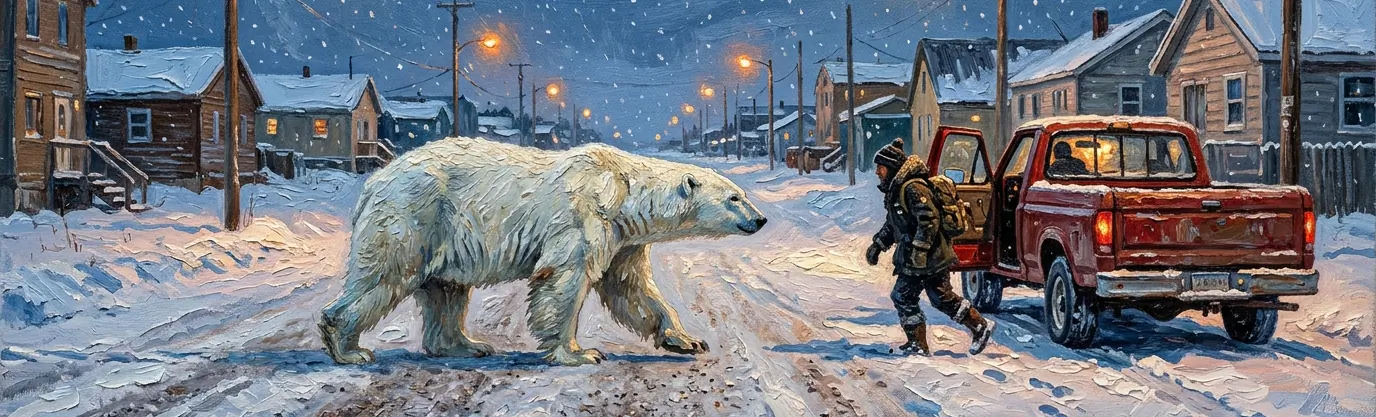
Explanation: Sitting right along the migration path of Western Hudson Bay's polar bears as they wait for autumn sea ice to freeze, the remote subarctic town of Churchill, Manitoba is known as the "Polar Bear Capital of the World." With roughly 800 human residents and a similar number of half-ton carnivores nearby, encounters on main streets are an everyday hazard.
To give pedestrians an emergency escape pod if a curious bear rounds a street corner, locals observe an unwritten civic rule: leave parked car and truck doors unlocked around the clock. Ducking inside a neighbor's pickup truck has saved more than one resident from a close encounter.
Churchill also operates a 24-hour Polar Bear Alert hotline and a specialized "Polar Bear Holding Facility"—affectionately nicknamed the Polar Bear Jail—where repeat town-wandering bears are held safely in former military hangar cells before being airlifted by helicopter back onto the coastal ice.
4.Which gravity anomaly around Canada's Hudson Bay makes you weigh slightly less there?
Correct Answer: B. Ancient ice sheet rebound
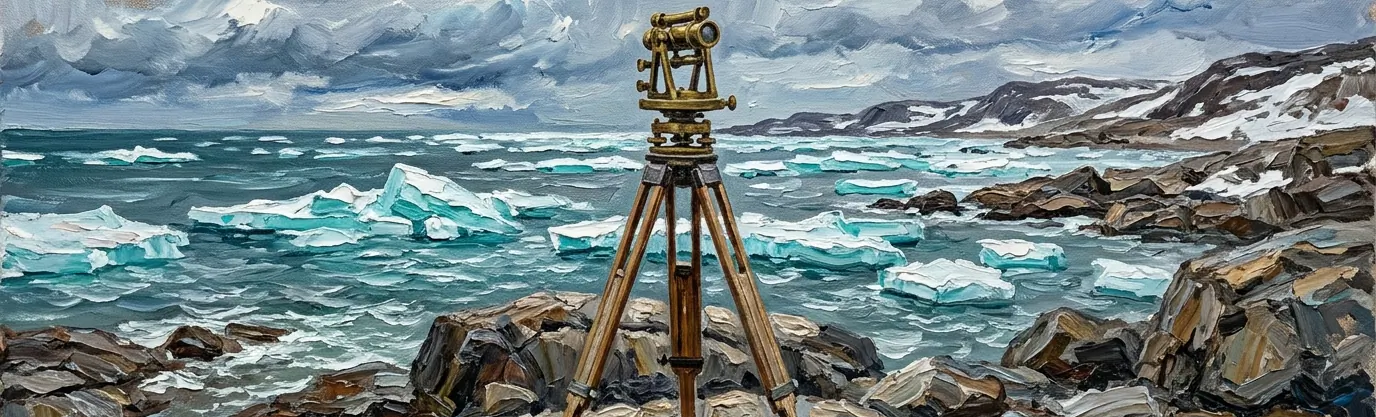
Explanation: In the 1960s, geophysicists mapping Earth's global gravity field noticed a baffling anomaly: gravity around Canada's Hudson Bay region is measurably weaker than almost anywhere else on the planet. Stepping onto an ultra-sensitive scale there reduces your weight by roughly one-thousandth of an ounce (about 0.005%).
Satellite data from NASA's GRACE mission revealed a two-part culprit rooted in deep time. During the last Ice Age, the colossal Laurentide Ice Sheet—towering over 3.2 kilometers (2 miles) thick—pressed down so heavily on northern Canada that it indented Earth's crust and displaced underlying mantle rock outward.
Even though the ice melted 10,000 years ago, the crust is still slowly rebounding upward at roughly a centimeter per year like a compressed memory-foam mattress. Combined with swirling magma convection currents deep beneath the bay, the missing mass leaves Hudson Bay slightly lighter in gravitational pull.
5.Which world-famous children's storybook bear was named after a real Canadian army mascot?
Correct Answer: D. Winnie-the-Pooh
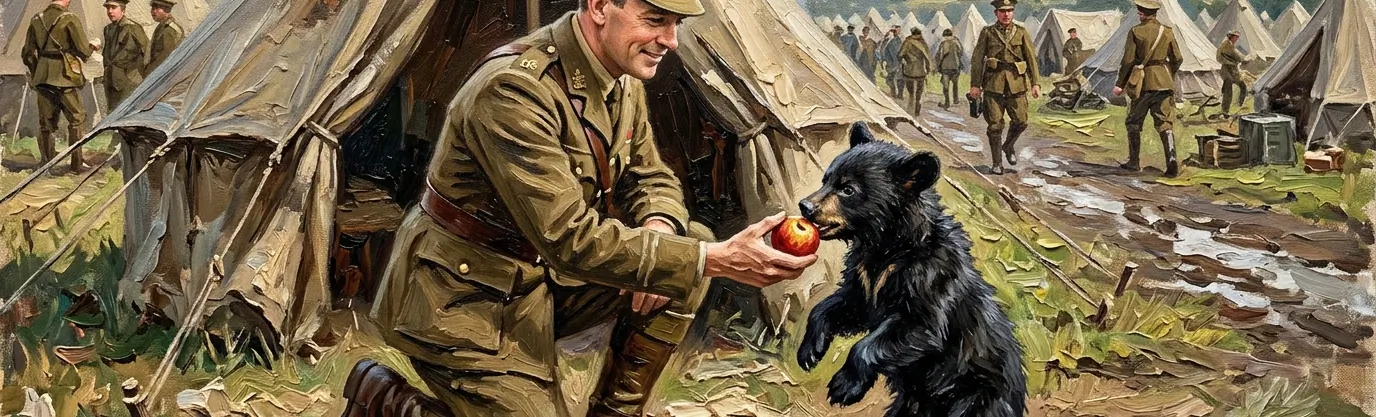
Explanation: In August 1914, while traveling by train from Winnipeg, Manitoba to join the Canadian Army Veterinary Corps for World War I, Lieutenant Harry Colebourn stopped in White River, Ontario and purchased an orphaned female black bear cub from a hunter for $20. Colebourn named the gentle cub "Winnipeg"—or "Winnie" for short—after his beloved hometown.
Winnie sailed across the Atlantic to England as the regimental mascot of the 2nd Canadian Infantry Brigade, sleeping under Colebourn's cot on Salisbury Plain. Before deploying to the battlefields of France, Colebourn loaned Winnie to the London Zoo for safekeeping, eventually donating her permanently when he saw how much British children adored her.
Among Winnie's most devoted London Zoo visitors was young Christopher Robin Milne, who was allowed inside her enclosure to feed her condensed milk with a spoon. So enchanted was the boy that he renamed his own stuffed teddy bear "Winnie," inspiring his father A. A. Milne to pen Winnie-the-Pooh.

6.What unusual punctuation feature does Saint-Louis-du-Ha!-Ha! boast in its official town name?
Correct Answer: A. Two exclamation marks
Explanation: Nestled in southeastern Quebec near the Maine and New Brunswick borders, the municipality of Saint-Louis-du-Ha!-Ha! holds the Guinness World Record as the only town on Earth with two exclamation points in its official name—outshining even England's Westward Ho!, which settled for a modest single exclamation mark.
Despite sounding like a punchline, the "Ha! Ha!" has nothing to do with laughter. According to Canada's Commission de toponymie, it derives from the archaic French word "haha," meaning an unexpected dead-end obstacle or sudden barrier—referring here to nearby Lake Témiscouata, which abruptly blocked early canoe portage trails.
The small parish of roughly 1,300 residents embraces its typographical fame with pride, welcoming road-trippers with bold exclamation-studded highway signs and holding the official motto "Solidaire dans le labeur" (United in Labor).
7.What did Canadian instructor James Naismith nail up to invent basketball in 1891?
Correct Answer: C. Wooden peach baskets
Explanation: Born in Almonte, Ontario and educated at McGill University in Montreal, Canadian physical education teacher Dr. James Naismith faced a rowdy winter gym class in December 1891 in Springfield, Massachusetts. Tasked with inventing an indoor game that prioritized skill and agility over bone-crushing football tackles, Naismith drafted 13 simple rules on two typewritten pages.
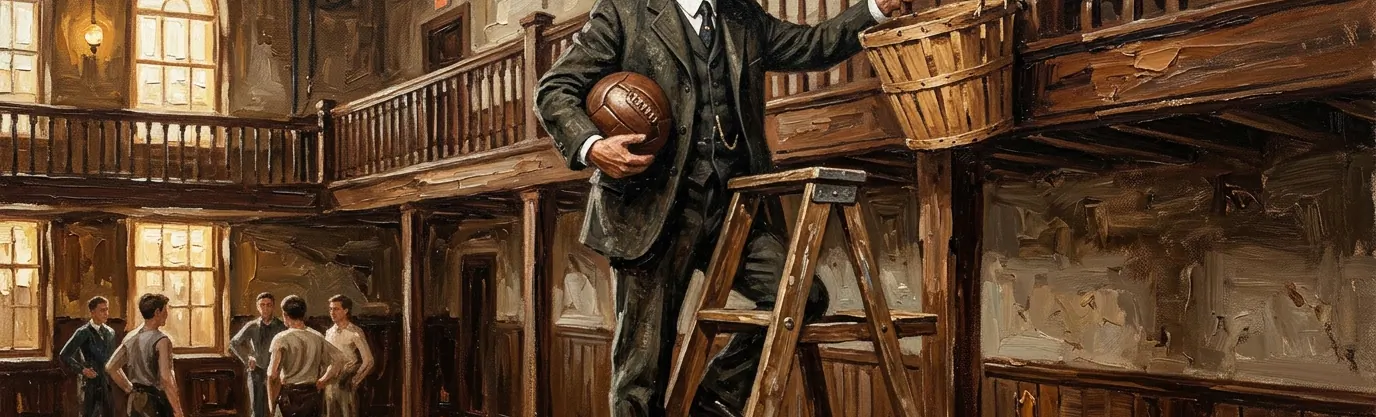
He asked the building superintendent for two 18-inch square boxes to serve as elevated goals, but the janitor only had two empty wooden half-bushel peach baskets in the storeroom. Naismith nailed them to the lower rail of the gymnasium balcony—which happened to sit exactly 10 feet above the floor, a standard height that endures across every basketball court today.
Because the wooden peach baskets still had solid bottoms, the game paused after every single made shot while someone climbed a stepladder (or poked a long dowel rod) to retrieve the leather soccer ball.
8.What hidden artwork appears inside Canadian biometric passports under ultraviolet blacklight?
Correct Answer: D. Glowing neon fireworks
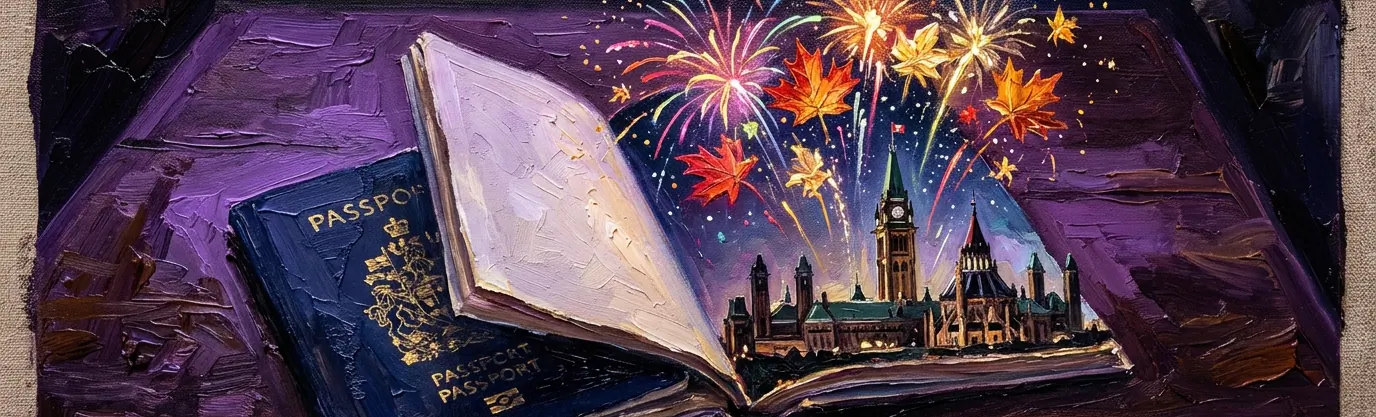
Explanation: Under ordinary daylight, Canada's ePassport pages display tasteful pastel illustrations of national landmarks—from Niagara Falls and the Bluenose schooner to the Canadian Rockies and Parliament Hill. Flip on an ultraviolet blacklight, however, and every spread erupts into a dazzling neon night scene.
Printed with optically variable UV-reactive security inks to thwart counterfeiters, the pages reveal glowing bursts of red, yellow, and violet fireworks over Ottawa's Peace Tower, starry constellations above historic ships, and radiant maple leaves floating across every visa page.
When travelers first photographed the UV-illuminated pages and shared them online, the passport went viral worldwide as the "rave passport," proving that high-security government anti-forgery engineering can double as miniature pop art.

9.Why did Canada's federal government mail scratch-and-sniff cards to households in the 1970s?
Correct Answer: B. Identifying marijuana odor
Explanation: During the late 1970s, the Canadian federal government launched an ambitious—and hilariously misguided—public awareness campaign by distributing educational pamphlets fitted with micro-encapsulated "scratch-and-sniff" patches designed to smell like burning marijuana.
The goal was to help suburban parents recognize the herbal scent wafting from their teenagers' basements. Unfortunately, the synthetic fragrance compound engineered by contractors smelled far more like sweet oregano, pine needles, or cheap herbal cologne than actual cannabis, triggering false alarms across Canadian dinner tables.
Decades later, after Canada became the first G7 nation to legalize recreational cannabis nationwide in October 2018, surviving vintage government scratch-and-sniff cards became prized, ironic museum collectibles.

10.Which sport shares official national status with hockey under Canada's 1994 Sports Act?
Correct Answer: C. Lacrosse
Explanation: Ask almost anyone to name Canada's national sport and they will instantly shout "ice hockey!" Yet for more than a century following Confederation, popular belief and athletic encyclopedias actually recognized lacrosse—played for centuries by First Nations peoples as "Baggataway" or "Tewaarathon"—as Canada's sole national game.
When lawmakers introduced a bill in 1994 to declare ice hockey the official national sport, Indigenous leaders and lacrosse historians protested erasing Canada's oldest athletic tradition. Parliament responded with a Solomonic compromise in the National Sports of Canada Act (Bill C-212).
Signed into law on May 12, 1994, the Act officially designated ice hockey as Canada's National Winter Sport and lacrosse as Canada's National Summer Sport, giving both fast-paced stick games equal billing.

11.Where is the only walled city in North America north of Mexico located?
Correct Answer: D. Quebec City
Explanation: Perched atop the dramatic cliffs of Cap Diamant overlooking the narrowing St. Lawrence River, Old Quebec (Vieux-Québec) in Quebec City is the only remaining fortified city north of Mexico whose defensive stone ramparts, bastions, and gates still encircle the historic core.
Constructed by French colonial engineers beginning in the 17th century and heavily expanded by the British Army after 1759—culminating in the star-shaped Citadelle of Quebec—the 4.6-kilometer (2.85-mile) stone circuit stood ready against American invasions in 1775 and the War of 1812.
In the 1870s, when modernist officials tried to demolish the walls to widen streets, Governor General Lord Dufferin stepped in to save and restore the ramparts, paving the way for Old Quebec's designation as a UNESCO World Heritage Site in 1985.
12.What quirky watercraft race turns Nanaimo's harbor into high-speed chaos every summer?
Correct Answer: A. Motorized bathtub regatta
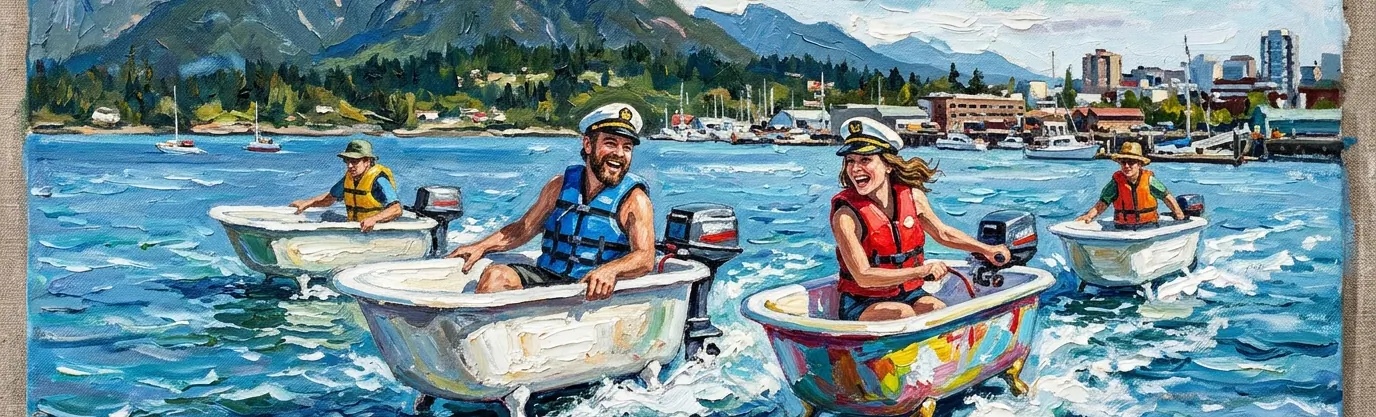
Explanation: Launched in 1967 to celebrate Canada's Centennial, the Great International World Championship Bathtub Race in Nanaimo, British Columbia transforms ordinary bathroom fixtures into roaring marine speedboats. Originally spanning 58 kilometers (36 miles) across the choppy Strait of Georgia from Nanaimo to Vancouver, the race now runs a rugged circular course around the Nanaimo harbor islands.
Strict "Tubbing" regulations require every hull to be molded like a real roll-top bathtub at least 48 inches long and 22 inches wide, powered by a small outboard motor. Fearless pilots—"tubbers"—crouch on their knees as waves slam over porcelain and fiberglass rims.
Upon reaching the finish beach, pilots must leap from their floating bathtubs and sprint up the sand to ring a brass victory bell, watched by tens of thousands of cheering spectators and escorted by safety vessels.

13.Which Canadian town built the world's first official UFO landing pad in 1967?
Correct Answer: B. St. Paul, Alberta
Explanation: While dozens of Canadian communities built parks and libraries for Canada's 1967 Centennial, the farming town of St. Paul, Alberta aimed considerably higher: it constructed the world's first official UFO Landing Pad. Weighing over 130 tons, the raised circular concrete platform sits atop six stout pillars beside a stone-studded map of Canada.
At the June 3, 1967 ribbon-cutting ceremony, Canada's Minister of National Defence, Paul Hellyer, arrived by helicopter to officially declare the pad open to both terrestrial neighbors and visitors from outer space. A plaque beside the pad pledges to keep outer space free from national wars and strife.
Though no flying saucers have officially touched down yet, the monument—along with a neighboring saucer-shaped tourist information center added in the 1990s—draws tens of thousands of delighted road-trippers every year, including visits from Queen Elizabeth II and Mother Teresa.

14.What does the Indigenous St. Lawrence Iroquoian word "kanata" actually translate to?
Correct Answer: C. Village or settlement
Explanation: In 1535, two Indigenous youths guiding French explorer Jacques Cartier up the St. Lawrence River pointed toward the route to the settlement of Stadacona (modern-day Quebec City) and used the St. Lawrence Iroquoian word "kanata," which simply meant "village" or "settlement."
Cartier misunderstood the local noun as the proper name of the entire surrounding territory ruled by Chief Donnacona, recording in his journals that the lands were called "le royaume de Canada." Soon European mapmakers began stamping "Canada" across the vast northern half of the continent.
What started as a friendly directional pointer to a cluster of wooden longhouses ultimately grew into the official name of the world's second-largest country by total area.
15.Which Arctic island holds a tiny island inside a triple-nested Canadian lake?
Correct Answer: D. Victoria Island
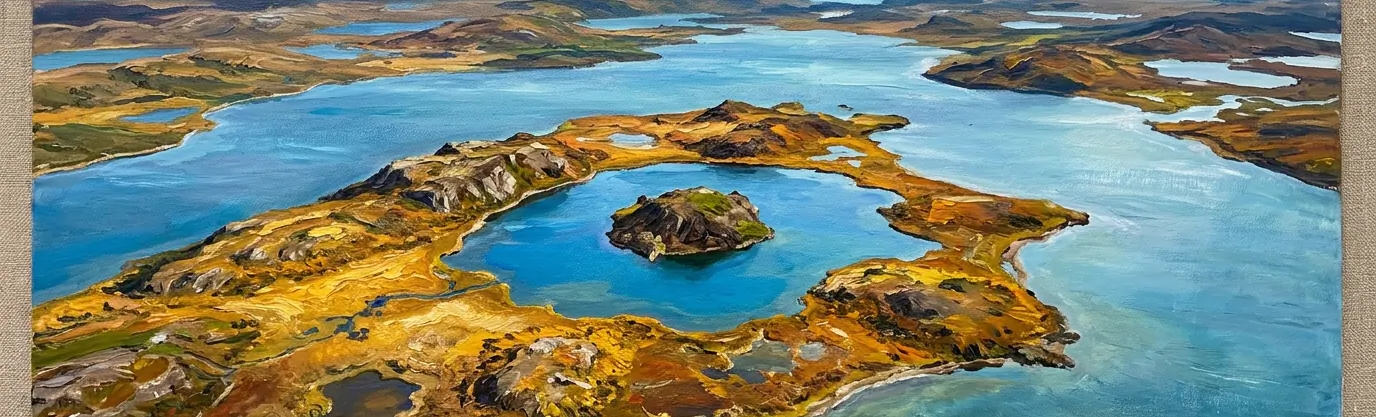
Explanation: Deep inside the remote tundra of Victoria Island—straddling the border of Nunavut and the Northwest Territories—lies a geographical Russian nesting doll: the world's largest third-order recursive island. Here, a tiny four-acre seahorse-shaped islet sits inside a small lake, which sits on a larger island, which floats inside a bigger lake on Victoria Island!
Discovered by geography enthusiasts poring over high-resolution NASA Landsat satellite imagery, this sub-sub-sub-island spans roughly 300 meters across and has likely never been stepped on by a human being due to its extreme isolation 90 kilometers inland from the Arctic coast.
Wait—Canada also holds the record for the largest island in a freshwater lake on Earth (Manitoulin Island in Lake Huron), making the country an undisputed world champion of island-in-a-lake inception.
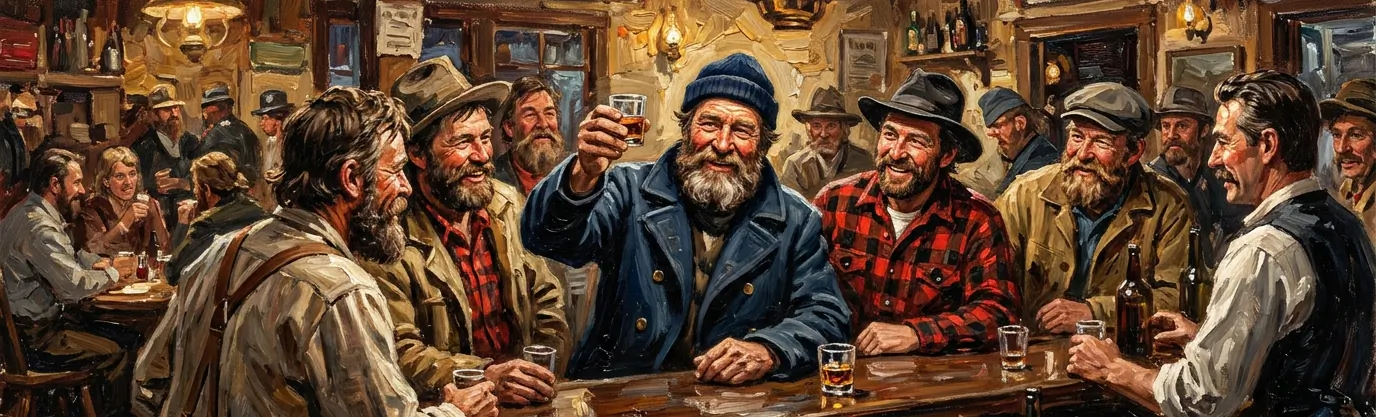
16.Why does Dawson City's Downtown Hotel serve a real preserved human toe in whisky?
Correct Answer: A. Gold rush rum-runner dare
Explanation: Since 1973, the Sourdough Saloon inside Dawson City, Yukon's Downtown Hotel has inducted over 100,000 brave travelers into the "Sourtoe Cocktail Club." The initiation requirement is simple, unsettling, and unforgettable: order a shot of whisky (typically Yukon Jack) containing a genuine, dehydrated, salt-preserved human toe.
The legend began in the 1920s when Yukon rum-runner Louie Liken froze his big toe during a cross-border blizzard. To prevent gangrene, his brother amputated it with an axe and preserved it in a jar of alcohol. Fifty years later, local riverboat captain Dick Stevenson found the forgotten jar in an abandoned cabin and invented the saloon challenge.
The official club rule—recited by the "Toe Captain"—states: "You can drink it fast, you can drink it slow, but your lips must touch the toe!" Accidentally swallowing the toe carries a steep $2,500 fine, and citizens have donated replacement toes in their wills to keep the tradition alive.

17.What global fraction of all natural freshwater lakes on Earth lies inside Canada?
Correct Answer: B. Over sixty percent
Explanation: According to global hydrographic satellite surveys led by McGill University, Canada is home to more than 60% of all the natural lakes on Planet Earth—more lakes than every other country in the world combined! Of the world's 1.42 million natural lakes larger than 10 hectares, nearly 900,000 glint across the Canadian landscape.
This staggering abundance was sculpted during the retreat of the Laurentide Ice Sheet at the end of the last Ice Age. As the massive glaciers ground across the ancient granite bedrock of the Canadian Shield, they gouged out millions of basins and left behind meltwater pools.
Nearly 9% of Canada's entire landmass is covered by fresh water, including monsters like Great Bear Lake (larger than Belgium) and Great Slave Lake (the deepest lake in North America at 614 meters).
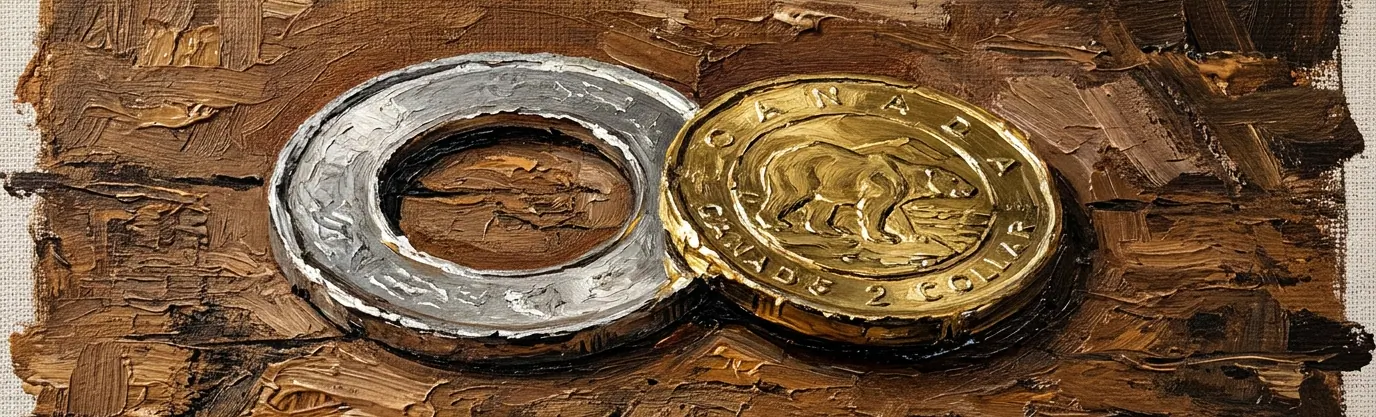
18.Why did Canada's Royal Mint redesign its first two-dollar Toonie coins in 1996?
Correct Answer: C. Popping center cores
Explanation: When the Royal Canadian Mint introduced the bimetallic two-dollar coin—instantly nicknamed the "Toonie" as a sequel to the one-dollar "Loonie"—in February 1996, Canadians were fascinated by its golden aluminum-bronze polar bear inner core locked inside a silver-colored outer nickel ring.
Within weeks, however, pranksters discovered that freezing a early-batch Toonie in a snowbank or freezer and whacking it sharply against a hard floor caused the golden center disc to pop right out like a button! News stations ran clips of separated Toonies, and rumors swirled about whether a popped coin was worth one dollar or nothing at all.
The Mint quickly reassured the public that only a tiny fraction of the first 60 million coins had an imperfect mechanical lock, tightened its stamping pressure at the Winnipeg facility, and offered free replacements for anyone holding a two-piece Toonie.
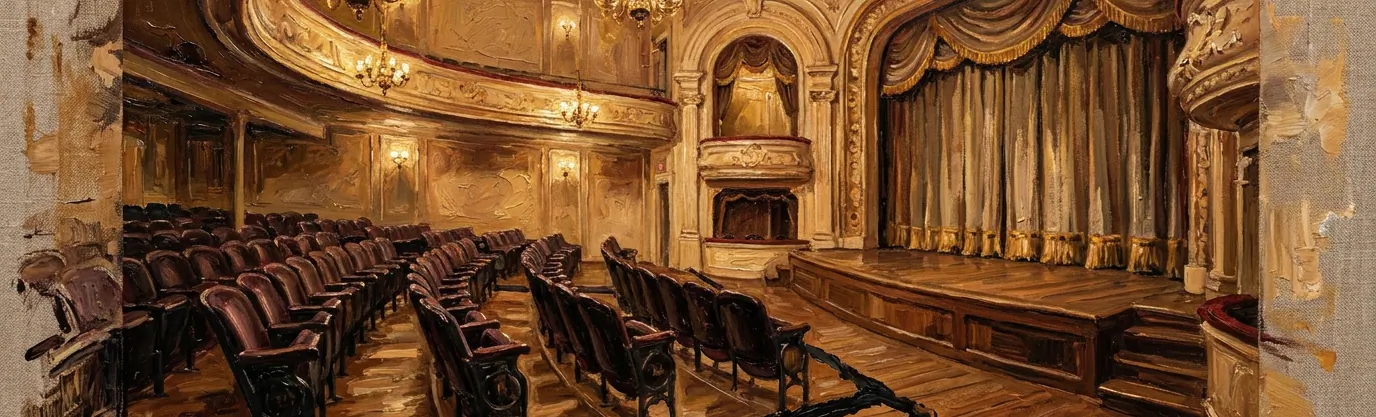
19.Which building straddles the Canada–US border with its stage and seats in different countries?
Correct Answer: A. Haskell Free Library
Explanation: Built in 1904 by a cross-border couple—American sawmill owner Carlos Haskell and his Canadian wife Martha Stewart Haskell—the Haskell Free Library and Opera House was deliberately erected right on top of the 45th parallel dividing Stanstead, Quebec and Derby Line, Vermont.
Inside the building, a thick black line painted diagonally across the polished wooden floors marks the exact international boundary. In the upstairs 400-seat opera house, the stage sits in Canada while most of the audience seats sit in the United States—leading locals to joke that it is the only theater where actors perform "abroad" from a few feet away.
In the downstairs library, the children's book collection rests on the American side while the adult stacks sit in Canada, complete with two separate telephone numbers, two postal addresses, and dual fire-insurance policies.

20.Which tiny Prince Edward Island farmhouse novel made Anne Shirley a global icon?
Correct Answer: B. Anne of Green Gables
Explanation: Written by Canadian author Lucy Maud Montgomery and published in 1908 after being rejected by several publishers, Anne of Green Gables tells the story of spirited, imaginative red-haired orphan Anne Shirley—"spelled with an E"—who is mistakenly sent to elderly siblings Matthew and Marilla Cuthbert in fictional Avonlea, Prince Edward Island.
Montgomery modeled Green Gables on the real white-and-green-shuttered farmhouse belonging to her cousins, the Macneill family, in Cavendish, PEI. The novel became an overnight sensation, selling over 50 million copies in more than 36 languages and drawing praise from Mark Twain, who called Anne "the dearest and most moving and delightful child since the immortal Alice."
In Japan, where the book has been part of the national school curriculum since 1952 under the title Akage no An ("Red-Haired Anne"), thousands of tourists fly to tiny Prince Edward Island every summer just to walk through the real Green Gables Heritage Place.
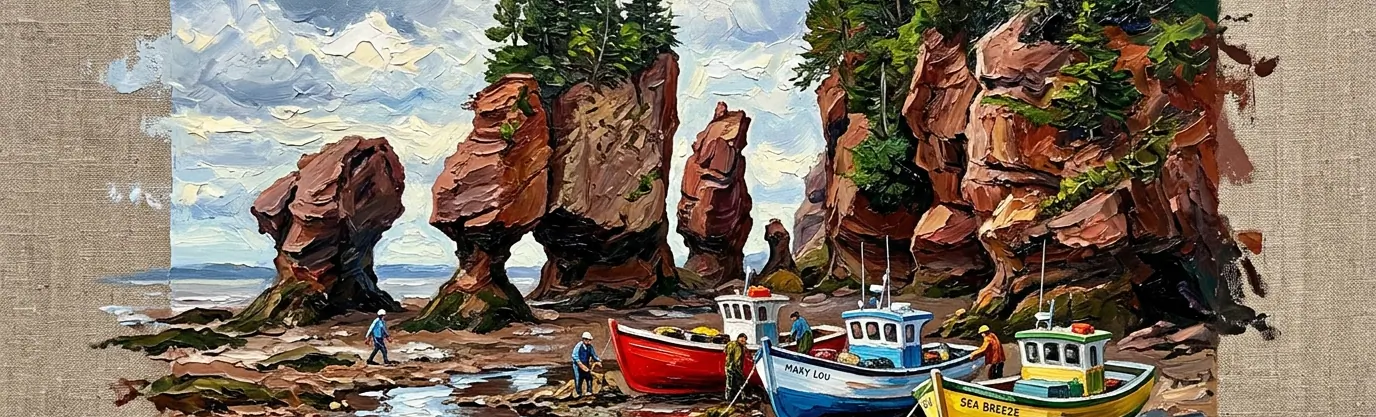
21.What coastal bay between Nova Scotia and New Brunswick boasts the world's highest tides?
Correct Answer: C. Bay of Fundy
Explanation: Twice every single day, 160 billion tons of seawater—more than the combined daily flow of every freshwater river on Earth—rush in and out of the funnel-shaped Bay of Fundy between New Brunswick and Nova Scotia, producing the highest vertical tides on the planet.
At Burntcoat Head in Nova Scotia's Minas Basin, the water level rises and falls up to 16.3 meters (53.5 feet)—the height of a five-story building! This extreme tidal range occurs because the bay's length and depth create a natural "sloshing" period of roughly 12.5 hours that matches the Atlantic Ocean's lunar tidal pulse, amplifying the waves like water rocking in a bathtub.
At low tide along New Brunswick's Hopewell Rocks, visitors can stroll dry-shod across the muddy ocean floor beneath towering sandstone "flowerpot" sea stacks, then return six hours later to paddle a kayak around the very treetops they just looked up at.
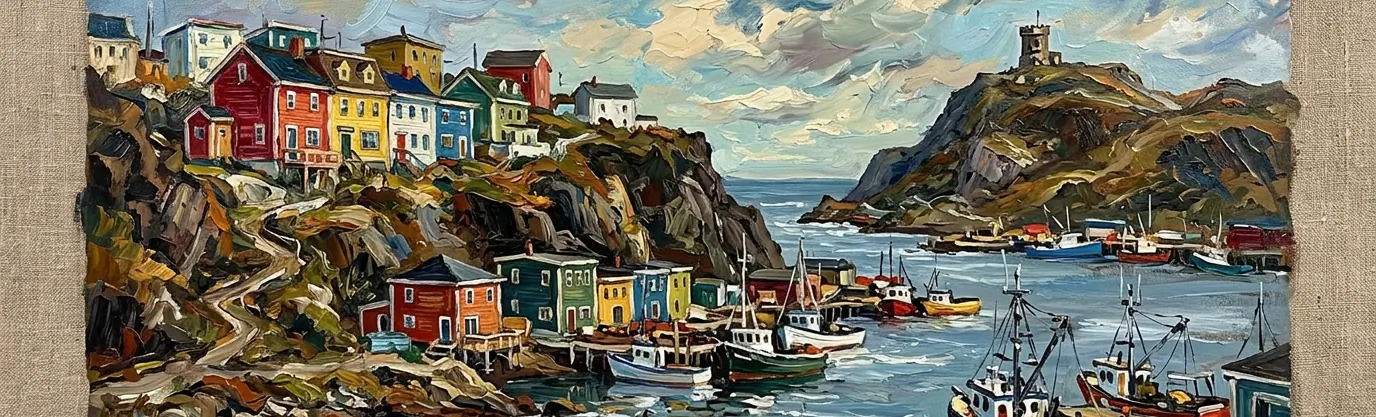
22.Which Canadian province joined Confederation last, finally becoming the tenth province in 1949?
Correct Answer: D. Newfoundland and Labrador
Explanation: Although delegates from Newfoundland attended the 1864 Quebec Conference that laid the groundwork for Canada, the proud Atlantic island colony initially rejected Confederation—inspiring the popular 1869 anti-union protest song declaring, "Come near at your peril, Canadian Wolf!"
For decades, Newfoundland operated as a self-governing British Dominion on equal footing with Canada, Australia, and New Zealand, issuing its own postage stamps and sending its own Royal Newfoundland Regiment to fight heroically in World War I. Following two razor-close referendums in 1948 spearheaded by fiery broadcaster Joey Smallwood, 52.3% of voters chose to join Canada.
At 11:59 p.m. on March 31, 1949—intentionally timed one minute before midnight so the historic union wouldn't fall on April Fools' Day—Newfoundland (later renamed Newfoundland and Labrador in 2001) officially became Canada's tenth province, bringing its own unique 30-minute time zone along with it.

23.Who sends personal replies in thirty languages to letters addressed to H0H 0H0?
Correct Answer: A. Canada Post volunteers
Explanation: When Canada switched to its six-character alphanumeric postal code system in the early 1970s, postal workers in Montreal noticed that thousands of children's letters addressed to "Santa Claus, North Pole" were piling up in undeliverable mail bins. In 1974, employees began writing individualized replies on their own time.
In 1983, Canada Post made the Santa Letter-Writing Program nationwide and assigned Santa his own official Canadian postal code: H0H 0H0 (reading "Ho Ho Ho!"). Today, an army of thousands of current and retired Canada Post volunteer "postal elves" answers more than one million letters every holiday season.
No postage stamp is required within Canada, and every child who includes a return address receives a personal response written in the same language they used—covering more than 30 languages, including Indigenous languages and Braille.

24.Which Canadian medical duo discovered life-saving insulin at the University of Toronto in 1921?
Correct Answer: B. Banting and Best
Explanation: Before the sweltering summer of 1921, a diagnosis of Type 1 diabetes was a swift, certain death sentence for children. Working inside a borrowed laboratory at the University of Toronto with physiologist J. J. R. Macleod and biochemist James Collip, young Ontario surgeon Dr. Frederick Banting and medical student Charles Best successfully isolated the pancreatic hormone insulin.
In January 1922, a purified extract was injected into 14-year-old Leonard Thompson, who lay near coma at Toronto General Hospital weighing just 65 pounds; within days, his blood sugar plummeted and his strength returned. Soon doctors walked through entire pediatric wards waking dying children from diabetic comas before their parents' eyes.
Refusing to profit from a life-saving breakthrough, Banting, Best, and Collip sold their Canadian patent for insulin to the University of Toronto for just $1 each, with Banting famously declaring, "Insulin does not belong to me, it belongs to the world."

25.What giant roadside monument in Sudbury, Ontario honors the city's mining heritage?
Correct Answer: C. Thirty-foot Big Nickel
Explanation: Towering nine meters (30 feet) high on the grounds of Dynamic Earth in Sudbury, Ontario, the Big Nickel is an exact, 64-million-times-enlarged stainless-steel replica of a 1951 Canadian five-cent coin commemorating the 200th anniversary of the isolation of the element nickel.
Curiously, the giant monument wasn't built by the city council—it was privately funded in 1964 by local firefighter and entrepreneur Ted Szilva after the official Sudbury Centennial Committee rejected his idea for a mining theme park. Szilva teamed up with local signmaker Bruno Cavallo to hand-hammer stainless steel panels over an artillery-grade structural frame.
Because Sudbury's ancient 1.85-billion-year-old meteorite impact basin holds one of the richest nickel-copper ore deposits on Earth, the 13-ton coin quickly became Canada's most iconic roadside landmark.
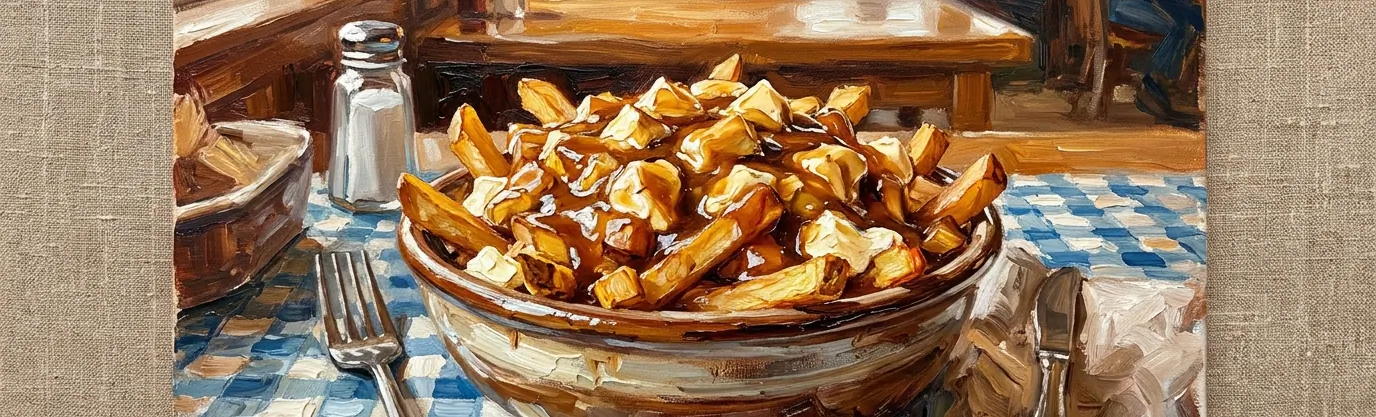
26.What three-ingredient Quebec comfort dish translates from local slang as "a glorious mess"?
Correct Answer: D. Classic cheese poutine
Explanation: Born in the rural dairy heartland of Quebec's Centre-du-Québec region in the late 1950s, classic poutine consists of three sacred components: thick-cut crispy French fries, fresh unaged cheddar cheese curds that "squeak" against your teeth, and piping-hot, peppery brown gravy poured over top just before serving.
Several small towns—most famously Warwick (where restaurateur Fernand Lachance supposedly exclaimed, "Ça va faire une maudite poutine!" meaning "That's going to make a cursed mess!" when a regular asked him to dump cheese curds into a bag of fries in 1957) and Drummondville (where Jean-Paul Roy added hot gravy in 1964)—claim credit for its birth.
Once dismissed by culinary snobs as humble late-night diner fare, poutine is now celebrated around the globe in gourmet variations topped with smoked brisket, lobster, or duck confit, though purists insist nothing beats fresh room-temperature squeaky curds.
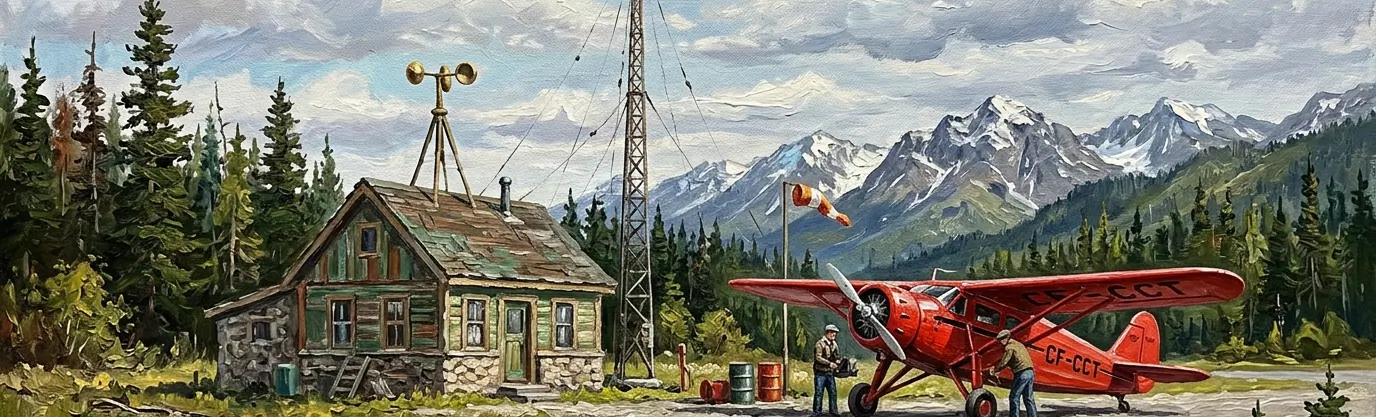
27.Why do nearly all major Canadian airport IATA codes begin with the letter Y?
Correct Answer: A. Old weather station prefixes
Explanation: Frequent flyers often wonder why Toronto Pearson is YYZ, Vancouver is YVR, Montreal is YUL, and Ottawa is YOW. While Vancouver (YVR) and Ottawa (YOW) at least echo their city names, virtually every major commercial airport across Canada shares that mysterious leading letter "Y."
The quirk dates back to the 1930s, when Canada's Department of Transport set up hundreds of two-letter Morse code weather and radio-beacon stations along railways and airfields. When North American aviation authorities expanded airport identifiers from two letters to three in the 1940s, Canadian airfields that were co-located with an existing weather station simply placed a "Y" (signifying "Yes, weather station present") in front of their old two-letter radio code!
Thus, Toronto Malton adopted the railway weather transmitter code of nearby village Malton/Brampton (YZ), becoming YYZ—which later inspired the famous instrumental rock anthem "YYZ" by Toronto prog-rock legends Rush, whose opening rhythm beats out Y-Y-Z in Morse code.
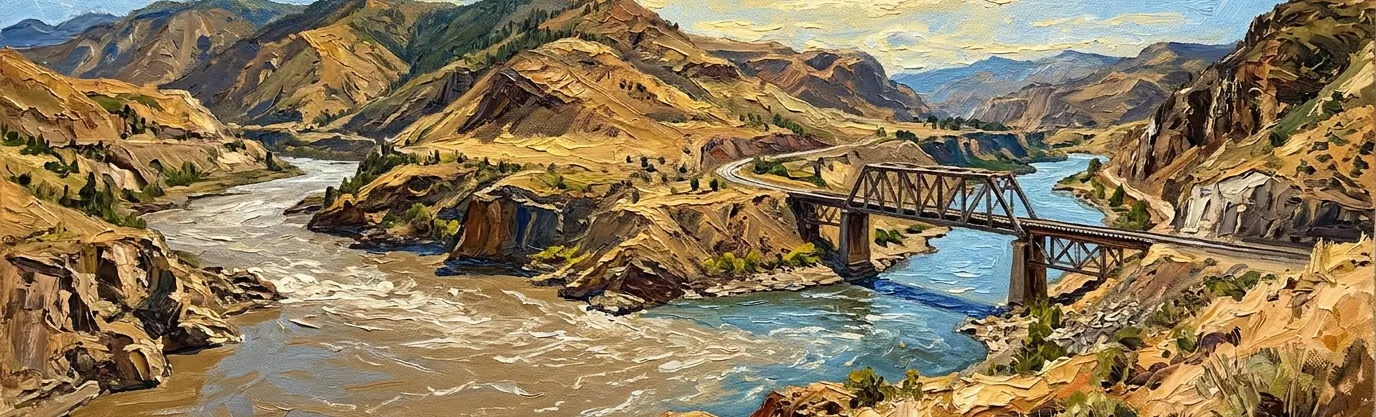
28.Which British Columbia canyon village recorded Canada's blistering 49.6°C (121.3°F) all-time heat record?
Correct Answer: B. Lytton, British Columbia
Explanation: Foreign visitors who picture Canada as an endless snow globe are stunned to learn that Canada's all-time highest temperature—49.6°C (121.3°F), recorded in the Fraser Canyon village of Lytton, British Columbia on June 29, 2021—is hotter than the all-time temperature record ever recorded in Las Vegas, Miami, or anywhere in Europe or South America!
During the June 2021 Pacific Northwest "Heat Dome," Lytton broke Canada's national all-time heat record three days in a row (46.6°C, 47.9°C, and 49.6°C), surpassing the previous 84-year-old record of 45.0°C set in Saskatchewan in 1937.
Nestled in a deep, arid rain-shadow canyon where sinking mountain winds compress and superheat the dry valley air, Lytton had long been known as "Canada's Hot Spot," though the extreme 2021 heatwave tragically sparked a devastating wildfire the very next afternoon.
29.Which legendary ocean liner disaster brought recovery ships and permanent memorials to Halifax?
Correct Answer: C. RMS Titanic
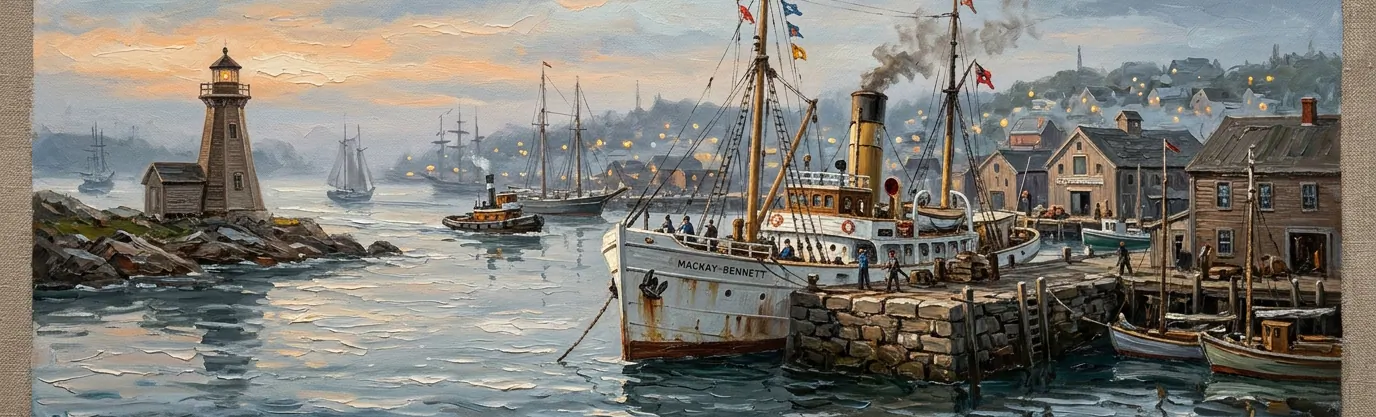
Explanation: When RMS Titanic struck an iceberg and sank in the North Atlantic on April 15, 1912, Halifax, Nova Scotia was the closest major railway-connected port with steamships equipped for deep-ocean recovery. The White Star Line immediately chartered four Canadian vessels—led by the Halifax-based cable ship CS Mackay-Bennett—to sail to the wreck site.
Carrying blocks of ice, embalming supplies, and clergy, the crews recovered 306 victims from the icy ocean and brought 209 of them back to Halifax harbor, where church bells tolled as horse-drawn hearses moved quietly through the streets.
Today, 150 Titanic victims rest across three cemeteries in Halifax—most famously 121 granite headstones arranged in the curved outline of a ship's bow at Fairview Lawn Cemetery, including the poignant grave of the "Unknown Child," later identified by DNA nearly a century later as 19-month-old Sidney Leslie Goodwin.

30.What towering painted landmarks earned the title "Prairie Sentinels" along Saskatchewan's railroad tracks?
Correct Answer: D. Wooden grain elevators
Explanation: For more than a century, drivers crossing the flat, golden horizons of Saskatchewan knew they were approaching the next town long before seeing a single house: towering 35-meter-tall (115-foot), steep-shouldered wooden country grain elevators rose above the wheat fields every ten miles along the railway tracks like painted "Prairie Sentinels."
Built from hundreds of thousands of stacked two-by-six Douglas fir planks nailed flat ("cribbed") to withstand the immense outward pressure of thousands of tons of wheat, barley, and canola, over 5,700 wooden elevators dotted the Canadian prairies at their 1933 peak—with more than 3,200 in Saskatchewan alone.
Though modern concrete inland terminals have replaced most of them, surviving wooden elevators painted in weathered mineral red, pool green, and sunshine yellow remain the architectural symbol of the Canadian West.
31.Which crescent sandbar off Nova Scotia is home to five hundred wild horses?
Correct Answer: A. Sable Island
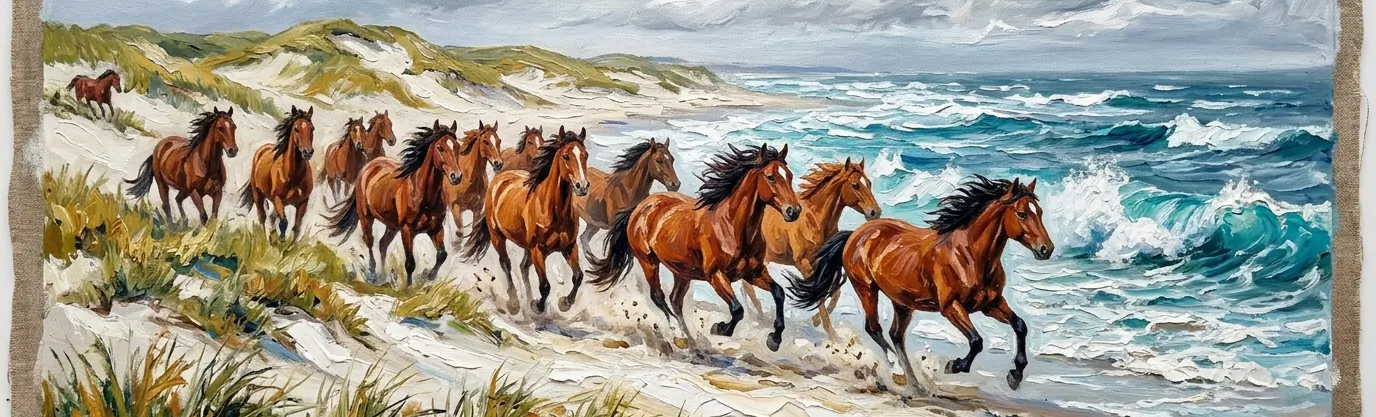
Explanation: Floating 300 kilometers southeast of Halifax in the foggy North Atlantic, Sable Island is a slender, 42-kilometer-long crescent of shifting sand dunes famously dubbed the "Graveyard of the Atlantic" for claiming more than 350 shipwrecks since 1583. Its permanent inhabitants include a tiny research crew, the world's largest colony of grey seals, and roughly 500 wild horses.
Contrary to romantic legends that the horses swam ashore from sinking Spanish galleons, historical records show they descend from hardy Acadian horses confiscated by the British during the 1750s Expulsion of the Acadians and shipped to the island by Boston merchant Thomas Hancock.
Protected as a National Park Reserve since 2013, the shaggy-coated Sable Island horses survive without a single tree on the island, grazing on marram dune grass and digging hooves into the sand to reach fresh rainwater lenses.

32.Why does the Dutch royal family send Ottawa thousands of tulip bulbs every spring?
Correct Answer: B. Wartime royal sanctuary
Explanation: Every May, Canada's capital bursts into a rainbow of over one million blooming tulips during the Canadian Tulip Festival—a living thank-you note rooted in one of World War II's most touching international gestures. When Nazi Germany invaded the Netherlands in 1940, Dutch Crown Princess Juliana and her young daughters evacuated to safety in Ottawa.
In January 1943, Princess Juliana was preparing to give birth to her third child, Princess Margriet, at the Ottawa Civic Hospital. Under Dutch law, a royal heir had to be born on Dutch soil to retain exclusive Dutch citizenship and remain in the line of succession—so Canada's federal cabinet temporarily declared the hospital's maternity ward "extraterritorial" (international territory belonging to no foreign country)!
After Canadian troops spearheaded the liberation of the Netherlands in 1945, Princess Juliana sent Ottawa 100,000 tulip bulbs in gratitude, establishing an unbroken annual royal gift of 20,000 bulbs that continues to this day.
33.What slithering spectacle attracts seventy thousand garter snakes to Narcisse, Manitoba every spring?
Correct Answer: C. Limestone mating dens
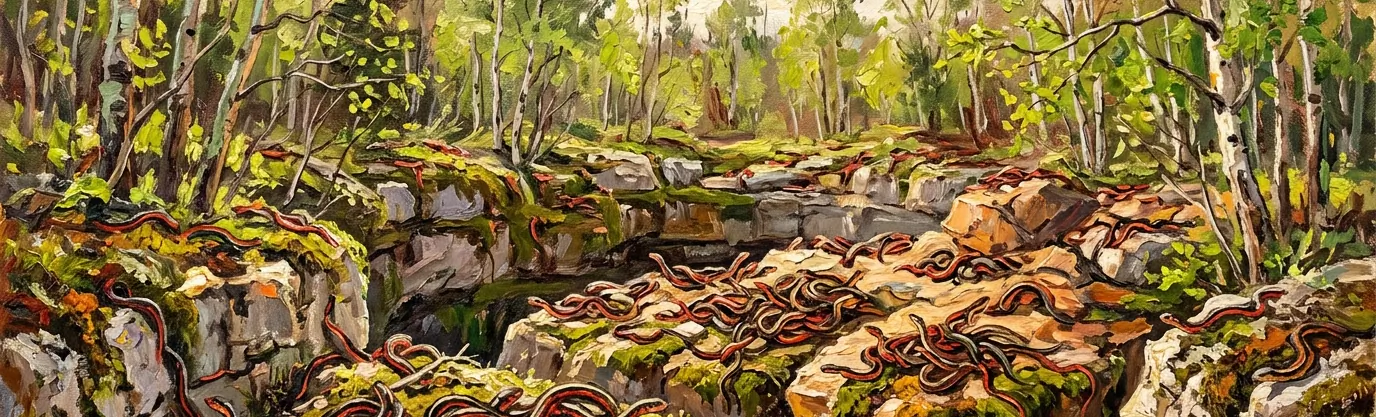
Explanation: Each May, as the harsh prairie winter thaws in Manitoba's Interlake region, the Narcisse Snake Dens host the largest concentration of snakes anywhere on Earth. Tens of thousands of harmless red-sided garter snakes emerge simultaneously from deep subterranean limestone sinkholes, transforming the cavern floors into writhing, living carpets.
During Manitoba's sub-zero winters, the snakes hibernate below the frost line inside water-carved fissures in the ancient limestone bedrock. When spring warmth arrives, males emerge first and wait patiently around the sunny rock ledges for larger females to surface, forming tangled "mating balls" of up to a hundred suitors.
Visitors stroll along elevated wooden boardwalks right beside the four main dens while wildlife interpreters invite brave guests to gently hold the docile, ribbon-striped reptiles before the snakes disperse across the summer marshes.
34.Which British Columbia town sits beside the mineral-rich polka-dot lake known as Kliluk?
Correct Answer: D. Osoyoos
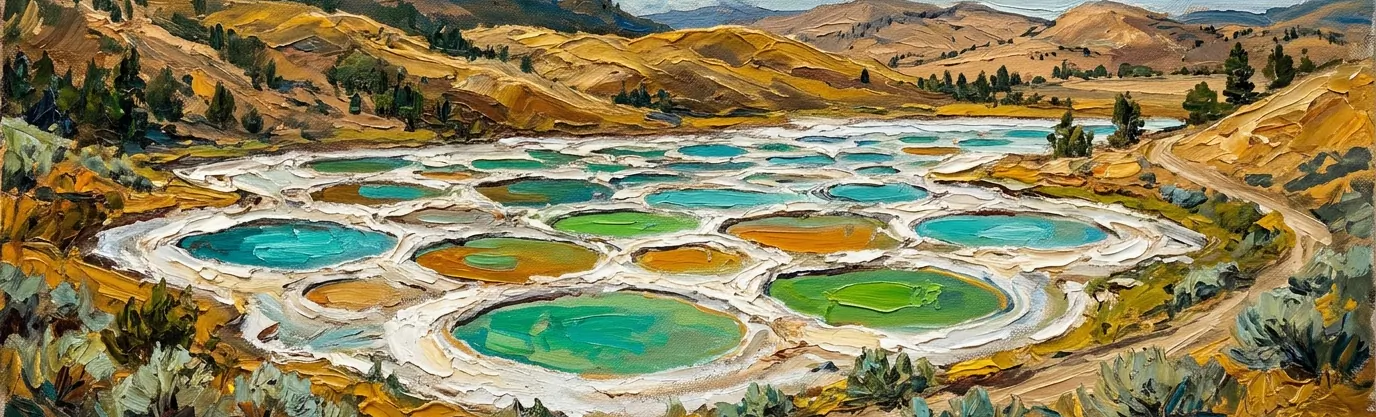
Explanation: Just northwest of the desert border town of Osoyoos in British Columbia's Okanagan Valley lies Spotted Lake—known for millennia to the Syilx Okanagan Nation as Kliluk, a sacred place of physical and spiritual healing. During winter and spring it looks like an ordinary alpine pond, but summer evaporation reveals an otherworldly alien mosaic.
Because the drainage basin is packed with dense concentrations of magnesium sulfate (Epsom salts), calcium, sodium sulfates, silver, and titanium, receding summer water leaves behind hundreds of distinct circular brine pools ringed by crusty white mineral walkways that shift in hue from turquoise and jade green to canary yellow.
During World War I, workers actually harvested up to a ton of salts per day from the lake's surface to manufacture munitions before the Syilx Okanagan Nation and the federal government purchased the land in 2001 to protect the sacred site forever.

35.What famous three-layered no-bake dessert was named after a Vancouver Island coastal city?
Correct Answer: A. Nanaimo Bar
Explanation: Voted one of Canada's favorite confections and immortalized on a Canada Post stamp, the Nanaimo Bar is a decadent no-bake square built of three distinct layers: a crunchy chocolate-graham-coconut-almond crumb base, a thick middle slab of bright yellow custard-flavored buttercream icing, and a snappy top glaze of melted dark chocolate.
The earliest confirmed printed recipe containing all three modern components appeared in the 1952 Women's Auxiliary to the Nanaimo Hospital Cookbook under the name "chocolate square," written by local resident Mabel Jenkins, before being published as the "Nanaimo Bar" by culinary columnist Edith Adams in 1953.
In 2006, the City of Nanaimo launched a nationwide contest to crown the ultimate official recipe, selecting Joyce Hardcastle's classic formula—which locals proudly enjoy along the city's self-guided "Nanaimo Bar Trail."

36.Which UNESCO badlands park in Alberta has yielded over fifty-eight dinosaur species?
Correct Answer: B. Dinosaur Provincial Park
Explanation: Carved by glacial meltwater into a surreal moonscape of striped sandstone canyons and mushroom-capped hoodoos along the Red Deer River, Alberta's Dinosaur Provincial Park is the richest Late Cretaceous dinosaur fossil bed on Earth. Seventy-five million years ago, this dry badland was a lush, subtropical coastal swamp teeming with prehistoric giants.
Since bone hunters began excavating here in the 1880s, paleontologists have unearthed more than 58 distinct dinosaur species and sent over 500 complete articulated skeletons to museums around the globe—from horned Centrosaurus herds and duck-billed Lambeosaurus to tyrannosaurs like Gorgosaurus.
Fossils are so abundant across the UNESCO World Heritage park that hikers frequently spot real, 75-million-year-old dinosaur bone fragments eroding right out of the hillside paths after a heavy summer rainstorm.

37.Why does the Stanley Cup travel everywhere with a white-gloved Hall of Fame keeper?
Correct Answer: B. Preventing wild trophy mishaps
Explanation: Donated in 1892 by Governor General Lord Stanley of Preston for just ten guineas ($48.67), the Stanley Cup is the oldest championship trophy competed for by professional athletes in North America—and the only one that grants every winning player and coach a full 24 hours of personal time with the real trophy during the summer.
Before Toronto's Hockey Hall of Fame assigned full-time white-gloved "Keepers of the Cup" (most famously Phil Pritchard) to accompany the trophy everywhere, championship celebrations regularly turned into slapstick disasters: the 1905 Ottawa Silver Seven drop-kicked it into the frozen Rideau Canal, the 1924 Montreal Canadiens accidentally left it in a snowbank while fixing a flat tire, and in 1991 it ended up at the bottom of Mario Lemieux's swimming pool.
Today, the white-gloved keeper flies over 300 days a year alongside the 34.5-pound silver chalice as it eats cereal, climbs mountain peaks, and attends hometown parades—making sure it always returns safely to its Toronto vault.