
United States Trivia: Test Your Coast-to-Coast IQ
Forget boring state-capital flashcards—explore 39 wild stories behind one-building towns, accidental border anomalies, green-oxidized monuments, and the quirkiest corners of the USA.
Most United States trivia quizzes ask you to recite the 13 original colonies or name the capital of New York. Yet the real story of the 50 states is packed with jaw-dropping twists: the 50-star American flag was designed by an 18-year-old Ohio high-school student who originally got a B-minus on the project, the northernmost, westernmost, and easternmost points of the United States are all in Alaska, and the White House had electricity lags while Hawaii's royal palace lit up five years earlier.
From a Michigan riverboat with its own floating ZIP Code and an entire Alaskan town living under one roof to the 21st-century discovery that Ohio wasn't technically admitted to the Union until 1953, test your wits with 39 short, punchy, and verified United States Trivia Questions & Answers below!
1.What grade did high schooler Robert Heft originally receive for America's fifty-star flag?
Show Answer & Explanation
Correct Answer: C. A B-minus
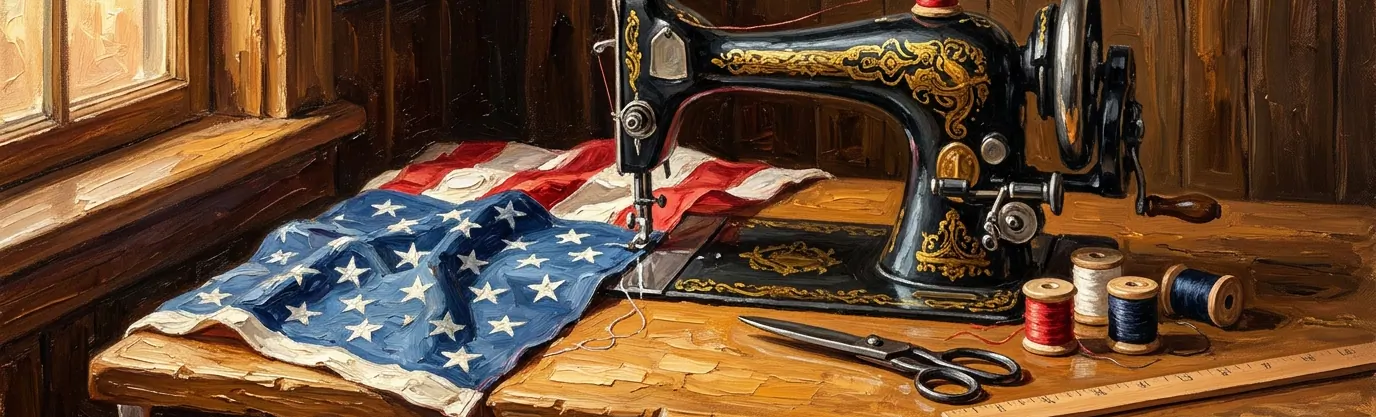
Explanation: In 1958, when Alaska and Hawaii were preparing to join the Union as the 49th and 50th states, seventeen-year-old Lancaster High School junior Robert G. Heft in Ohio spent a weekend cutting up his parents' 48-star wedding flag and stitching five rows of six stars alternating with four rows of five stars on his mother's Singer sewing machine for a history class project.
When Heft turned in his 50-star flag, his history teacher, Stanley Pratt, was unimpressed and gave him a mediocre B-minus—joking that the design lacked originality ("Wait, you don't even know how many states there are!") and promising: "If you can get Congress to accept it as the national flag, I'll change your grade."
Challenge accepted! Heft mailed his homemade flag to his Ohio congressman Walter Moeller, and out of more than 1,500 flag designs submitted nationwide, President Dwight D. Eisenhower personally selected Heft's 50-star banner in 1959! True to his word, Mr. Pratt promptly upgraded Robert Heft's history grade from a B-minus to an A.
2.Which California city honored self-proclaimed 'Emperor of the United States' Joshua Norton?
Show Answer & Explanation
Correct Answer: A. San Francisco
Explanation: In September 1859, after losing his fortune trying to corner the Peruvian rice market during the California Gold Rush, San Francisco businessman Joshua Abraham Norton walked into the offices of the San Francisco Daily Evening Bulletin and handed the editor a signed proclamation declaring himself "Norton I, Emperor of the United States" (later adding "Protector of Mexico").
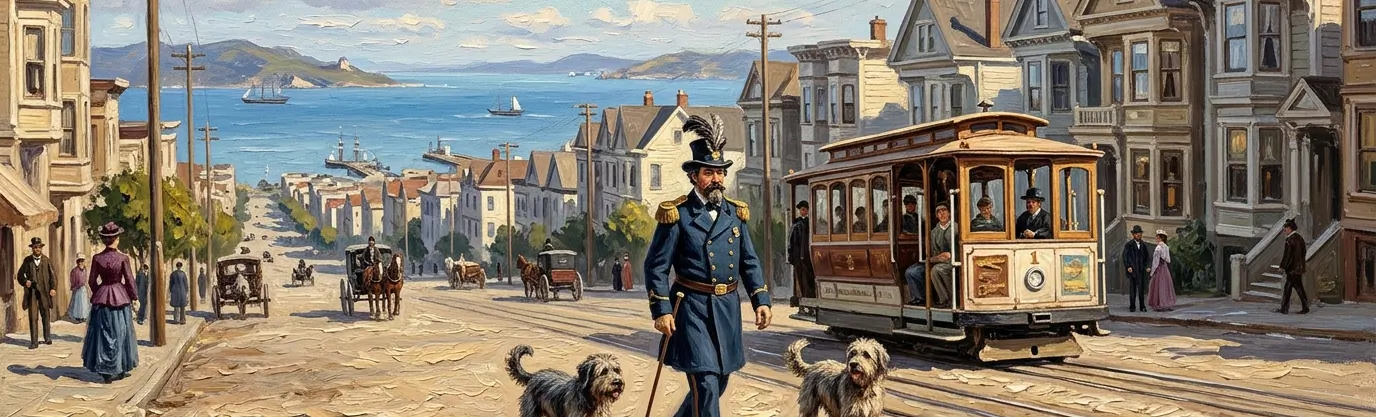
Rather than mocking or institutionalizing him, the free-spirited citizens of nineteenth-century San Francisco embraced Emperor Norton as a beloved civic treasure! Dressed in a secondhand blue Union Army uniform with tarnished gold epaulets, a beaver top hat topped with a peacock feather, and a ceremonial sword, Norton patrolled the city's streets inspecting cable cars and sidewalks alongside two famous stray dogs named Bummer and Lazarus.
San Francisco restaurants competed to feed him for free, theaters reserved front-row seats for His Majesty, shops accepted his hand-printed "Imperial Treasury" fifty-cent notes, and when Emperor Norton collapsed and died in January 1880, over 10,000 mourning San Franciscans lined the streets for his two-mile-long funeral procession!
3.Which U.S. state runs a public park where visitors keep any diamonds found?
Show Answer & Explanation
Correct Answer: D. Arkansas
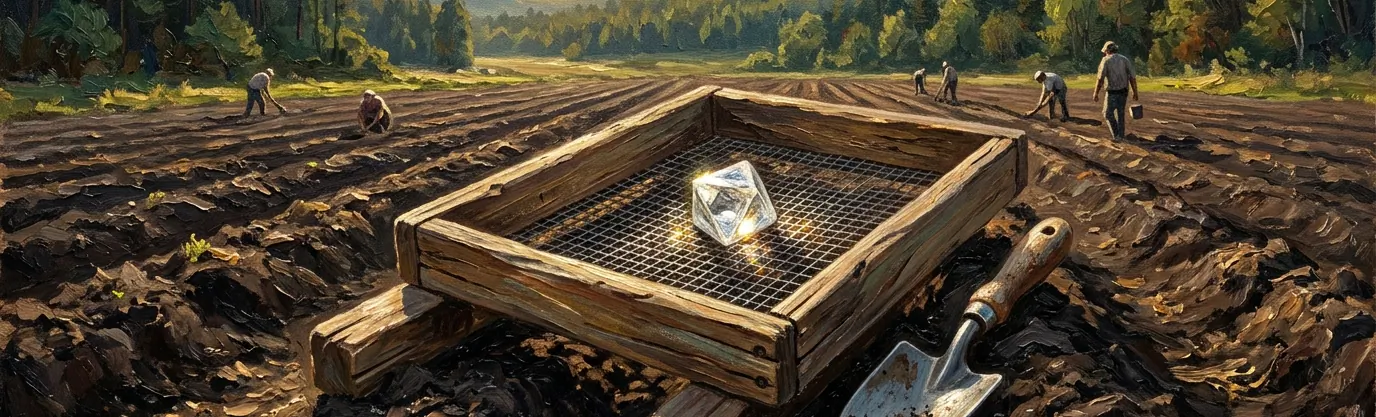
Explanation: Just outside Murfreesboro in Pike County, southwestern Arkansas, lies Crater of Diamonds State Park—the only diamond-producing site in the world open to the general public where amateur prospectors can dig in an eroded 37.5-acre volcanic pipe and keep 100% of any diamonds they find, regardless of value!
Around 100 million years ago, a volcanic eruption blasted diamond-bearing lamproite magma straight up from Earth's mantle to the surface. Since farmer John Huddleston spotted two glittering crystals in the dirt in 1906, more than 35,000 genuine white, brown, and yellow diamonds have been recovered from the field—including the 40.23-carat "Uncle Sam," the largest diamond ever unearthed in the United States!
Operating under a strict "finders, keepers" policy for a modest daily admission ticket, park rangers regularly plow the volcanic soil to bring new gems to the surface: in 2020 alone, a visitor found a flawless 9.07-carat brandy-brown diamond sitting right on top of a dirt furrow!
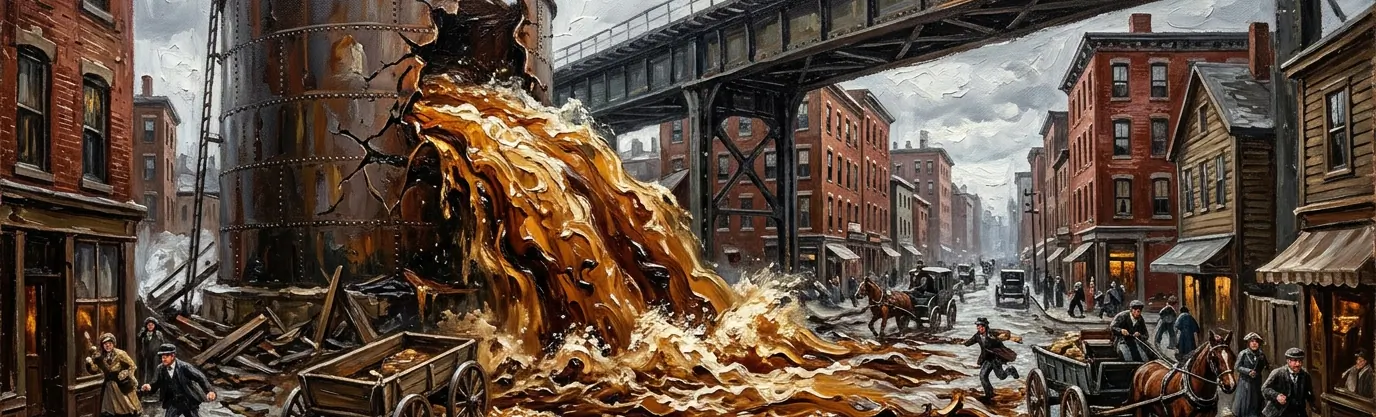
4.What sticky wave raced through Boston's streets at thirty-five mph in 1919?
Show Answer & Explanation
Correct Answer: B. Two million gallons of molasses
Explanation: Around 12:30 PM on the unusually mild winter afternoon of January 15, 1919, residents of Boston's North End heard a sound like a machine-gun roar as steel rivets popped off a 50-foot-tall storage tank owned by the Purity Distilling Company on Commercial Street.
Seconds later, the defectively built steel tank burst wide open, unleashing 2.3 million gallons (roughly 12,000 metric tons) of fermented, warm Caribbean molasses! Far from moving "slower than molasses in January," the 25-foot-high wall of heavy syrup surged through the cobblestone streets at 35 miles per hour (56 km/h).
The Great Molasses Flood sheared steel girders off the Boston Elevated Railway, knocked a firehouse off its foundation, and tragicaly claimed 21 lives as the cooling syrup thickened like quicksand in the winter air. It took hundreds of sailors and workers weeks of saltwater hosing to clean the neighborhood—turning Boston Harbor brown until summer!
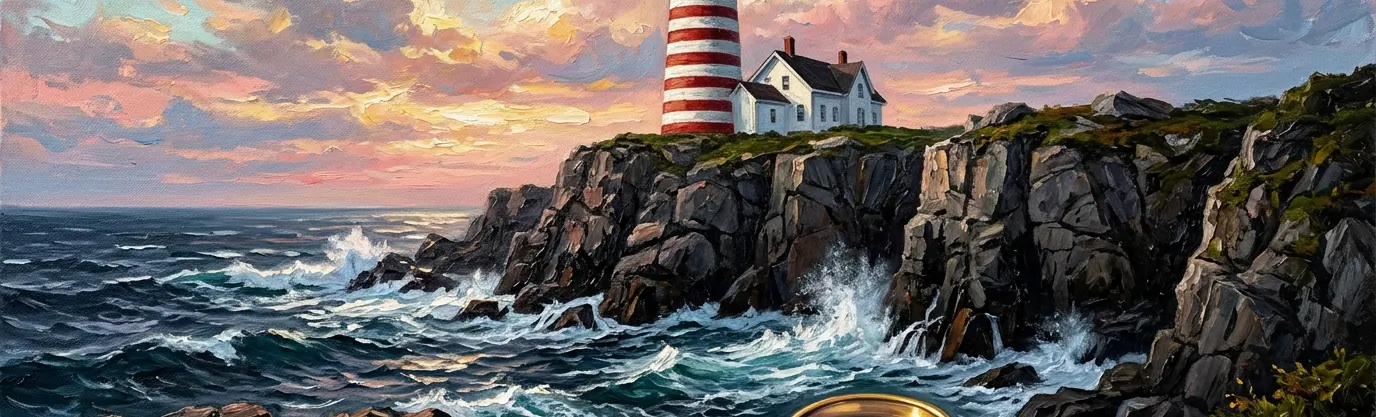
5.Which U.S. state is geographically closest to the continent of Africa?
Show Answer & Explanation
Correct Answer: C. Maine
Explanation: Ask a room full of Americans which U.S. state sits closest to the continent of Africa, and nine out of ten people will immediately guess Florida because its tropical peninsula points southward toward the equator.
Pull out a three-dimensional globe instead of a flat Mercator wall map, however, and you will see that the eastern seaboard of North America angles sharply northeastward toward Europe and northwestern Africa!
Because West Quoddy Head, Maine—marked by its famous red-and-white candy-striped lighthouse—juts out to longitude 66°57' West, it sits roughly 900 miles farther east than Miami, Florida! Measured along a great-circle path across the North Atlantic Ocean, West Quoddy Head, Maine is just 3,154 miles (5,076 km) from El Beddouza on the coast of Morocco—beating Florida by nearly 1,000 miles!
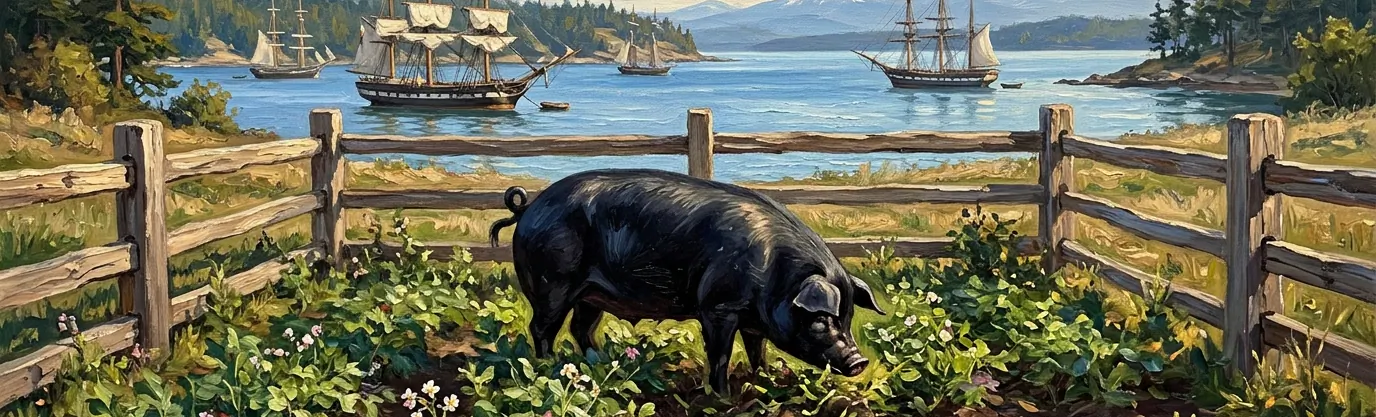
6.What was the only casualty of the 1859 U.S.–British San Juan standoff?
Show Answer & Explanation
Correct Answer: A. One garden-raiding pig
Explanation: In 1846, the Oregon Treaty drew the border between the United States and British North America (modern Canada) along the 49th parallel and down "the middle of the channel which separates the continent from Vancouver Island"—forgetting that there were actually two channels, leaving the lush San Juan Islands claimed by both nations!
On June 15, 1859, American farmer Lyman Cutlar looked out at his potato patch on San Juan Island and found a large black Berkshire pig owned by Irish-born Hudson's Bay Company employee Charles Griffin rooting up his tubers. Infuriated, Cutlar shot the pig dead; when British authorities threatened to arrest Cutlar, American settlers called for U.S. Army protection.
Within weeks, Captain George Pickett (later of Gettysburg fame) landed U.S. troops with cannons, and the British Royal Navy dispatched five warships carrying 70 guns and 2,140 men! Cooler heads prevailed when British Rear Admiral Robert Baynes refused to "involve two great nations in a war over a squabble about a pig"—leading to twelve years of peaceful joint occupation where the poor pig remained the war's only casualty!
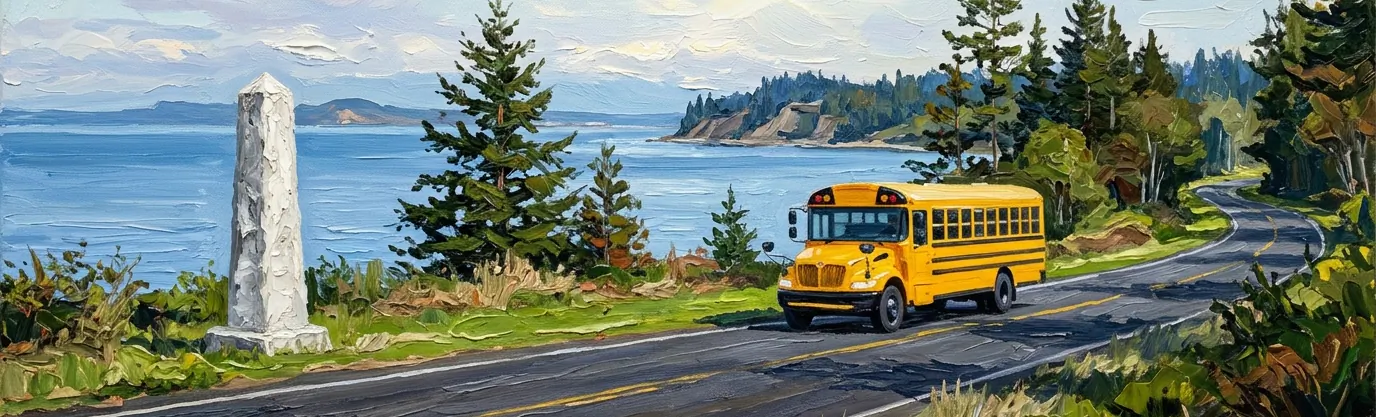
7.How must Point Roberts, Washington kids travel by bus to American high schools?
Show Answer & Explanation
Correct Answer: D. Twice across Canada's border
Explanation: When British and American diplomats drew the western border straight along the 49th parallel in 1846 without detailed coastal maps, they accidentally sliced off the southern tip of the Tsawwassen peninsula just south of Vancouver, British Columbia—creating the 4.9-square-mile American pene-exclave of Point Roberts, Washington!
Surrounded on three sides by the waters of Boundary Bay and the Strait of Georgia, and on the north by Canada, Point Roberts cannot be reached by land from the rest of the United States without driving 25 miles through British Columbia.
Because Point Roberts only has an elementary school going up to third grade, older American children living on the peninsula board a yellow Blaine School District bus every morning, cross the international border into Canada, drive forty minutes through British Columbia, and cross a second international border checkpoint back into Washington State just to attend fourth grade through high school!
8.Which U.S. state capital boasts America's only official royal residence palace?
Show Answer & Explanation
Correct Answer: B. Honolulu
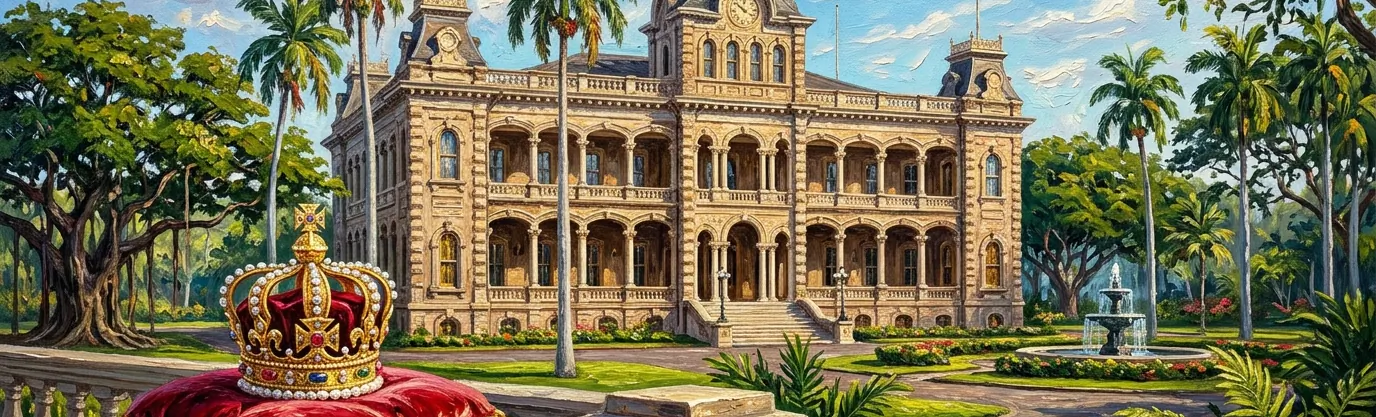
Explanation: Standing proudly in the capitol district of downtown Honolulu, Hawaii, ʻIolani Palace is the only official royal palace of a reigning monarch anywhere on United States soil!
Commissioned in 1879 and completed in 1882 by King Kalākaua—known as the "Merrie Monarch"—and later occupied by his sister and successor Queen Liliʻuokalani until the 1893 overthrow of the Hawaiian Kingdom, the four-story American Florentine palace cost over $340,000 and dazzled visiting foreign dignitaries with its Koa-wood grand staircase and gilded throne room.
Remarkably, King Kalākaua was such an enthusiastic champion of modern technology after his 1881 world tour (during which he met Thomas Edison) that ʻIolani Palace had indoor flushing toilets, intra-island telephones, and electric lights glowing in its halls in 1887—four years before electricity was installed in the White House in Washington, D.C.!
9.What happened when WWII 'bat bombs' accidentally escaped during a New Mexico test?
Show Answer & Explanation
Correct Answer: A. Burned down the test airbase
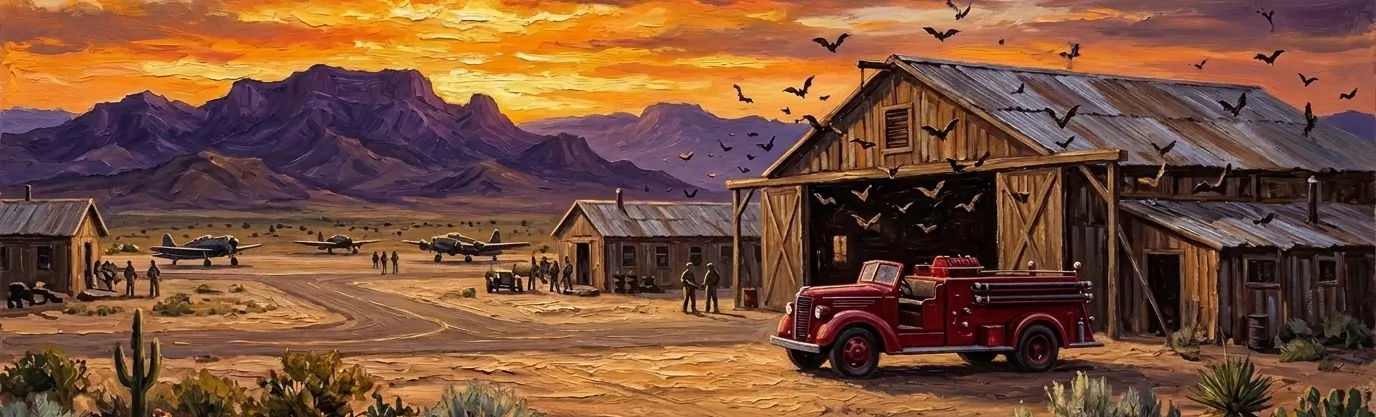
Explanation: Shortly after the December 7, 1941 attack on Pearl Harbor, Pennsylvania dental surgeon Lytle S. Adams—who had recently visited New Mexico's bat-filled Carlsbad Caverns—wrote to the White House with an outlandish idea: strap tiny timed incendiary napalm capsules to millions of Mexican free-tailed bats and drop them in parachute canisters over Japanese cities at dawn so they would roost inside wooden eaves before igniting!
President Franklin D. Roosevelt approved the plan ("This man is not a nut"), launching the $2 million military program known as Project X-Ray. Each 14-gram bat could easily carry a 17-gram time-delayed napalm device designed by Louis Fieser, the Harvard chemist who invented military napalm.
On May 15, 1943, during a test at the newly built Carlsbad Army Airfield Auxiliary Air Base in New Mexico, several armed bats warmed up early, woke from hibernation, and flew straight under the eaves of the airbase's own wooden buildings and fuel tanks—burning down a general's car, barracks, and test range while firefighters watched helplessly from outside the security fence!
10.What sparked the 1992 ratification of Madison's 202-year-old Twenty-Seventh Amendment?
Show Answer & Explanation
Correct Answer: C. A C-grade college paper
Explanation: In 1789, future President James Madison introduced twelve constitutional amendments to the very first U.S. Congress. Ten of those were ratified in 1791 as the Bill of Rights, while the second proposed amendment—preventing members of Congress from giving themselves a pay raise until after the next election—was ratified by only six states and sat forgotten in dusty archives for nearly two centuries.
In 1982, nineteen-year-old University of Texas at Austin sophomore Gregory Watson stumbled across the unratified 1789 amendment in a book and wrote a government term paper arguing that since Congress had never attached a ratification deadline, the amendment was still legally alive and could be ratified right now!
Watson's teaching assistant was unconvinced and gave the paper a C! When the professor refused to raise the grade, a determined Watson launched a ten-year, self-funded letter-writing campaign from his apartment—convincing state legislature after state legislature until Michigan became the 38th state to ratify the 27th Amendment in May 1992, 202 years after Madison wrote it (and UT Austin finally changed Watson's grade to an A+ in 2017)!
11.To whom does Monowi, Nebraska's sole resident pay her annual tavern taxes?
Show Answer & Explanation
Correct Answer: D. Herself as town mayor
Explanation: Tucked between the Niobrara and Missouri Rivers in Boyd County, northern Nebraska, sits the village of Monowi—the only officially incorporated municipality in the United States with a verified U.S. Census population of exactly 1!
After her husband Rudy passed away in 2004, Elsie Eiler became the town's sole remaining citizen. Rather than letting Monowi dissolve into an unincorporated ghost town, Elsie keeps the village legally alive by serving simultaneously as Mayor, Town Clerk, Treasurer, Secretary, Street Commissioner, Librarian of Rudy's 5,000-book library, and owner-bartender of the Monowi Tavern!
Every year, Mayor Elsie posts a notice for the municipal election at the tavern, votes for herself, draws up a municipal road plan to keep the town's four streetlights funded by the state, and as tavern owner, writes a check to the Village of Monowi for her annual liquor license and local taxes—handing the check directly across the counter to herself as Town Treasurer!
12.What was the native first language of eighth U.S. President Martin Van Buren?
Show Answer & Explanation
Correct Answer: B. Dutch
Explanation: Every American president from George Washington (1st) through John Quincy Adams (6th) and Andrew Jackson (7th) was born a British colonial subject prior to the 1776 Declaration of Independence. Born on December 5, 1782, Martin Van Buren (the 8th U.S. President) holds the distinction of being the very first president born an American citizen!
Ironically, despite being the first native-born U.S. citizen to reach the White House, Martin Van Buren is also the only president in American history who did not speak English as his first language!
Growing up in the tight-knit seventeenth-century Dutch farming settlement of Kinderhook in New York's Hudson Valley, where his father Abraham ran a local tavern, young Martin spoke exclusively Dutch at home with his family and only learned English as a second language when he began attending the local village schoolhouse—later earning the campaign nickname "Old Kinderhook" ("O.K.")!
13.What color was the Statue of Liberty when unveiled in 1886?
Show Answer & Explanation
Correct Answer: A. Shiny reddish-brown copper
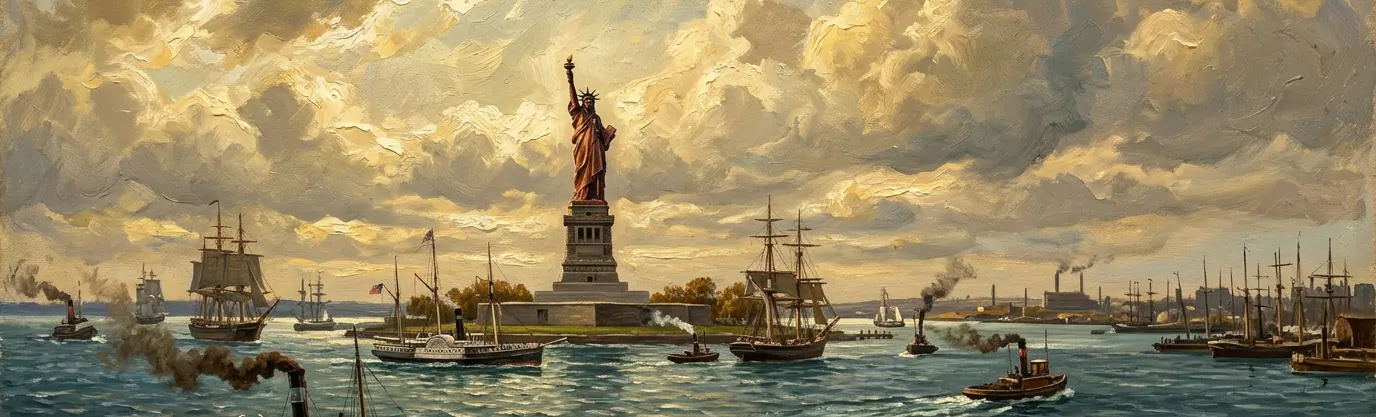
Explanation: Today, the chalky blue-green patina of the Statue of Liberty on Liberty Island is one of the most recognizable colors in world visual culture. Yet when French sculptor Frédéric Auguste Bartholdi and engineer Gustave Eiffel unveiled "Liberty Enlightening the World" in New York Harbor on October 28, 1886, she wasn't green at all!
Lady Liberty's outer skin was hammered out of 300 sheets of pure, un-painted copper just 2.4 millimeters (3/32 of an inch—about the thickness of two stacked pennies) thick, weighing 62,000 pounds. When first assembled, the statue gleamed a warm, shiny reddish-brown copper color just like a brand-new penny!
Over the next twenty years, exposure to salty harbor air, rain, and sulfur dioxide from coal-burning Manhattan steamships slowly oxidized the copper surface—turning it dark reddish-brown by 1900 and fully coating it in protective verdigris green copper carbonate by 1906. When Congress proposed painting the statue back to bronze in 1906, public outcry saved her signature green cloak!
14.What wild cocktail fueled 1904 St. Louis Olympic marathon winner Thomas Hicks?
Show Answer & Explanation
Correct Answer: C. Strychnine rat poison and brandy
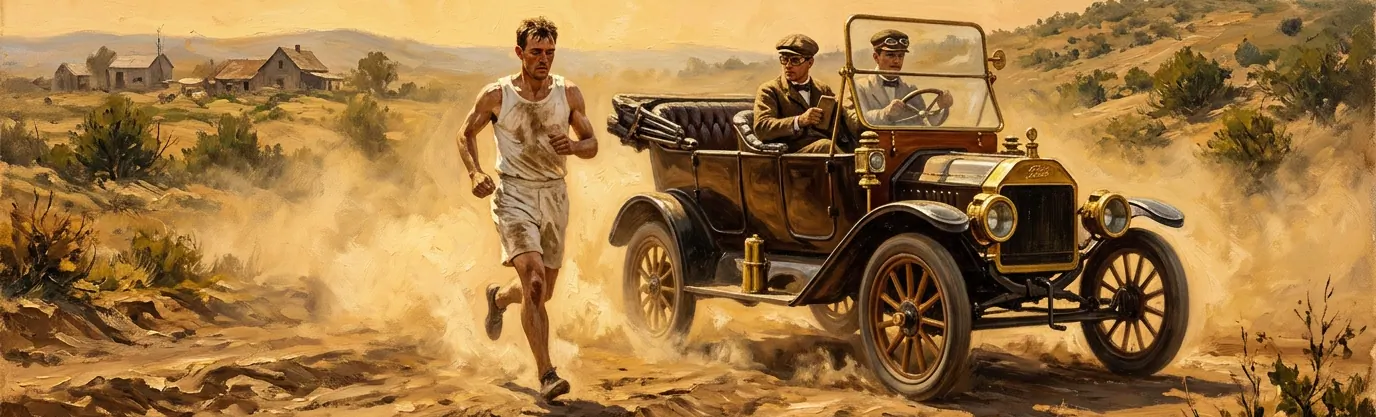
Explanation: The men's marathon at the 1904 Summer Olympics in St. Louis, Missouri, remains the most chaotic footrace in sports history. Run in stifling 90°F (32°C) heat at 3:00 PM along unpaved dirt roads choked with dust kicked up by officials' cars—and with only a single water well along the entire 24.85-mile course—more than half the runners collapsed!
Cuban mailman Félix Carvajal ran in heavy street shoes cut into shorts, stopped at an orchard to snack on rotten apples, got stomach cramps, took a nap in a ditch, and still finished fourth! First across the finish line was American Fred Lorz—until spectators revealed he had hitched an 11-mile ride in a support car after cramping at mile nine.
Meanwhile, the official gold medalist, Thomas Hicks, collapsed seven miles from the finish, where his trainers refused to give him water and instead injected him twice with sulfate of strychnine (commonly used as rat poison, which stimulates the nervous system in tiny doses) mixed with raw egg whites and shots of French brandy—carrying his hallucinating, shuffling body across the finish line to win Olympic gold!
15.Where do nearly all residents of the Alaskan coastal town Whittier live?
Show Answer & Explanation
Correct Answer: D. One fourteen-story apartment building
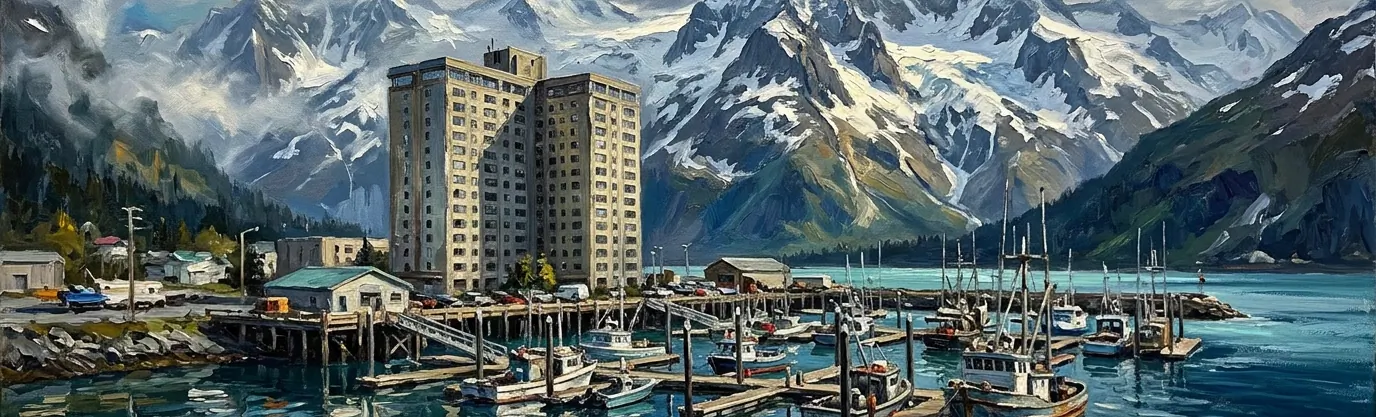
Explanation: Accessible by land only through a single-lane, 2.5-mile highway-and-railroad tunnel blasted through Maynard Mountain (which closes completely every night), the scenic port town of Whittier on Prince William Sound, Alaska, has earned the nickname "The Town Under One Roof."
Out of Whittier's roughly 260 year-round residents, about 85% live inside a single Cold War-era, fourteen-story concrete building called Begich Towers Condominium (originally built by the U.S. Army Corps of Engineers in 1957 as the Hodge Building to house military families)!
Because winter winds in Whittier howl at 60 mph and dump over 20 feet of snow a year, residents of Begich Towers never have to step outside into the blizzard: the fourteen-story building houses not only their apartments, but also the town post office, police department, convenience store, health clinic, church, laundromat, bed-and-breakfast, and an underground heated tunnel leading straight to the public school!
16.In which Georgia city does a white oak legally 'own' itself?
Show Answer & Explanation
Correct Answer: B. Athens
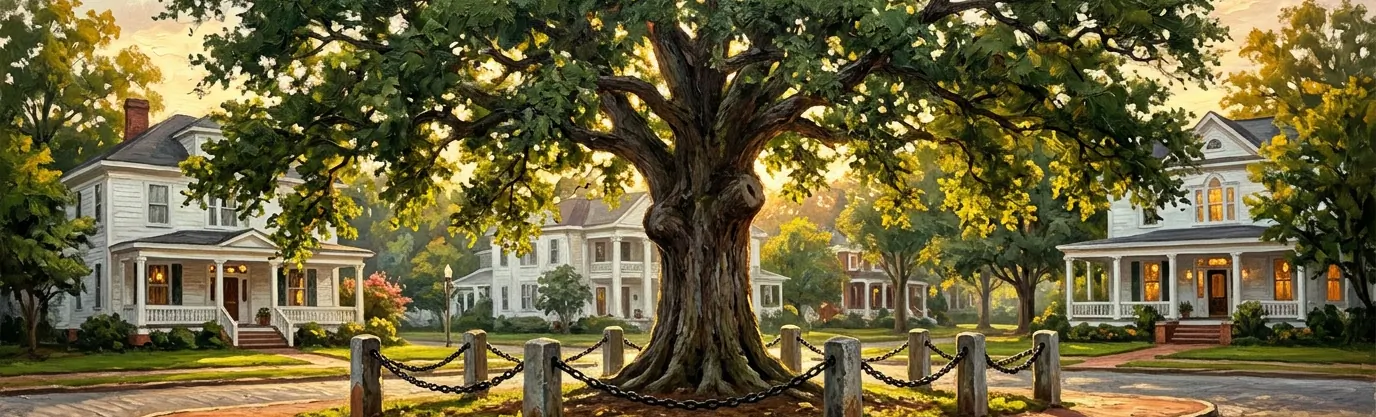
Explanation: At the corner of South Finley and Dearing Streets in the college town of Athens, Georgia, stands a famous white oak enclosed by granite posts and chains that locals proudly call "The Tree That Owns Itself."
According to an 1890 front-page story in the Athens Weekly Banner, University of Georgia professor Colonel William Henry Jackson so cherished the shade tree from his boyhood memories that somewhere between 1820 and 1832 he drafted a legal deed reading: "I, W. H. Jackson, of the county of Clarke, of the one part, and the oak tree... of the other part: Witnesseth, That the said W. H. Jackson for and in consideration of the great affection which he bears said tree, and his great desire to see it protected has conveyed, and by these presents do convey unto the said oak tree entire possession of itself and of all land within eight feet of it on all sides."
Even though a non-human tree cannot strictly hold a real-estate title under common law, the city of Athens and Clarke County officially recognize the tree's autonomy—and when the original 400-year-old oak blew down in a 1942 storm, citizens planted an acorn grown from the original tree right in its plot as "The Son of the Tree That Owns Itself"!
17.How long did the legendary Pony Express actually operate before closing?
Show Answer & Explanation
Correct Answer: A. Just eighteen months
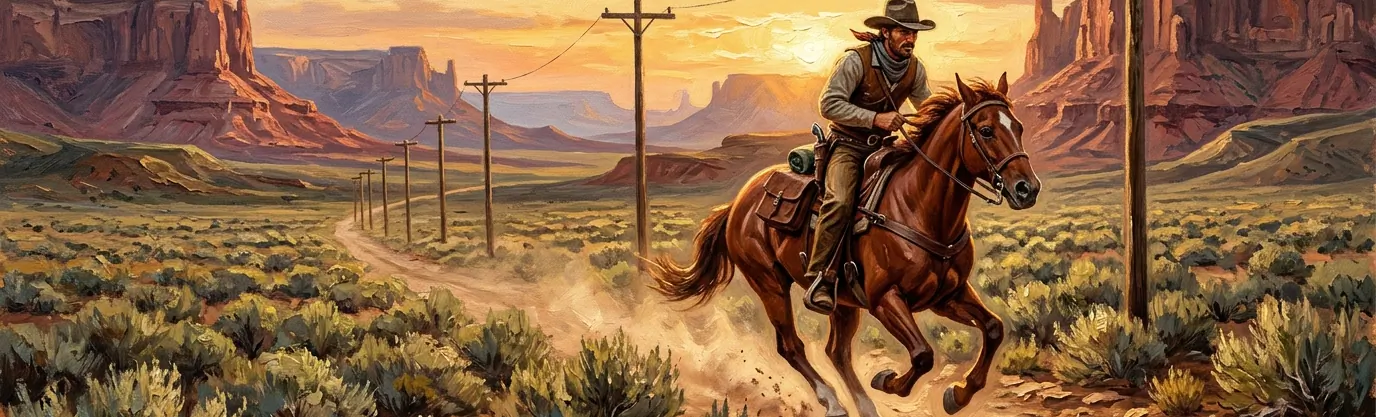
Explanation: Thanks to countless Hollywood Westerns, dime novels, and Buffalo Bill Cody's Wild West shows, most Americans assume the Pony Express—where daring young riders galloped across prairies and mountains switching horses every ten miles—carried the mail across the American West for decades.
In reality, the Pony Express operated for just eighteen months—from April 3, 1860, to October 26, 1861—and was a catastrophic financial money-loser that bankrupted its founders!
By stationing 80 lightweight teenage riders and 400 fast horses across 184 relay stations along the 1,900-mile trail from St. Joseph, Missouri, to Sacramento, California, the Pony Express slashed transcontinental mail delivery time from three weeks to an astonishing ten days. However, just two days after Western Union completed the First Transcontinental Telegraph line in October 1861—which transmitted messages from coast to coast in seconds—the Pony Express rode into history forever.
18.Which state holds both the contiguous U.S.'s highest peak and lowest basin?
Show Answer & Explanation
Correct Answer: C. California
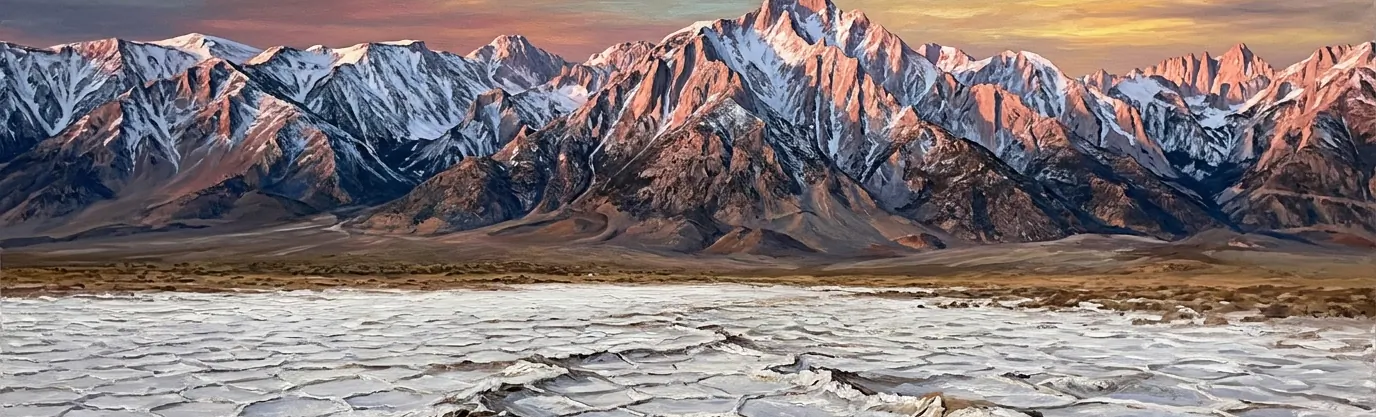
Explanation: Only in California's Inyo County can a traveler stand at the lowest point in all of North America at sunrise and hike to the summit of the highest mountain peak in the contiguous 48 United States before sunset—because the two geographic extremes sit just 84.6 miles (136 kilometers) apart!
At the bottom of Death Valley National Park lies Badwater Basin, an otherworldly expanse of hexagonal white salt flats sitting 282 feet (86 meters) below sea level. Look westward from the scorching desert floor, and just beyond the Panamint Range rises the jagged granite crest of the Sierra Nevada.
Soaring 14,505 feet (4,421 meters) above sea level, Mount Whitney is the tallest mountain in the Lower 48 states (second in the entire U.S. only to Alaska's 20,310-foot Denali). Every July, elite ultramarathoners even race between the two extremes on foot in the grueling 135-mile Badwater Ultramarathon!
19.Why did Washington, D.C.'s alphabetical street grid skip 'J' Street?
Show Answer & Explanation
Correct Answer: D. Looked identical to letter I
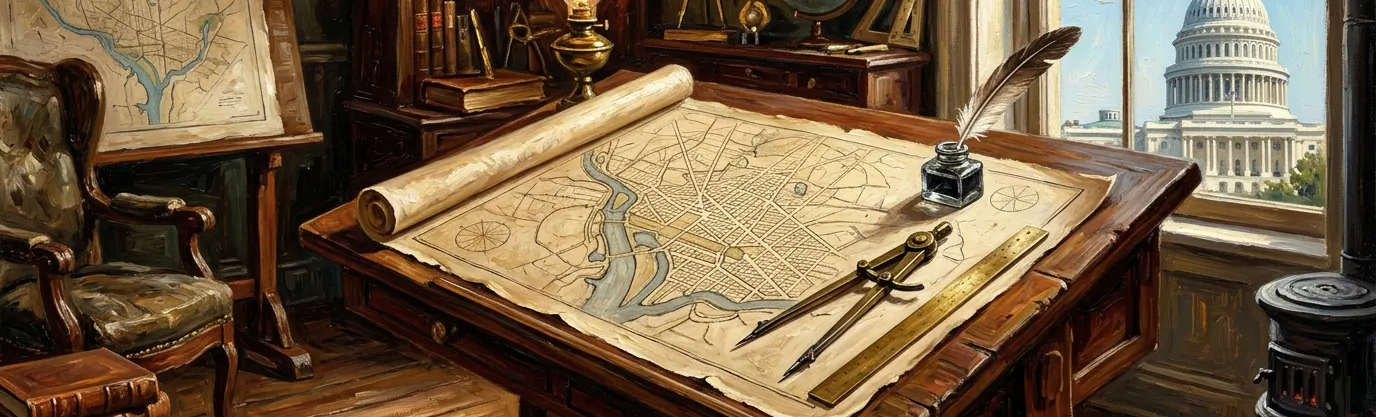
Explanation: Walk north or south through the alphabetical east-west streets of Washington, D.C.—from A Street, B Street (Constitution/Independence Ave), C, D, E, F, G, H, and I Street—and you will suddenly jump straight from I Street to K Street, with zero J Street anywhere in the nation's capital!
For generations, tour guides repeated a juicy rumor that French-born city planner Pierre Charles L'Enfant intentionally snubbed the first Chief Justice of the Supreme Court, John Jay, by deleting "J" Street after an argument over the 1794 Jay Treaty.
The real reason is pure eighteenth-century typography! In the late 1700s, when Washington's street grid was laid out, the English alphabet still treated the letters "I" and "J" as interchangeable variants of the same character, and in carved stone street markers and handwritten maps, a capital "I" and a capital "J" looked virtually indistinguishable—so surveyors skipped "J" to prevent mail carriers and visitors from getting lost!

20.What unusual pet walked on a leash around Calvin Coolidge's White House?
Show Answer & Explanation
Correct Answer: B. A raccoon named Rebecca
Explanation: Although 30th U.S. President Calvin Coolidge was nicknamed "Silent Cal" for his famously dry, reserved New England demeanor, his 1920s White House was essentially a private zoological park—home to twelve dogs, a bobcat, a wallaby, a black bear cub, twin lion cubs named Tax Reduction and Budget Bureau, and a pygmy hippopotamus named Billy!
In November 1926, an admirer in Nitta Yuma, Mississippi, shipped a live female raccoon in a crate to the White House intending for the First Family to cook and eat her for Thanksgiving dinner!
Appalled at the thought of eating the friendly, inquisitive creature, Calvin and First Lady Grace Coolidge immediately pardoned her, named her Rebecca, built her a custom house inside a White House tree, and bought her an embroidered collar reading "White House Raccoon." President Coolidge regularly strolled the White House grounds with Rebecca draped around his neck or trotting on a leash, and even let her join the annual White House Easter Egg Roll!
21.What has burned continuously beneath the ghost town of Centralia, Pennsylvania, since 1962?
Show Answer & Explanation
Correct Answer: A. An underground coal seam
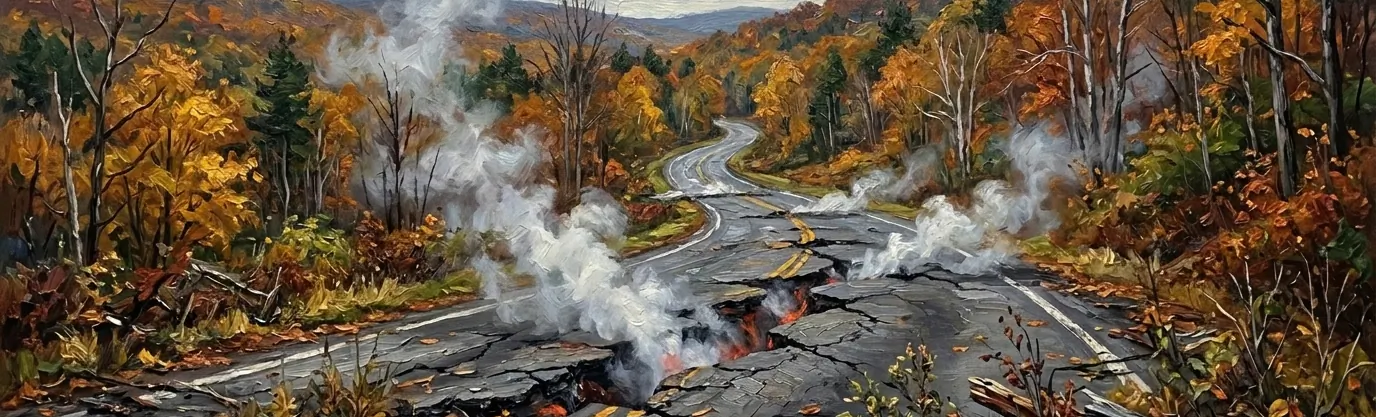
Explanation: In May 1962, the borough council of Centralia—a bustling anthracite coal-mining town of over 1,000 residents in Columbia County, Pennsylvania—hired volunteer firefighters to clean up the municipal landfill located inside an abandoned strip-mine pit right before Memorial Day by setting the trash on fire.
Unbeknownst to the crew, an unsealed opening at the bottom of the pit connected directly to a labyrinth of old underground anthracite coal-mine tunnels beneath the town! The trash fire ignited a massive underground vein of pure coal, which began burning laterally beneath Centralia's homes, churches, and highways at temperatures exceeding 1,000°F (540°C).
By 1981, carbon monoxide gas was seeping into basements and a twelve-year-old boy nearly fell to his death when a steaming 150-foot sinkhole opened beneath his grandmother's backyard! After Congress paid $42 million to relocate residents and demolish nearly every building, Centralia became a real-life ghost town (inspiring the Silent Hill movies)—while geologists estimate the underground coal seam has enough fuel to keep burning for another 250 years!
22.Which state is NOT part of the famous Four Corners intersection?
Show Answer & Explanation
Correct Answer: D. Nevada
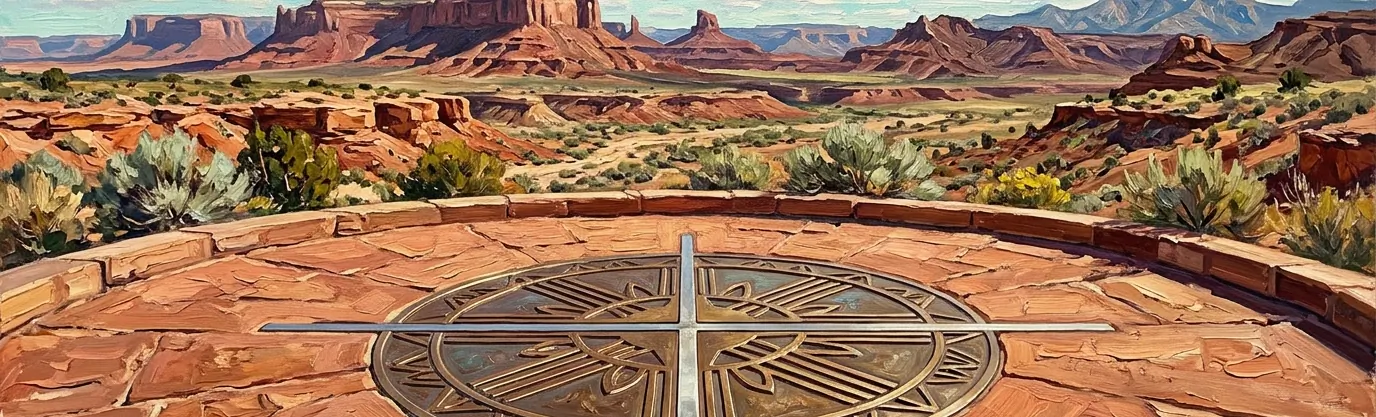
Explanation: Deep in the high desert plateau of the American Southwest—on land administered by the Navajo Nation—sits the Four Corners Monument, the single location in the entire United States where four state boundaries meet at right angles at a single geographic point!
Put your hands and feet on the circular bronze disk embedded in the granite plaza, and you can physically touch Arizona (southwest), Utah (northwest), Colorado (northeast), and New Mexico (southeast) all at the exact same instant—while Nevada sits more than 200 miles away to the west across Utah and Arizona!
When nineteenth-century surveyor Chandler Robbins planted the original sandstone marker in 1875 along the 37th parallel north and 109th meridian west using astronomical star sightings, his instruments were off by about 1,807 feet (550 meters)—yet the U.S. Supreme Court ruled in 1925 that the physical markers placed on the ground by surveyors legally define the true state border forever!
23.Roughly how much per acre did America pay Russia for Alaska?
Show Answer & Explanation
Correct Answer: C. Two cents
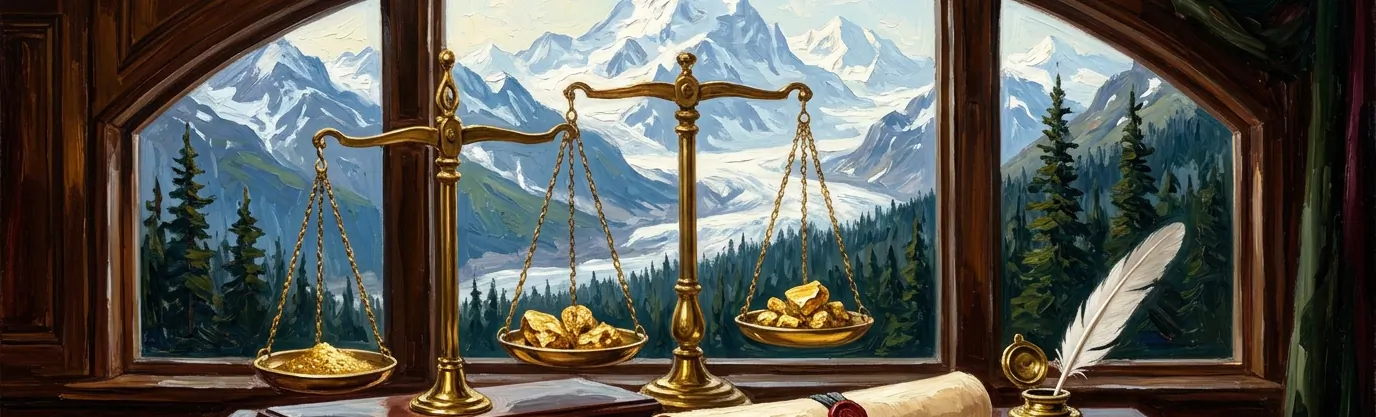
Explanation: In the spring of 1867, U.S. Secretary of State William H. Seward stayed up all night negotiating with Russian Envoy Baron Eduard de Stoeckl, who wanted to sell Russian America before Britain could seize it in a future war. At 4:00 AM on March 30, 1867, the two diplomats signed the Treaty of Cession purchasing all 586,412 square miles (375 million acres) of Alaska for $7.2 million in gold!
Divide $7.2 million across 375 million acres, and the United States acquired a territory twice the size of Texas for roughly 1.9 cents (two cents) per acre!
At the time, skeptical newspaper editors mocked the deal as "Seward's Folly," "Seward's Icebox," and Andrew Johnson's "Polar Bear Garden." Within thirty years, however, the Klondike and Nome Gold Rushes pulled hundreds of millions of dollars in gold out of the ground, followed in 1968 by the discovery of the Prudhoe Bay oil field—making Seward's two-cents-an-acre bargain one of the greatest real-estate deals in world history!
24.How deep could Lake Superior's water flood all North and South America?
Show Answer & Explanation
Correct Answer: B. One full foot deep
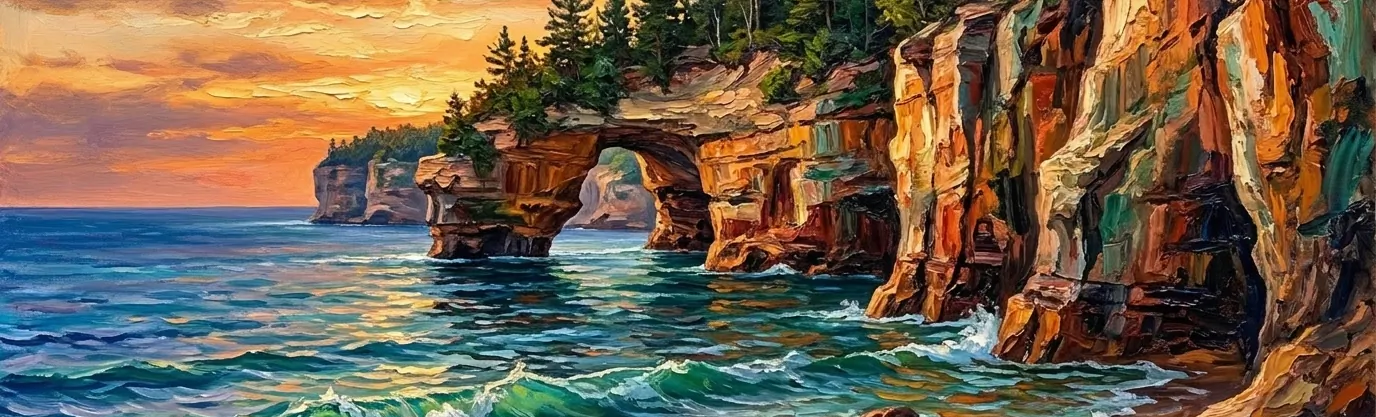
Explanation: Straddling the border of Michigan, Wisconsin, Minnesota, and Ontario, Canada, Lake Superior is the largest freshwater lake on Earth by surface area (31,700 square miles—bigger than the states of South Carolina or Maine!) and the third-largest by volume.
While many Americans picture Lake Superior as just a big lake, hydrologists classify it as a genuine inland freshwater sea: it stretches 350 miles long, plunges 1,332 feet (406 meters) deep, and holds more water than the other four Great Lakes (Michigan, Huron, Erie, and Ontario) combined, plus three extra Lake Eries!
In fact, Lake Superior contains a mind-boggling 3 quadrillion gallons (12,100 cubic kilometers) of crystal-clear fresh water—10% of all the liquid surface fresh water on Planet Earth! If you poured Lake Superior evenly across the entire combined land mass of both North America and South America, it would submerge both continents from Alaska to Patagonia under one full foot (30 centimeters) of water!

25.What has been banned on Michigan's resort island of Mackinac since 1898?
Show Answer & Explanation
Correct Answer: A. Motorized automobiles
Explanation: Sitting in the turquoise waters of the Straits of Mackinac between Michigan's Upper and Lower Peninsulas, historic Mackinac Island looks like a living postcard from the Victorian Gilded Age—and for good reason: private motorized automobiles ("horseless carriages") have been legally banned on the island since July 6, 1898!
That summer, when a visitor brought one of the first noisy, backfiring internal-combustion cars onto the island, it terrified the horses pulling resident and tourist carriages so badly that village councilmen passed an immediate ban on all motor vehicles (except emergency ambulances and fire trucks).
Over 125 years later, the ban remains strictly enforced! More than a million annual visitors and 600 year-round residents get around the island exclusively on foot, aboard horse-drawn taxis and drays, or on 1,500+ bicycles—making Michigan's State Highway M-185 (which loops 8.2 miles around Mackinac Island's shoreline) the only state highway in the United States where cars are outlawed!

26.What sits on the top floor directly above the Supreme Court chamber?
Show Answer & Explanation
Correct Answer: D. A basketball court
Explanation: When architect Cass Gilbert designed the majestic neoclassical marble temple of the United States Supreme Court Building in Washington, D.C. (completed in 1935), he included an empty fifth-floor storage room directly above the grand courtroom where the nine Supreme Court Justices hear oral arguments.
In the 1940s, building administrators converted that high-ceilinged fifth-floor storage space into a gymnasium for Supreme Court law clerks, police officers, and Justices, installing wood flooring and two glass backboards with basketball hoops—creating what Washington insiders universally call "The Highest Court in the Land"!
Over the decades, Law Clerks and even Supreme Court Justices themselves—most famously Justice Byron "Whizzer" White (a former NFL rushing leader and college basketball standout), Justice Sandra Day O'Connor (who held aerobics classes there), Elena Kagan, and Brett Kavanaugh—have shot hoops on the fifth floor. There is only one strict house rule: players are forbidden from dribbling when the Supreme Court is in session directly beneath the floor!
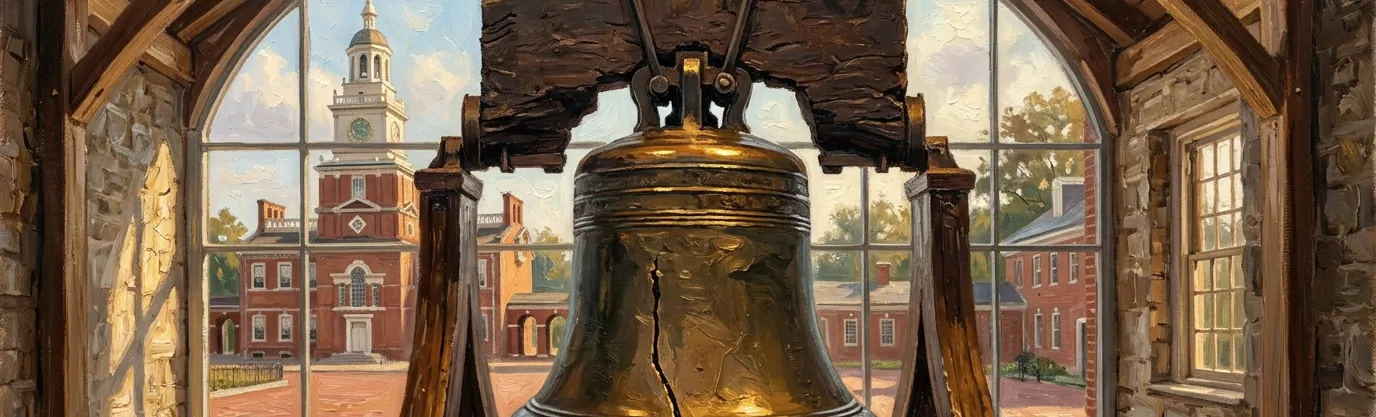
27.Which word is famously misspelled on the side of Philadelphia's Liberty Bell?
Show Answer & Explanation
Correct Answer: C. Pennsylvania
Explanation: Walk up to the glass pavilion housing the 2,080-pound bronze Liberty Bell in Philadelphia and read the inscription around its crown: beneath the famous Bible verse "Proclaim LIBERTY Throughout all the Land unto all the Inhabitants Thereof," the bell's origin line reads: "By Order of the ASSEMBLY of the Province of PENSYLVANIA for the State House in Philada."—spelling "Pennsylvania" with only one "N" in the middle!
Originally cast in 1752 at London's Whitechapel Bell Foundry, the bell cracked on its very first test ring after arriving in Philadelphia. Two local craftsmen, John Pass and John Stow, melted the British bell down, added extra copper to make it less brittle, and recast the bell in 1753 with their names and the single-N "Pensylvania" spelling molded into the bronze.
Before you blame Pass and Stow for bad spelling, historians note that English spelling in the 1750s was still fluid: "Pensylvania" was an accepted eighteenth-century variant that even appears on paper currency printed by Benjamin Franklin—and in Alexander Hamilton's handwriting at the bottom of the U.S. Constitution itself!
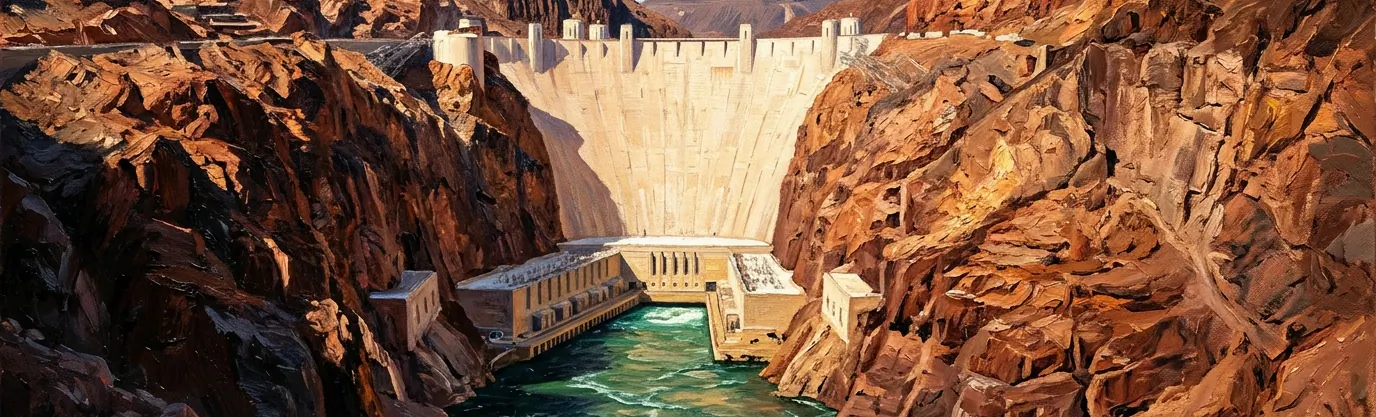
28.How did engineers cool Hoover Dam's concrete in two years instead of 125?
Show Answer & Explanation
Correct Answer: B. Embedded ice-water pipes
Explanation: Built during the Great Depression between 1931 and 1936 across Black Canyon on the Arizona–Nevada border, Hoover Dam required 3.25 million cubic yards of concrete—enough concrete to build a two-lane highway stretching all the way from San Francisco to New York City!
Here is a surprising fact of chemistry: concrete does not harden by "drying out"; it hardens via an exothermic chemical reaction (hydration) between cement and water that generates enormous internal heat. Bureau of Reclamation engineers calculated that if they poured Hoover Dam as a single solid block, the interior concrete would take 125 years to cool down, and uneven thermal contraction would crack the dam apart!
To solve the puzzle, chief engineer Frank Crowe poured the dam as a series of 230 interlocking trapezoidal concrete columns and embedded 582 miles of 1-inch steel pipes inside the curing blocks. A giant on-site refrigeration plant pumped river water and ice-chilled water at 38°F through the pipes 24 hours a day—cooling the entire colossus in under two years before workers filled the pipes with pressurized grout!
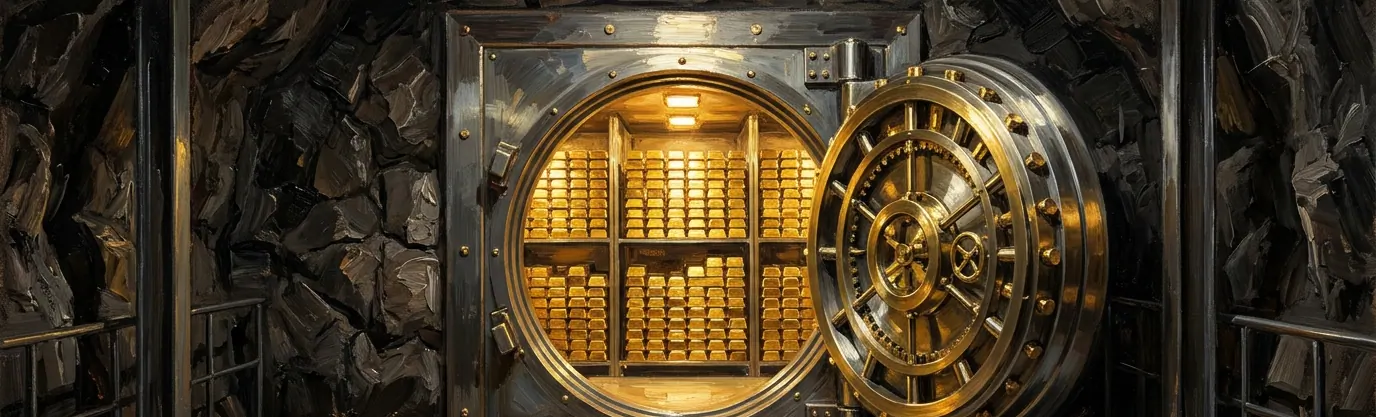
29.Which vault actually stores more gold than Kentucky's legendary Fort Knox?
Show Answer & Explanation
Correct Answer: A. New York Federal Reserve
Explanation: In American pop culture and James Bond films, the United States Bullion Depository at Fort Knox, Kentucky—holding 147.3 million troy ounces (roughly 4,580 metric tons) of U.S. Treasury gold bars—is synonymous with the largest gold hoard on Earth.
Yet there is a vault in the United States that quietly holds roughly 35% more gold than Fort Knox: the subterranean vault of the Federal Reserve Bank of New York, located 80 feet below street level and 50 feet below sea level in the solid Manhattan schist bedrock at 33 Liberty Street in New York City's Financial District!
Protected by a 90-ton, steel cylinder door that seals airtight like a bank cork, the New York Fed vault holds roughly 507,000 gold bars weighing approximately 6,331 metric tons! While Fort Knox holds exclusively U.S. government gold, about 95% of the gold inside the New York Federal Reserve vault belongs to 36 foreign central banks and international organizations that store their national reserves there for safekeeping.
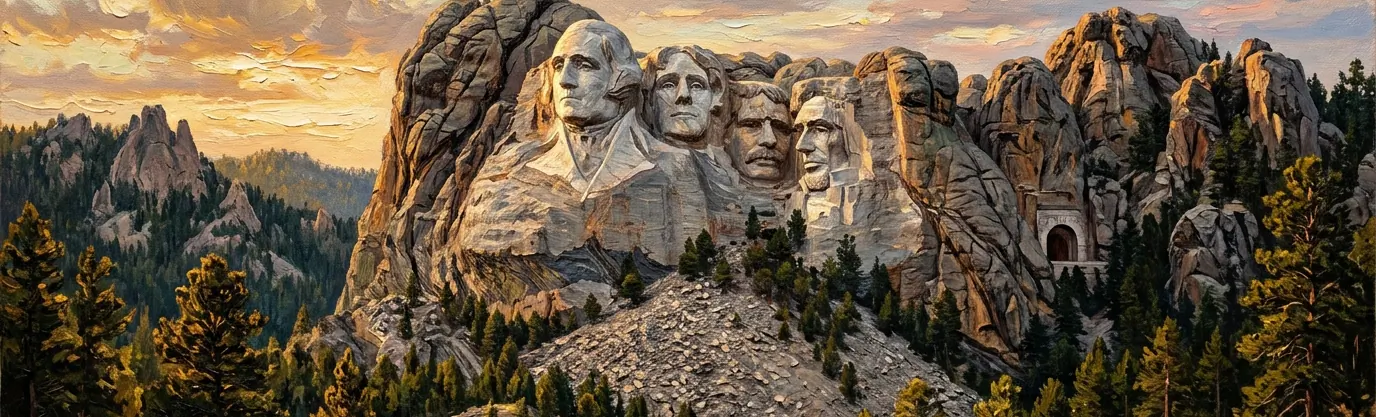
30.What did sculptor Gutzon Borglum blast into the canyon behind Lincoln's head?
Show Answer & Explanation
Correct Answer: D. A porcelain Hall of Records
Explanation: Millions of visitors gaze up at the 60-foot granite faces of George Washington, Thomas Jefferson, Theodore Roosevelt, and Abraham Lincoln on Mount Rushmore in South Dakota's Black Hills without realizing there is a hidden chamber blasted right into the rock wall behind Abraham Lincoln's hairline!
Sculptor Gutzon Borglum worried that thousands of years in the future, a distant civilization might stumble across the four giant stone heads in the forest and have no idea who the men were or why they were carved—just like modern tourists puzzling over Stonehenge or Easter Island.
In 1938, Borglum began blasting a 70-foot tunnel into the secluded canyon directly behind Lincoln's head to build a grand "Hall of Records." Although Borglum died in 1941 before finishing the interior room, in August 1998 the National Park Service completed his dream by sealing sixteen porcelain-enamel panels engraved with the Declaration of Independence, the Constitution, the Bill of Rights, and the history of the presidents inside a titanium vault beneath a 1,200-pound granite capstone in the tunnel floor!
31.What is the official constitutional language of the United States federal government?
Show Answer & Explanation
Correct Answer: C. There is none
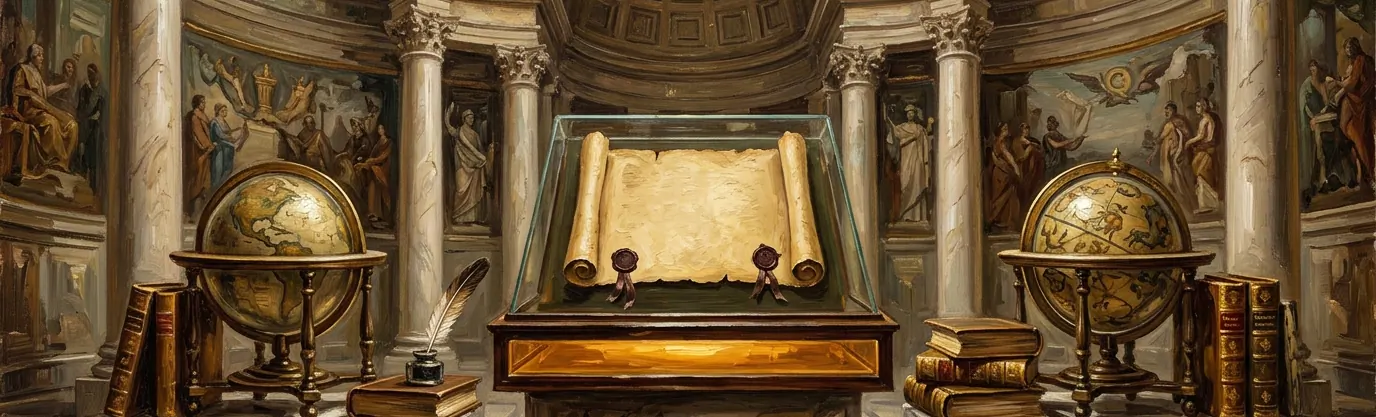
Explanation: It is one of the most common trick questions on U.S. citizenship quizzes and bar trivia nights: although English is spoken at home by roughly 78% of the population and used for federal laws and Supreme Court rulings, the United States has never adopted an official national language at the federal level!
When the Founding Fathers drafted the U.S. Constitution in Philadelphia in 1787, the young nation was already home to thriving communities speaking German, Dutch, French, Spanish, and hundreds of Indigenous languages. Founding leaders like John Adams and Benjamin Rush believed that in a free republic, the federal government had no business dictating which language citizens could speak or print.
In fact, the Continental Congress itself printed official proclamations and articles in German and French during the Revolutionary War! While more than 30 individual states have passed state-level resolutions naming English (and in Hawaii, both English and Ōlelo Hawaiʻi; in Alaska, English plus 20 Native languages) as official state languages, the federal Constitution remains completely silent on the subject.
32.What has been missing in the waters off Tybee Island, Georgia, since 1958?
Show Answer & Explanation
Correct Answer: D. An Air Force hydrogen bomb
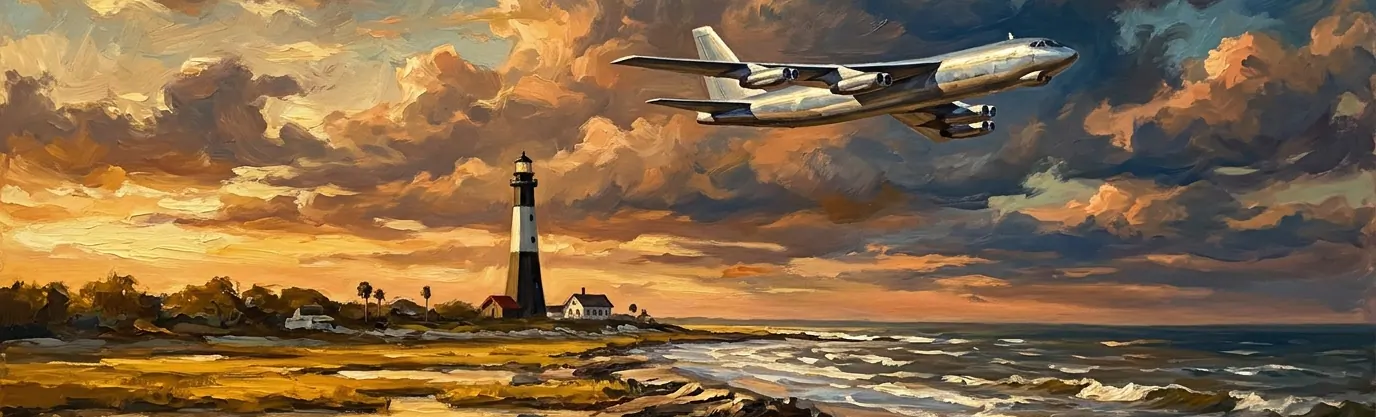
Explanation: Around 2:00 AM on February 5, 1958, during a simulated night combat mission out of Homestead Air Force Base in Florida, a U.S. Air Force B-47 Stratojet strategic bomber collided in midair at 38,000 feet with an F-86 Sabre fighter jet over the coast of Georgia.
While the F-86 pilot ejected safely, the crippled B-47 bomber was carrying a 7,600-pound (3,400-kg), 11.5-foot-long Mark 15 thermonuclear hydrogen bomb! To lighten the damaged aircraft and prevent the 400-pound conventional high-explosive trigger inside the bomb from detonating if the plane crashed on the runway at Hunter Air Force Base in Savannah, the pilot obtained permission to jettison the nuclear weapon from 7,200 feet into the shallow waters of Wassaw Sound near Tybee Island, Georgia.
For ten weeks, 100 Navy divers combed the murky silt of Wassaw Sound using handheld sonar without success. Buried under 5 to 15 feet of shifting mud, the Tybee Island Mark 15 hydrogen bomb (classified as a "Broken Arrow") is still sitting somewhere off the Georgia beach today!
33.Whose personal collection of 6,487 books rebuilt the burned Library of Congress?
Show Answer & Explanation
Correct Answer: C. Thomas Jefferson's
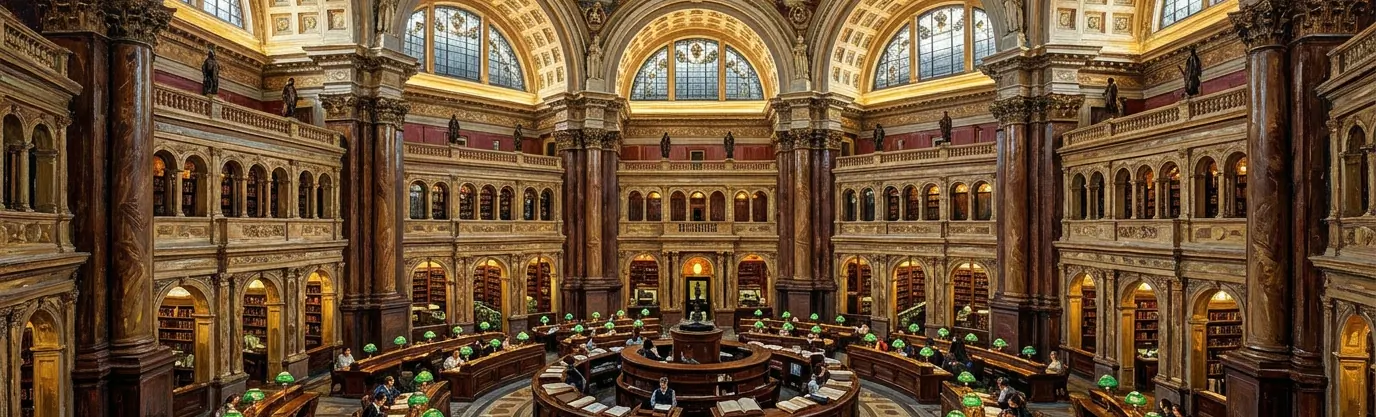
Explanation: Today, the Library of Congress in Washington, D.C. is the largest library in the history of the world—housing more than 175 million items across 838 miles of bookshelves. Yet in August 1814, during the War of 1812, invading British troops set fire to the U.S. Capitol building and burned the original 3,000-volume Congressional library to ashes!
Within weeks of the fire, retired former President Thomas Jefferson wrote to Congress from his Monticello estate in Virginia offering to sell his personal library—which he had spent fifty years assembling across America and Europe, declaring "I cannot live without books"—to restart the national collection.
In January 1815, Congress paid Jefferson $23,950 for all 6,487 volumes! Whereas the original Library of Congress contained mostly dry legal statutes and parliamentary records, Jefferson's collection spanned architecture, science, philosophy, literature, cooking, and foreign languages—forever transforming the Library of Congress into a universal repository of all human knowledge.
34.Which wonder became the world's very first national park in 1872?
Show Answer & Explanation
Correct Answer: B. Yellowstone
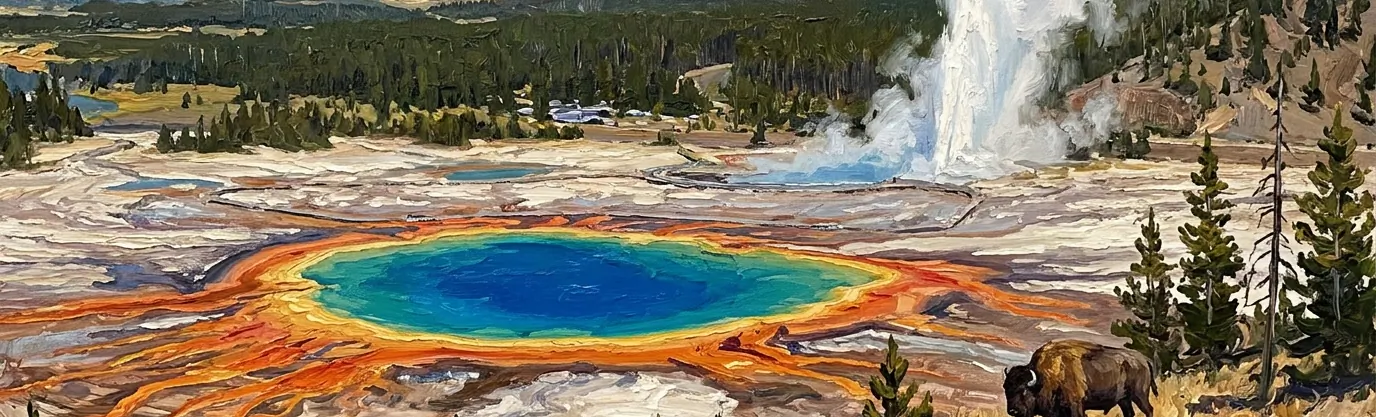
Explanation: For decades in the early 1800s, when rugged mountain men like Jim Bridger and John Colter returned East telling stories of a high-altitude Rocky Mountain wonderland filled with boiling mud pots, rainbow hot springs, petrified forests, and geysers shooting boiling water 150 feet into the air, newspaper editors laughed and dismissed the region as "Colter's Hell."
Only in 1871, when Geologist Ferdinand V. Hayden led a federally funded scientific survey accompanied by photographer William Henry Jackson and landscape painter Thomas Moran, did Congress see undeniable visual proof of Yellowstone's geothermal marvels.
On March 1, 1872, President Ulysses S. Grant signed the Yellowstone National Park Protection Act—setting aside more than 2.2 million acres across Wyoming, Montana, and Idaho "as a public park or pleasuring-ground for the benefit and enjoyment of the people," making Yellowstone the very first National Park in both the United States and the entire world!
35.What giant food gift sat aging in Andrew Jackson's White House foyer?
Show Answer & Explanation
Correct Answer: A. A 1,400-pound cheddar wheel
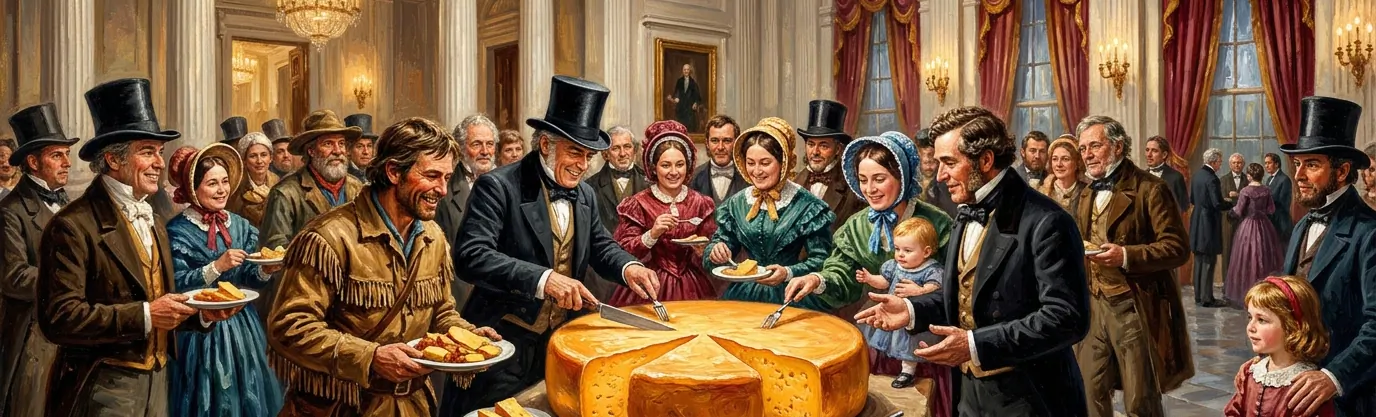
Explanation: In 1835, an enthusiastic New York dairy farmer named Colonel Thomas S. Meacham of Sandy Creek decided to honor President Andrew Jackson by pooling the milk of 150 cows to craft a "Mammoth Cheese"—a single solid wheel of cheddar measuring four feet in diameter, two feet thick, and weighing a staggering 1,400 pounds (635 kilograms), wrapped in a giant patriotic belt inscribed "The Union, it must be preserved!"
Delivered by wagon and steamboat to Washington, D.C., the colossal cheese wheel was placed right in the entrance foyer of the White House, where it sat aging at room temperature for nearly two full years!
By February 1837, as Jackson prepared to leave office, he had 1,400 pounds of pungent cheddar still sitting by his front door. For his farewell Washington's Birthday reception on February 22, 1837, Jackson invited 10,000 citizens into the White House armed with knives: the crowd devoured the entire 1,400-pound cheese in just two hours, grinding so much cheddar into the carpets and curtains that incoming President Martin Van Buren had to air out and scrub the White House for months!
36.Which highway is actually the longest continuous road across the United States?
Show Answer & Explanation
Correct Answer: C. U.S. Route 20
Explanation: While Route 66 ("The Main Street of America," 2,448 miles) gets all the rock-and-roll songs and Interstate 90 (3,020 miles) is the longest Interstate freeway, neither holds the title of the longest continuous road in the United States: that crown belongs to historic U.S. Route 20!
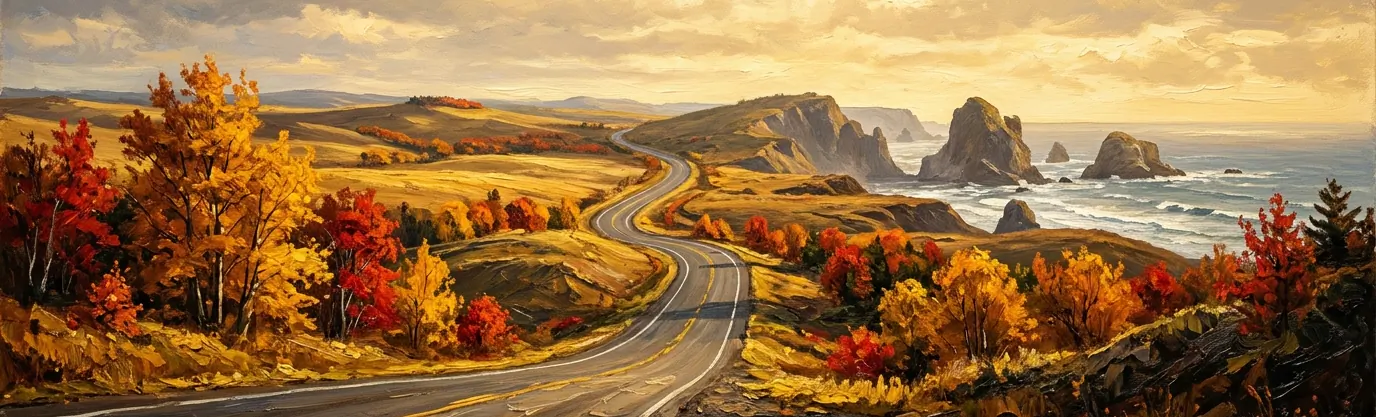
Stretching an incredible 3,365 miles (5,415 kilometers) from coast to coast, U.S. Route 20 begins at Kenmore Square in Boston, Massachusetts, and winds westward across twelve states—passing the Finger Lakes, Niagara Falls, Lake Erie, Chicago, the Corn Belt of Iowa, the Nebraska Sandhills, Yellowstone National Park, and the Oregon Trail—before terminating just yards from the Pacific Ocean at Newport, Oregon!
Wait—what about the sign inside Yellowstone National Park? Because numbered highways are un-signed inside Yellowstone's boundaries, motorists simply follow the park roads from the East Entrance to the West Entrance to complete America's ultimate 3,365-mile road trip.
37.What bizarre resource let Americans claim nearly a hundred islands in 1856?
Show Answer & Explanation
Correct Answer: B. Seabird guano fertilizer
Explanation: In the 1840s and 1850s, before the invention of synthetic nitrogen fertilizers, American and European agriculture experienced a nationwide "guano mania": farmers discovered that sun-baked seabird droppings (guano) accumulated over millennia on dry tropical islands were packed with concentrated nitrogen, phosphate, and potassium that doubled crop yields overnight, as well as saltpeter for gunpowder!
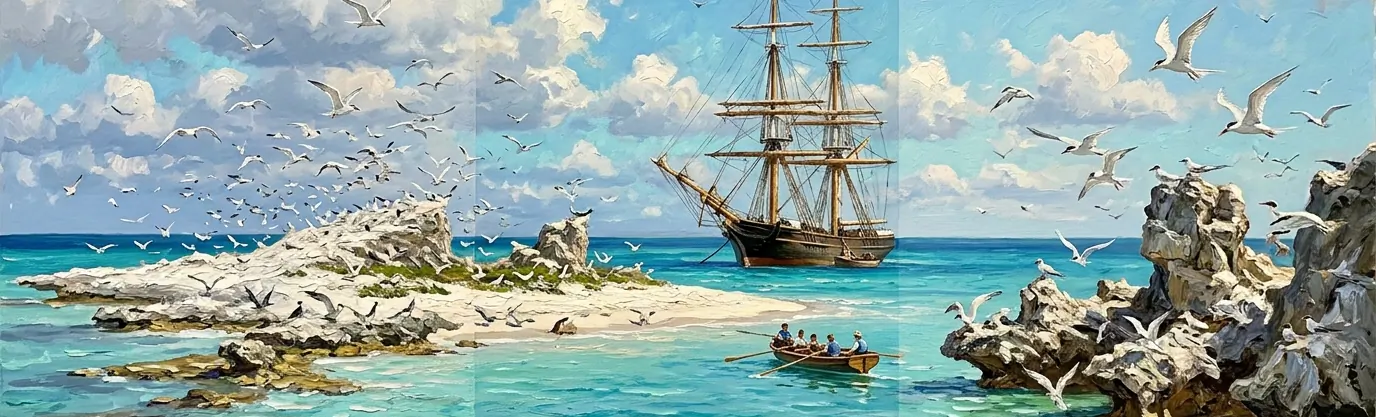
When Peru monopolized the Chincha Islands and jacked up guano prices to $76 a ton, the U.S. Congress passed the remarkable Guano Islands Act on August 18, 1856. The law authorized any U.S. citizen who discovered a deposit of bird droppings on an unclaimed, uninhabited island anywhere on Earth to claim the island as official United States territory—complete with U.S. Navy protection!
Under the Guano Islands Act (which is still federal law today under 48 U.S.C. Chapter 8!), American adventurers claimed nearly 100 remote islands across the Pacific and Caribbean—and nine of them, including Baker Island, Howland Island, Jarvis Island, Johnston Atoll, Kingman Reef, Midway Atoll, and Navassa Island, remain official U.S. Minor Outlying Islands to this day!
38.Which U.S. state claims America's northernmost, westernmost, and easternmost points?
Show Answer & Explanation
Correct Answer: A. Alaska
Explanation: Everyone knows Alaska is the northernmost state in the Union (reaching Point Barrow at 71°23' North) and the westernmost state (stretching far out into the Bering Sea). Yet by the strict rules of global longitude, Alaska is also the easternmost state in the United States—beating West Quoddy Head, Maine!
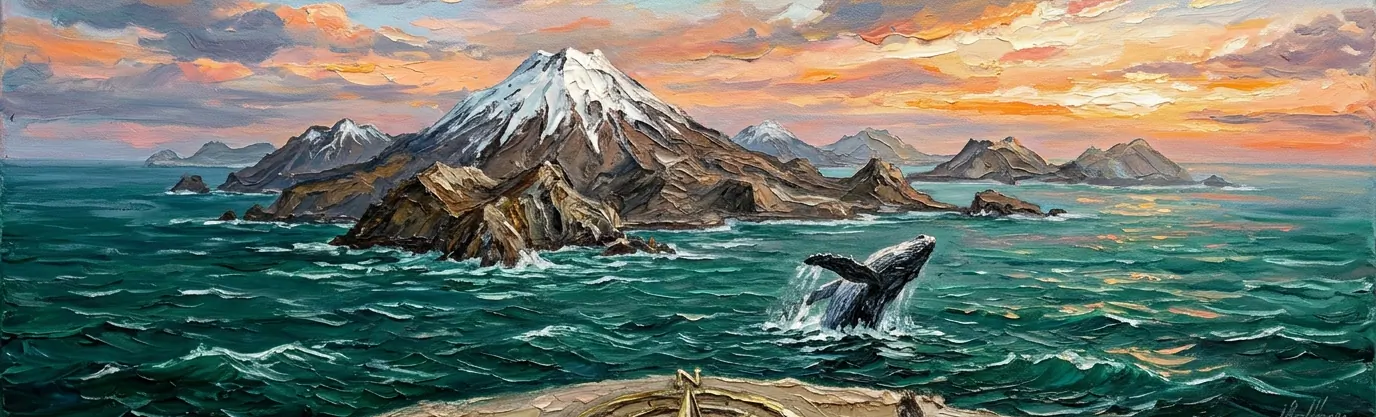
How is that possible? The 180th meridian—the invisible line of longitude opposite the Prime Meridian that divides the Western Hemisphere from the Eastern Hemisphere—slices right through Alaska's Aleutian Island chain. Semisopochnoi Island sits at 179°46' East longitude, placing that piece of Alaskan soil squarely inside the Eastern Hemisphere.
If you ignore the 180th meridian and measure purely by direction of travel from the geographic center of the United States, Maine reclaims the easternmost crown while Alaska's Amatignak Island remains the westernmost point of the nation.
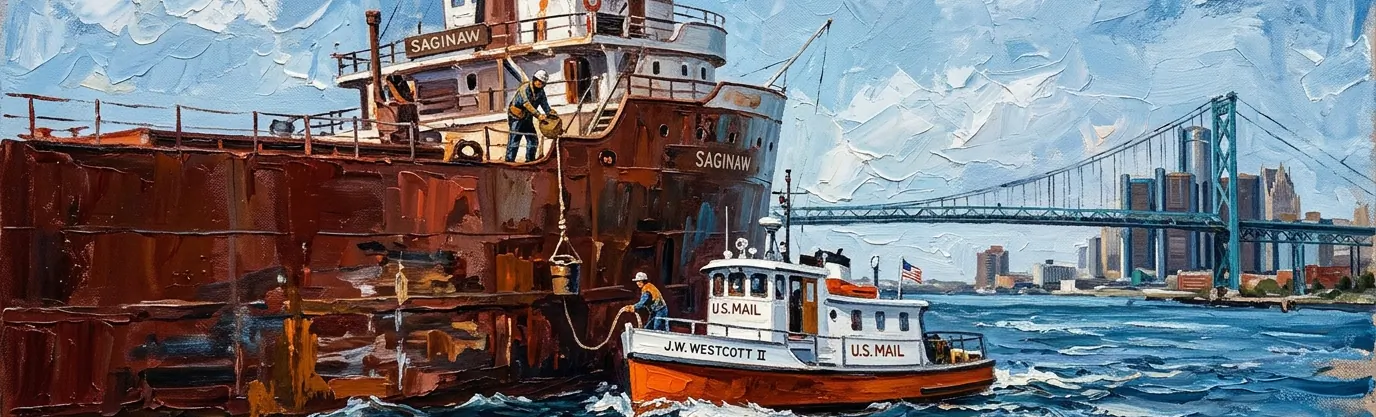
39.Why does the Detroit River mail boat J.W. Westcott have ZIP Code 48222?
Show Answer & Explanation
Correct Answer: B. It delivers mail to ships
Explanation: Operating out of Detroit, Michigan since 1874, the 45-foot diesel launch J.W. Westcott II holds a distinction unmatched anywhere else in the United States Postal Service: it is the only floating post office in America with its own dedicated five-digit ZIP Code, 48222.
Because giant 1,000-foot Great Lakes iron-ore and grain freighters burn thousands of dollars in fuel and lose hours of transit time if they drop anchor or dock while passing through the busy Detroit River channel between Lake Huron and Lake Erie, Captain John Ward Westcott invented a daring "mail in a pail" delivery system.
Whenever a massive freighter steams past Detroit at full speed, the tiny J.W. Westcott II pulls right alongside its towering steel hull. A crew member on the ship lowers a five-gallon rope bucket forty feet down to the mailboat's deck, swapping outgoing crew letters for incoming care packages, fresh newspapers, laundry, and hot Detroit pizzas without the freighter ever slowing down.
Did You Know? Fascinating Facts
- Because Alaska's Aleutian Islands cross the 180th meridian into the Eastern Hemisphere, Alaska is simultaneously the northernmost, westernmost, AND easternmost state in the United States!
- The current 50-star U.S. flag was designed in 1958 as a high-school history project by 17-year-old Robert G. Heft—whose teacher gave him a B-minus until President Dwight D. Eisenhower selected his design!
- Honolulu's Iolani Palace—the only official royal residence in the United States—had electric lights and flush toilets installed years before the White House in Washington, D.C.!