
Inventions Trivia: Wild Accidents That Changed the World
Forget memorizing patent numbers—explore 30 wild stories behind the microwave oven, Bubble Wrap, Play-Doh, Velcro, and the world's greatest accidental inventions.
Most inventions quizzes put you to sleep asking what year Thomas Edison patented the light bulb. The real history of human ingenuity is packed with glorious accidents and bizarre origins: a radar engineer whose melted pocket candy bar inspired the microwave oven, two inventors who tried to make textured 3D plastic wallpaper and accidentally created Bubble Wrap, and a paste originally sold to scrub black coal soot off living-room wallpaper that became Play-Doh.
From the tin can being patented nearly fifty years before anyone invented a can opener and an eleven-year-old boy accidentally freezing the first Popsicle on his porch to Douglas Engelbart's hand-carved wooden computer mouse, test your knowledge with 30 short, punchy, and verified Inventions Trivia Questions & Answers below!
1.What melted in Percy Spencer's pocket and inspired the microwave oven?
Show Answer & Explanation
Correct Answer: C. A peanut cluster bar
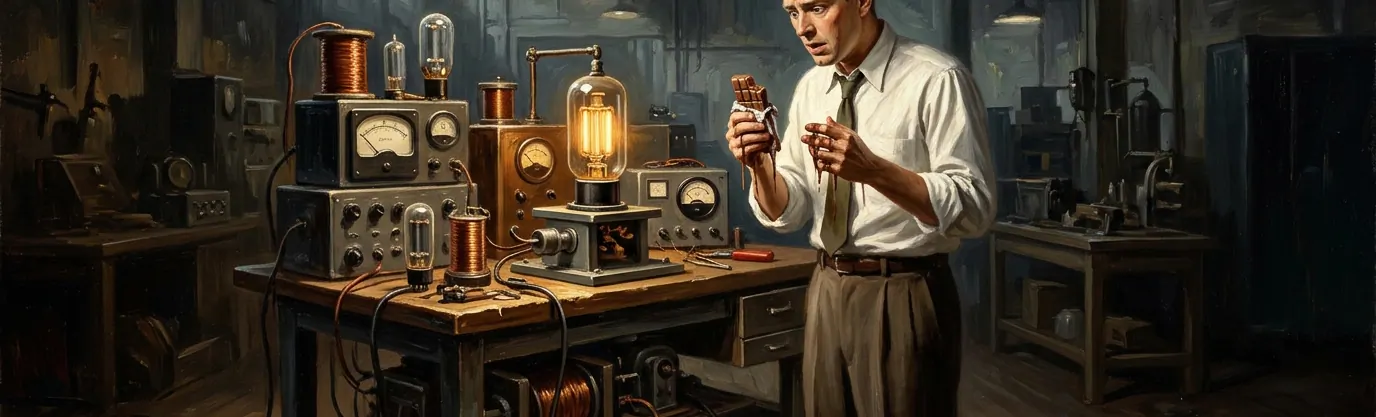
Explanation: In 1945, self-taught Raytheon engineer Percy Spencer—who had left school at age twelve to work in a spool mill before becoming one of the world's foremost experts on wartime radar tube manufacturing—was testing a high-powered vacuum tube called a cavity magnetron in his Massachusetts laboratory.
While standing in front of the active radar set, Spencer noticed a strange warm sensation in his pants pocket. Reaching inside, he discovered that the Mr. Goodbar peanut cluster candy bar he had brought for a snack had melted into a gooey puddle!
Curious rather than annoyed, Spencer sent out for a bag of unpopped corn kernels, held them beside the magnetron waveguide, and watched them pop all over the lab floor. The next morning, he cut a hole in the side of a metal kettle, placed a raw egg inside, and aimed the magnetron into the pot—which promptly exploded hot yolk onto a colleague's face! By 1947, Raytheon unveiled the 750-pound, 5-foot-9-inch "Radarange," the world's first commercial microwave oven.
2.What were the creators of Bubble Wrap originally trying to invent?
Show Answer & Explanation
Correct Answer: A. Textured 3D plastic wallpaper
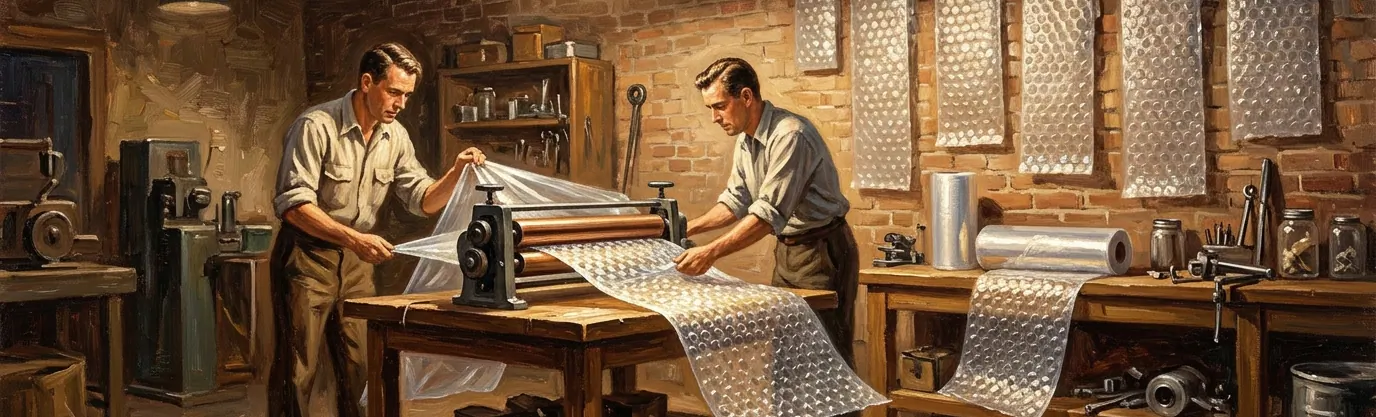
Explanation: In 1957, American engineer Alfred Fielding and Swiss chemist Marc Chavannes rented a tiny garage in Hawthorne, New Jersey, convinced that futuristic Mid-Century Modern homeowners would pay top dollar for washable, textured three-dimensional plastic wallpaper!
They fed two plastic shower curtains through a heat-sealing machine that trapped hundreds of tiny air bubbles between the sheets, pasted it onto cardboard backing, and pitched it to interior designers. It was a complete commercial flop—nobody wanted their living room walls covered in popping plastic blisters!
After a second failed attempt to market the bubbly sheets as greenhouse insulation, Chavannes was gazing out an airplane window at fluffy clouds cushioning the plane's descent into Newark Airport when inspiration struck: air-filled plastic bubbles would make the ultimate lightweight packing material! When IBM launched its fragile new 1401 transistor computer in 1959 and used Bubble Wrap to ship every unit safely, Sealed Air Corporation became an overnight sensation.
3.Why did two Scottish doctors invent the chainsaw in 1785?
Show Answer & Explanation
Correct Answer: D. Aiding difficult childbirth surgeries
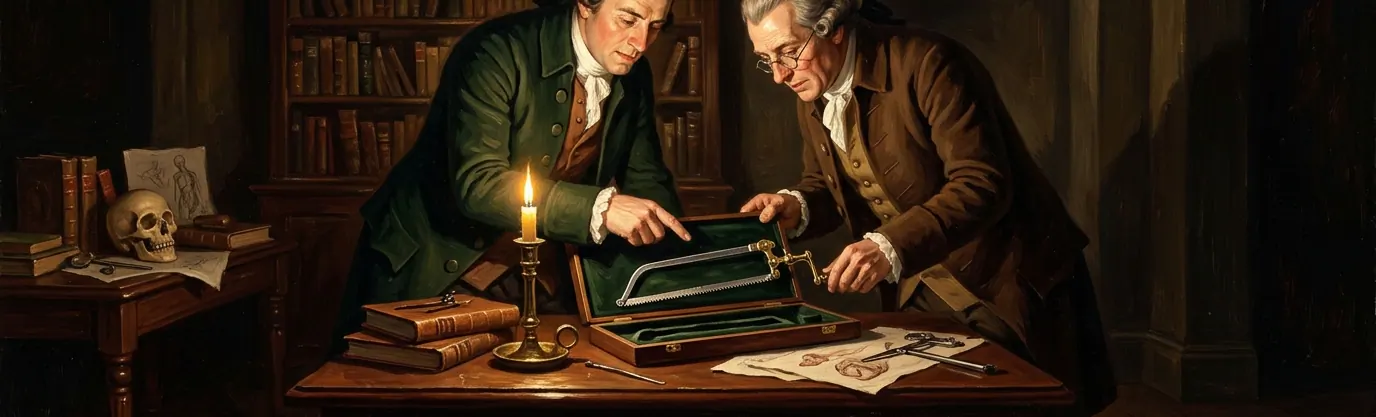
Explanation: Today we associate chainsaws with lumberjacks felling giant redwood trees or horror-movie villains, so it comes as a shock to learn that the chainsaw was originally invented in 1785 in Edinburgh, Scotland, by two obstetricians—Dr. John Aitken and Dr. James Jeffray!
In the late eighteenth century, before safe anesthesia and modern Cesarean sections existed, when a baby became dangerously trapped in the birth canal, doctors had to perform a delicate procedure called a symphysiotomy—widening the pelvic opening by carefully cutting through the tough cartilage and bone of the pubic symphysis.
Using a rigid straight bone saw in such a cramped space was slow, exhausting, and risked injuring surrounding tissue. Aitken and Jeffray designed a miniature, flexible, fine-toothed link chain modeled on a watch chain, fitted with two teardrop handles on either end (and later a small hand crank) that could be threaded gently behind the bone and pulled back and forth with precision. Only in 1905 did San Francisco timberman Samuel J. Bens adapt the surgical concept into a giant mechanical tree-felling tool!

4.How long after the tin can's invention came the first can opener?
Show Answer & Explanation
Correct Answer: B. Nearly fifty years later
Explanation: In 1810, British merchant Peter Durand received a royal patent from King George III for preserving cooked food inside cylindrical canisters made of wrought iron coated with tin and sealed shut with lead solder—an invention that revolutionized Royal Navy expeditions and Arctic exploration.
Yet there was one hilarious catch: early tin cans were forged out of thick iron sheet metal that weighed more than the food inside, and neither Durand nor anyone else bothered to invent a tool to open them! Printed instructions on early food tins literally advised customers to "Cut round the top near the outer edge with a chisel and hammer."
For nearly half a century, British soldiers and sailors had to bash their rations open with bayonets, rocks, hammers, or even musket balls! Only in the 1850s, once thinner steel cans came onto the market, did English inventor Robert Yeates (1855) and American Ezra Warner (1858) patent the first lever-blade can openers, followed by William Lyman's rotating wheel opener in 1870.

5.What clung to a Swiss engineer's dog and inspired Velcro?
Show Answer & Explanation
Correct Answer: A. Prickly Alpine burdock burrs
Explanation: One autumn day in 1941, Swiss electrical engineer George de Mestral returned from a hunting walk in the Jura Mountains with his beloved Irish Pointer dog and noticed that both his wool trousers and his dog's fur were covered in stubborn, prickly seed burrs from the greater burdock plant (Arctium lappa).
Instead of tossing the burrs into the trash after plucking them off, the curious engineer placed one under his home microscope. To his amazement, every tiny spine on the burdock seed ended in a microscopic, flexible hook that latched effortlessly onto the tiny loops in woven clothing fabric and animal hair—and sprang back into shape without breaking when pulled loose!
De Mestral spent the next fourteen years working with a weaver in Lyon, France, until he discovered that heat-treated nylon thread formed indestructible hooks and loops. Combining the French words velours ("velvet") and crochet ("hook"), he patented "Velcro" in 1955!

6.How old was Frank Epperson when he accidentally invented the Popsicle?
Show Answer & Explanation
Correct Answer: C. Eleven years old
Explanation: During an unseasonably freezing winter night in 1905 in Oakland, California, eleven-year-old Frank Epperson was mixing a glass of powdered white soda flavoring and water on his back porch using a wooden stirring stick when his mother called him inside for bed.
Forgetting his cup on the porch overnight as temperatures dipped below freezing, young Frank walked outside the next morning to find the fruit soda frozen solid around the wooden stick. Pulling the icy treat out of the glass by its handle and licking it, he dubbed his accidental creation the "Epsicle" (a mashup of Epperson and icicle) and made them for his neighborhood friends.
Eighteen years later, in 1923, Epperson began selling his frozen fruit-on-a-stick treats at Neptune Beach amusement park in Alameda. Because his own young children kept begging their dad for "Pop's 'sicle," he changed the name to "Popsicle" and patented the "frozen confectionery" in 1924!

7.What dirty household chore was Play-Doh originally formulated to tackle?
Show Answer & Explanation
Correct Answer: B. Cleaning coal soot off wallpaper
Explanation: In the 1930s, when most American homes were still heated by coal-burning furnaces and fireplaces, thick black coal soot settled onto living room walls every winter. Because traditional paper wallpaper couldn't be washed with soap and water without ruining it, Cleo McVicker and his brother Noah at Kutol Products in Cincinnati formulated a soft, non-toxic dough made of flour, water, salt, and mineral oil that homeowners rolled across wallpaper to lift off the black soot!
By the early 1950s, however, millions of families switched from dirty coal furnaces to clean natural-gas and oil heating—and sales of Kutol's wallpaper-cleaning putty plummeted toward bankruptcy.
Then Cleo's nephew, Joe McVicker, heard from his sister-in-law Kay Zufall—a nursery school teacher in New Jersey—that kids struggled to mold stiff, expensive modeling clay, so she had let her preschoolers sculpt Christmas ornaments out of Kutol's soft wallpaper putty! McVicker removed the detergent, added almond scent and bright red, yellow, and blue dyes, and relaunched the wallpaper cleaner in 1956 as "Play-Doh"!
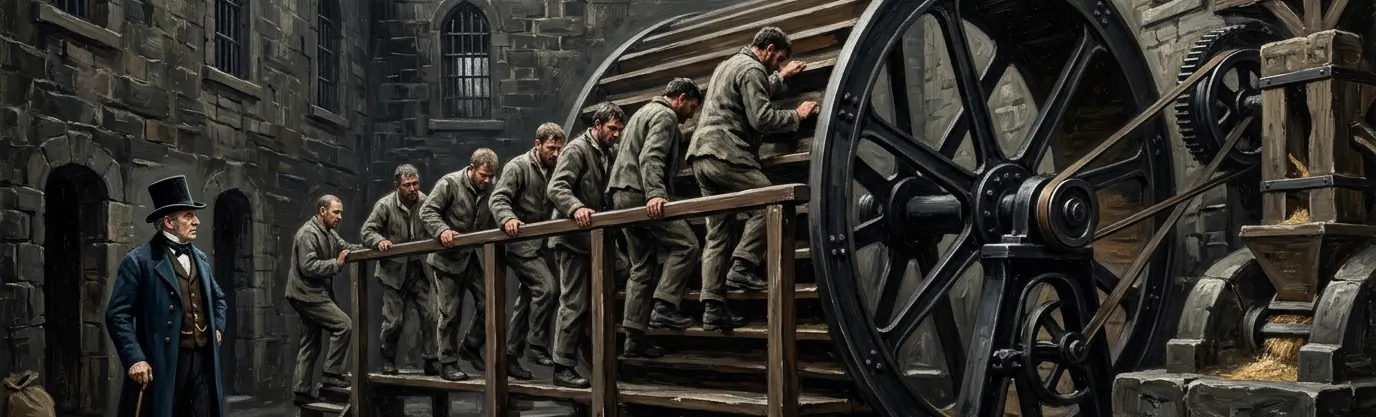
8.What was the treadmill originally invented for in 1818 England?
Show Answer & Explanation
Correct Answer: D. Punishing Victorian prison inmates
Explanation: Every time you groan while stepping onto a gym treadmill for cardio day, you can blame nineteenth-century English civil engineer Sir William Cubitt—who invented the "tread-wheel" in 1818 specifically to torment and reform idle inmates inside British prisons!
After visiting the county jail at Bury St Edmunds and seeing prisoners lounging around playing cards, Cubitt designed a colossal horizontal iron-and-wood paddle wheel lined with 24 steps. Up to forty prisoners stood side by side separated by wooden partitions, forced to climb the rotating steps for six to eight hours a day—equivalent to ascending 5,000 to 14,000 vertical feet (nearly half the height of Mount Everest!) without ever moving an inch forward!
Some prison treadwheels pumped water or ground corn, while others simply spun giant metal fans against air resistance as pure "penal servitude." Britain didn't ban prison treadwheels under the Prison Act until 1898—and in 1913, American inventor Claude Lauraine Hagen patented the first flat conveyor-belt training machine that evolved into the modern gym treadmill!
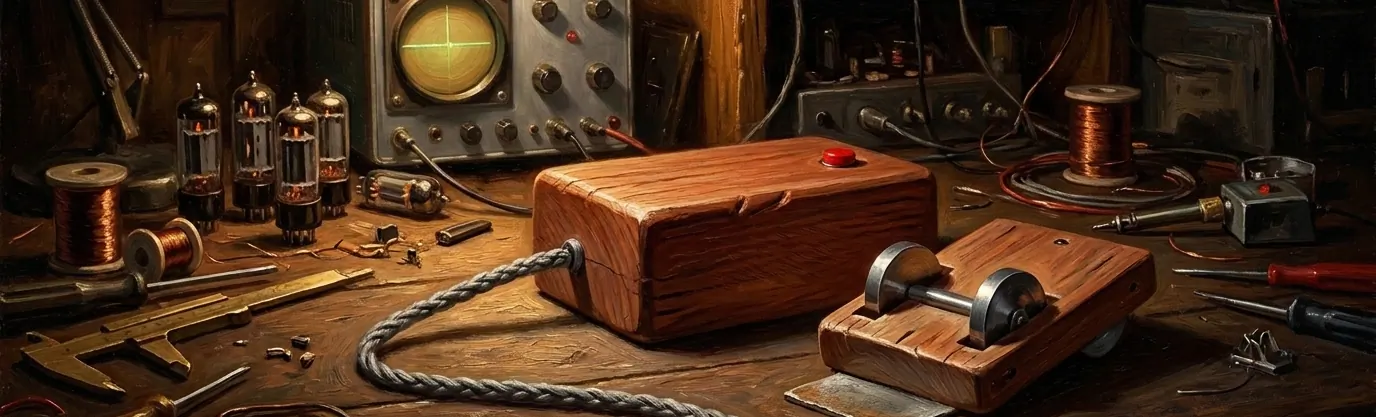
9.What material formed the shell of Douglas Engelbart's first computer mouse?
Show Answer & Explanation
Correct Answer: A. A carved block of wood
Explanation: In the early 1960s, interacting with a mainframe computer required punching holes into stacks of paper cards or typing cryptic teletype commands. Visionary Stanford Research Institute (SRI) engineer Douglas Engelbart dreamed of a world where humans could point and click directly on a glowing screen.
Working with lead hardware engineer Bill English in 1964, Engelbart built the world's very first computer mouse prototype: its outer shell was carved out of a solid rectangular block of pine wood, featuring a single red push-button in the top-right corner and two perpendicular metal knife-edge discs underneath that tracked horizontal (X) and vertical (Y) movement across a desk!
Why did they call the wooden box a "mouse"? Because the gray insulated wire cord exited out the back of the wooden block like a tiny rodent's tail, and the flashing cursor on the cathode-ray screen was nicknamed the "cat"!
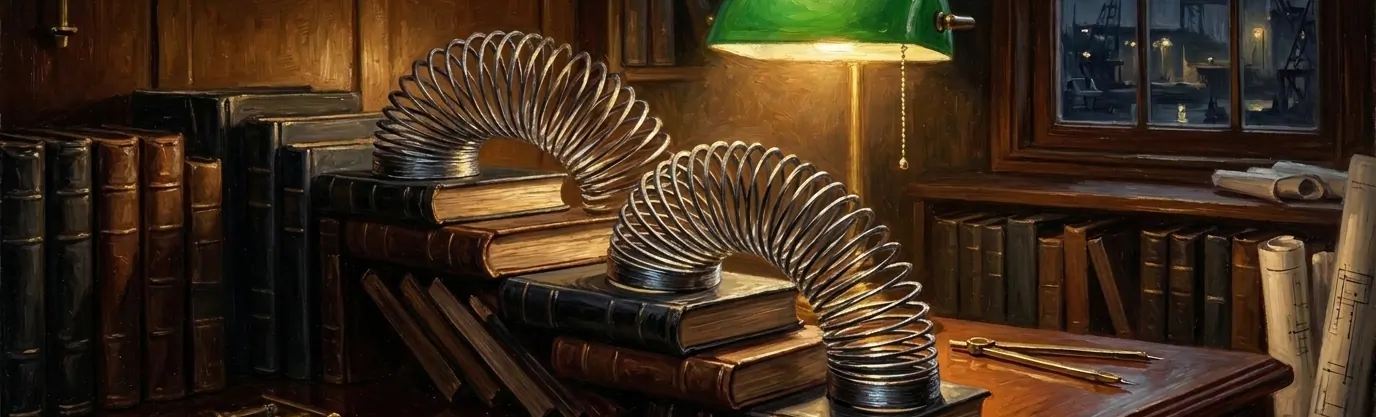
10.What was naval engineer Richard James designing when he invented the Slinky?
Show Answer & Explanation
Correct Answer: C. Anti-vibration springs for ship gauges
Explanation: In 1943, during World War II, mechanical engineer Richard T. James was working at the William Cramp & Sons shipyards in Philadelphia trying to solve a tricky naval problem: how to suspend delicate horsepower and navigation instruments aboard warships so they would stay steady even when the ship pitched violently in rough ocean swells.
While experimenting with various steel tension springs on his desk, James accidentally knocked one of the finely calibrated torsion springs off a high shelf. Instead of clattering to the floor in a heap, the spring gracefully "stepped" in a series of arches from the shelf onto a stack of books, down to a tabletop, and down onto the floor, where it recoiled upright!
James rushed home and told his wife Betty: "I think if I got the right property of steel and the right tension, I could make it walk." Betty paged through the dictionary, found the Swedish-derived word "Slinky" (meaning sleek and sinuous), and when Gimbels department store in Philadelphia demonstrated 400 Slinkys during the 1945 Christmas rush, all 400 sold out in ninety minutes!
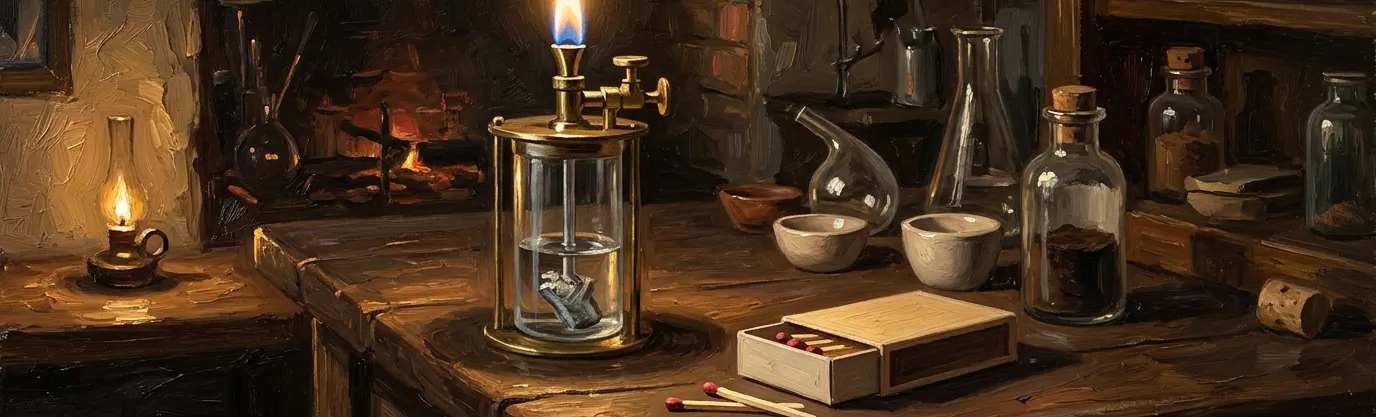
11.Which fire-starting device was actually invented three years before friction matches?
Show Answer & Explanation
Correct Answer: B. The mechanical lighter
Explanation: Ask almost anyone which came first—the match or the cigarette lighter—and common sense says simple wooden matches must have preceded mechanical lighters by centuries. In reality, the lighter was invented in 1823, three full years before the friction match was invented in 1826!
In 1823, renowned German chemist Johann Wolfgang Döbereiner (whose work on element triads helped inspire the periodic table) discovered that when a jet of hydrogen gas generated by zinc reacting with sulfuric acid was directed onto spongy platinum metal, the platinum acted as a catalyst that immediately ignited the gas into an open flame! Known as "Döbereiner's lamp" (or the Feuerzeug), over one million of these tabletop lighters were sold across Europe in the 1820s.
The modern friction match wasn't born until three years later in November 1826, when English pharmacist John Walker in Stockton-on-Tees accidentally scraped a wooden mixing stick coated with antimony sulfide and potassium chlorate across his stone hearth—and watched it burst into flame!

12.How did engineer Wilson Greatbatch accidentally invent the implantable cardiac pacemaker?
Show Answer & Explanation
Correct Answer: D. Grabbed the wrong resistor
Explanation: In 1956, electrical engineer Wilson Greatbatch was working at the Chronic Disease Research Institute in Buffalo, New York, building a small transistorized oscillator designed solely to record fast, irregular heart sounds onto a chart recorder.
Reaching into his parts box for a 10,000-ohm resistor (tagged with brown-black-orange color bands) to finish the circuit, Greatbatch accidentally misread the tiny colored stripes and plugged in a 1-megaohm (1,000,000-ohm) resistor (brown-black-green)—one hundred times larger than intended!
When he flipped the switch, instead of producing a steady recording tone, the circuit gave off a rhythmic 1.8-millisecond electrical pulse, paused for exactly one second, and pulsed again—mimicking the exact cadence of a healthy human heartbeat! Greatbatch immediately realized his "mistake" could electrically stimulate a failing human heart from inside the chest, and by 1960 his implantable pacemaker was saving lives around the world.
13.What was NASA engineer Lonnie Johnson testing when he invented the Super Soaker?
Show Answer & Explanation
Correct Answer: A. An eco-friendly heat pump nozzle
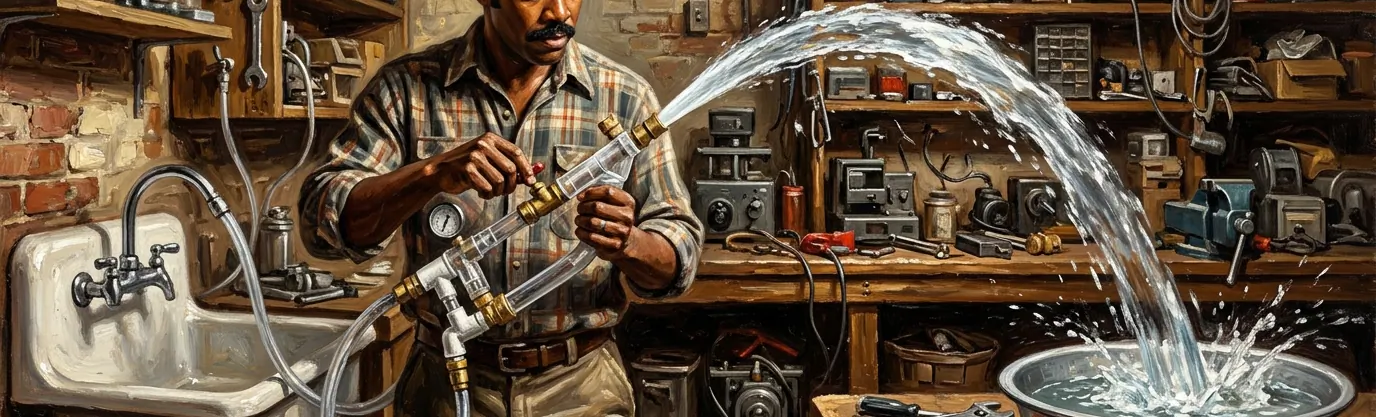
Explanation: In 1982, nuclear and aerospace engineer Lonnie Johnson—who worked on the stealth bomber program for the U.S. Air Force and the nuclear power source for NASA's Galileo spacecraft mission to Jupiter at the Jet Propulsion Laboratory—was tinkering in his home basement at night on a revolutionary environmentally friendly heat pump that used pressurized water instead of ozone-depleting Freon gas.
After machining a custom high-pressure brass nozzle, Johnson hooked it up to his bathroom sink faucet and opened the valve. A concentrated, laser-like jet of water blasted clear across the bathroom with such force that the rushing air curtain made the bathroom curtains billow!
Chuckling to himself that "this would make a great water gun," Johnson built a prototype out of PVC pipe, plexiglass, and an empty two-liter soda bottle for his seven-year-old daughter Aneka. Originally launched in 1990 as the "Power Drencher" before being renamed the "Super Soaker," Johnson's invention generated over $1 billion in retail sales!
14.What piece of furniture inspired Sylvan Goldman's first 1937 shopping cart?
Show Answer & Explanation
Correct Answer: C. A wooden folding chair
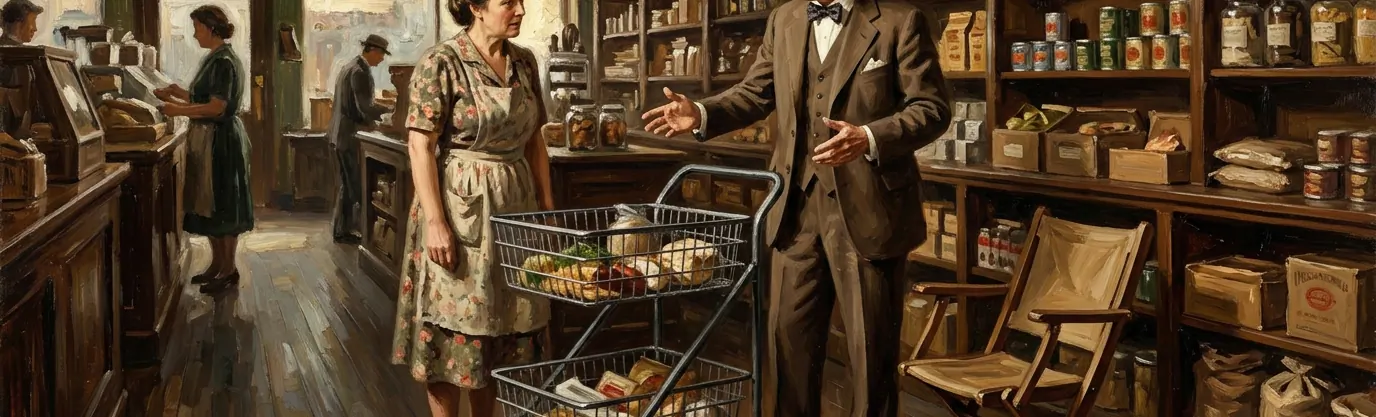
Explanation: In 1936, Sylvan Goldman—owner of the Humpty Dumpty supermarket chain in Oklahoma City—noticed a major bottleneck in his stores: as soon as a shopper's handheld wicker wire basket got too heavy to carry, they stopped shopping and walked straight to the cash register!
One night in his office, Goldman stared at a pair of wooden folding chairs and had a lightbulb moment: what if you put small wheels on the legs of a folding chair, raised the seat frame, and stacked two removable wire grocery baskets—one on the seat and one underneath?
When Goldman unveiled his "folding basket carriers" on June 4, 1937, practically nobody touched them: women complained they looked too much like baby strollers ("I've pushed my last baby buggy!"), and men insisted their arms were plenty strong enough to carry baskets! Undeterred, Goldman hired attractive male and female models of all ages to stroll around his stores casually pushing loaded carts—and within weeks, the shopping cart became an unstoppable global phenomenon.
15.How did Coca-Cola become carbonated at Jacobs' Pharmacy in 1886?
Show Answer & Explanation
Correct Answer: B. A clerk mixed soda water
Explanation: In May 1886, Atlanta pharmacist Dr. John Stith Pemberton brewed a fragrant, caramel-colored syrup in a three-legged brass kettle in his backyard, blending coca leaf extract and caffeine-rich kola nut with sugar, lime juice, vanilla, and essential oils as a patent "brain tonic" for headaches and fatigue.
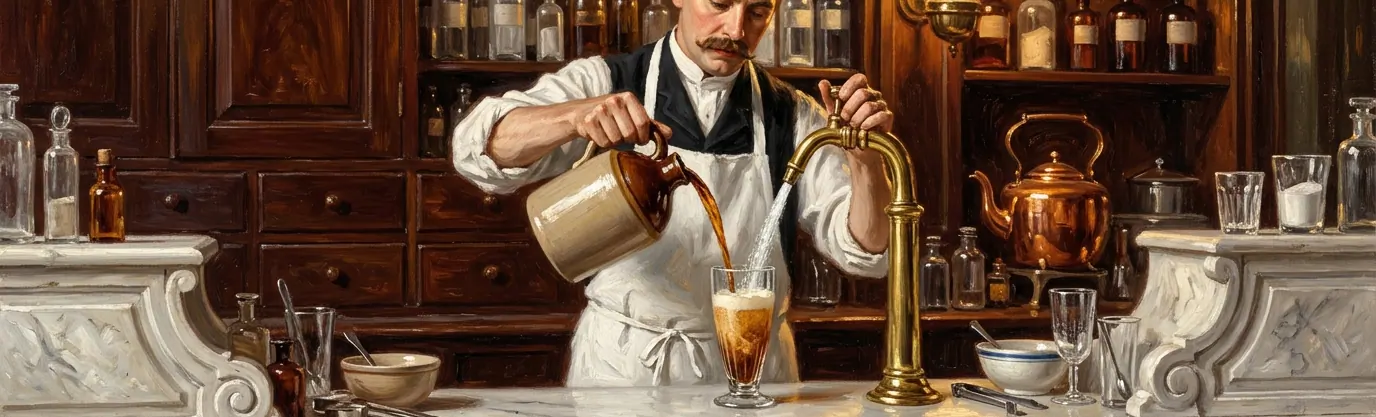
Originally, Pemberton intended his syrup to be mixed at the counter with plain, flat tap water! He carried a jug of the new syrup down the street to Jacobs' Pharmacy in downtown Atlanta, where soda-fountain operator Willis E. Venable put it on sale for five cents a glass.
According to Coca-Cola lore, when a customer suffering from a headache walked in asking for a glass, the clerk was too lazy to walk to the far end of the counter where the plain tap water faucet sat—so he mixed the syrup with the fizzy carbonated soda water spout right in front of him instead! Customers loved the bubbly refreshment so much that Coca-Cola was never served flat again.
16.What inspired Mary Anderson to patent the windshield wiper in 1903?
Show Answer & Explanation
Correct Answer: D. A freezing New York streetcar
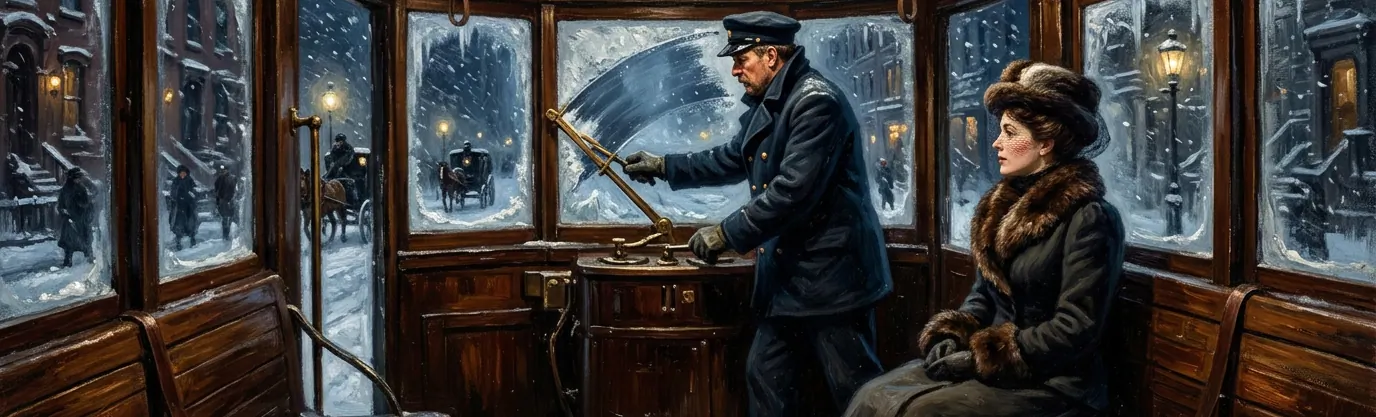
Explanation: During a wintry visit to New York City from her home in Birmingham, Alabama in 1902, real-estate developer and cattle rancher Mary Anderson rode a crowded electric streetcar through a blinding sleet and snowstorm.
Anderson noticed that the poor streetcar motorman could barely see ten feet ahead: every few blocks he had to ride with the front split-pane window wide open—blasting himself and the shivering passengers with freezing sleet—or stop the trolley altogether and climb outside into the slush to scrape the ice off the glass by hand!
Right there on the trolley, Anderson opened her sketchbook and drew a counterweight-and-spring-loaded rubber blade mounted on a spindle through the top of the windshield frame, operated by a simple hand lever from inside the warm cab! She received U.S. Patent #743,801 on November 10, 1903—before Henry Ford had even built a single Model T!
17.Why are classic Post-it Notes canary yellow instead of white?
Show Answer & Explanation
Correct Answer: A. Next-door lab had yellow scrap
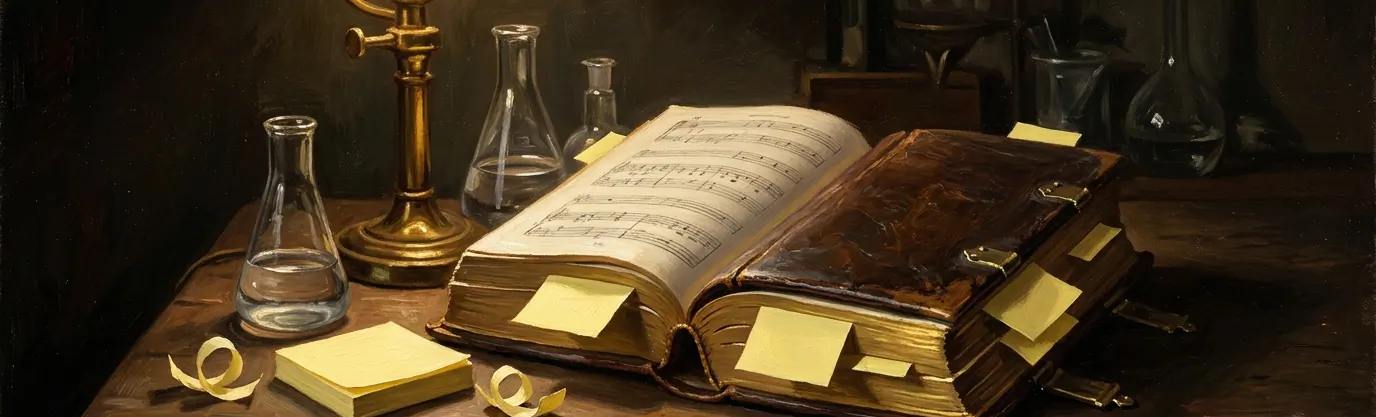
Explanation: The story of the Post-it Note begins with two 3M scientists: in 1968, chemist Dr. Spencer Silver was trying to develop a super-strong aerospace adhesive for jet airplanes when he accidentally created "acrylate copolymer microspheres"—a weird, low-tack adhesive that stuck lightly to surfaces and peeled off cleanly without leaving residue.
Six years later, in 1974, fellow 3M chemical engineer Art Fry grew frustrated every Wednesday night at church choir practice when the little slips of paper he used to mark pages in his hymnal fluttered onto the floor. Coating the top edge of bookmarks with Silver's "failed" adhesive solved the problem instantly!
When Fry and his team made the first batch of sample pads to hand out around 3M's headquarters so executives would get hooked on them, they walked over to the lab next door and asked if they had any leftover scrap paper lying around. All the neighboring lab had in their scrap bin was canary-yellow paper—and when they reordered more pads, executives specifically demanded "more of those yellow sticky notes"!

18.Which thorny tree inspired Illinois farmers to invent barbed wire in 1874?
Show Answer & Explanation
Correct Answer: B. Thorny Osage orange hedges
Explanation: When nineteenth-century settlers moved out onto the vast, treeless prairies of the American Midwest and Great Plains, they faced a crisis: there was no timber for split-rail wooden fences and no boulders for stone walls, while smooth single-strand wire fences simply bent or snapped whenever thousand-pound cattle leaned against them to scratch an itch!
For decades, farmers planted thick living hedges of Osage orange (Maclura pomifera)—a tough, thorny native tree known as "bois d'arc" whose branches bristled with needle-sharp, one-inch spines that kept the rowdiest livestock at bay ("horse-high, bull-strong, and pig-tight").
Unfortunately, Osage orange hedges took four years to grow and couldn't be moved. At the 1873 DeKalb County Fair in Illinois, farmer Joseph F. Glidden saw a wooden strip studded with metallic points, went home, used his wife Lucinda's coffee mill to twist sharp wire barbs inspired by Osage orange thorns around a smooth wire, and twisted a second wire over it to lock the barbs in place—patenting modern barbed wire in November 1874!

19.What did French physician René Laennec roll up for the first stethoscope?
Show Answer & Explanation
Correct Answer: C. A stack of paper notebooks
Explanation: Before 1816, whenever a doctor wanted to listen to a patient's heart or lungs, they practiced "immediate auscultation"—pressing their ear directly against the patient's bare chest or back!
In September 1816, thirty-five-year-old French physician René-Théophile-Hyacinthe Laennec at Paris's Necker Hospital was examining a young woman suffering from severe heart disease. Because of the patient's youth and build, Laennec felt it was improper and ineffective to press his ear directly onto her chest.
Walking through the courtyard of the Louvre, Laennec remembered watching children tap a pin against one end of a long wooden beam while a friend pressed their ear to the other end to hear the amplified sound. Returning to the ward, he took a quire of twenty-four sheets of paper, rolled it into a tight cylinder, placed one end over the patient's heart and his ear to the other, and was astonished to hear the heartbeat far more clearly and distinctly than he ever had with his bare ear! He soon turned a hollow wooden cylinder on his lathe and named it the stethoscope.
20.Why didn't Édouard Bénédictus's dropped glass flask shatter in 1903?
Show Answer & Explanation
Correct Answer: D. Dried plastic film held it together
Explanation: In the early days of the automobile at the turn of the twentieth century, ordinary plate-glass windshields were a deadly hazard: even a minor fender-bender sent razor-sharp shards of flying glass into drivers' faces and necks.
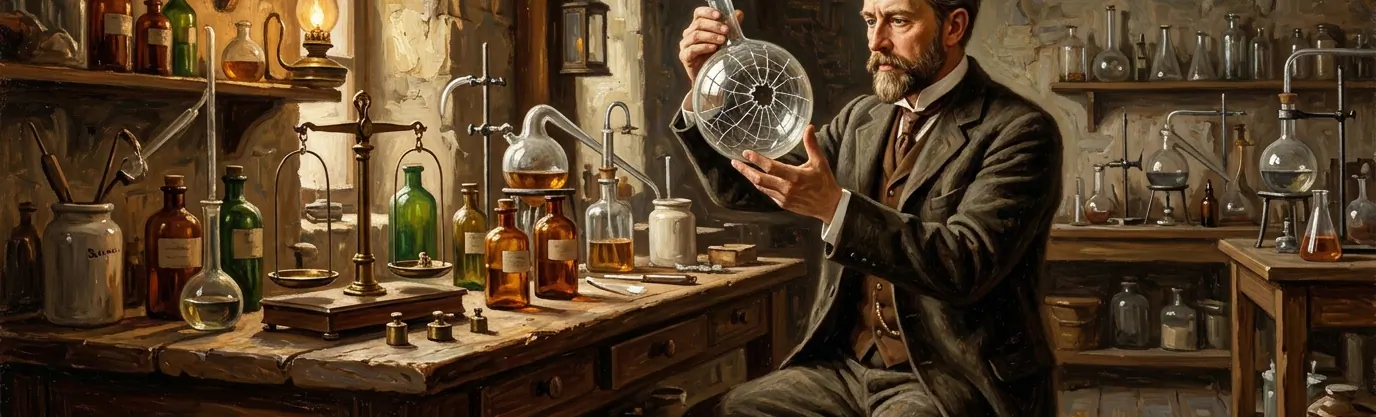
One autumn evening in 1903, French chemist, painter, and composer Édouard Bénédictus was climbing a ladder to tidy up his Parisian laboratory when he accidentally knocked a glass chemical flask off a high shelf onto the hard stone floor eleven feet below. Bénédictus braced for a shower of splinters—but when he looked down, the glass flask was starred with hundreds of radial cracks yet still held its exact shape without a single shard detaching!
Inspecting the flask, Bénédictus realized it had once held a solution of collodion (cellulose nitrate, a liquid plastic): the solvent had evaporated years earlier, coating the inside of the glass with an invisible, crystal-clear skin of adhesive plastic! After reading in a Paris newspaper that same week about two young women injured by windshield glass in taxi crashes, Bénédictus locked himself in his lab for 24 hours and invented laminated safety glass ("Triplex").
21.How did New York merchant Thomas Sullivan accidentally invent the teabag?
Show Answer & Explanation
Correct Answer: A. Customers dunked his silk sample pouches
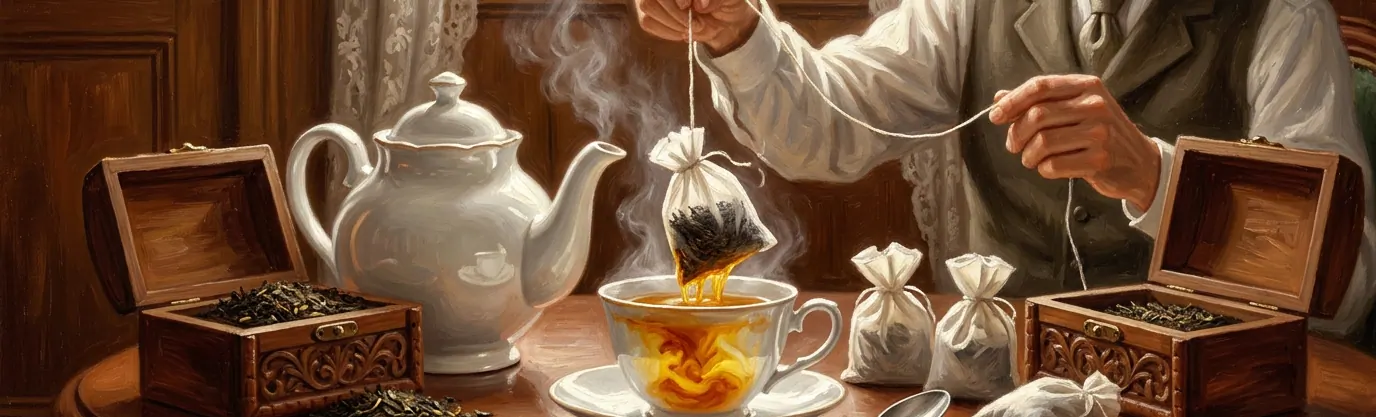
Explanation: Around 1908, New York tea and coffee importer Thomas Sullivan decided to cut costs on mailing samples to prospective buyers. Instead of sending out expensive, heavy metal tins of loose-leaf tea, Sullivan had tiny pouches hand-sewn out of lightweight silk mesh, filled each pouch with a spoonful of tea leaves, and mailed them out expecting customers to untie the silk bag and dump the leaves into their metal tea infusers.
Instead, confused customers assumed the dainty silk pouch itself was meant to be dropped directly into the boiling teapot—and loved how easy it was to fish the soggy bag out afterward without scrubbing messy tea leaves out of a strainer!
Soon orders flooded Sullivan's office—not for his loose tea, but specifically demanding his convenient "tea bags"! Wait—customers did have one complaint: the fine silk mesh was woven a bit too tightly for water to circulate fast enough, prompting Sullivan to replace the silk with porous gauze and later perforated abaca-hemp filter paper.

22.What was chemist Stephanie Kwolek researching when she invented bulletproof Kevlar?
Show Answer & Explanation
Correct Answer: B. Lightweight fibers for car tires
Explanation: In 1964, anticipating a future gasoline shortage, the DuPont chemical company in Wilmington, Delaware assigned forty-one-year-old polymer chemist Stephanie Kwolek to search for a lightweight synthetic fiber strong enough to replace the heavy steel belts inside radial automobile tires—which would make cars lighter and dramatically boost fuel economy!
While dissolving rigid aromatic polyamide rod-like molecules in solvents, Kwolek created a strange batch that looked nothing like normal clear, thick, molasses-like nylon polymers: her liquid was thin, watery, and cloudy like buttermilk.
The technician running the spinning machine initially refused to pour Kwolek's cloudy solution into his spinneret, fearing that particulate grit would clog the tiny platinum holes. Kwolek persisted and persuaded him to run the test: to everyone's shock, the spun golden fibers didn't break—and testing revealed the new material (Kevlar) was five times stronger than steel on an equal-weight basis, saving thousands of police officers' and soldiers' lives in bulletproof vests!
23.How did the Kellogg brothers accidentally create flaked breakfast cereal in 1894?
Show Answer & Explanation
Correct Answer: C. Rolled out stale cooked wheat
Explanation: In 1894, Dr. John Harvey Kellogg and his younger brother Will Keith Kellogg were running the famous Battle Creek Sanitarium in Michigan—a health resort where wealthy guests like President William Howard Taft, Thomas Edison, and Amelia Earhart followed a strict vegetarian diet free of alcohol, caffeine, and spices.
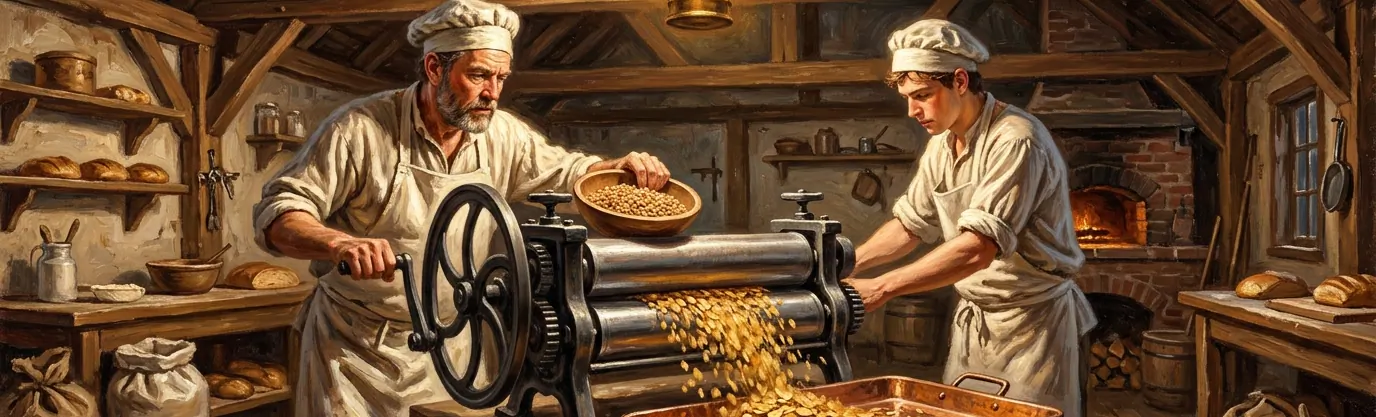
One night in August 1894, the brothers were boiling a batch of wheat berries to roll into long sheets of dough when an urgent call from the hospital ward pulled them out of the kitchen. By the time they returned more than a day later, the pot of cooked wheat had gone stale and moldy!
On a tight budget, the brothers decided to force the tempered, stale wheat berries through the heavy steel dough rollers anyway to see what would happen. Instead of pressing into a single sheet of dough, each individual wheat berry flattened out into a paper-thin flake! When they baked the flakes in the oven, they turned into light, crispy, delicious toasted cereal—which Will soon perfected using sweet corn kernels as Kellogg's Corn Flakes!
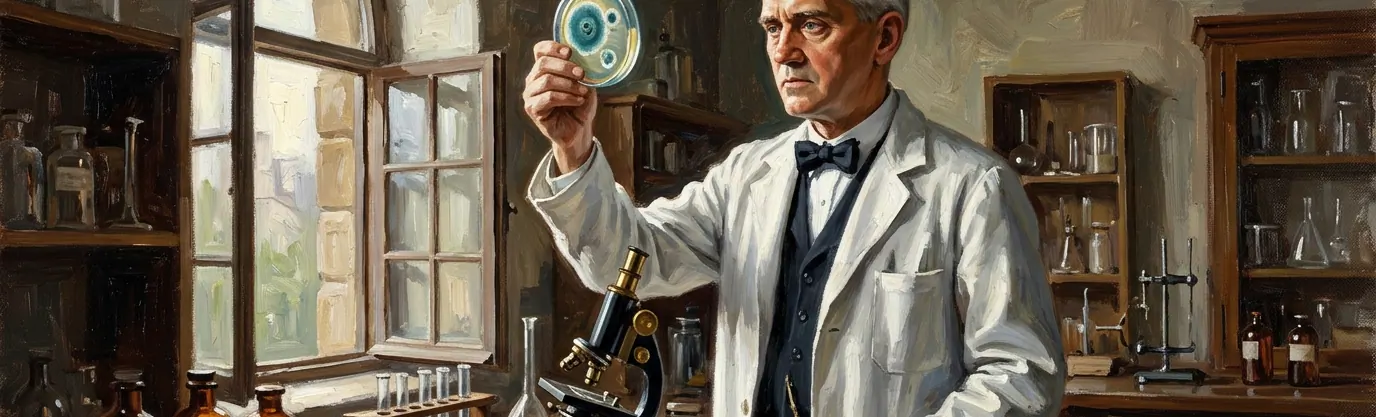
24.What grew in Alexander Fleming's unwashed Petri dish during his 1928 vacation?
Show Answer & Explanation
Correct Answer: D. Bacteria-killing Penicillium mold
Explanation: Before leaving London in August 1928 for a month-long summer holiday with his family in Suffolk, Scottish bacteriologist Dr. Alexander Fleming stacked several glass Petri dishes streaked with deadly Staphylococcus bacteria in a corner tray on his laboratory bench at St Mary's Hospital, out of reach of the antiseptic lysol bath.
When Fleming returned on September 3, 1928, and began sorting through his unwashed culture plates with a visiting colleague, he paused over one dish near the window whose lid had slipped slightly ajar—allowing an airborne fungal spore to drift inside.
Pointing at a fuzzy blue-green blob of mold growing on the agar gel, Fleming uttered his immortal understated remark: "That's funny." Around the mold colony was a crystal-clear halo where every single cluster of deadly Staphylococcus bacteria had been dissolved! Identifying the mold as Penicillium notatum, Fleming named its antibacterial "mold juice" penicillin—the world's first antibiotic, which has since saved an estimated 200 million human lives.

25.Who built a famous early water thermoscope in 1593 Padua?
Show Answer & Explanation
Correct Answer: A. Galileo Galilei
Explanation: While Galileo Galilei is best remembered for pointing his spyglass telescope at the moons of Jupiter, in 1593—while teaching mathematics at the University of Padua in the Republic of Venice—he also built one of the earliest instruments for visually measuring changes in heat and cold: the water thermoscope!
Galileo took a small glass bulb the size of a hen's egg fitted with a long, slender glass neck about the width of a piece of straw. He warmed the glass bulb in his hands to expand the air inside, then inverted the open tip of the narrow tube into a vessel of water.
As the air inside the top bulb cooled and contracted, atmospheric pressure pushed water partway up the narrow glass stem; whenever the room grew warmer, the trapped air expanded and pushed the water column back down! Soon afterward, Galileo's Venetian physician friend Santorio Santorio added a numbered scale to the tube so doctors could measure a patient's fever quantitatively for the very first time.
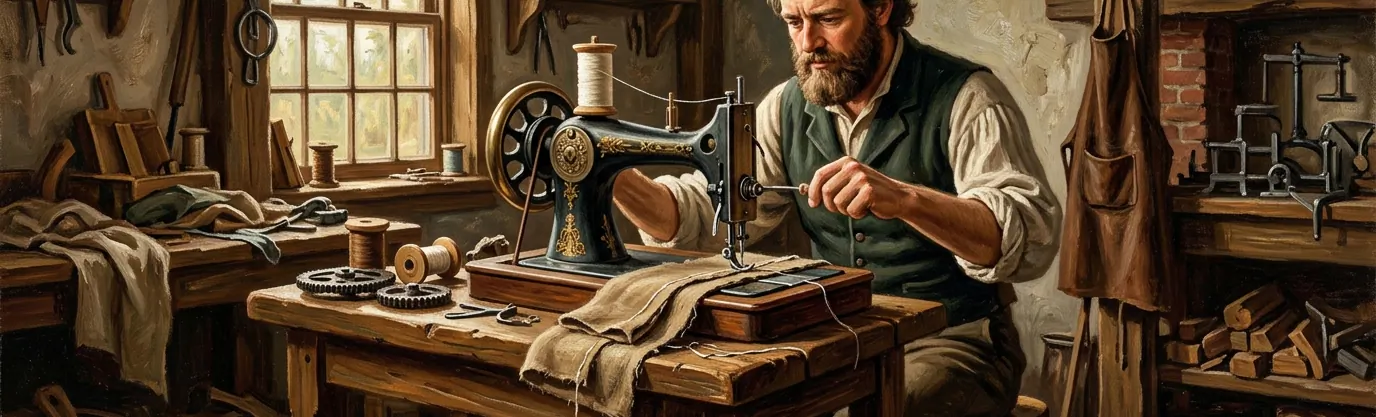
26.What crucial design change unlocked Elias Howe's 1846 lockstitch sewing machine?
Show Answer & Explanation
Correct Answer: B. Putting the eye near the point
Explanation: For half a century in the early 1800s, dozens of inventors in Europe and America tried and failed to build a reliable mechanical sewing machine because they all tried to copy the way a human hand sews—pushing an ordinary needle (with the eye at the blunt back end) all the way through the fabric and pulling it out the other side.
Massachusetts machinist Elias Howe spent years struggling with the exact same problem until—according to nineteenth-century family accounts—he solved the puzzle in 1845 after waking from a vivid nightmare in which a fierce king ordered him executed unless he finished his sewing machine, and Howe noticed that the guards' spears had eye-shaped holes pierced right through their sharp iron tips!
By moving the eye of the needle down to the sharp point instead of the back end, the needle only had to poke a tiny loop of thread partway through the cloth, where a swinging underneath shuttle carrying a second bobbin thread passed right through the loop to create an unbreakable "lockstitch"! Howe received U.S. Patent #4,750 on September 10, 1846.

27.How did Bertha Benz unclog a blocked fuel pipe on history's first road trip?
Show Answer & Explanation
Correct Answer: C. With her long hatpin
Explanation: Although German engineer Karl Benz patented the world's first gasoline-powered automobile—the three-wheeled Patent-Motorwagen—in 1886, skeptical buyers dismissed the noisy contraption as a useless novelty, and Benz himself was too timid to drive it beyond short workshop test loops.
At dawn on August 5, 1888—without telling her sleeping husband!—thirty-nine-year-old Bertha Benz (whose personal dowry had funded the invention) wheeled the Motorwagen out of the shed with her sons Eugen (15) and Richard (13) and set off on a daring 66-mile (106-km) cross-country road trip from Mannheim to Pforzheim!
Along the unpaved roads, Bertha improvised modern automotive maintenance on the fly: she bought Ligroin cleaning solvent at a town pharmacy in Wiesloch (making it the world's first gas station), used her elastic garter to insulate a shorted ignition wire, asked a village cobbler to nail leather strips onto the wooden brake blocks (inventing brake linings!), and pulled the long metal hatpin from her bonnet to unclog a blocked fuel pipe!
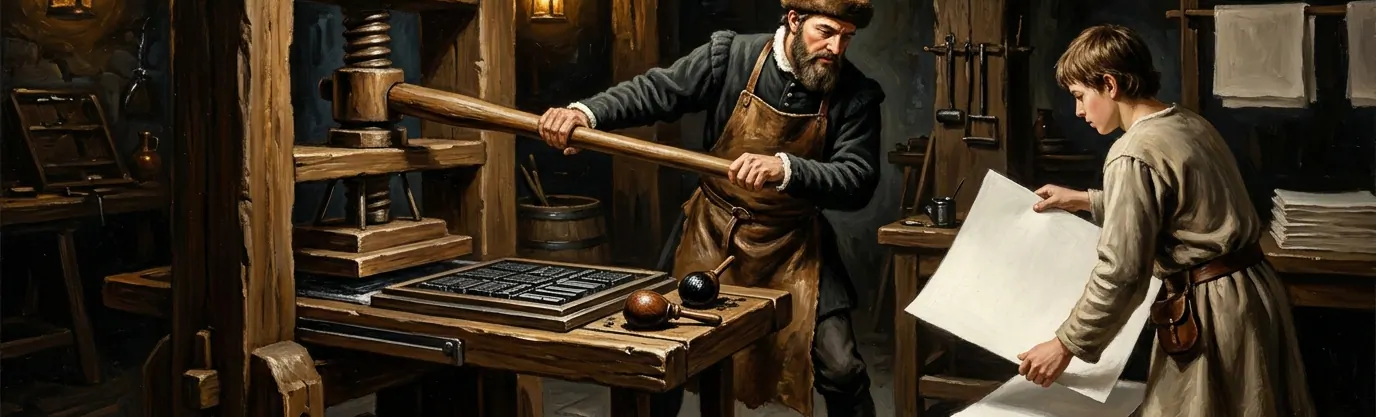
28.Which agricultural machine did Johannes Gutenberg adapt for his 1440 printing press?
Show Answer & Explanation
Correct Answer: A. A wooden wine and olive press
Explanation: Before German goldsmith Johannes Gutenberg unveiled his printing system in Mainz around 1440–1450, every book in Europe had to be copied letter by letter by monastic scribes or rubbed by hand onto woodblocks—making a single Bible cost as much as a stone farmhouse!
Having grown up in the Rhineland wine-making capital of Mainz, Gutenberg realized that the heavy oak screw presses used by local vintners for centuries to crush grapes for wine (and olives for oil) applied steady, even downward pressure across a wide flat surface—exact what was needed to transfer oil-based ink from metal type onto damp paper in a single pull of a lever!
Combining his modified agricultural wine press with his greatest metallurgical breakthrough—a hand-held adjustable mold that cast durable, interchangeable movable letters out of an alloy of lead, tin, and antimony—Gutenberg printed his famous 42-line Bible and sparked the Scientific Revolution and Renaissance across Europe.

29.Why did chef George Crum slice potatoes paper-thin in 1853 Saratoga?
Show Answer & Explanation
Correct Answer: D. A diner complained they were thick
Explanation: In the summer of 1853, George Speck (later known as George Crum)—a renowned chef of Native American and African American heritage—was running the kitchen at Moon's Lake House, an upscale resort restaurant in Saratoga Springs, New York.
According to popular culinary lore, a picky dining guest (often said in later legends to be railroad tycoon Cornelius Vanderbilt) repeatedly sent his plate of French-fried potatoes back to the kitchen, complaining that the slices were too thick, soggy, and bland.
Determined to teach the fussy customer a lesson, Crum grabbed a sharp knife, shaved a batch of potatoes so paper-thin you could practically see light through them, boiled them in sizzling oil until they curled into rock-hard crisps that couldn't even be speared with a fork, and buried them in salt! To Crum's astonishment, the diner raved about the crunchy "Saratoga Chips" and ordered a second platter!

30.What plant fiber gave Thomas Edison's 1880 light bulb a 1,200-hour glow?
Show Answer & Explanation
Correct Answer: B. Carbonized Japanese bamboo
Explanation: When Thomas Alva Edison and his "muckers" at the Menlo Park laboratory in New Jersey set out to build the first practical, long-lasting commercial incandescent light bulb in 1878–1879, they tested more than 6,000 different vegetable fibers, grasses, woods, and even hairs plucked from a laboratory assistant's red beard to find a filament that wouldn't burn out in minutes inside an evacuated glass bulb!
While carbonized cotton sewing thread glowed for 14.5 hours in October 1879, the true commercial breakthrough came in 1880 when Edison accidentally disassembled a Japanese folding hand fan on his desk and carbonized a strip of its flexible bamboo rim!
Edison immediately dispatched plant explorers across the globe, discovering that carbonized Madake bamboo harvested from the Arashiyama groves of Kyoto, Japan burned cleanly with a warm golden glow for more than 1,200 hours—powering Edison's early electric streetlamps and bulbs worldwide for over a decade before tungsten filaments arrived!
Did You Know? Fascinating Facts
- Although Peter Durand patented the soldered tin-plated iron food can in 1810, the dedicated can opener wasn't invented until 1855—for nearly fifty years, soldiers and sailors had to bash cans open with hammers and chisels!
- When engineers Alfred Fielding and Marc Chavannes sealed two plastic shower curtains together in 1957 to create Bubble Wrap, they were actually trying to sell trendy 3D textured plastic wallpaper.
- Mechanical lighters (Döbereiner's 1823 platinum lamp) were actually invented three full years before English chemist John Walker invented the first friction match in 1826!