
Astronomy Trivia: Blast Off Into Cosmic Mysteries
Skip the grade-school planet drills—explore 31 mind-bending cosmic wonders spanning diamond stars, sideways planets, and seared-steak spacewalks.
Most astronomy quizzes put you to sleep asking which planet is closest to the Sun or what galaxy we live in. The real cosmos is infinitely stranger: a giant molecular dust cloud near the center of the Milky Way packed with the exact chemical that gives raspberries their flavor and rum its smell, a planet where a single day lasts longer than an entire year, and crushing ice-giant atmospheres where solid diamonds literally rain toward the core.
From the eleven-year-old English schoolgirl who named Pluto over breakfast and the pigeon droppings that nearly hid the echo of the Big Bang to frosty blue Martian sunsets and spacesuits that smell like seared steak, test your stargazing wits with 31 short, punchy, and verified Astronomy Trivia Questions & Answers below!
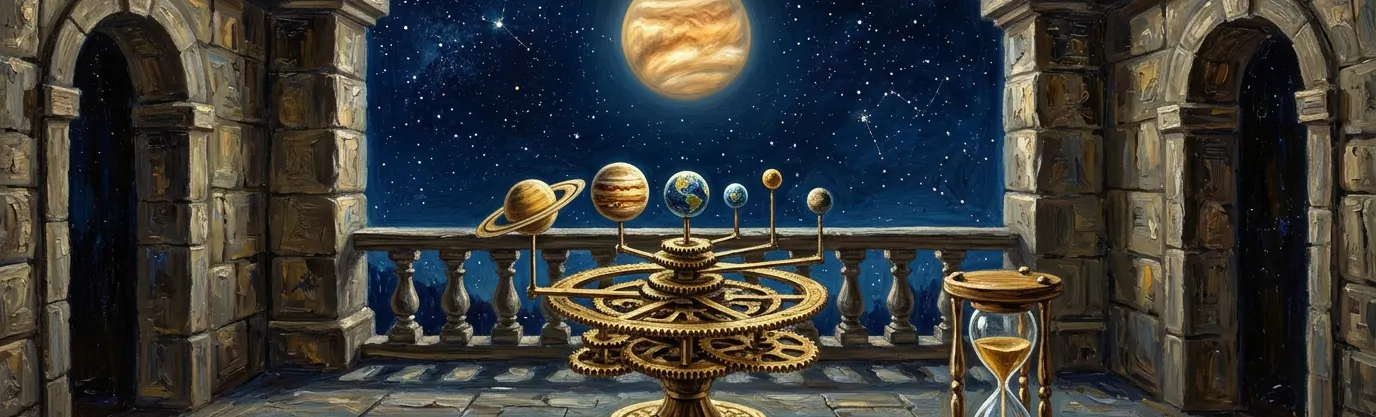
1.On which planet is a single day longer than a year?
Show Answer & Explanation
Correct Answer: C. Venus
Explanation: On Earth, we take it for granted that our planet spins hundreds of times on its axis during a single orbit around the Sun. On neighboring Venus, however, planetary rotation runs in extreme slow motion—and backward!
While Venus completes a full orbit around the Sun (one Venusian year) in just 224.7 Earth days, it takes an astonishing 243 Earth days to complete a single rotation on its axis (one sidereal day). That means a single sidereal day on Venus actually lasts eighteen Earth days longer than its entire year!
Even stranger, because Venus rotates in retrograde (clockwise when viewed from above the Sun's north pole, opposite to almost every other planet), if you could stand beneath its crushing sulfuric-acid clouds, you would see the Sun rise in the west and set in the east once every 116.75 Earth days (its solar day)!
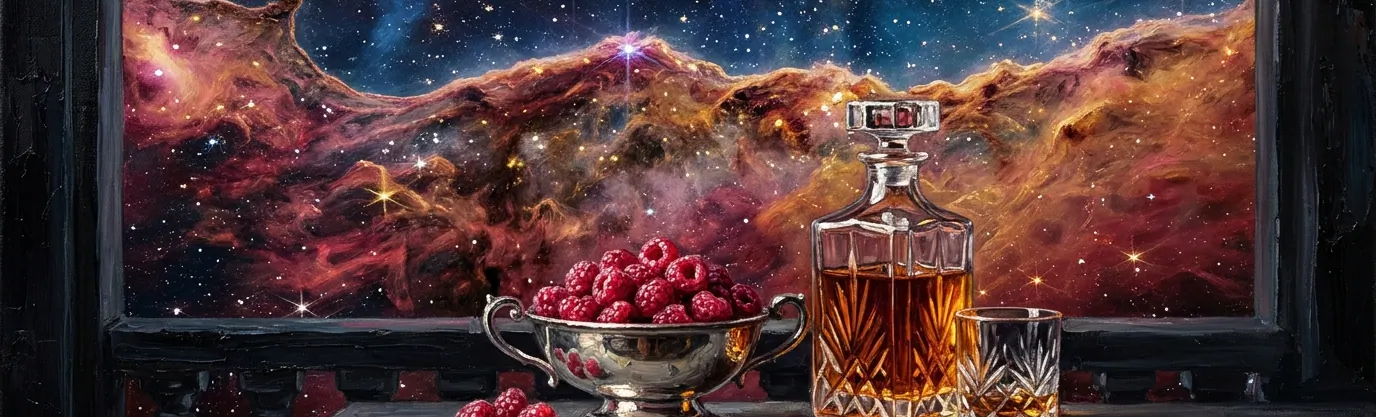
2.What does the giant cosmic dust cloud Sagittarius B2 smell like?
Show Answer & Explanation
Correct Answer: A. Raspberries and rum
Explanation: Hovering 26,000 light-years away near the supermassive black hole at the center of our Milky Way galaxy is Sagittarius B2—a colossal molecular gas and dust cloud spanning 150 light-years across and weighing three million times more than our Sun.
For years, astronomers at the Max Planck Institute for Radio Astronomy pointed the IRAM 30-meter radio telescope in Spain at the glowing heart of Sagittarius B2 to catalog the organic molecules floating in interstellar space. In 2009, they identified the distinct spectral fingerprint of ethyl formate ($C_3H_6O_2$) alongside vast quantities of propyl cyanide.
On Earth, ethyl formate is the exact chemical ester that gives fresh raspberries their characteristic fruity flavor—and gives rum its distinct aroma! While the cloud also contains enough ethyl alcohol (ethanol) to fill quintillions of pint glasses, it is mixed with lethal cosmic cyanide, so astronauts shouldn't mix a cocktail from it anytime soon.
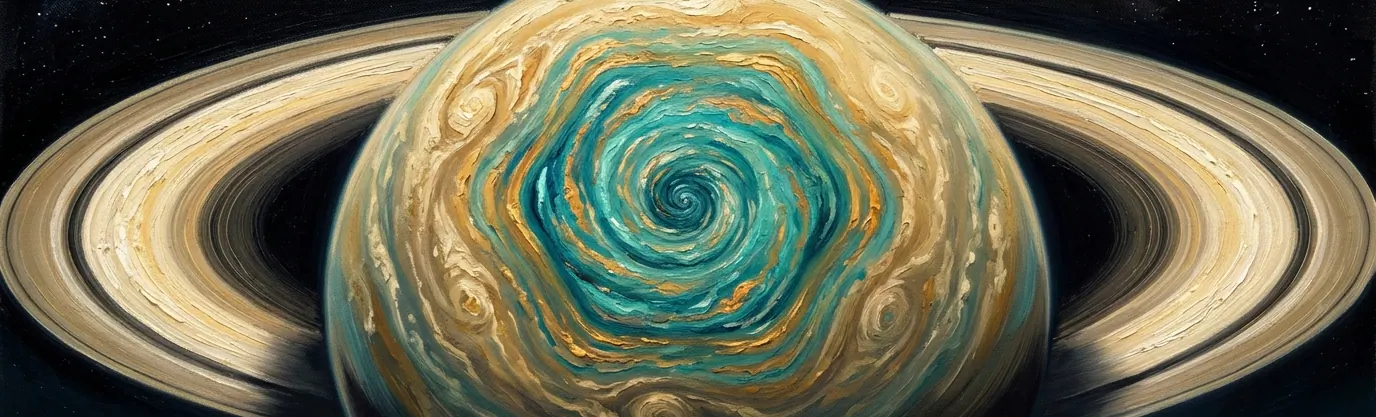
3.What bizarre geometric shape swirls around Saturn's north pole?
Show Answer & Explanation
Correct Answer: D. A giant six-sided hexagon
Explanation: Planetary clouds and hurricanes on Earth and Jupiter naturally swirl into smooth circles, ovals, and spirals. Yet when NASA's Voyager 1 and 2 spacecraft flew past Saturn in 1981—and later when the Cassini orbiter photographed it in high-resolution sunlight—astronomers were floored to see a persistent, sharp-cornered six-sided hexagon framing Saturn's north pole!
Known as Saturn's Hexagon, each of its six straight sides measures roughly 14,500 kilometers (9,000 miles) long—meaning the entire geometric storm is nearly 30,000 kilometers wide, big enough to fit more than two whole Earths inside!
Fluid-dynamics experiments at Oxford University later demonstrated how nature draws straight lines on a gas giant: a 320-km/h (200-mph) atmospheric jet stream racing around Saturn's pole at 78 degrees north latitude develops steep latitudinal wind-shear gradients that lock into a stable six-wave Rossby standing wave, rotating in sync with Saturn's deep radio interior every 10 hours and 39 minutes.
4.What nickname did Jocelyn Bell Burnell's team give the first pulsar signal?
Show Answer & Explanation
Correct Answer: B. Little Green Men
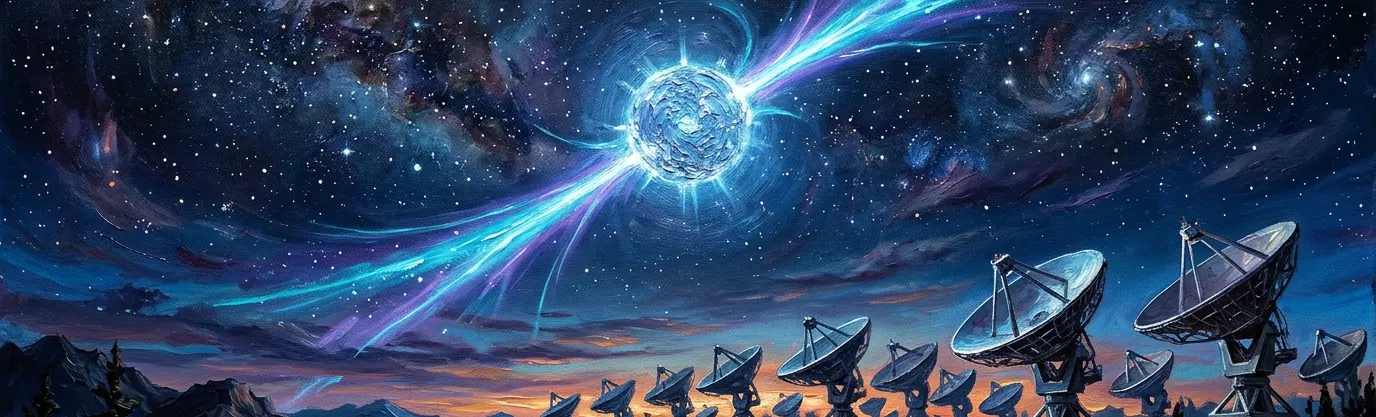
Explanation: In July 1967, twenty-four-year-old graduate student Jocelyn Bell (now Dame Jocelyn Bell Burnell) was inspecting hundreds of feet of paper chart-recorder rolls from a newly built four-acre dipole radio telescope array at Cambridge University when she spotted a tiny, quarter-inch patch of "scruff" that didn't match any known quasar or human radio interference.
When she sped up the chart recorder to resolve the signal in November 1967, she found a series of radio pulses ticking with astonishing, metronome-like precision once every 1.3373011 seconds—far too fast and regular to come from any normal oscillating star.
Half-jokingly wondering if they had intercepted an artificial navigation beacon from an extraterrestrial civilization, Bell and her supervisor Antony Hewish labeled the source "LGM-1"—short for "Little Green Men 1"! Months later, Bell discovered a second, third, and fourth rhythmic source across different parts of the sky, proving they were natural cosmic lighthouses: rapidly spinning neutron stars now known as pulsars.
5.What happens when two uncoated pieces of identical metal touch in space?
Show Answer & Explanation
Correct Answer: C. They fuse together permanently
Explanation: On Earth, if you press two smooth bars of bare steel or aluminum together in your workshop, they stay two separate pieces of metal. That is only because Earth's oxygen-rich atmosphere instantaneously coats every exposed metal surface with a microscopic barrier layer of oxidized rust and adsorbed grease.
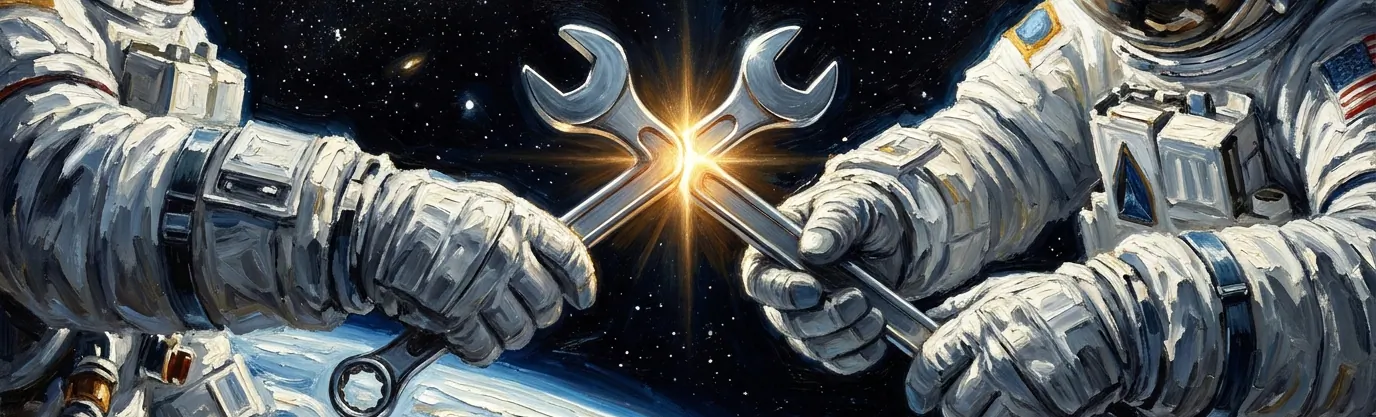
In the hard vacuum of outer space, however, if that thin oxide skin is scraped or worn off and two clean, smooth pieces of the same uncoated metal touch each other, they undergo instant "cold welding" (contact welding) without a single spark of heat!
Because the atoms on both bare metallic surfaces have no oxide barrier between them, electrons flow freely across the boundary and the two pieces of metal literally do not "know" they belong to separate objects—fusing into a single solid block! In 1991, cold welding famously jammed the high-gain umbrella antenna on NASA's Galileo spacecraft bound for Jupiter.
6.After which Beatles song did astronomers nickname a giant crystallized diamond star?
Show Answer & Explanation
Correct Answer: A. Lucy in the Sky
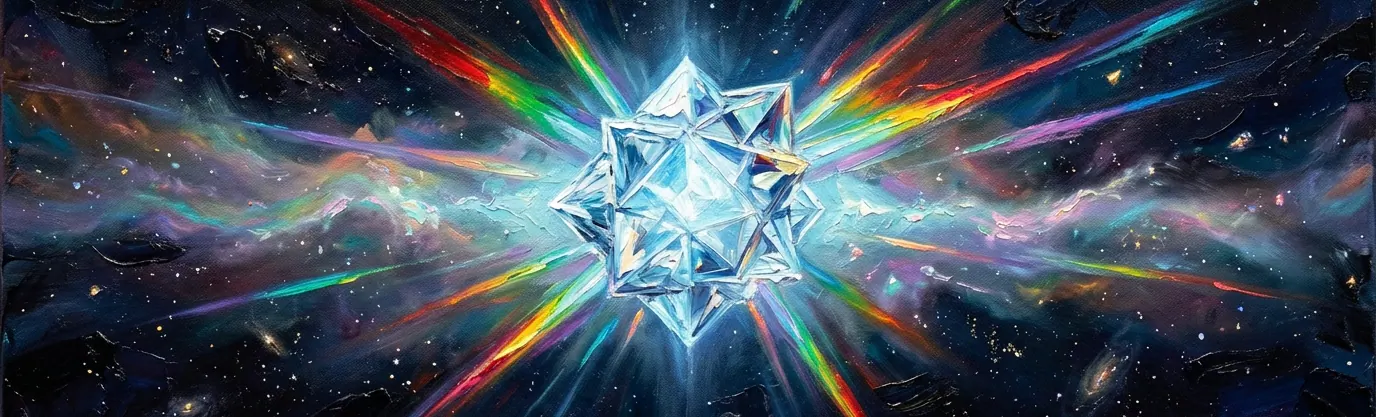
Explanation: Fifty light-years from Earth in the constellation Centaurus sits BPM 37093—the cooled, ultra-dense white dwarf remnant of a once-bright star that exhausted its nuclear fuel and collapsed to a sphere just 4,000 kilometers (2,500 miles) across.
In 2004, astronomers at the Harvard-Smithsonian Center for Astrophysics used asteroseismology—measuring the ringing sound-wave pulsations of the white dwarf like a giant cosmic gong—to prove that the crushing pressure inside BPM 37093 had crystallized up to 90% of its carbon-and-oxygen core into a single solid diamond lattice!
Weighing roughly $10^{34}$ carats (a one followed by 34 zeros—ten billion trillion trillion carats), the cosmic gemstone is the largest diamond ever identified in the universe, prompting Harvard astronomers to officially nickname the star "Lucy" after the 1967 Beatles classic "Lucy in the Sky with Diamonds."
7.Why wouldn't hikers standing atop Mars's giant Olympus Mons see its base?
Show Answer & Explanation
Correct Answer: D. Slope curves beyond horizon
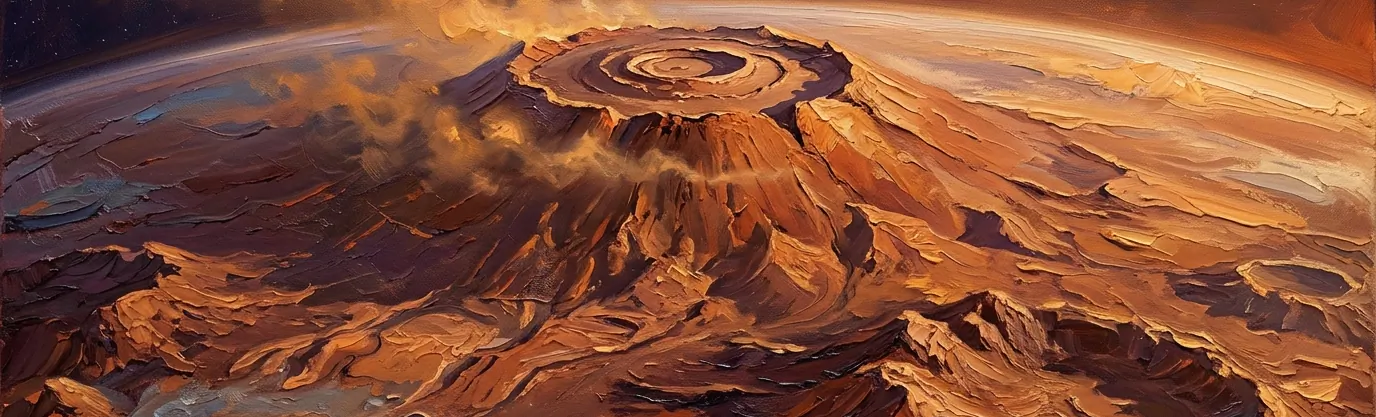
Explanation: Soaring roughly 21.9 kilometers (13.6 miles or 72,000 feet) above the Martian datum—nearly two-and-a-half to three times the height of Mount Everest above sea level—Olympus Mons on Mars is the tallest planetary mountain and volcano anywhere in our solar system.
Because Mars lacks shifting tectonic plates like Earth's (which carried the Hawaiian islands over a magma hotspot to create a chain of smaller volcanoes), Mars's crust sat stationary over a single volcanic plume for cientos of millions of years, piling layer upon layer of fluid basalt lava into a titanic shield volcano 600 kilometers (370 miles) wide—big enough to cover the entire state of Arizona or country of Poland!
Despite its staggering height, Olympus Mons has an average flank slope of just 5 degrees (like a gentle wheelchair ramp). Because the volcano is so wide and Mars is smaller than Earth, if you stood on the summit or at the foot of Olympus Mons, you could never see the whole mountain: its slopes curve right out of sight beyond the curvature of the Martian horizon!
8.What color is a sunset on the rusty red planet Mars?
Show Answer & Explanation
Correct Answer: B. Cool frosty blue
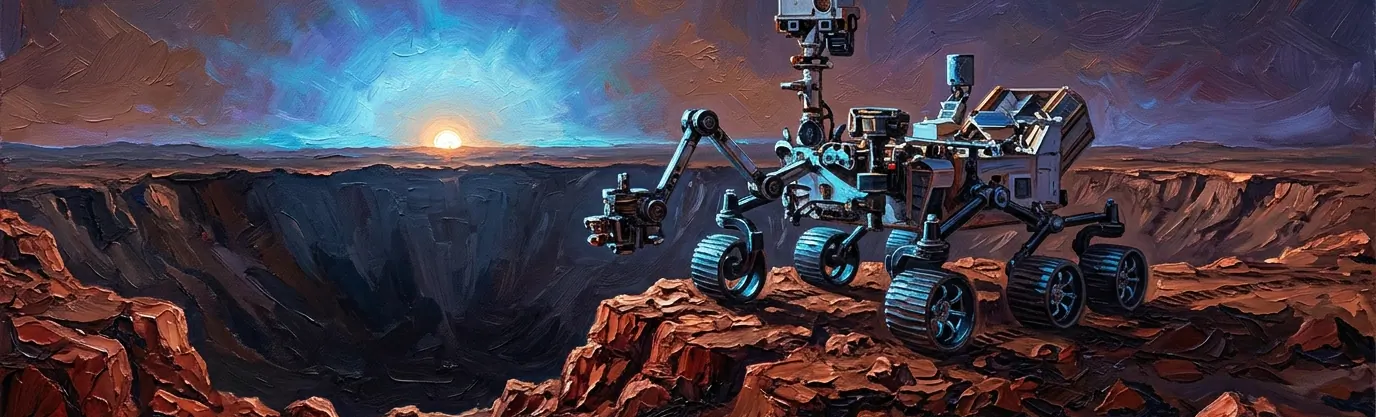
Explanation: Mars is universally known as the Red Planet, and during the Martian daytime its sky glows a butterscotch, salmon-pink, or rusty orange-red hue. Yet when the Sun dips toward the Martian horizon at dusk, the colors flip into the exact opposite of Earth's: Mars has cool, frosty blue sunsets!
On Earth, tiny nitrogen and oxygen gas molecules scatter short-wavelength blue light across the daytime sky (Rayleigh scattering), leaving long-wavelength red and orange rays to paint our sunsets. Mars, however, has an ultra-thin carbon-dioxide atmosphere choked with fine, micrometer-sized iron-oxide (rust) dust particles lifted by windstorms.
Those larger Martian dust grains absorb blue light and scatter warm red light across the daytime sky—while scattering blue light forward at very narrow angles right around the disk of the Sun (Mie scattering)! At sunset, when sunlight passes through the longest path of dusty Martian air directly toward a rover's camera, a mesmerizing sapphire-blue glow halos the setting Sun.
9.Who suggested the name 'Pluto' for our solar system's ninth world?
Show Answer & Explanation
Correct Answer: A. An eleven-year-old English schoolgirl
Explanation: On March 14, 1930, Falconer Madan—the retired head librarian of Oxford University's Bodleian Library—was reading The Times over breakfast in Oxford, England, and read aloud the front-page news that American astronomer Clyde Tombaugh at Lowell Observatory had discovered a mysterious ninth planet beyond Neptune, though it still had no name.
Sitting across the breakfast table was his eleven-year-old granddaughter, Venetia Burney, who was fascinated by both classical Roman mythology and astronomy. Without missing a beat, Venetia remarked that since the new world was so dark, freezing, and far away, it ought to be named "Pluto" after the Roman god of the underworld (who could also make himself invisible).
Thrilled by the suggestion, her grandfather walked over to Oxford astronomer Herbert Hall Turner, who immediately cabled the name across the Atlantic to Lowell Observatory in Flagstaff, Arizona! Not only did "Pluto" win the observatory's official vote unanimously, its first two letters (P-L) also honored observatory founder Percival Lowell—and Venetia's grandfather rewarded her with a five-pound note!
10.What powers the four hundred erupting volcanoes on Jupiter's moon Io?
Show Answer & Explanation
Correct Answer: C. Gravitational tug-of-war tides
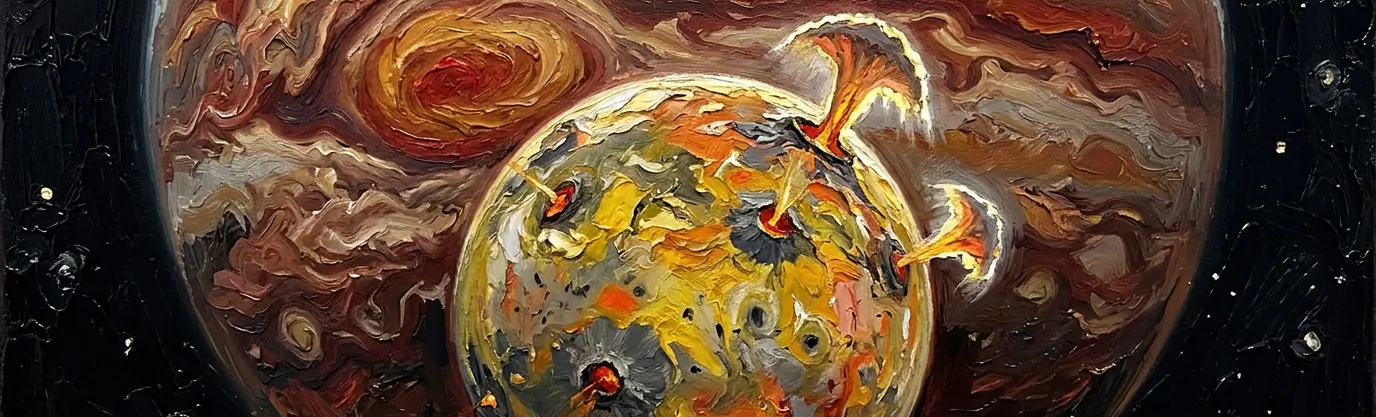
Explanation: Slightly larger than Earth's Moon, Jupiter's innermost Galilean satellite Io looks from space like a giant, bubbling pepperoni-and-cheese pizza coated in yellow, red, white, and black sulfur compounds. With more than 400 active volcanoes blasting umbrella-shaped plumes of sulfur dioxide 500 kilometers (300 miles) high into space, Io is the most volcanically active world in the solar system!
Normally, a small rocky moon of Io's size would have cooled into a dead, frozen ball billions of years ago (just like Earth's Moon). How does Io stay molten inside so far from the Sun?
The secret is orbital resonance and tidal flexing! For every single orbit Ganymede makes around Jupiter, Europa completes exactly two orbits and Io completes four. This rhythmic gravitational tug-of-war between colossal Jupiter on one side and Europa and Ganymede on the other squeezes and stretches Io's solid rock surface up and down by 100 meters (330 feet) every 42 hours—generating immense internal friction heat just like bending a metal paperclip back and forth!
11.What did astronomers name the official average color of our universe?
Show Answer & Explanation
Correct Answer: D. Cosmic Latte
Explanation: In 2001, astronomers Karl Glazebrook and Ivan Baldry at Johns Hopkins University analyzed the combined visible light spectrum of more than 200,000 galaxies from the 2dF Galaxy Redshift Survey to answer a whimsical question: if you blended all the light in the universe together into a single pixel, what color would the cosmos be?
At first, due to a software bug in their color-matching code, they announced the universe was a pale turquoise green. Months later, after spotting the white-point error in their software, they published the true hexadecimal RGB value (`#FFF8E7`): a warm, creamy, slightly off-white beige!
When The Washington Post printed a color swatch and invited readers and scientists to vote on a name for the universe's true color—alongside suggestions like "Cappuccino Cosmico," "Big Bang Buff," and "Skyvory"—astronomer Peter Drum happened to be sipping a cup of coffee at Starbucks while reading the paper and noticed his drink matched the swatch identically, winning the vote with "Cosmic Latte"!
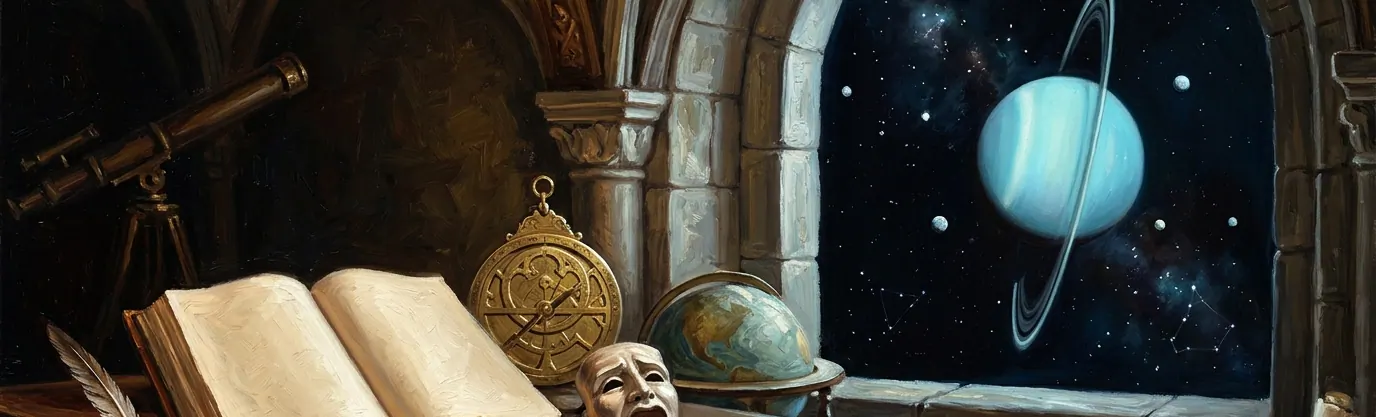
12.After whose literary characters are the moons of sideways-spinning Uranus named?
Show Answer & Explanation
Correct Answer: B. Shakespeare and Alexander Pope
Explanation: Uranus is the rebel of the solar system in more ways than one. First, probably due to a cataclysmic collision with an Earth-sized proto-planet billions of years ago, Uranus is knocked onto its side at an axial tilt of 97.77 degrees—rolling around the Sun like a bowling ball so its north and south poles take turns pointing straight at the Sun for 42 years at a time!
Second, while every other planet in the solar system has moons named after figures from Greek and Roman mythology, English astronomer John Herschel (son of Uranus's discoverer William Herschel) broke tradition in 1852 by naming Uranus's moons after spirits from English literature!
Today, all 28 known moons of Uranus are named exclusively after characters from the plays of William Shakespeare—including Titania, Oberon, Puck, Miranda, Ariel, Caliban, Juliet, Ophelia, and Prospero—plus three moons (Umbriel, Belinda, and Ariel) that also appear in Alexander Pope's satirical poem The Rape of the Lock!
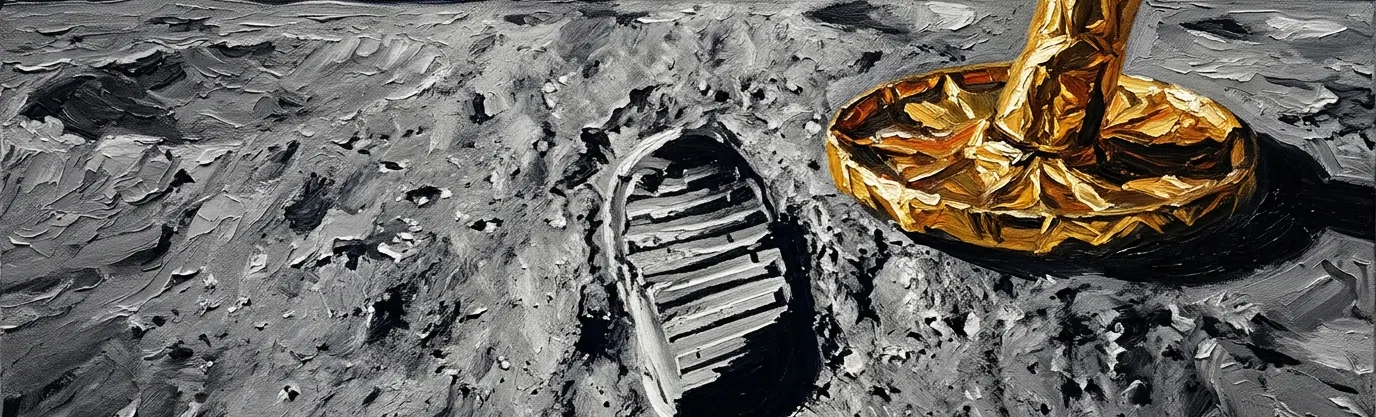
13.What slowly erases Apollo astronaut bootprints on the airless Moon?
Show Answer & Explanation
Correct Answer: A. Tiny micrometeorite impacts
Explanation: On Earth, footprints left in beach sand or desert dirt vanish within hours or days thanks to wind, rain, ocean waves, and burrowing insects. On the Moon, however, there is virtually no atmosphere, zero wind, zero liquid water rain, and no active volcanic lava flows to resurface the ground.
As a result, the crisp, ribbed bootprints pressed into the powdery gray lunar regolith by Neil Armstrong, Buzz Aldrin, and the ten other moonwalkers between 1969 and 1972 are still sitting right where they left them—verified by high-resolution photographs from NASA's Lunar Reconnaissance Orbiter!
Does that mean lunar footprints last forever? Not quite! Because the Moon has no protective atmosphere to burn up incoming space dust, a steady, microscopic drizzle of high-speed micrometeorites and solar-wind particles ("space weathering") bombards the lunar surface—acting like ultra-slow cosmic sandpaper that churns the top millimeter of dust ("lunar gardening") and will gradually blur the Apollo bootprints over 10 million to 100 million years.

14.What did Nobel laureates Penzias and Wilson first blame for Big Bang static?
Show Answer & Explanation
Correct Answer: C. Roosting pigeon droppings
Explanation: In 1964, Bell Labs radio astronomers Arno Penzias and Robert Wilson were calibrating the super-sensitive, 15-meter Holmdel Horn Antenna in New Jersey when they encountered an annoying problem: no matter which direction they pointed the giant metal horn in the sky—day or night, summer or winter—they heard a persistent, uniform microwave static hiss corresponding to a temperature of about 3.5 Kelvin above absolute zero.
Convinced the static was an earthly equipment flaw, Penzias and Wilson climbed inside the giant aluminum horn and found a pair of pigeons roosting in the narrow throat, which had coated the interior metal with what Penzias politely described in their scientific paper as "a white dielectric material" (pigeon poop)!
The two scientists trapped the pigeons, mailed them upstate (where the homing pigeons promptly flew right back!), and scrubbed every inch of bird droppings out of the antenna with brooms and rags. Yet the 3-Kelvin microwave hiss refused to go away! Only after talking with Princeton physicist Robert Dicke did they realize they had accidentally discovered the Cosmic Microwave Background—the cooled afterglow of the Big Bang itself, winning the 1978 Nobel Prize in Physics!

15.What liquid fills the rivers, lakes, and rainstorms on Saturn's moon Titan?
Show Answer & Explanation
Correct Answer: D. Liquid methane and ethane
Explanation: Larger than the planet Mercury and wrapped in a dense, golden-orange nitrogen haze 1.5 times thicker than Earth's air, Saturn's largest moon Titan is the only world in the entire solar system besides Earth known to have stable clouds, rainstorms, winding river valleys, lakes, and vast seas on its surface!
However, because Titan orbits nearly 1.4 billion kilometers from the Sun, its surface temperature hovers at a bone-chilling -179°C (-290°F). At that cryogenic temperature, water ice is frozen as hard as granite bedrock—forming the pebbles, mountains, and sand dunes of Titan's landscape.
Instead of water, Titan's entire hydrological cycle runs on liquid hydrocarbons—specifically liquid methane ($CH_4$) and liquid ethane ($C_2H_6$)! When the European Space Agency's Huygens probe parachuted onto Titan's surface in January 2005, it landed on a damp flood plain of methane mud and photographed rounded water-ice cobbles worn smooth by rushing rivers of liquid natural gas.
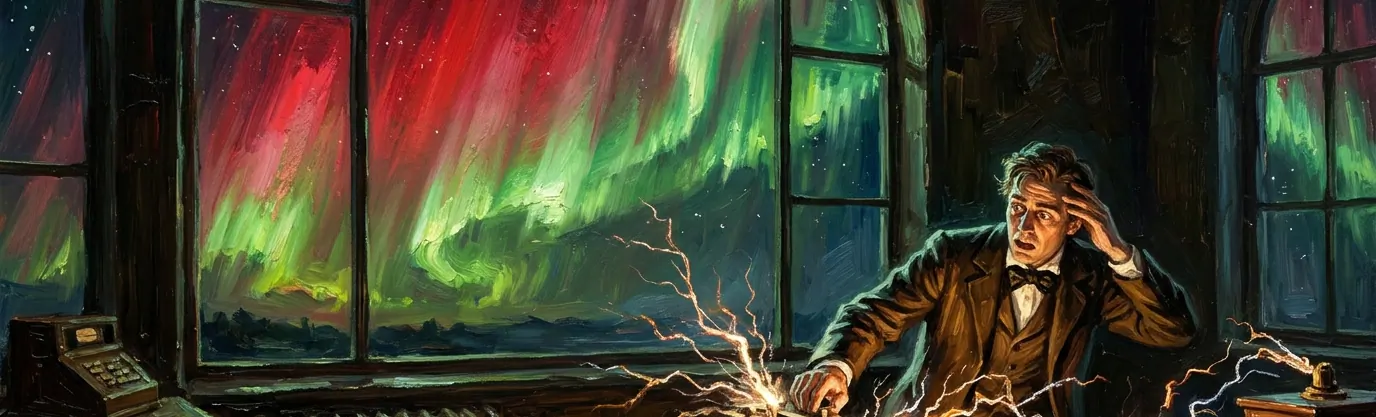
16.What happened to telegraph machines during the massive 1859 Carrington solar storm?
Show Answer & Explanation
Correct Answer: B. Operated unplugged on aurora current
Explanation: On September 1, 1859, British astronomer Richard Carrington was sketching a cluster of giant sunspots projected through his telescope when he witnessed two blinding beads of white light erupt from the Sun's surface—humanity's first recorded observation of a monster solar flare and Coronal Mass Ejection (CME).
Just 17.6 hours later, that magnetized plasma cloud slammed head-on into Earth's magnetosphere, triggering the largest geomagnetic superstorm in recorded history (the Carrington Event). Blood-red and emerald auroras lit up the night sky as far south as Cuba, Jamaica, Hawaii, and Colombia—so bright that Rocky Mountain gold miners woke up at 1:00 AM and cooked bacon and eggs thinking the Sun was rising!
Across North America and Europe, geomagnetic currents surged through thousands of miles of copper telegraph wires: telegraph pylons threw showers of sparks, telegraph paper caught fire, and when stunned operators in Boston and Portland unplugged their heavy acid batteries for safety, they discovered they could still transmit Morse code messages for two hours powered entirely by the aurora current flowing through the sky!
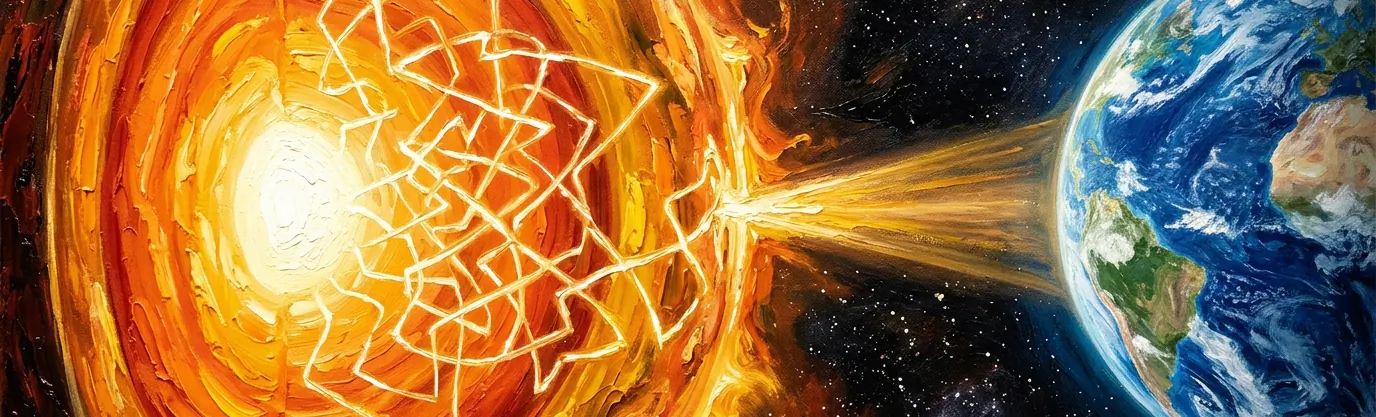
17.How long does a photon take to bounce out of the Sun's core?
Show Answer & Explanation
Correct Answer: A. Roughly one hundred thousand years
Explanation: Everyone learns in school that sunlight takes just 8 minutes and 20 seconds to cross the 150 million kilometers of empty space from the surface of the Sun to your face on Earth. Yet the energy inside that sunbeam was actually born in the Sun's nuclear fusion furnace during the last Ice Age!
At the center of the Sun, hydrogen nuclei fuse into helium at 15 million degrees Celsius, releasing high-energy gamma-ray photons. If the Sun were transparent, a photon would zip from the core to the surface in just 2.3 seconds. Instead, the Sun's radiative zone is packed so densely with protons and electrons ($150 ext{ g/cm}^3$—thirteen times denser than solid lead) that a photon can only travel a fraction of a millimeter before colliding with a charged particle and scattering in a random new direction!
Known in physics as the "drunkard's walk" (random walk), the photon bounces around like a cosmic pinball trillions upon trillions of times, losing energy until it turns into visible light—taking an average of 40,000 to 170,000 years just to reach the Sun's surface before making its 8-minute dash to Earth!
18.Which famous author arrived and departed life alongside Halley's Comet?
Show Answer & Explanation
Correct Answer: C. Mark Twain
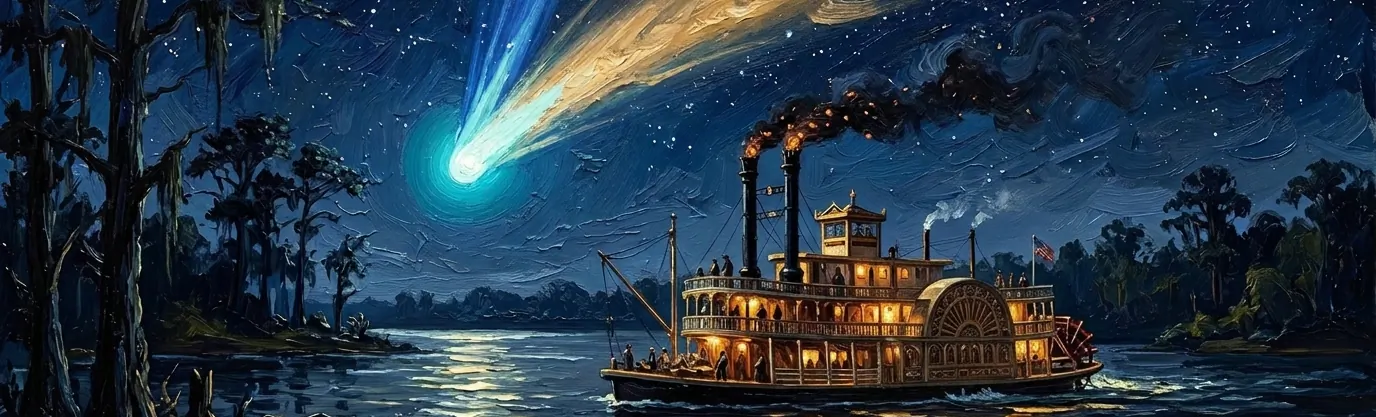
Explanation: Halley's Comet—the only known short-period comet regularly visible to the naked eye from Earth—swings through the inner solar system once every 75 to 76 years, making it a once-or-twice-in-a-lifetime celestial visitor for human beings.
On November 30, 1835, Samuel Langhorne Clemens—better known to the world as American humorist and author Mark Twain—was born in Florida, Missouri, just two weeks after Halley's Comet reached perihelion (its closest approach to the Sun) in the autumn sky.
Seventy-four years later, in 1909, Twain prophetically told his biographer: "I came in with Halley's Comet in 1835. It is coming again next year, and I expect to go out with it. It will be the greatest disappointment of my life if I don't go out with Halley's Comet. The Almighty has said, no doubt: 'Now here are these two unaccountable freaks; they came in together, they must go out together.'" True to his word, Mark Twain passed away on April 21, 1910—just one day after Halley's Comet reached its 1910 perihelion!
19.Roughly how wide is the eerie galaxy-starved region called Boötes Void?
Show Answer & Explanation
Correct Answer: D. Three hundred million light-years
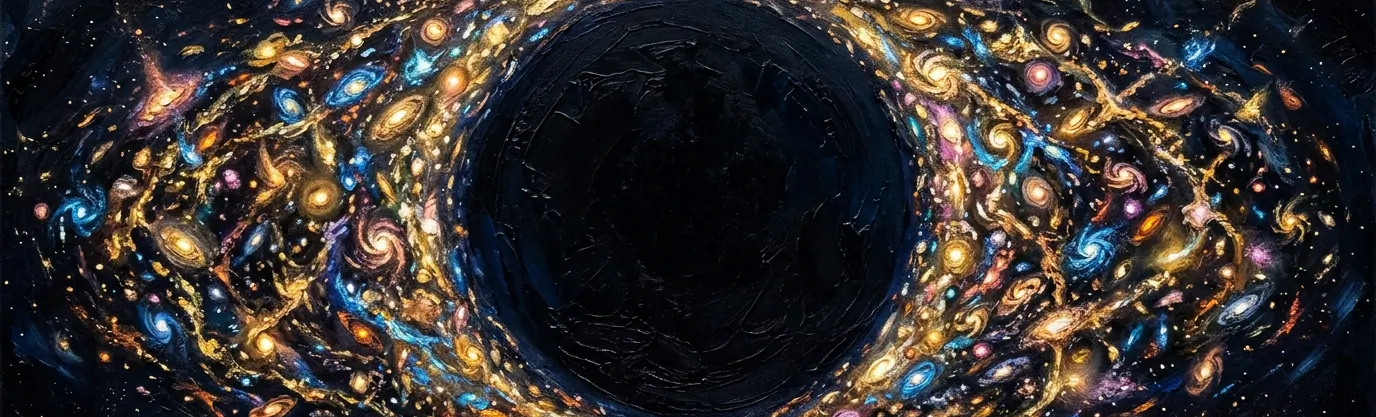
Explanation: Discovered in 1981 by astronomers Robert Kirshner, Augustus Oemler Jr., Paul Schechter, and Stephen Shectman, the Boötes Void (often called "The Great Nothing") is one of the largest and spookiest supervoids in the observable universe.
Located 700 million light-years from Earth in the direction of the constellation Boötes, this roughly spherical chasm of nearly empty space measures a mind-boggling 330 million light-years in diameter—roughly 0.27% of the diameter of the entire observable universe!
In a normal patch of the cosmos that size, astronomers would expect to find roughly 2,000 to 10,000 bright galaxies. Inside the entire 330-million-light-year expanse of the Boötes Void, surveys have found only 60 galaxies! As astronomer Greg Aldering famously put it: "If the Milky Way had been in the center of the Boötes Void, we wouldn't have known there were other galaxies until the 1960s."
20.Which icy moon shoots giant saltwater geysers into Saturn's outer E-ring?
Show Answer & Explanation
Correct Answer: B. Enceladus
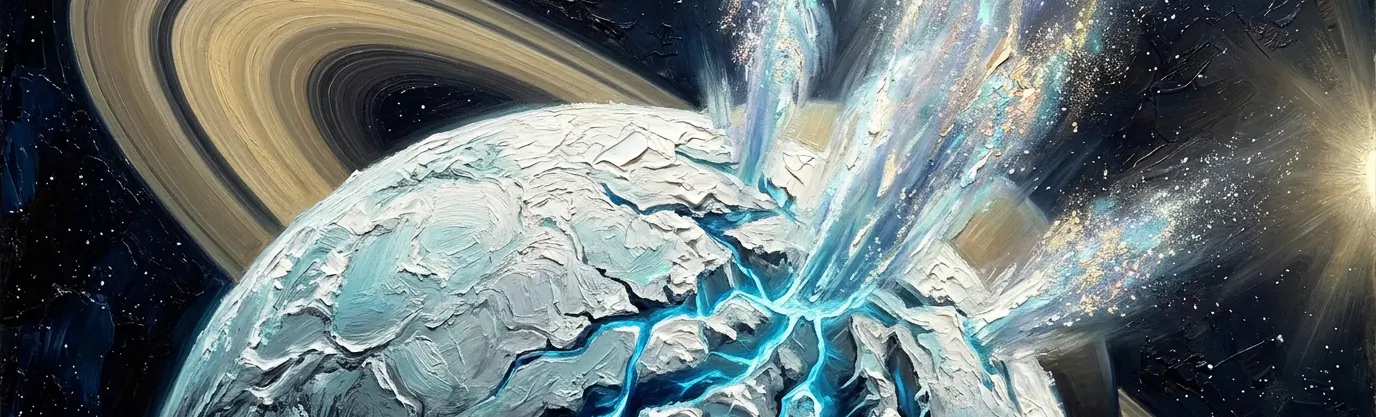
Explanation: Measuring just 500 kilometers (310 miles) across—small enough to fit comfortably inside the borders of the United Kingdom or the state of Arizona—Saturn's sixth-largest moon Enceladus is the single most reflective body in the solar system, reflecting over 90% of incoming sunlight like freshly fallen snow.
For decades, astronomers wondered why Enceladus looked so blindingly white and clean compared to neighboring cratered moons—and why Saturn's diffuse outer E-ring was thickest right along Enceladus's orbit. In 2005, NASA's Cassini spacecraft solved both mysteries at once!
Flying past Enceladus's south pole, Cassini photographed more than 100 towering cryovolcanic geysers erupting from four warm parallel fractures nicknamed "Tiger Stripes." Powered by a global subsurface liquid saltwater ocean resting directly on a rocky hydrothermal seafloor, Enceladus blasts 200 kilograms per second of water vapor, ice grains, salt, and organic molecules into space—snowing fresh white powder onto itself and creating Saturn's E-ring!
21.Why is NASA's Psyche spacecraft visiting the strange asteroid 16 Psyche?
Show Answer & Explanation
Correct Answer: A. It's an exposed metal core
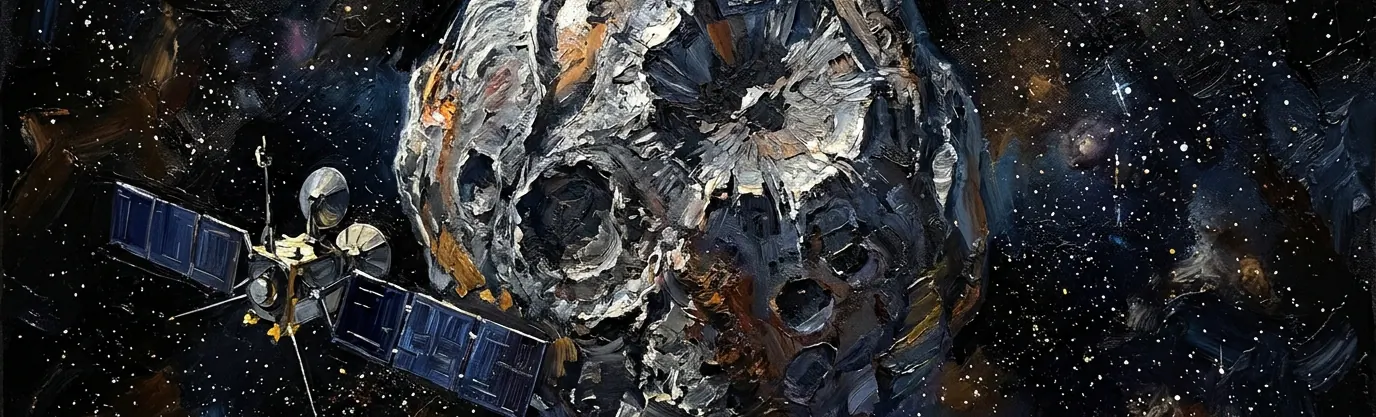
Explanation: Orbiting the Sun in the main asteroid belt between Mars and Jupiter is 16 Psyche—a potato-shaped world measuring roughly 220 kilometers (137 miles) across that discovered by Italian astronomer Annibale de Gasparis in 1852.
Unlike 99% of asteroids made of silicate rock or carbon-rich clay, radar and spectral observations show that 16 Psyche is composed of between 30% and 60% solid metallic iron and nickel! Planetary scientists believe Psyche is the battered, exposed metallic heart (core) of an early proto-planet whose outer rocky mantle was stripped away in violent hit-and-run collisions during the dawn of the solar system.
Because humans can never drill 2,900 kilometers down to visit Earth's own molten iron-nickel core, NASA launched the Psyche spacecraft in October 2023 (arriving in 2029) to directly inspect the only metallic core in the solar system we can ever see up close!

22.What surprising aroma clings to astronauts' spacesuits right after a spacewalk?
Show Answer & Explanation
Correct Answer: D. Seared steak and gunpowder
Explanation: Because outer space is a near-perfect vacuum, you obviously cannot take off your helmet outside the International Space Station and take a whiff—doing so would pull the air out of your lungs immediately. However, the moment spacewalking astronauts climb back inside the airlock, repressurize the chamber with oxygen, and unlatch their helmets, a potent, unmistakable smell fills the room!
From Apollo moonwalkers to ISS astronauts like Don Pettit, Chris Hadfield, and Thomas Jones, crews universally describe the "smell of space" clinging to their spacesuit fabric, gloves, and tools as a metallic, acrid blend of seared steak, hot welding fumes, spent gunpowder, and burnt almond cookies.
Astrophysicists attribute this cosmic barbecue scent to two sources: first, single atoms of reactive atomic oxygen floating in low Earth orbit cling to spacesuit fabrics and react with cabin air during repressurization to form ozone ($O_3$); second, dying stars across the cosmos seed space with polycyclic aromatic hydrocarbons (PAHs)—the exact same carbon-ring molecules found in charred steak and coal smoke on Earth!
23.How did the Event Horizon Telescope capture history's first black hole image?
Show Answer & Explanation
Correct Answer: C. Linked dishes across Earth
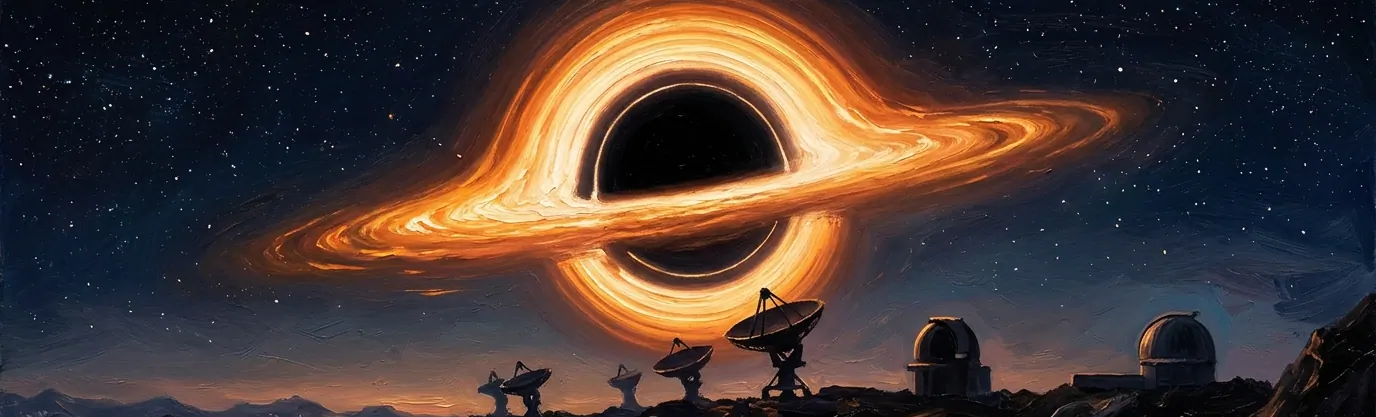
Explanation: On April 10, 2019, the Event Horizon Telescope (EHT) collaboration unveiled one of the most iconic scientific photographs in history: a glowing, fiery orange ring of superheated plasma encircling the dark shadow of M87*, a supermassive black hole weighing 6.5 billion suns located 55 million light-years away in the Messier 87 galaxy.
Because M87* is so distant, resolving its event horizon required the angular resolution needed to read the date on a coin in Los Angeles from New York—a feat that would require a single optical or radio telescope dish literally the size of Planet Earth!
Since building a 12,742-kilometer-wide dish is impossible, over 200 scientists used a brilliant technique called Very-Long-Baseline Interferometry (VLBI). Synchronizing radio observatories across Antarctica, Chile, Hawaii, Arizona, Mexico, and Spain using ultra-precise hydrogen maser atomic clocks, they turned our rotating planet into one giant virtual Earth-sized telescope—recording five petabytes of raw data shipped on physical hard drives by airplane!

24.What exotic precipitation falls miles deep inside ice giants Neptune and Uranus?
Show Answer & Explanation
Correct Answer: B. Solid diamond rain
Explanation: Neptune and Uranus owe their striking azure and cyan colors to methane gas ($CH_4$—one carbon atom bonded to four hydrogen atoms) in their upper atmospheres, which absorbs red sunlight and reflects blue light back into space.
About 7,000 kilometers (4,300 miles) below the cloud tops of these "ice giants," however, atmospheric pressures skyrocket to millions of times Earth's sea-level pressure while temperatures reach several thousand degrees Celsius. Under those extreme conditions, methane molecules are ripped apart and their carbon atoms are squeezed directly into crystalline diamonds!
In 2017 and 2020, physicists at SLAC National Accelerator Laboratory fired high-powered optical lasers at hydrocarbon plastics to recreate Neptune's interior pressures and confirmed that carbon atoms rapidly crystallize into nanometer-sized diamonds—which then grow and sink like a perpetual hailstorm of solid diamonds raining down toward the planet's core!
25.Whose love-struck brainwaves were recorded onto NASA's interstellar Voyager Golden Record?
Show Answer & Explanation
Correct Answer: A. Ann Druyan's
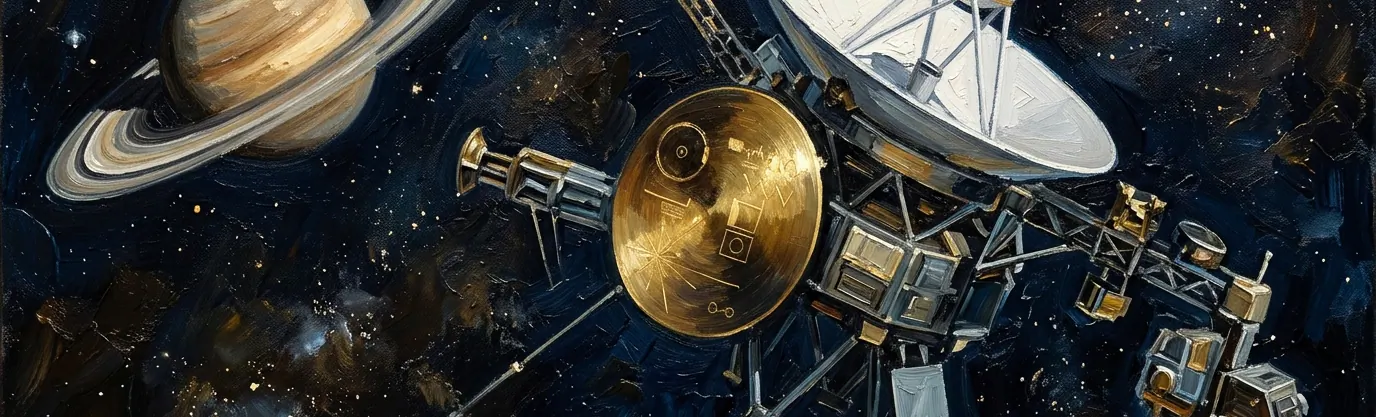
Explanation: Bolted to the hulls of NASA's twin Voyager 1 and Voyager 2 spacecraft—launched in 1977 and now cruising through interstellar space more than 20 billion kilometers from Earth—are two 12-inch gold-plated copper phonograph records curated by astronomer Carl Sagan to introduce humanity to any extraterrestrial civilization that might intercept them over the next billion years.
Alongside greetings in 55 languages, 115 images, humpback whale songs, and music ranging from Bach and Beethoven to Chuck Berry and Blind Willie Johnson, the Creative Director of the Voyager Golden Record project—writer and producer Ann Druyan—wondered if future alien scientists might be able to decode the electrical activity of a human brain.
Just two days after she and Carl Sagan confessed their love for each other and decided to marry, Druyan hooked herself up to an electroencephalogram (EEG) at Bellevue Hospital in New York for an hour while meditating on the history of Earth and what it felt like to fall in love—encoding her compressed brainwaves and heartbeat onto the Golden Record as an eternal cosmic love letter!
26.Why is the distant dwarf planet Haumea shaped like a squashed rugby ball?
Show Answer & Explanation
Correct Answer: D. Breakneck four-hour rotation
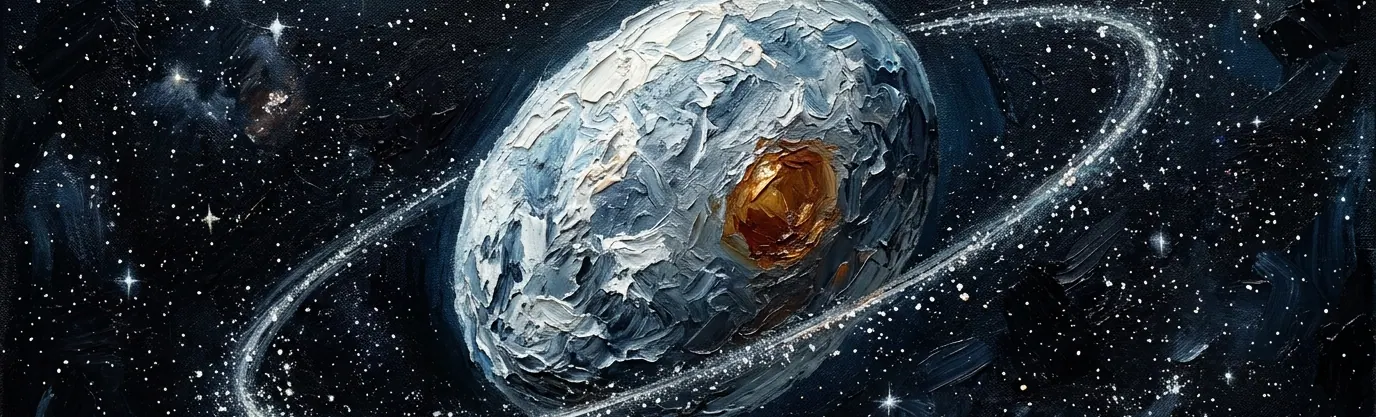
Explanation: Orbiting the Sun out beyond Neptune in the icy Kuiper Belt, the dwarf planet Haumea (named after the Hawaiian goddess of childbirth) looks nothing like a normal round planet: it is stretched into a bizarre triaxial ellipsoid shaped like a cosmic rugby ball or river pebble, twice as long (2,322 km) along its major axis as it is wide (1,025 km) across its poles!
What stretched an entire icy dwarf planet out of shape? Billions of years ago, a massive cosmic collision slammed into Haumea at a glancing angle—knocking off chunks of pure water ice (which formed two moons, Hiʻiaka and Namaka, plus a glittering ring discovered in 2017) and spinning Haumea up like a top.
Today, Haumea completes a full rotation on its axis once every 3.9 hours—making it the fastest-spinning large object in our entire solar system! That breakneck four-hour spin generates such intense centrifugal force at its equator that gravity pulls the dwarf planet into a permanent elongated football.
27.When Andromeda and the Milky Way collide, how many stars will crash?
Show Answer & Explanation
Correct Answer: C. Virtually zero stars
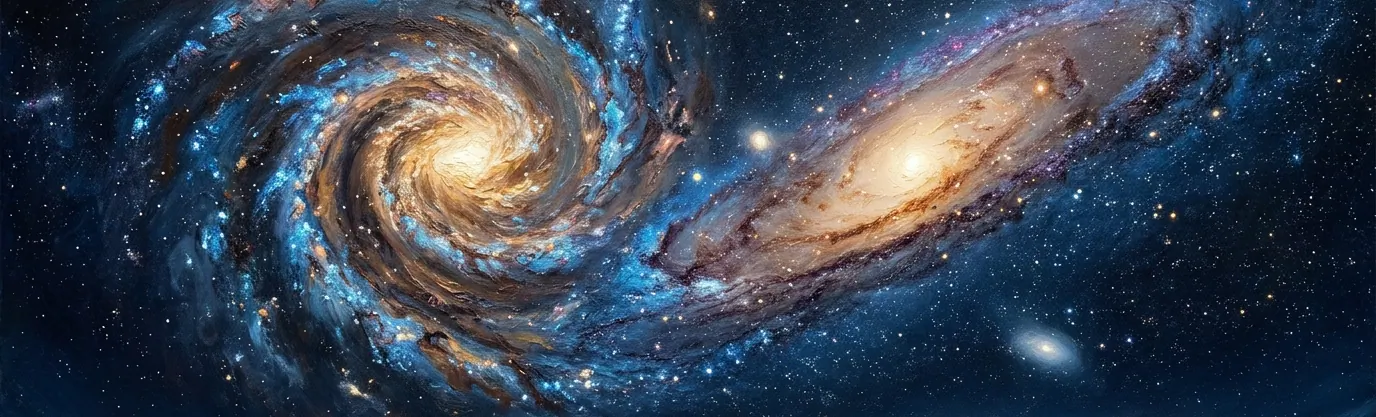
Explanation: Right now, our neighboring spiral galaxy—the Andromeda Galaxy (M31), containing roughly one trillion stars—is hurtling toward our Milky Way galaxy (containing 200 to 400 billion stars) at a speed of about 110 kilometers per second (250,000 mph). In roughly 4.5 billion years, the two giant galaxies will collide and merge into a single colossal elliptical galaxy nicknamed "Milkomeda."
With more than a trillion stars slamming into a 400-billion-star galaxy, you might picture an apocalyptic demolition derby of exploding suns. In reality, astrophysicists calculate that the number of individual stars that will physically crash head-on into another star during the entire collision is virtually zero!
Why? Because stars are tiny pinpricks separated by almost unimaginable expanses of empty space! If our Sun were shrunk to the size of a ping-pong ball in Paris, the nearest star (Proxima Centauri) would be another ping-pong ball sitting 1,100 kilometers away in Berlin—so two galaxies pass right through each other like two swarms of bees while gravity gracefully reshapes their orbits!
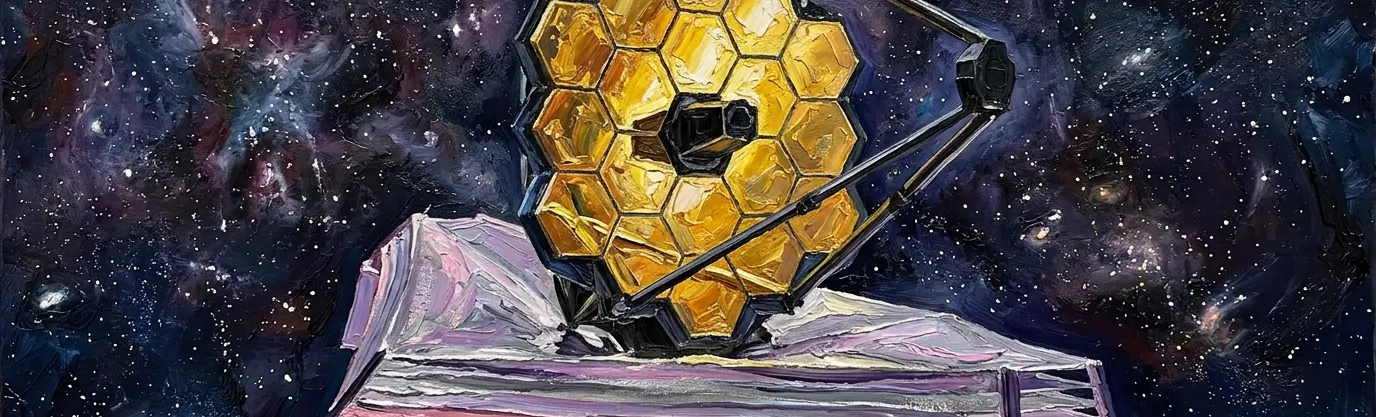
28.Why does the James Webb Space Telescope hide behind a five-layer sunshield?
Show Answer & Explanation
Correct Answer: B. Keep infrared mirrors freezing cold
Explanation: Launched on Christmas Day 2021 to orbit the second Sun-Earth Lagrange point (L2) 1.5 million kilometers from Earth, the James Webb Space Telescope (JWST) was engineered to peer back over 13.5 billion years to see the very first stars and galaxies formed after the Big Bang.
Because the expansion of the universe has stretched (redshifted) the visible light of those ancient galaxies into faint infrared (heat) wavelengths, JWST must observe the cosmos in infrared light. However, any warm object—including the telescope itself!—glows brightly in infrared, which would blind its own sensors just like trying to photograph fireflies with a floodlight shining into your camera lens.
To keep its 6.5-meter gold-coated beryllium mirror and instruments below 40 Kelvin (-233°C / -388°F), JWST unfurled a five-layer, tennis-court-sized Kapton sunshield coated in aluminum and silicon. While the sun-facing Layer 1 bakes at +85°C (185°F), vacuum gaps between the five hair-thin membranes block heat so effectively that the shadow side stays nearly 320°C colder just feet away!
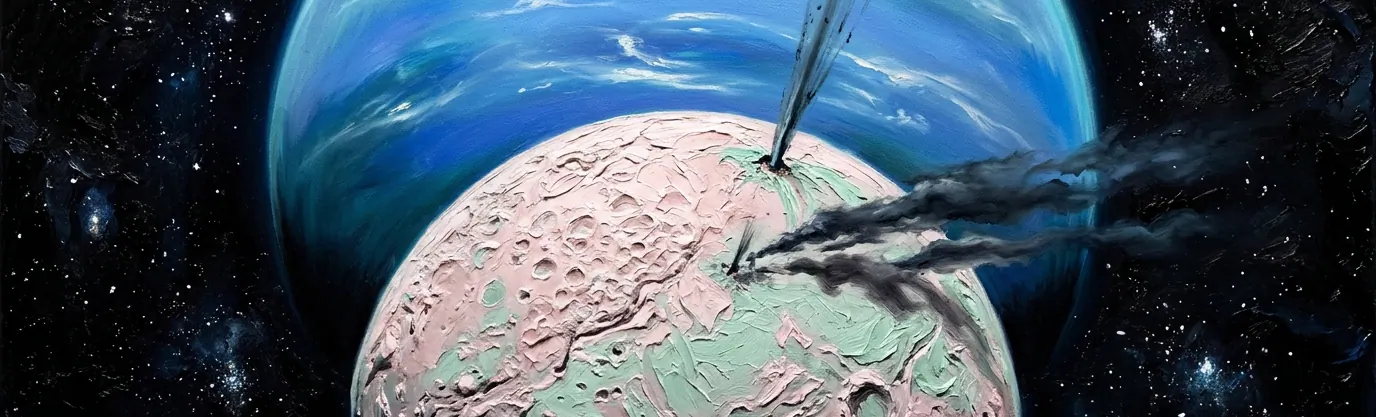
29.Why do astronomers know Neptune's giant moon Triton was kidnapped from space?
Show Answer & Explanation
Correct Answer: A. It orbits backward
Explanation: Every major moon that formed naturally alongside its parent planet from a swirling disk of gas and dust—including Earth's Moon, Jupiter's four Galilean moons, and Saturn's Titan—orbits in the same direction that its planet rotates (a prograde orbit).
Neptune's largest moon Triton, however, breaks the rule completely: measuring 2,706 kilometers across (larger than Pluto!), Triton is the only large moon in the entire solar system that orbits in a retrograde orbit—traveling backward in the opposite direction of Neptune's rotation!
Because a moon cannot form out of a planet's birth disk moving backward, planetary dynamicists realized Triton is an interloper: it originally formed as an independent dwarf planet in the Kuiper Belt (a twin brother to Pluto!) before wandering too close to Neptune billions of years ago and getting gravitationally captured! Today, tidal drag is slowly pulling backward-orbiting Triton inward until it will shatter into a spectacular Saturn-style ring around Neptune in 3.6 billion years.

30.What was Alabama resident Ann Hodges doing when a meteorite bruised her hip?
Show Answer & Explanation
Correct Answer: C. Napping on her couch
Explanation: Thousands of meteorites hit Earth's oceans and uninhabited land every year, yet across all of modern documented history, only one human being has ever been confirmed by scientists and doctors to have been struck by a falling meteorite: thirty-four-year-old Ann Elizabeth Hodges of Sylacauga, Alabama!
At 12:46 PM on November 30, 1954, Ann Hodges was taking a cozy afternoon nap on her living-room couch covered in heavy quilts when a 4.5-billion-year-old, grapefruit-sized, 3.86-kilogram (8.5-pound) chondrite meteorite streaked across the southern sky like a fireball.
The space rock smashed straight through the shingled roof and wooden ceiling of her rented house, bounced off a large Philco console radio standing across the room, and slammed into her left hip and hand—leaving a giant, pineapple-shaped purple bruise! Because the wooden roof and radio absorbed most of the kinetic impact, Hodges survived with minor injuries and later donated the famous Sylacauga Meteorite to the Alabama Museum of Natural History.
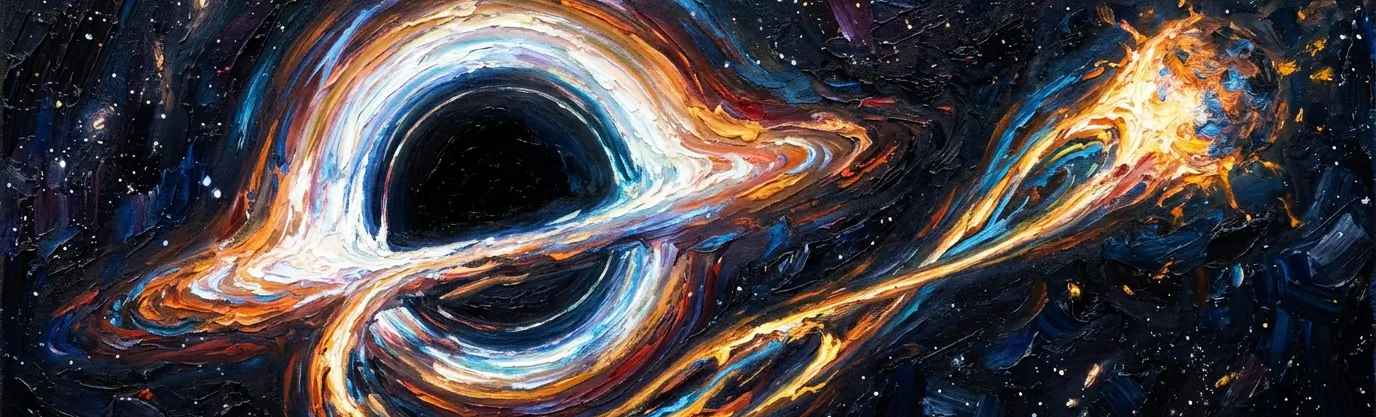
31.What is the official astrophysical term for black hole tidal stretching?
Show Answer & Explanation
Correct Answer: B. Spaghettification
Explanation: It sounds like a joke coined by an Italian chef, but "spaghettification" (popularized by Stephen Hawking in his 1988 bestseller A Brief History of Time) is the genuine, peer-reviewed astrophysical term used by researchers to describe what happens when a star, planet, or astronaut falls feet-first toward a stellar-mass black hole!
Because gravity weakens rapidly with distance (the inverse-square law), when you approach a small, ultra-dense stellar black hole, the gravitational pull on your boots—just two meters closer to the black hole than your helmet—becomes millions of times stronger than the gravitational pull on your head!
Simultaneously, because both of your shoulders are being pulled along slightly converging paths toward the single center point of the black hole, extreme tidal forces squeeze you inward from the sides while stretching you vertically into a long, thin, subatomic strand of pasta before you ever finish crossing the event horizon!
Did You Know? Fascinating Facts
- Venus rotates so slowly backward on its axis that a single Venusian sidereal day (243 Earth days) actually lasts longer than an entire Venusian year around the Sun (225 Earth days)!
- Astronomers analyzing the giant Sagittarius B2 molecular dust cloud near the center of the Milky Way discovered billions of liters of ethyl formate—the chemical compound that gives raspberries their flavor and smells like rum.
- When Nobel laureates Arno Penzias and Robert Wilson first detected the Cosmic Microwave Background radiation from the Big Bang in 1964, they initially blamed the mysterious hiss on 'white dielectric material'—droppings left by pigeons roosting inside their horn antenna!