
Norway Trivia: 31 Knighted Penguins, Flaming Brown Cheese & Arctic Wonders
Go beyond Oslo and Vikings—explore 31 surprising Norwegian oddities spanning knighted penguins, mountain sun-mirrors, and Friday night taco mania.
1.Which flightless bird holds the rank of Major General in Norway's army?
Correct Answer: C. A king penguin
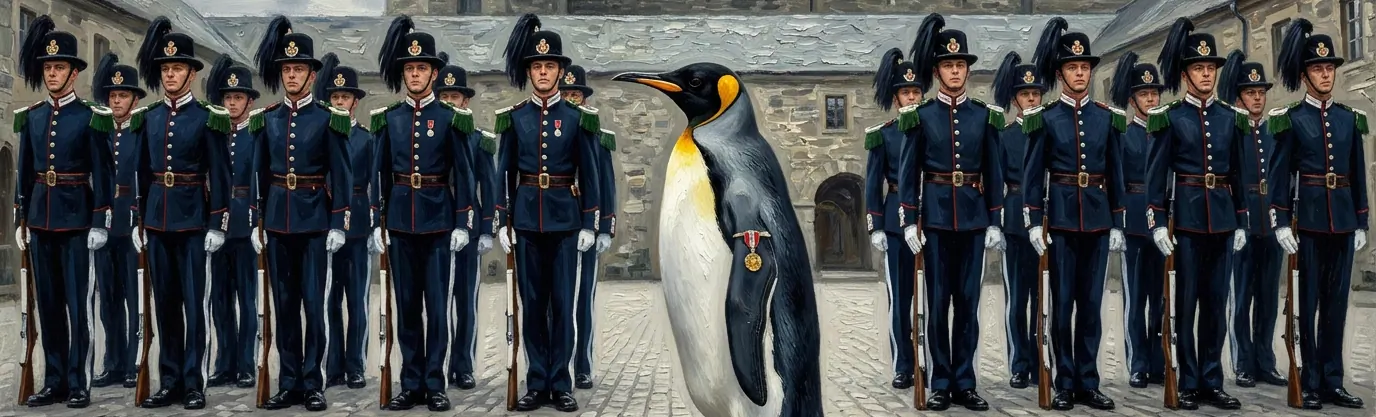
Explanation: Wait until you salute Sir Nils Olav III—a real-life king penguin residing at Edinburgh Zoo in Scotland who officially holds the rank of Major General in His Majesty the King's Guard (Hans Majestet Kongens Garde) of the Norwegian Army!
The tradition began in 1961 when Lieutenant Nils Egelien of the Norwegian King's Guard visited the Edinburgh Military Tattoo and fell in love with the zoo's king penguin colony—a species originally gifted to Edinburgh Zoo in 1913 by the Norwegian shipping magnate Christian Salvesen. In 1972, the regiment adopted a penguin and named him Nils Olav after Lieutenant Egelien and King Olav V of Norway.
Every time the Norwegian King's Guard returns to Edinburgh for the Royal Military Tattoo, the penguin is promoted and inspects the uniformed troops in person! In 2008, Nils Olav was officially knighted with a sword on behalf of King Harald V, and in August 2023 he was promoted to Major General, making him the highest-ranking bird in world military history.
2.What sweet Norwegian grocery item fueled a five-day highway tunnel fire in 2013?
Correct Answer: A. Caramelized brown goat cheese
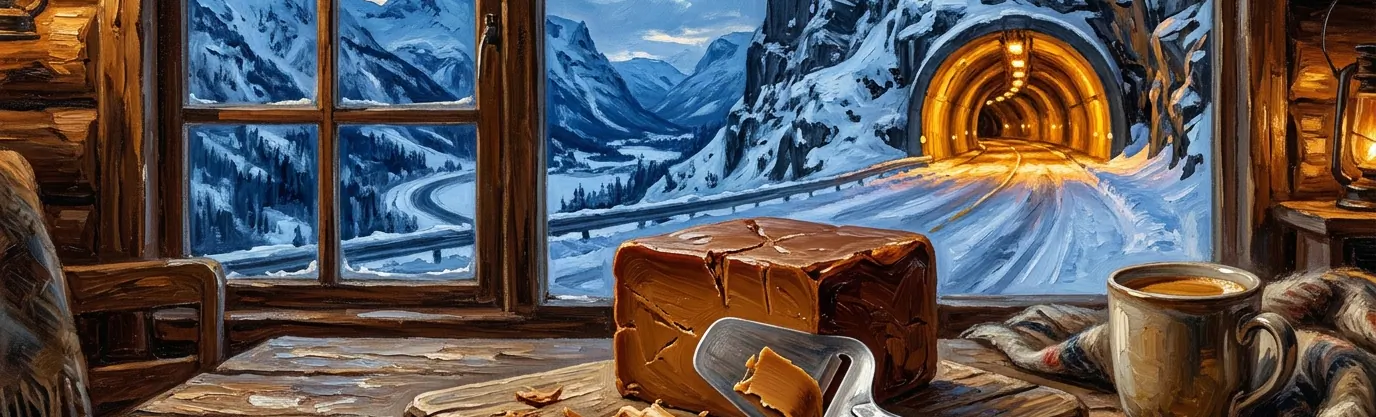
Explanation: No Norwegian breakfast table or ski backpack is complete without brunost ("brown cheese")—a fudge-colored national delicacy made by boiling down cow's and goat's milk whey, cream, and milk for hours until the natural milk sugars caramelize into a sweet, tangy, salty block.
Because authentic brunost (especially Gudbrandsdalsost and Geitost) contains up to 30% milk fat alongside concentrated caramelized lactose sugar, it packs an astonishing amount of combustible energy—a fact Norwegian firefighters learned the hard way in January 2013.
When a semi-trailer hauling 27 metric tons of Tine brunost caught fire inside the 3.6-kilometer Brattli Tunnel in northern Norway's Tysfjord municipality, the melting fat and sugar burned like napalm! The "Great Goat Cheese Fire" raged so hot and belched such toxic black smoke that emergency crews couldn't enter the mountain tunnel for five straight days.
3.How does Norway's twenty-four-kilometer Lærdal Tunnel stop drivers from falling asleep underground?
Correct Answer: D. Glowing blue-and-gold cave chambers
Explanation: Piercing straight through the solid gneiss rock of the Aurlandsfjellet mountains between Lærdal and Aurland along the Oslo–Bergen highway, the Lærdal Tunnel (Lærdalstunnelen) is the longest road tunnel on Planet Earth—stretching an uninterrupted 24.51 kilometers (15.23 miles) underground.
Before the tunnel opened in November 2000, transport psychologists at Norway's SINTEF research institute warned engineers of a deadly hazard: driving for twenty straight minutes through a monotonous, windowless concrete tube induces highway hypnosis, claustrophobia, and asleep-at-the-wheel crashes.
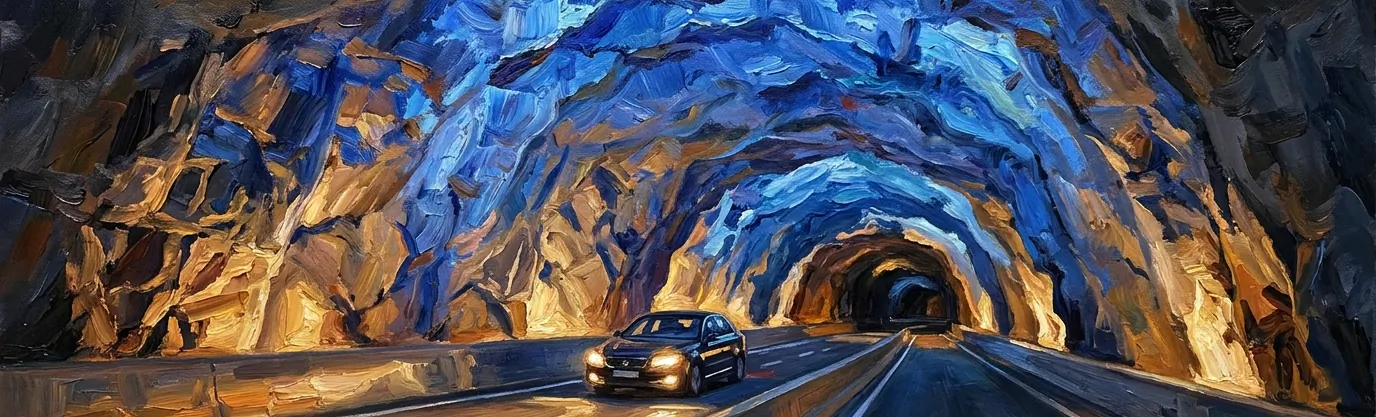
To keep drivers alert, engineers blasted three colossal underground rock caverns spaced exactly six kilometers apart! Each chamber is three times wider than the highway and bathed in theatrical sapphire-blue dome lighting with a golden ring at floor level—simulating an Arctic sunrise and inviting drivers to pull over, stretch their legs, and reset their brains.
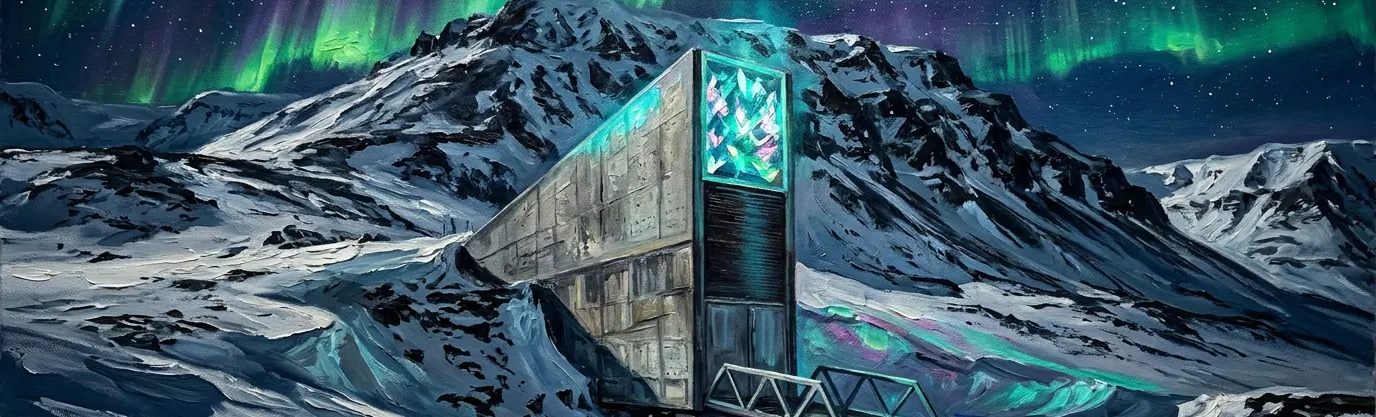
4.What precious cargo sleeps inside Svalbard's permafrost-chilled Doomsday Vault?
Correct Answer: B. Millions of crop seeds
Explanation: Carved 120 meters (390 feet) deep into the solid sandstone of Platåberget mountain on the Norwegian Arctic island of Spitsbergen—roughly 1,300 kilometers south of the North Pole—stands the Svalbard Global Seed Vault, universally nicknamed the "Doomsday Vault."
Opened by the Norwegian government in February 2008, this ultra-secure subterranean bunker serves as the ultimate planetary backup drive for human agriculture. Inside three ice-coated vaults kept at -18°C (-0.4°F), foil-sealed packets protect more than 1.3 million distinct crop seed samples—from ancient heirloom wheats and wild potatoes to rice varieties—donated by nearly every nation on Earth.
Even if the global electrical grid failed completely, the surrounding high-Arctic mountain permafrost would naturally keep the seeds frozen for decades, while its elevation 130 meters above sea level guarantees the vault will stay bone-dry even if every polar ice sheet on Earth melts!
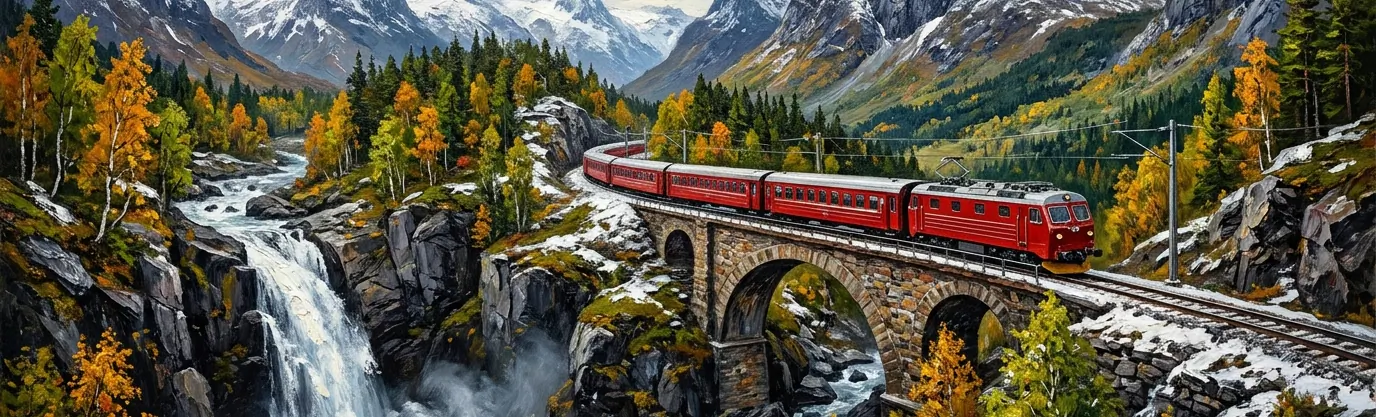
5.What unusual television genre did Norwegian broadcaster NRK turn into ratings gold?
Correct Answer: C. Unedited multi-day Slow TV
Explanation: In an era of rapid-fire TikTok clips and frantic jump-cuts, Norway's public broadcaster NRK shocked the international television industry in 2009 by inventing the global phenomenon of Sakte-TV ("Slow TV")—airing marathon, real-time, uninterrupted events with zero flashy editing or dramatic narration.
To celebrate the 100th anniversary of the scenic Bergen Line railway in November 2009, NRK mounted cameras on a passenger train and broadcast the entire 7-hour, 16-minute journey from Bergen to Oslo minute-by-minute. Over 1.2 million Norwegians—nearly a quarter of the entire country's population—tuned in to watch the train roll past fjords and through dark tunnels!
NRK followed up with even wilder Slow TV blockbusters: a 134-hour (5.5-day) live broadcast of the MS Nordnorge coastal ferry sailing up the Norwegian coast (watched by over half of Norway), a 12-hour live broadcast of a burning fireplace, and an 8-hour sweater-knitting marathon!
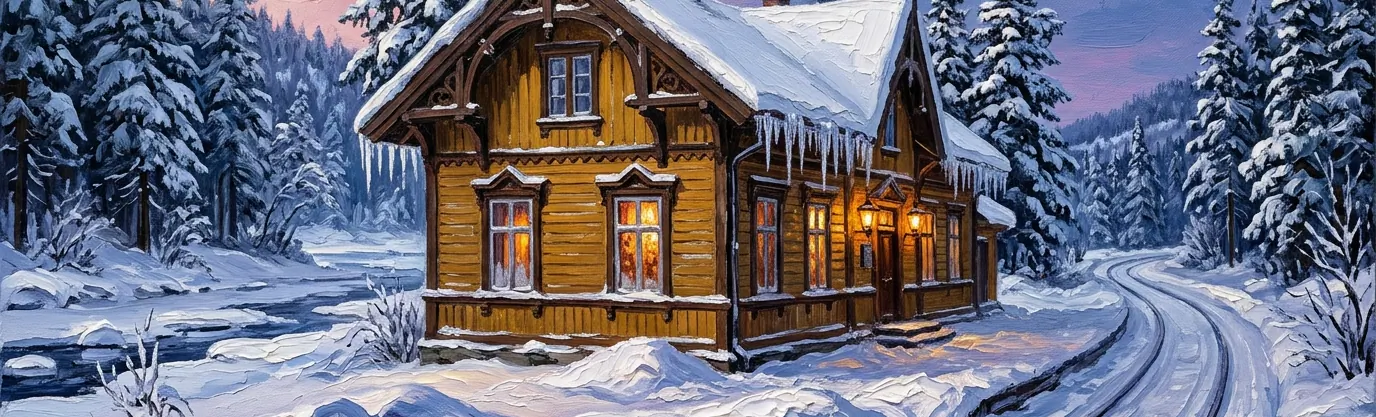
6.What happens every winter to the Norwegian railway village literally named Hell?
Correct Answer: A. Hell freezes solid
Explanation: Just thirty kilometers east of Trondheim—and a five-minute walk from Trondheim's international airport—sits the quiet Norwegian village of Hell in Stjørdal municipality, home to roughly 1,700 residents, a grocery store, a retirement home, and a famous yellow wooden train station.
For English-speaking travelers, the station's vintage white sign reading "HELL — GODS-EXPEDITION" (which simply means "Freight/Cargo Handling" in older Norwegian) is one of Europe's greatest photo ops. Even better, the village name doesn't come from the underworld at all: it derives from the Old Norse word hellir, meaning an overhanging cliff cave!
Because central Norway experiences sub-Arctic winter temperatures plunging well below -10°C (14°F) from December through March, every single year without fail, Hell literally freezes over—complete with an annual Blues in Hell music festival!
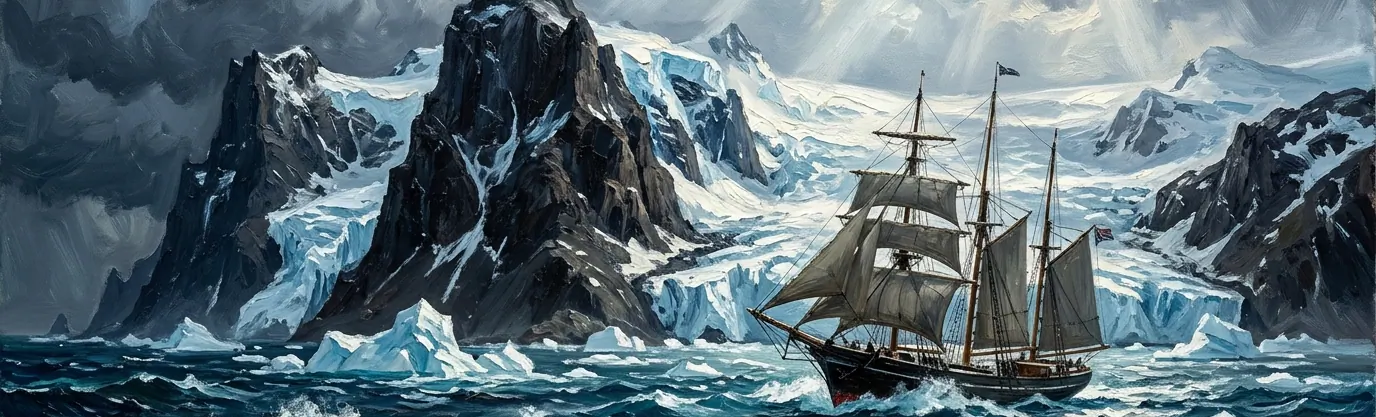
7.How did tiny Bouvet Island in the South Atlantic become Norwegian territory?
Correct Answer: D. Claimed by whaling expedition
Explanation: Located in the sub-Antarctic South Atlantic Ocean 2,525 kilometers southwest of South Africa, Bouvet Island (Bouvetøya) is officially recognized as the single most remote, isolated uninhabited island on Planet Earth—93% buried under sheer glaciers and inhabited only by seals and penguins.
First spotted through thick fog in 1739 by French explorer Jean-Baptiste Charles Bouvet de Lozier, the island's coordinates were misrecorded and it remained "lost" for decades before British sealers sporadically visited it in the nineteenth century.
On December 1, 1927, a Norwegian scientific and whaling expedition aboard the vessel Norvegia, funded by whaling magnate Lars Christensen and commanded by Captain Harald Horntvedt, managed the first-ever extended landing on the icy island, built a small depot hut, and raised the Norwegian flag! Despite brief British protests, Britain waived its claim in 1928, making a frozen volcano near Antarctica an official dependency of Norway—and giving it the internet domain code .bv.
8.What vessel did Norwegian explorer Thor Heyerdahl sail across the Pacific?
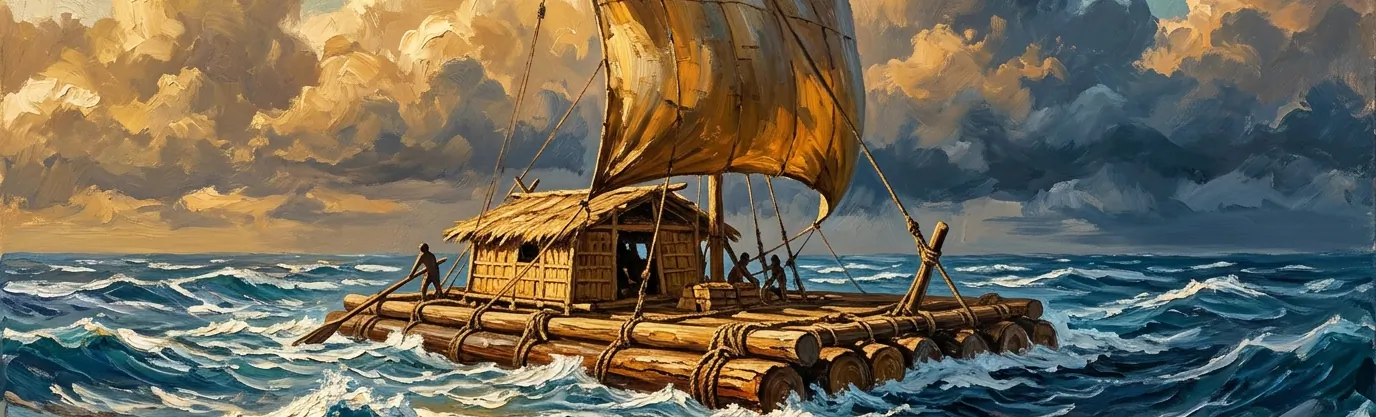
Correct Answer: B. A balsa wood raft
Explanation: In the 1940s, young Norwegian ethnographer and adventurer Thor Heyerdahl proposed a controversial theory that ancient South Americans could have sailed across the Pacific Ocean to Polynesia long before European tall ships—only for academic anthropologists to dismiss him because Inca-era people had no seaworthy boats, only balsa-wood rafts that scholars claimed would get waterlogged and sink within two weeks.
Determined to prove the voyage was physically possible, Heyerdahl traveled to Ecuador in 1947, felled nine giant green balsa tree trunks, and lashed them together with hemp ropes—using zero nails, wire, or metal—into a 14-meter raft named Kon-Tiki with a bamboo cabin and square canvas sail.
ironically, Thor Heyerdahl himself had a lifelong fear of water and could barely swim! Yet he and five Scandinavian companions set sail from Peru on April 28, 1947, and drifted 6,980 kilometers (4,300 miles) across the open Pacific for 101 days before crashing safely onto the Raroia reef in French Polynesia—winning the Academy Award for Best Documentary in 1951.
9.Which woodworking tool inspired Norwegian carpenter Thor Bjørklund's 1925 cheese slicer?
Correct Answer: A. A carpenter's wood plane
Explanation: Open the kitchen drawer of any home across Scandinavia and you are guaranteed to find a gleaming metal ostehøvel—the flat, slotted cheese slicer that shaves whisper-thin, uniform ribbons off blocks of Gouda, Jarlsberg, and brown goat cheese.
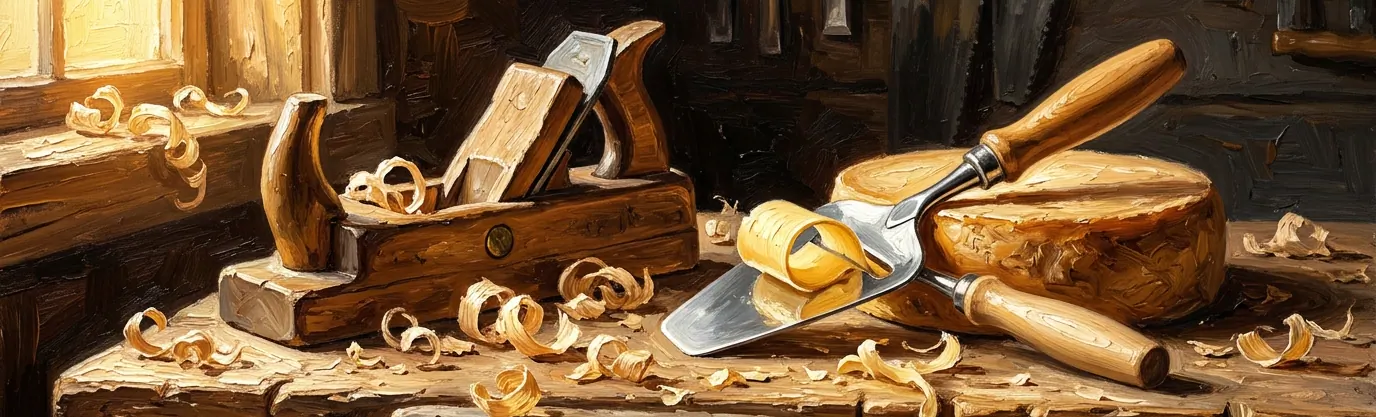
Until 1925, Norwegians sliced cheese with ordinary kitchen knives, which constantly produced thick, jagged, uneven wedges and wasted expensive cheese. Master cabinetmaker Thor Bjørklund of Lillehammer grew so frustrated with ragged cheese slices in his workshop lunchbox that he looked down at the carpenter's hand plane (høvel) he used every day to shave paper-thin curls of pine wood.
Realizing the exact same blade geometry would work on semi-hard cheese, Bjørklund forged a stainless-steel kitchen plane with a raised cutting slot and patented the ostehøvel on February 27, 1925! His Lillehammer company has since manufactured more than 50 million cheese slicers worldwide.
10.Roughly what share of all publicly listed global stocks does Norway's Oil Fund own?
Correct Answer: C. Roughly one-and-a-half percent
Explanation: On Christmas Eve 1969, the Phillips Petroleum drilling rig Ocean Viking struck the massive Ekofisk oil field beneath the Norwegian sector of the North Sea—transforming a modest nation of fishermen, shipbuilders, and timber merchants into an energy superpower.
Rather than spending the windfall immediately and triggering runaway inflation ("Dutch disease"), Norway's parliament established the Government Pension Fund Global (Statens pensjonsfond utland) in 1990 to invest petroleum surpluses exclusively outside Norway for future generations.
Today, for a country of just 5.5 million people, Norway's sovereign wealth fund has grown past $1.7 trillion (over $300,000 for every Norwegian man, woman, and child)! It is the single largest sovereign wealth fund on Earth, holding stakes in around 9,000 companies across 70 countries and owning roughly 1.5% of every publicly listed company on the entire planet.
11.How did the shadowed valley town of Rjukan bring winter sunshine downtown?
Correct Answer: D. Mounted giant hill mirrors
Explanation: Wedged tightly at the bottom of a steep east-west gorge in Telemark, southern Norway, the industrial town of Rjukan sits in perpetual shadow for six months of the year: from late September until mid-March, the winter sun stays too low on the horizon to clear the towering 900-meter mountain cliffs to the south.
As early as 1913, town founder Sam Eyde dreamed of mounting giant mirrors on the mountain rim to bounce sunlight into the dark valley, but early twentieth-century technology wasn't advanced enough—so he built a cable car (Krossobanen) to lift pale townspeople up into the sun instead.
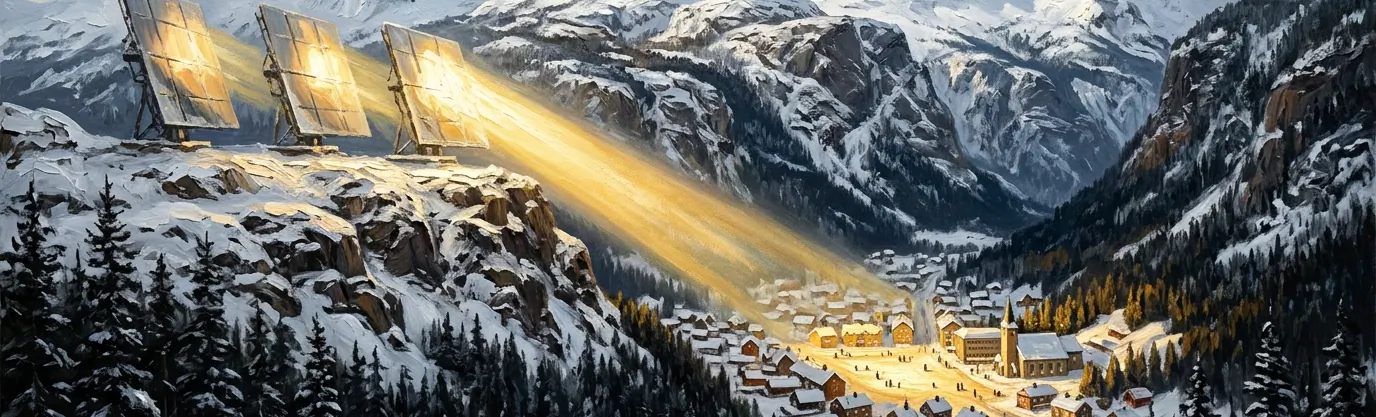
Exactly one hundred years later, in October 2013, local artist Martin Andersen revived the dream and installed the Solspeil ("Sun Mirror"): three computer-controlled, solar-powered heliostat mirrors spanning 51 square meters bolted 450 meters up the northern mountain cliff! As they track the winter sun across the sky, the mirrors reflect a blazing 600-square-meter beam of warm golden sunshine straight down onto Rjukan's central town square.
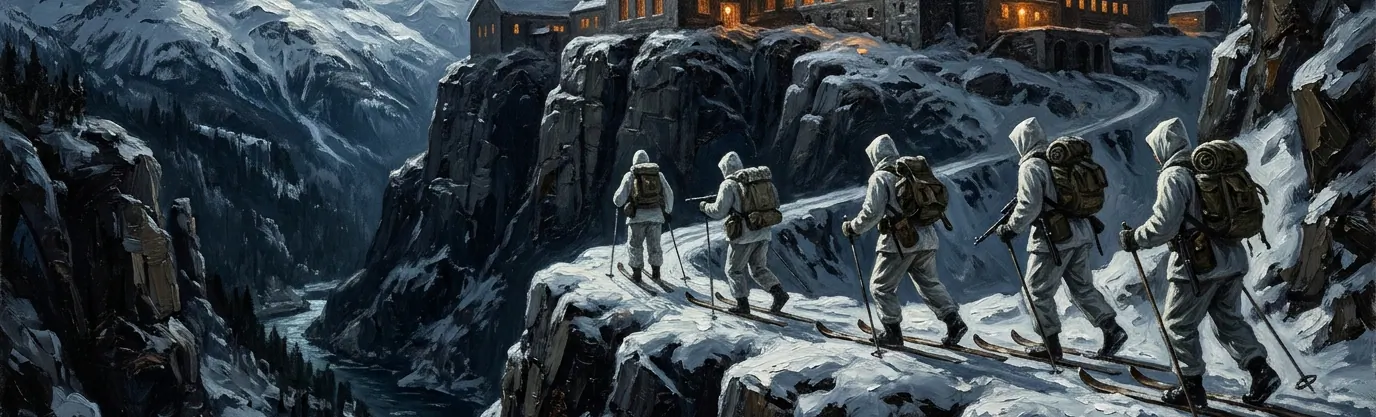
12.How did Norwegian commandos infiltrate Vemork in 1943 to sabotage Nazi heavy water?
Correct Answer: B. Cross-country skis and ravine climb
Explanation: During World War II, Nazi Germany's nuclear weapons program ("Uranverein") relied on deuterium oxide ("heavy water") produced at only one industrial facility in Europe: the fortress-like Norsk Hydro Vemork hydroelectric plant perched on a sheer cliff ledge above a 200-meter gorge in Telemark, Norway.
After a tragic 1942 British glider raid failed, six British-trained Norwegian resistance fighters led by 23-year-old Joachim Rønneberg parachuted onto the freezing Hardangervidda mountain plateau in February 1943 for Operation Gunnerside. Because the German garrison had mined the approaches and guarded the single suspension bridge across the gorge, the commandos skied through blizzards and did what the Germans thought was humanly impossible: they descended into the icy river ravine at night and free-climbed the sheer 200-meter vertical rock cliff right up to the factory railway tracks!
Slipping inside through a cable duct, Rønneberg's team planted explosives on the eighteen heavy-water electrolysis cells, lit a 30-second fuse, and destroyed months of Nazi heavy-water production without firing a single shot or losing a single man—escaping 400 kilometers on cross-country skis all the way to neutral Sweden!
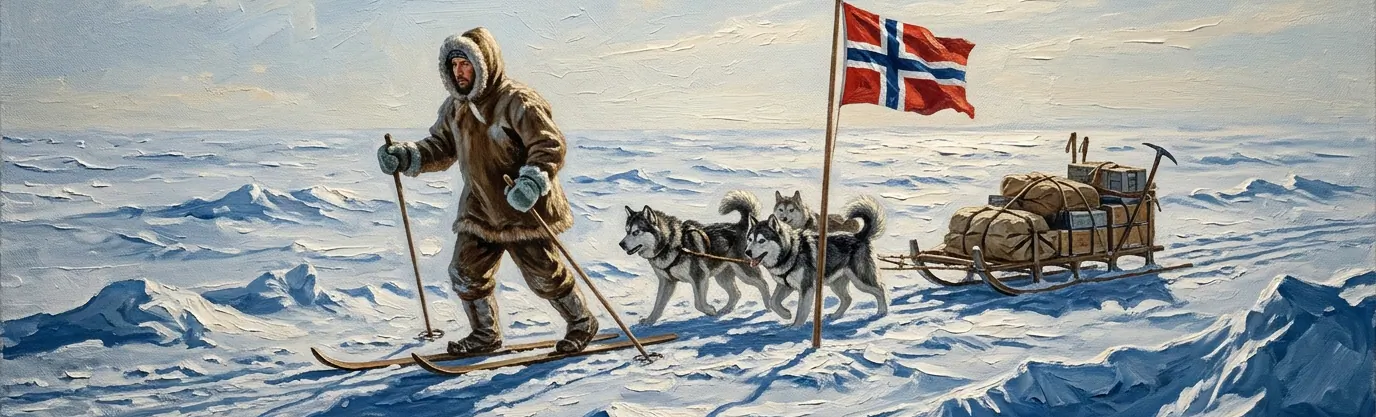
13.What secret weapon helped Roald Amundsen beat Robert Falcon Scott to the South Pole?
Correct Answer: A. Greenland sled dogs and skis
Explanation: In the dramatic 1911 race to become the first human beings to reach the geographic South Pole, British Royal Navy officer Robert Falcon Scott relied on a flawed mix of experimental motorized sledges (which broke down in the freezing cold), Manchurian ponies (which sank into the snow and froze), and exhausting "man-hauling" where sailors dragged heavy sledges on foot in wool clothing.
Norwegian explorer Roald Amundsen—who had spent two years in the Canadian Arctic living alongside the Inuit of King William Island—took the exact opposite approach. He dressed his five-man team in loose, breathable Inuit-style reindeer-skin parkas and recruited Norway's finest cross-country ski champions.
Most crucially, Amundsen brought nearly 100 Greenland sled dogs! Fast, lightweight, and able to pull loads over treacherous glacier crevasses while running alongside expert skiers, Amundsen's dog teams carried the Norwegians to the South Pole on December 14, 1911—thirty-four days ahead of Scott—and brought every single man back home alive and healthy.
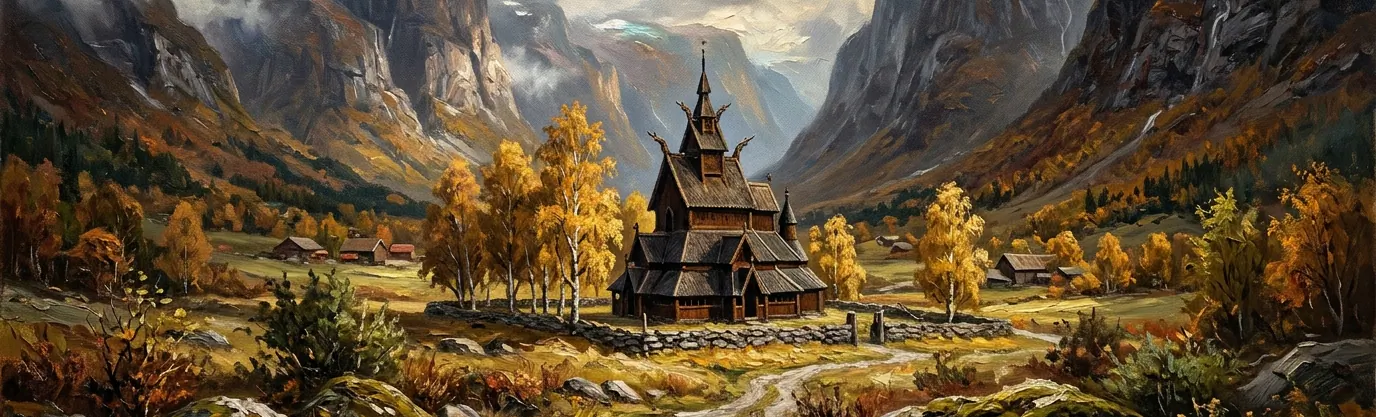
14.How were Norway's medieval wooden stave churches constructed to survive eight centuries?
Correct Answer: C. Interlocking timber without nails
Explanation: Rising out of green Norwegian valleys with cascading shingle roofs and fiercely carved Viking dragon heads, Norway's 28 surviving medieval stave churches (stavkirker)—led by Borgund, Urnes, and Heddal, built between 1130 and 1250 AD—are among the oldest wooden buildings standing on Earth.
Drawing on centuries of Viking longship engineering, medieval Norwegian master builders constructed these soaring timber cathedrals around massive vertical pine corner posts ("staves") resting on dry stone foundations so ground moisture could never rot the wood.
Remarkably, the entire load-bearing skeleton of a stave church was assembled without a single iron nail, screw, or bolt! Instead, craftsmen used precision mortise-and-tenon joints, tongue-and-groove planking, and wooden dowels coated in pungent pine tar—creating a flexible wooden frame that expands, contracts, and sways gracefully in hurricane-force mountain winds without snapping.
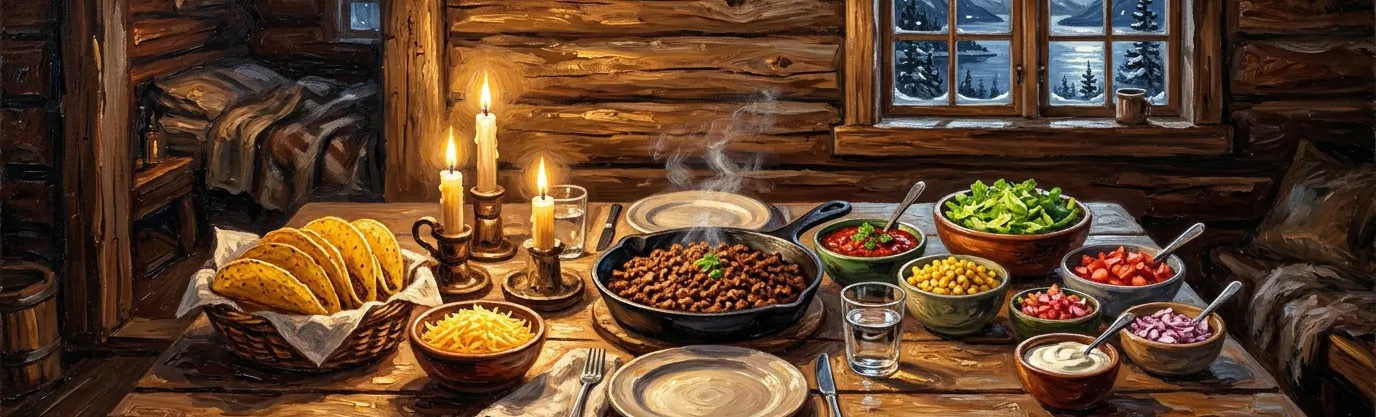
15.What dish has become Norway's beloved unofficial national Friday night ritual?
Correct Answer: D. Tex-Mex tacos
Explanation: Visit any Norwegian supermarket on a Friday afternoon and you will witness a nationwide cultural stampede down the Mexican food aisle: Norwegians are among the largest per-capita consumers of Tex-Mex tacos on Planet Earth outside North America!
Known universally across the country as Tacofredag ("Taco Friday"), the tradition began in the early 1990s when Old El Paso and Santa Maria introduced yellow taco kits to Norwegian grocery stores. For families emerging from austere post-war Nordic diets of boiled potatoes and salted cod, customizable DIY tacos—packed with spiced minced beef, sweet corn, cucumber cubes, grated Jarlsberg cheese, sour cream, and salsa—became the ultimate symbol of weekend cozy family time (kos).
Today, polls show that more than 80% of Norwegians eat tacos regularly, and over 400,000 Norwegians sit down to a plate of tacos every single Friday night while watching evening television!
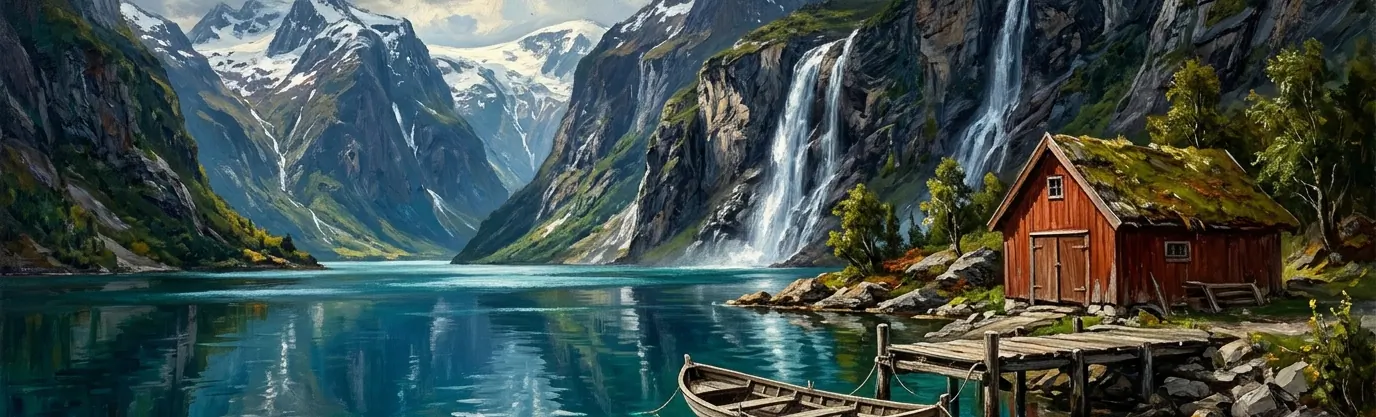
16.How deep does Norway's mighty Sognefjord plunge below sea level?
Correct Answer: B. Over thirteen hundred meters
Explanation: Known across Scandinavia as Fjordenes Konge ("The King of the Fjords"), the Sognefjord slices 204 kilometers (127 miles) inland from the North Sea coast just north of Bergen all the way to the foot of the Jotunheimen mountains—making it the longest and deepest fjord in Norway and the second-longest fjord on Earth after Greenland's Scoresby Sund.
While tourists cruising along the Sognefjord gaze up in awe at the sheer granite cliffs towering more than 1,000 meters (3,300 feet) above the water, the true scale of the glacial valley lies hidden beneath the hull of their boat.
Carved out by crushing Ice Age glaciers over millions of years, the Sognefjord plunges an astonishing 1,308 meters (4,291 feet) below sea level near Vadheim! Only near the ocean mouth does the seabed rise rapidly to a shallow 100-meter rocky sill where the ancient glacier terminated.
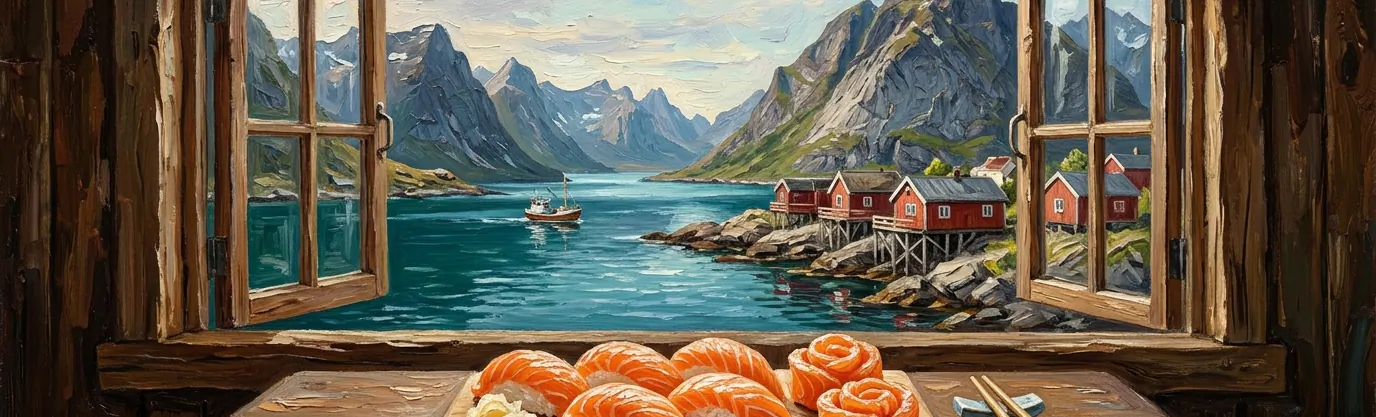
17.Which country convinced Japan in the 1980s to eat raw salmon sushi?
Correct Answer: A. Norway
Explanation: Walk into any sushi restaurant from Tokyo to New York today and salmon nigiri and salmon rolls are the undisputed top sellers. Yet if you had asked a traditional Tokyo sushi master in 1980 for raw salmon sushi, he would have looked at you in horror!
Historically, Japanese chefs never served raw Pacific salmon because wild Pacific salmon frequently carried parasites (such as Anisakis roundworms) and had lean flesh that spoiled quickly without cooking or curing. Meanwhile, in the mid-1980s, Norway's booming cold-water aquaculture industry faced a massive surplus of clean, fatty, parasite-free Atlantic salmon overflowing inside Norwegian freezers.
In 1986, Norwegian Fisheries Minister Thor Listau and industry leader Bjørn Eirik Olsen launched "Project Japan"—spending a decade marketing flash-frozen, parasite-free Norwegian Atlantic salmon directly to Japanese food distributors as nama sarmon. By 1995, rotating conveyor-belt sushi bars across Japan embraced the buttery orange fish, turning a Norwegian export campaign into a global sushi staple!
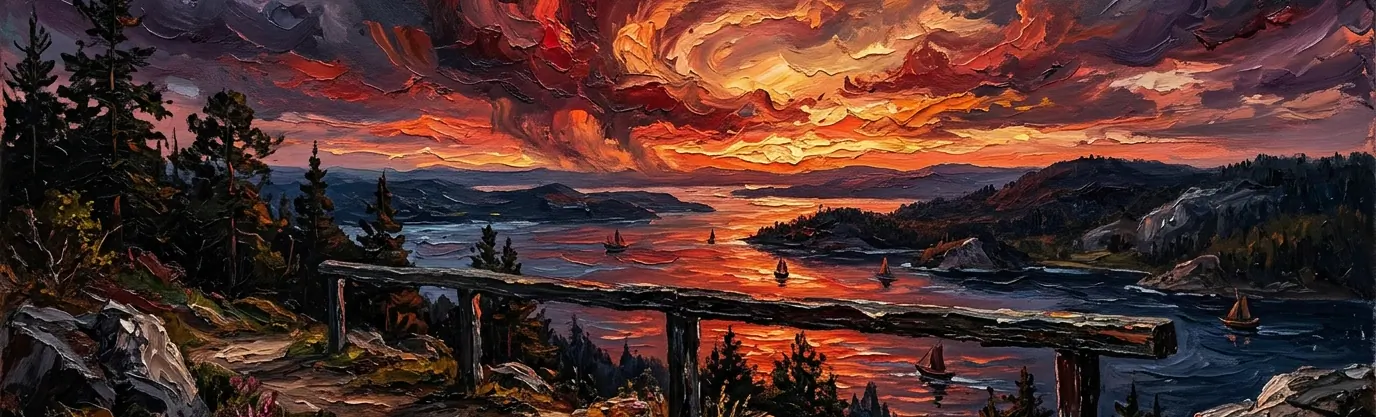
18.What distant volcanic eruption turned Oslo's sky blood-red before Munch painted The Scream?
Correct Answer: C. Krakatoa
Explanation: In his diary entry dated January 22, 1892, Norwegian Expressionist painter Edvard Munch described the real-life moment that inspired his 1893 masterpiece Skrik (The Scream): "I was walking along a path with two friends—the sun was setting—suddenly the sky turned blood red... there were blood and tongues of fire above the blue-black fjord and the city—and I stood there trembling with anxiety—and I sensed an infinite scream passing through nature."
Art historians and astrophysicists later pinpointed the exact promenade along Ekeberg hill overlooking Oslofjord—and solved why the twilight sky over Oslo looked like roaring flames of blood in the winter of 1883–1884.
In August 1883, the catastrophic eruption of the Krakatoa volcano in Indonesia blasted millions of tons of sulfur dioxide and volcanic ash high into the stratosphere. Circulating around the entire globe, those volcanic aerosols produced lurid, blood-red and fiery orange twilight skies across Europe—burning an unforgettable image into the young Norwegian artist's memory!
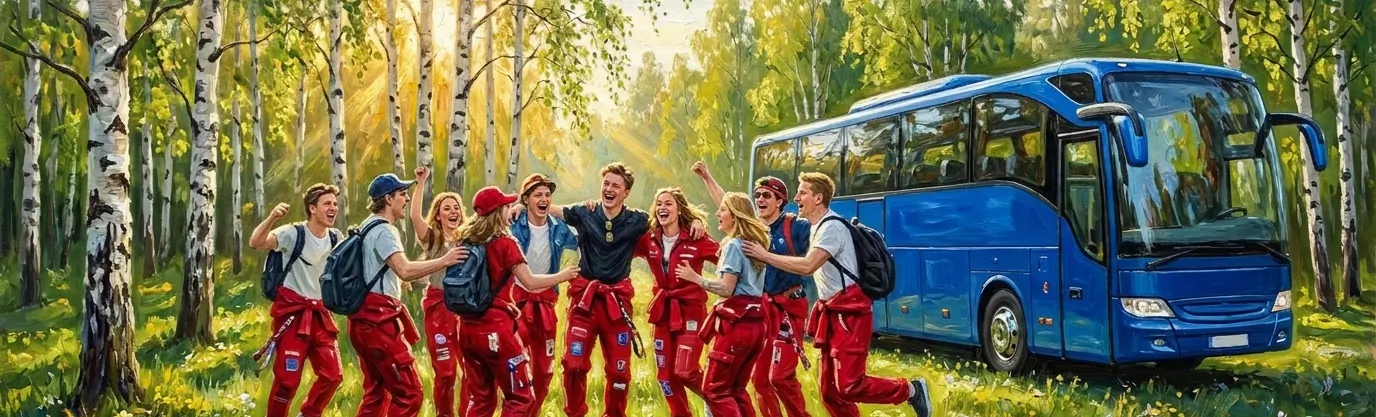
19.When do Norwegian high school seniors hold their month-long Russ bus celebrations?
Correct Answer: D. Right before final exams
Explanation: In almost every country on Earth, high school seniors study hard for their final graduation exams first, and then party afterward. Norway does the exact opposite with Russefeiring—a wild, month-long graduation festival that runs from mid-April until Norway's Constitution Day on May 17, right before students sit down for their make-or-break final exams!
Dating back to 1700s Norwegian students traveling to Copenhagen University (where freshmen had to wear mock horns until passing an exam), modern Russ seniors pull on color-coded baggy overalls—red for general academic studies, blue for business, and black for vocational trades—that they refuse to wash for an entire month.
Groups of friends pool years of part-time job savings (often spending over $100,000 per bus) to buy and convert full-sized tour buses into rolling nightclubs with concert-grade sound systems, trading personalized humorous calling cards (russekort) with local kids before staggering into their exam halls in late May!
20.What surprising amenity do inmates use inside Norway's ultra-rehabilitative Halden Prison?
Correct Answer: B. Music studio and chef kitchen
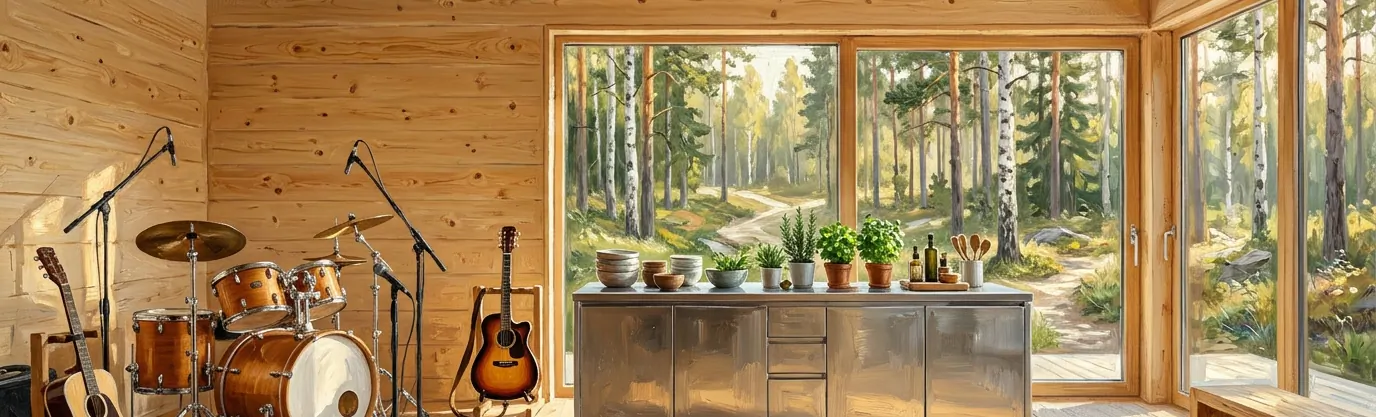
Explanation: Opened in 2010 in Østfold, maximum-security Halden Prison has been dubbed "the world's most humane prison" by international journalists. Instead of iron bars, razor wire, and concrete cages, Halden is set inside a tranquil 75-acre blueberry and birch forest where every room has unbarred floor-to-ceiling windows, a flat-screen TV, a mini-fridge, and a private en-suite bathroom.
Operating under the Norwegian Correctional Service's "Principle of Normality"—which holds that the punishment is the loss of liberty itself, and life inside should resemble the outside world as closely as possible so prisoners return as good neighbors—inmates take culinary classes using sharp steel knives in chef kitchens, record albums in a professional studio named "Criminal Records," and work in woodworking and graphic design shops.
While critics initially scoffed at the Scandinavian approach, the results stunned criminologists worldwide: after reforming its prison system in the 1990s, Norway's two-year recidivism (re-offending) rate dropped to roughly 20%—one of the lowest on Earth!
21.What ancient treasures have glacial archaeologists uncovered melting out near Norway's highest peak?
Correct Answer: A. Iron Age skis and arrows
Explanation: Surrounding Galdhøpiggen—Norway's and Northern Europe's highest mountain peak at 2,469 meters (8,100 feet) in the Jotunheimen ("Home of the Giants") range—lie ancient high-altitude ice patches that have remained frozen solid for thousands of years.
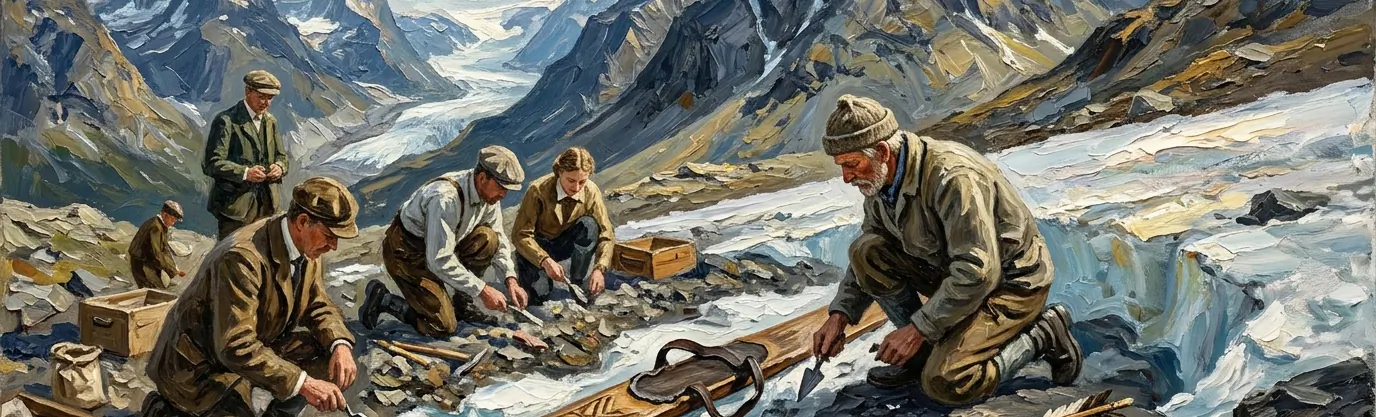
As warming summers cause these mountain ice patches to retreat, a specialized team of Norwegian glacial archaeologists known as "Secrets of the Ice" has recovered more than 4,000 pristine artifacts frozen in time like a prehistoric deep-freezer!
Because ancient reindeer herds climbed onto the summer ice patches to escape biting flies, Stone Age, Bronze Age, Iron Age, and Viking hunters followed them up the mountains—leaving behind 6,000-year-old feathered hunting arrows, a 1,700-year-old wool tunic, Viking horseshoes, leather shoes, and at Digervarden, the world's best-preserved pair of 1,300-year-old wooden skis complete with intact leather and birch bindings!
22.For roughly how long does the sun never set in Tromsø's summer?
Correct Answer: D. Over two months
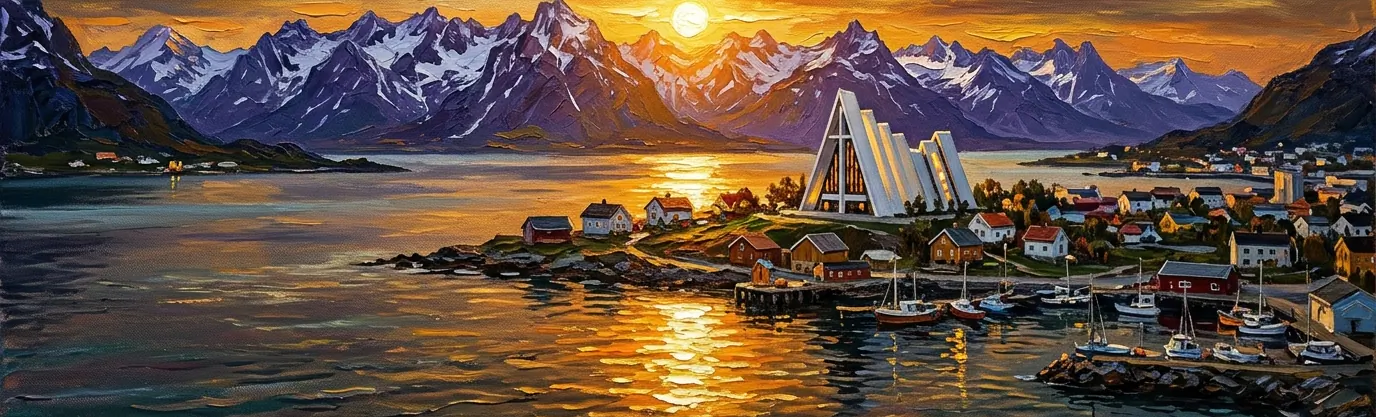
Explanation: Located 350 kilometers (217 miles) north of the Arctic Circle in northern Norway, the vibrant island city of Tromsø—known as the "Gateway to the Arctic"—experiences one of Earth's most dramatic seasonal light cycles due to our planet's 23.4-degree axial tilt.
Every year from approximately May 18 to July 25—a continuous stretch of over two months (about 70 days)—the sun never dips below the horizon in Tromsø! At 12:00 AM midnight, the golden orb simply skims along the northern mountain peaks and begins rising again, fueling midnight marathons, 2:00 AM rounds of golf, and late-night fjord kayaking.
In winter, the cosmic pendulum swings to the opposite extreme: from late November to mid-January, the sun stays below the horizon for the Polar Night (Mørketid), bathing the snowy city in magical blue twilight and dancing green curtains of the Aurora Borealis.
23.What natural force creates ten-meter-wide whirlpools every six hours at Norway's Saltstraumen?
Correct Answer: C. Four hundred million tons of tide
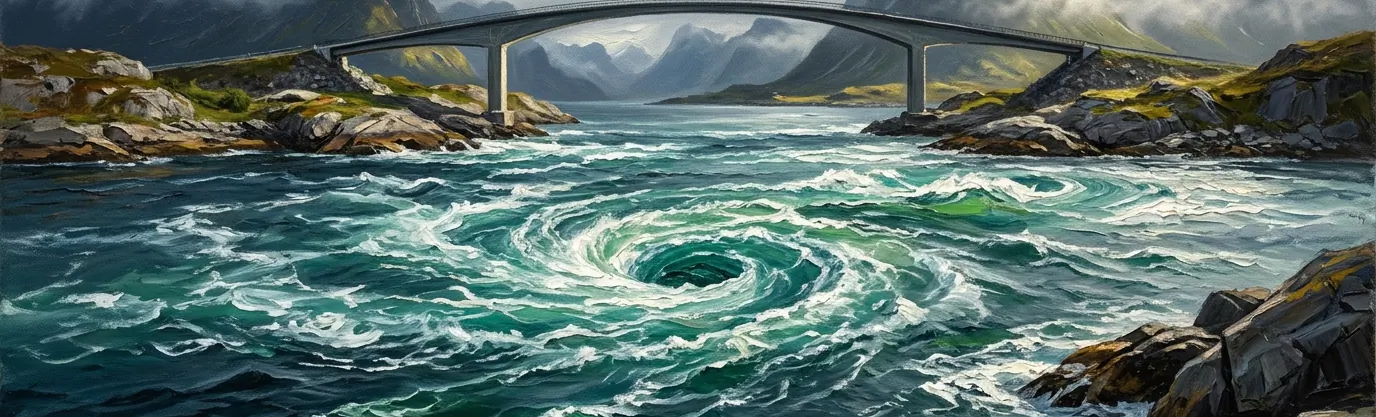
Explanation: Just thirty kilometers east of the Arctic coastal city of Bodø, a narrow 150-meter-wide, 3-kilometer-long strait connects the outer Saltfjorden with the vast inner Skjerstadfjord—forming Saltstraumen, the strongest tidal current (maelstrom) on Planet Earth!
Every six hours as the ocean tide rises and falls, more than 400 million cubic meters (400 million metric tons) of seawater try to squeeze simultaneously through that 150-meter bottleneck at speeds reaching 20 knots (37 km/h or 23 mph).
The resulting collision of water spins up terrifying, roaring whirlpool vortices (kjeler or "cauldrons") measuring up to 10 meters (33 feet) across and plunging 5 meters (16 feet) deep into the foaming water—a real-life counterpart to the legendary Norwegian maelstroms immortalized by Edgar Allan Poe and Jules Verne!
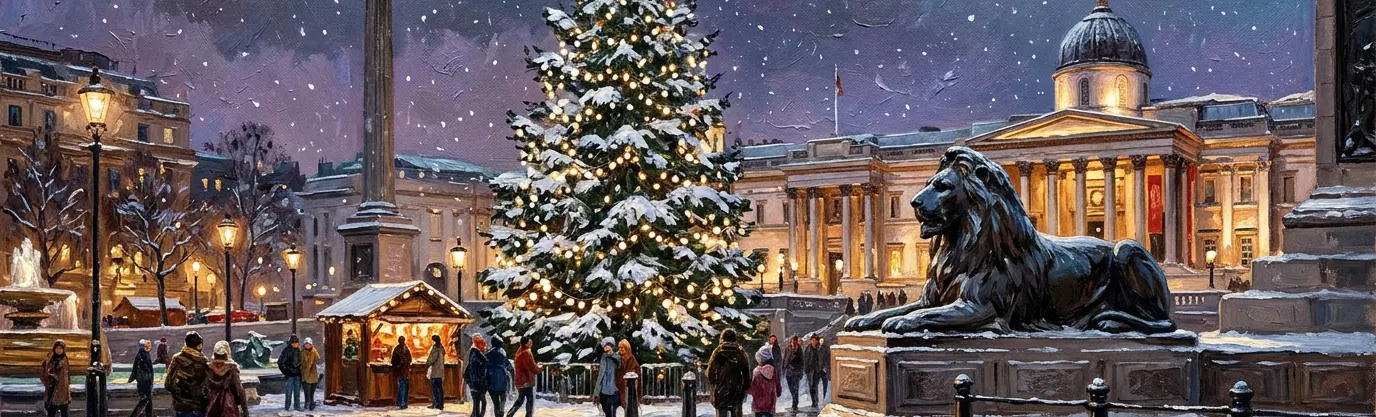
24.Why has Oslo gifted London a giant spruce tree every December since 1947?
Correct Answer: B. World War II gratitude
Explanation: When Nazi Germany invaded neutral Norway in April 1940, King Haakon VII and the democratically elected Norwegian cabinet refused to surrender—escaping to London, where Britain hosted Norway's government-in-exile for five years, broadcast coded BBC resistance news into occupied Norway, and launched joint commando raids.
During the war, Norwegian commandos even slipped across the North Sea in secret to fell a Norwegian forest Christmas tree and deliver it to King Haakon VII in London so the exiled monarch could smell his homeland during the holidays.
In 1947, two years after liberation, the city of Oslo inaugurated an enduring annual tradition of gratitude: every November, Oslo's mayor and the British ambassador venture into the Nordmarka forest outside Oslo to fell a 50-to-60-year-old, 20-meter-tall Norwegian spruce ("the Queen of the Forest") and ship it across the North Sea to stand illuminated in London's Trafalgar Square!
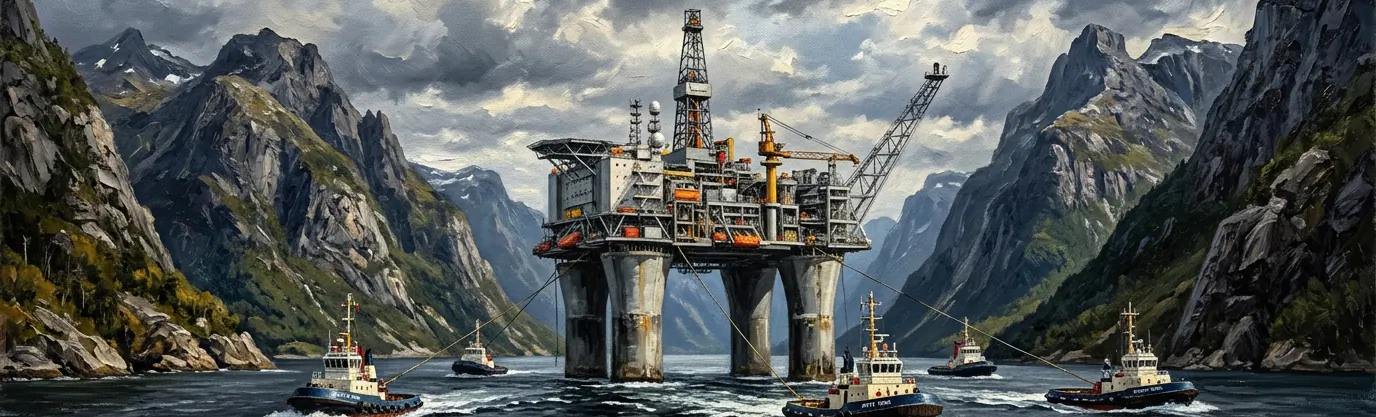
25.What world record does Norway's 472-meter concrete Troll A offshore platform hold?
Correct Answer: A. Tallest structure ever moved
Explanation: Standing in the Troll gas field off the western coast of Norway, the Troll A offshore natural gas platform is one of the most staggering feats of civil engineering in human history. Built from 245,000 cubic meters of slip-formed reinforced concrete and 100,000 tons of steel inside the deep Vatsfjord, the structure stands 472 meters (1,549 feet) tall—taller than the Empire State Building and the Eiffel Tower—and weighs 683,600 metric tons (1.2 million tons with ballast)!
In May 1996, ten massive ocean tugboats hooked steel towlines to the floating concrete colossus and towed it 200 kilometers out into the North Sea over seven days before sinking its four hollow concrete legs 36 meters deep into the seabed clay at a water depth of 303 meters.
That epic voyage earned Troll A the Guinness World Record for both the tallest and the heaviest man-made structure ever moved to another position on the surface of the Earth—and its continuous slip-formed concrete legs are engineered to stand in North Sea storms for at least 70 years!
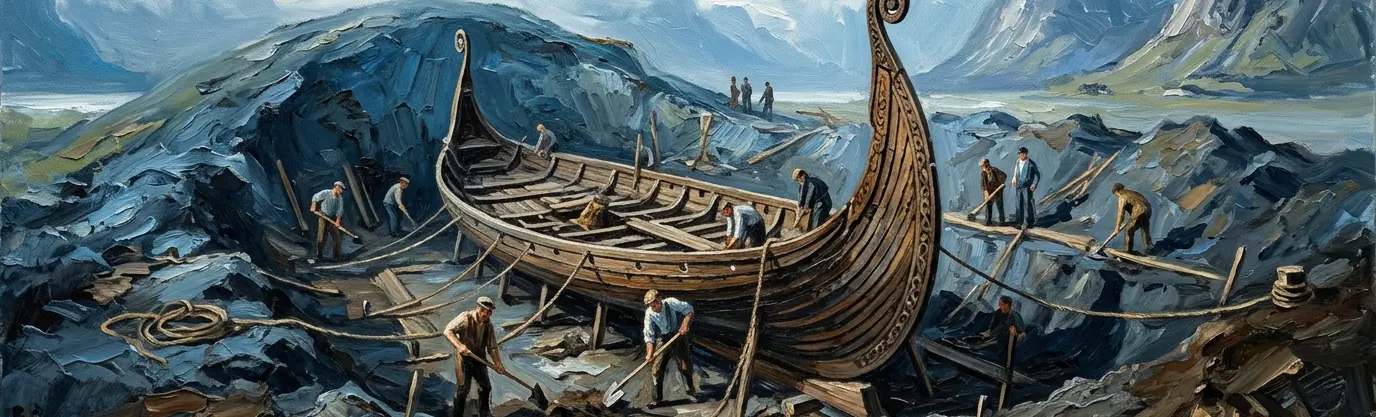
26.What soil preserved Norway's ninth-century Oseberg Viking ship almost intact underground?
Correct Answer: D. Airtight blue clay
Explanation: In August 1903, a farmer digging into a large burial mound on the Oseberg farm near Tønsberg on the western shore of Oslofjord struck carved oak wood. When archaeologist Gabriel Gustafson excavated the site in 1904, he uncovered the Oseberg Ship—a breathtaking 21.5-meter clinker-built Viking longship crafted in 820 AD and buried in 834 AD as the royal tomb of two high-ranking Viking women.
Ordinarily, wooden ships buried in damp northern European soil rot away into nothingness within a century, leaving behind only rusty iron rivets (as happened at Britain's Sutton Hoo).
At Oseberg (and nearby Gokstad), however, the Viking mourners buried the oak vessel inside a valley floor of dense, wet marine "blue clay" (blåleire) and piled turf sods on top! That airtight blue clay completely sealed out oxygen and wood-eating fungi for more than 1,000 years—preserving over 90% of the ship's original oak timbers and intricate dragon-and-serpent carvings!
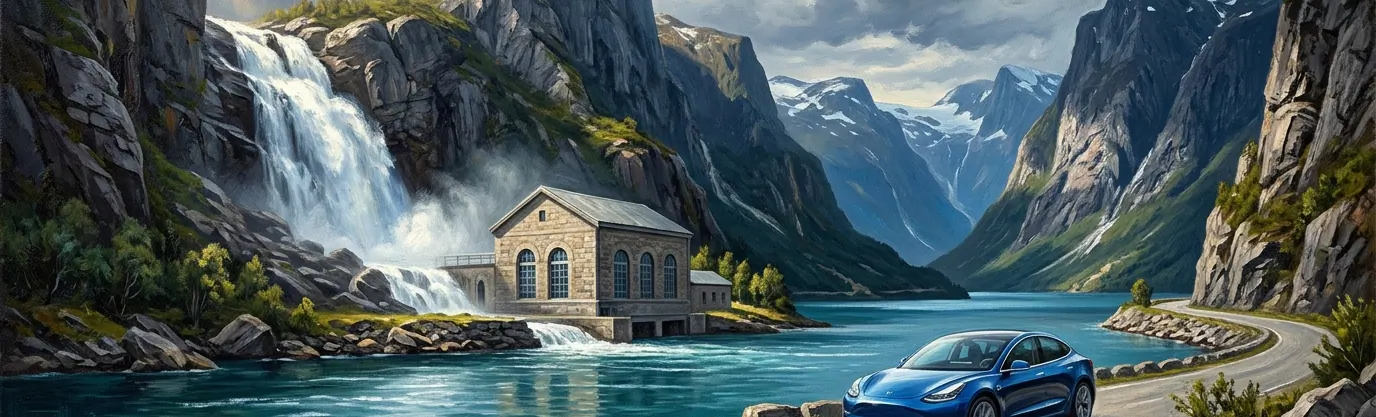
27.What renewable source generates over ninety percent of Norway's domestic electricity?
Correct Answer: C. Mountain waterfall hydropower
Explanation: Here is one of the great paradoxes of modern energy: even though Norway is Western Europe's largest exporter of offshore crude oil and natural gas, almost none of that fossil fuel is burned to power homes, factories, or cars inside Norway itself!
Thanks to Norway's steep mountain plateaus, heavy Atlantic precipitation, melting glaciers, and more than 1,700 high-altitude reservoirs and hydroelectric power stations, cascading mountain water (hydropower) generates between 90% and 96% of all electricity produced in Norway—with wind power supplying nearly all the rest.
Armed with abundant, 98%-renewable hydroelectricity, Norway launched generous tax incentives in the 1990s to electrify its roads: today, roughly 90% of all new passenger cars sold in Norway are fully battery-electric vehicles (EVs), giving Oslo and Bergen the cleanest urban air and highest EV concentration of any nation on Earth!
28.What geological surprise rises atop Norway's remote Arctic island of Jan Mayen?
Correct Answer: B. Earth's northernmost active volcano
Explanation: When most people think of Norway's geology, they picture ancient, solid granite mountains and stable glacial fjords—leaving active volcanoes to neighboring Iceland. Yet 550 kilometers northeast of Iceland in the freezing Norwegian Sea lies the spoon-shaped Arctic territory of Jan Mayen, home to only 18 meteorological and military staff.
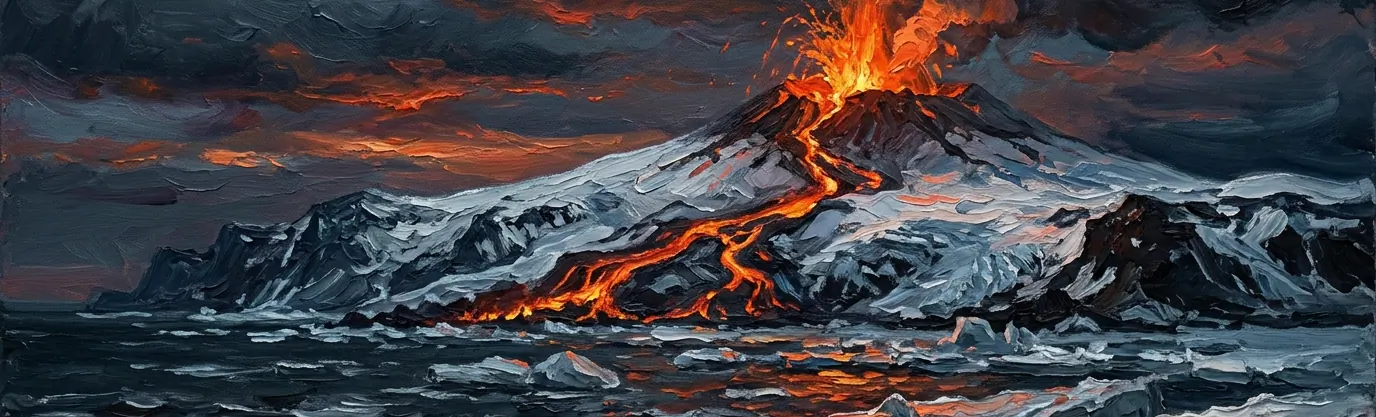
Dominating the northern half of Jan Mayen is the majestic, glacier-wrapped cone of Beerenberg ("Bear Mountain", named by seventeenth-century Dutch whalers after polar bears seen on its slopes), soaring 2,277 meters (7,470 feet) straight out of the Arctic Ocean.
Sitting atop the Mid-Atlantic Ridge, Beerenberg is officially the world's northernmost active subaerial (above-water) volcano! Thought to be extinct for over a century, Beerenberg shocked geologists by roaring back to life in September 1970 and again in January 1985—pouring rivers of red-hot basalt lava through its icy glaciers into the steaming Arctic sea.
29.Why did Norwegians secretly wear paperclips on their jacket lapels during World War II?
Correct Answer: A. Symbol of anti-Nazi unity
Explanation: In 1899, Norwegian mathematician and inventor Johan Vaaler received a German patent (and in 1901 a U.S. patent) for a square-looped spring-steel wire paper fastener. Although Britain's Gem Manufacturing Company had already produced the classic double-oval Gem paperclip earlier, Norwegians proudly embraced Vaaler as the father of the paperclip (binders).
When Nazi Germany occupied Norway in 1940 and installed Vidkun Quisling's collaborationist regime, citizens were strictly forbidden from wearing buttons, ribbons, or badges displaying King Haakon VII's monogram or the national colors.
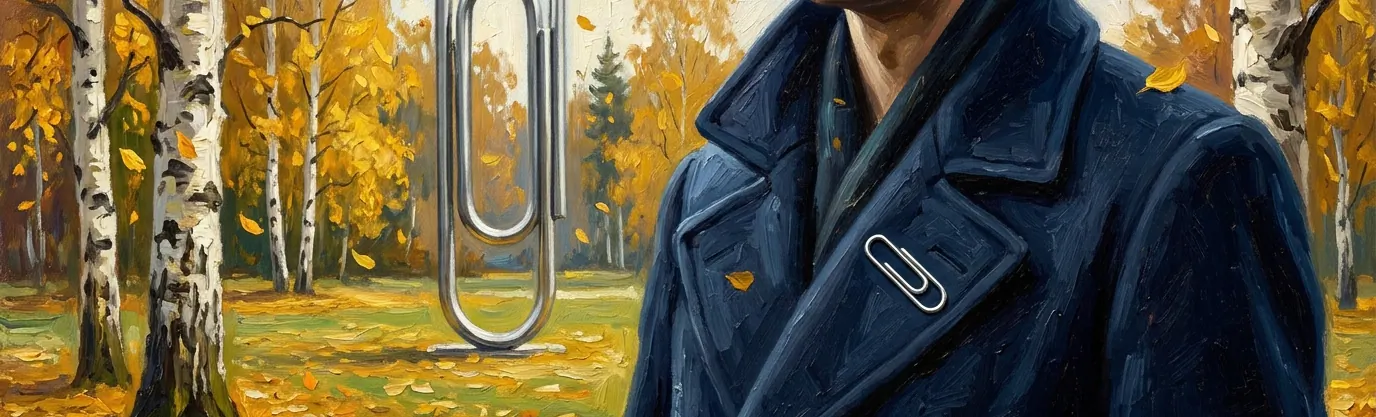
In response, students at Oslo University began pinning ordinary metal paperclips onto their jacket lapels! Because the Norwegian word for paperclip (binders) literally means "something that binds together," wearing a humble office paperclip served as a brilliant, silent badge of solidarity ("we are bound together against the occupiers")—until Nazi authorities caught on and made wearing a paperclip in public a criminal offense punishable by arrest!
30.How high above Lysefjord does Norway's wedged Kjeragbolten boulder hang suspended?
Correct Answer: C. Nearly one thousand meters
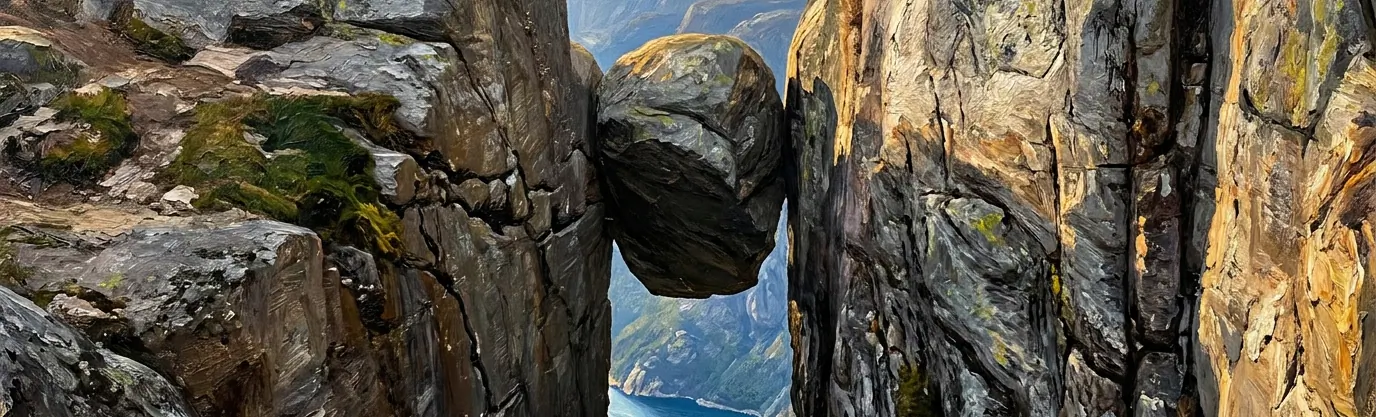
Explanation: High atop Kjerag mountain along the southern shore of southwestern Norway's dramatic Lysefjord sits Kjeragbolten—a five-cubic-meter rounded glacial boulder wedged like a giant pebble between two vertical granite cliff walls.
Left behind around 10,000 years ago when the melting Ice Age glacier retreated out of the fjord, the boulder became wedged in a narrow mountain crevasse directly above a sheer, uninterrupted vertical drop of 984 meters (3,228 feet) down to the blue waters of Lysefjord below!
Despite looking like one strong sneeze could send it plummeting nearly a full kilometer into the fjord, the boulder is locked firmly between the converging granite walls—allowing fearless hikers from around the world to step right onto the narrow rock top without a harness for Norway's most stomach-dropping photograph.
31.Which Nobel Prize is awarded in Oslo, Norway, rather than Stockholm, Sweden?
Correct Answer: B. Peace
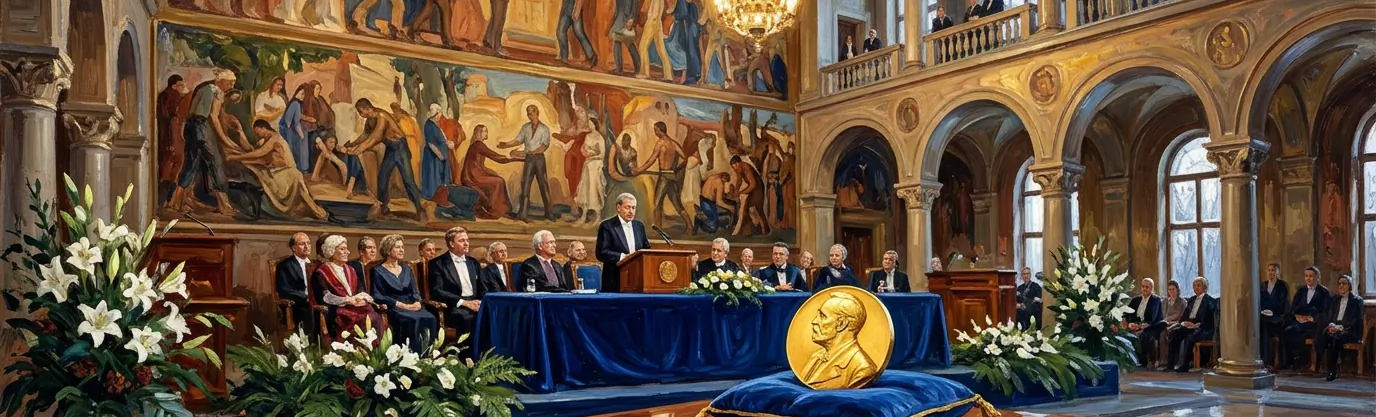
Explanation: Every December 10—the anniversary of Swedish dynamite inventor Alfred Nobel's death in 1896—the Nobel Prizes in Physics, Chemistry, Physiology or Medicine, and Literature are presented by the King of Sweden at the Stockholm Concert Hall. Yet the Nobel Peace Prize is presented on the exact same day in a separate ceremony 400 kilometers away at Oslo City Hall in Norway!
Why did a Swedish industrialist hand his most famous prize to Norway? In 1895, when Alfred Nobel wrote his last will and testament in Paris, Norway and Sweden were still joined in a personal union under a single monarch, though Norway had its own parliament (the Storting).
Historians point out that while Sweden had a long tradition of military power Politics, Norway's Storting was in the 1890s the first parliament in the world to actively champion international arbitration and peace movements—leading Nobel to stipulate in his will that a five-member committee appointed by the Norwegian Storting should forever select and award the Champions of Peace!