
Herbs Trivia: 36 Bizarre Royal Curses, Screaming Roots & Wild Kitchen Secrets
Skip dry botany textbooks—explore 36 outrageous plant superstitions, ancient remedies, and verified herbal misadventures that actually happened.

1.Why did medieval herbalists tie hungry dogs to deadly mandrake roots?
Correct Answer: B. To absorb demonic screams
Explanation: Ancient and medieval herbalists believed that when a mandrake root was yanked from the dirt, it unleashed a piercing, demonic scream capable of instantly killing or driving insane anyone within earshot.
To dodge sudden death, clever harvesters tied a rope from a hungry hound to the root, stood well back while blowing loud trumpets, and tossed a juicy chunk of roasted meat just out of the canine's reach.
The famished dog lunged forward, ripped the screaming root from the earth, and immediately succumbed to the plant's dark curse—leaving the relieved herbalist safely in possession of the prized magical talisman.
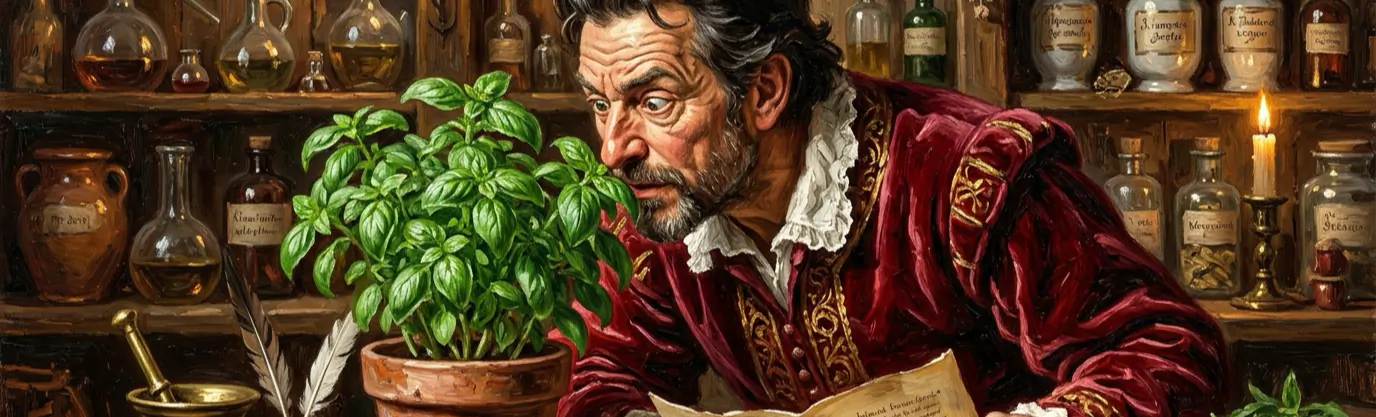
2.What creepy menace did 16th-century doctors warn that sniffing basil bred inside human brains?
Correct Answer: C. Deadly scorpions
Explanation: During the Renaissance, several prominent European physicians and botanists gravely warned patients that inhaling the scent of fresh sweet basil would cause scorpions to spontaneously spawn in the human brain.
The rumor gained serious medical traction when 16th-century herbalist John Gerard recorded tales of an Italian gentleman who supposedly died after sniffing fresh basil, only to have a nest of scorpions discovered inside his cranium upon autopsy.
Modern culinary fans can breathe a huge sigh of relief knowing that pesto only breeds deep satisfaction, not brain-dwelling arachnids.

3.How did prickly wild thistles famously save Scotland from a midnight Viking invasion?
Correct Answer: A. Barefoot warriors stepped on them
Explanation: According to legendary Scottish history, an invading Norse army attempted to sneak up on a slumbering encampment of Scots under the shroud of darkness at the Battle of Largs in 1263.
To move with total stealth across the moonlit field, the Norse command ordered all warriors to strip off their heavy leather boots and advance completely barefoot.
Unfortunately for the invaders, they marched directly into a dense patch of jagged Scottish thistles, provoking howling shrieks of agony that instantly alerted the Scots, who routed the barefoot raiders. Scotland adopted the thistle as its proud national emblem shortly thereafter.
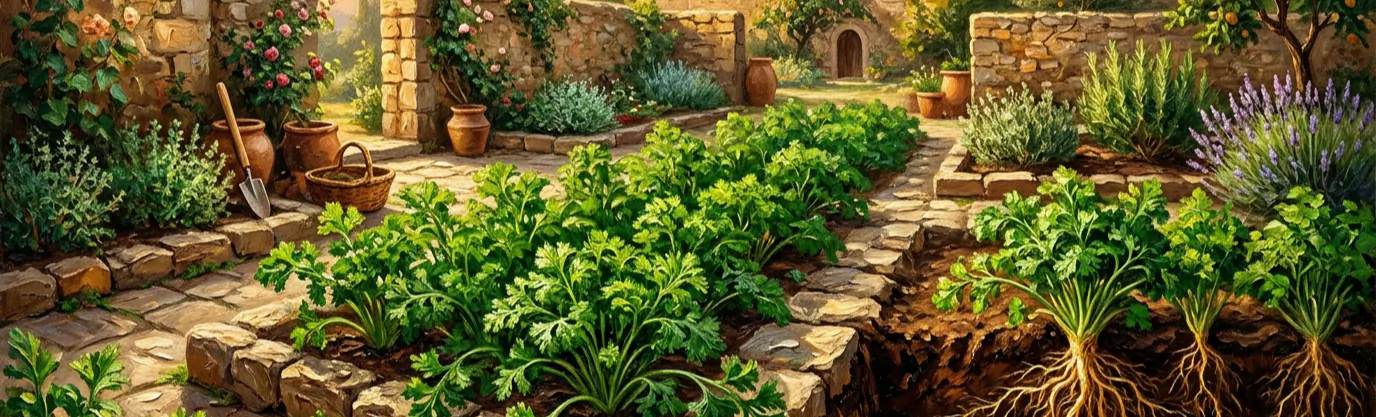
4.According to medieval European superstition, where does parsley seed journey before finally sprouting?
Correct Answer: D. To Hell and back
Explanation: Gardeners know that parsley is notoriously slow to germinate, often taking between three to four agonizingly quiet weeks to show its first tender green shoots.
Medieval English folklore had a chilling explanation for this stubborn delay: parsley seed supposedly had to travel to Hell and back seven times—with the devil taking his personal tithe of seedlings—before it was permitted to sprout.
Because of this sinister association, transplanting established parsley was considered terrible luck, as folks feared offending underworld spirits who kept watch over the stubborn garnish.
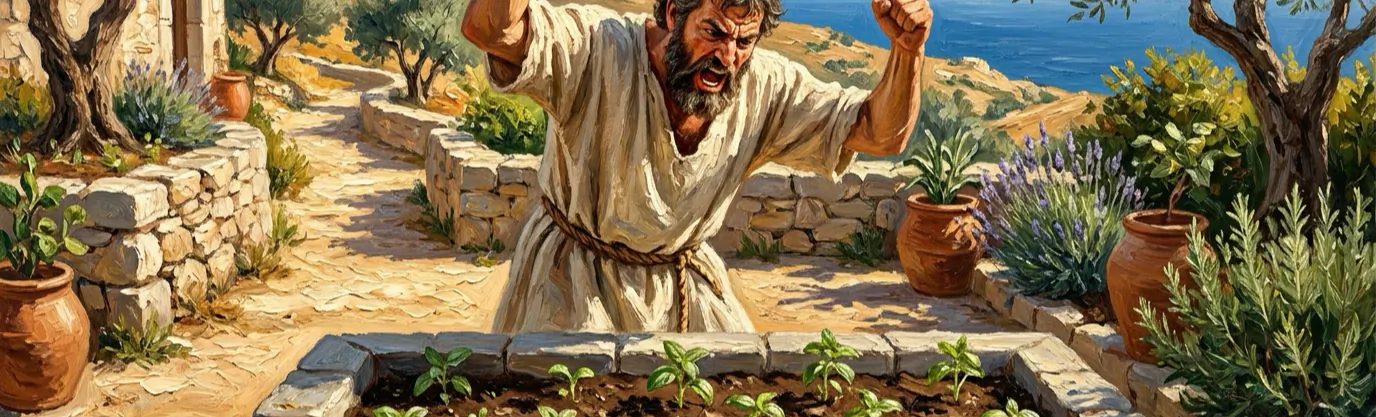
5.What bizarre ritual did ancient Greeks believe was necessary to make basil grow properly?
Correct Answer: A. Screaming curses and insults
Explanation: While modern gardeners play classical music and whisper kind encouragements to house plants, ancient Greeks and Romans took the opposite approach with basil, hurling ferocious obscenities at the seedbeds.
Classical botanists believed basil was intimately linked with hatred, misfortune, and the mythical basilisk, teaching that seeds would only germinate if gardeners shouted furious curses and pounded the soil in simulated rage.
The French even coined the phrase 'semer le basilic' (to sow basil), meaning to stir up unprovoked strife, before Italian cuisine redeemed the herb as the king of romantic sauces.

6.Why did scholars in ancient Greece wear fragrant rosemary garlands during difficult examinations?
Correct Answer: B. To boost memory recall
Explanation: Long before late-night study sessions and energy drinks, ancient Greek students braided fresh sprigs of aromatic rosemary into elaborate wreaths and wore them on their heads while cramming for exams.
Greek philosophy and medicine revered rosemary as the ultimate herb of memory and mental clarity, believing its pungent volatile terpenes helped uncloud the intellect and sharpen intellectual recall.
Centuries later, Shakespeare immortalized the exact same ancient belief in Hamlet, when Ophelia famously remarks that rosemary is for remembrance.
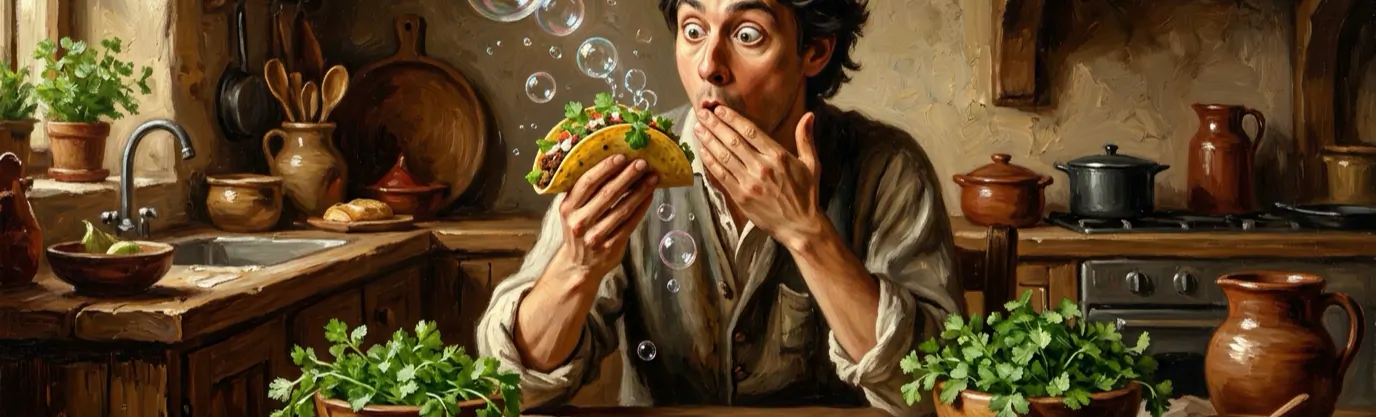
7.Which specific gene makes cilantro taste like harsh laundry soap to millions of people?
Correct Answer: C. OR6A2
Explanation: If a bite of fresh salsa tastes like a squirt of dishwashing liquid, science proves you are not being a fussy eater—you are experiencing a genuine genetic mutation.
Scientists have linked cilantro aversion to the OR6A2 olfactory receptor gene, which encodes specialized sensors in the nose that pick up tiny aldehyde chemicals shared by both cilantro and bath soaps.
Roughly 4 to 14 percent of the global population carries this specific genetic tweak, turning what others describe as citrusy delight into an overwhelming mouthful of laundry bubbles.

8.Why did medieval European noblewomen embroider sprigs of thyme onto scarves for marching knights?
Correct Answer: D. To bestow bravery in combat
Explanation: In the age of chivalry, ladies frequently presented departing crusaders with silk scarves and tunics embroidered with a delicate motif of a bee hovering over a sprig of wild thyme.
The ancient Greek word for thyme, 'thymos', translates directly to courage, spiritedness, and valor, making the hardy herb the universal military symbol of unshakeable bravery.
Before charging into brutal combat, knights pinned these aromatic tokens directly over their chest armor, believing the herb would banish cowardice and steady racing heartbeats.

9.What does the Latin root of the culinary herb sage, salvare, literally mean?
Correct Answer: B. To heal or save
Explanation: The common culinary herb sage takes its botanical name, 'Salvia', directly from the Latin verb 'salvare', which translates literally as 'to heal', 'to cure', or 'to save'.
Ancient Romans and medieval monks viewed sage as practically a panacea, coining the famous proverb: 'Why should a man die while sage grows in his garden?'
From purifying contaminated drinking wells to packing deep flesh wounds on battlefields, sage was revered for millennia as humanity's ultimate herbal savior before finding its modern home in holiday turkey stuffing.
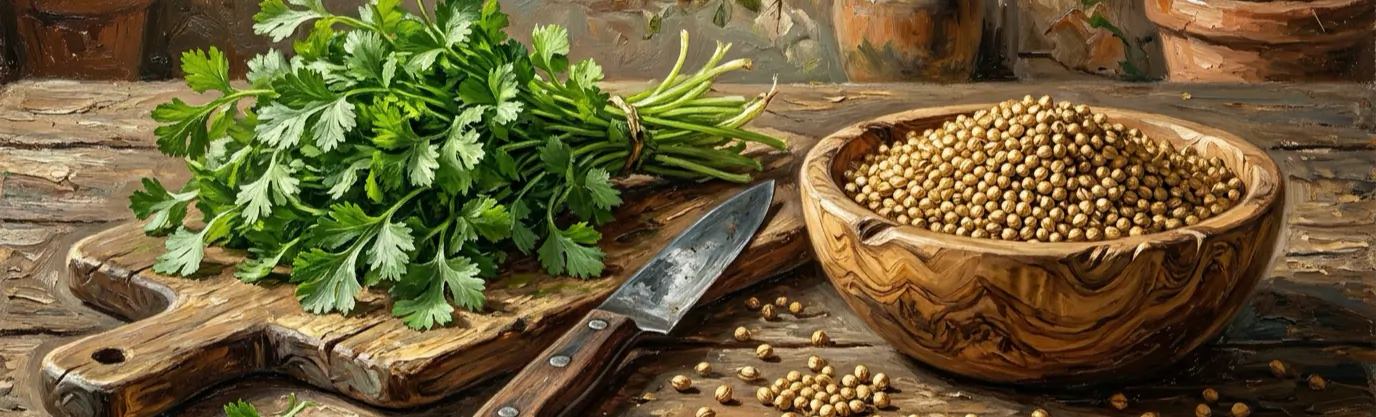
10.Which part of the coriander plant provides the common culinary herb known as cilantro?
Correct Answer: A. Fresh leafy green stems
Explanation: Cilantro and coriander might sound like completely separate kitchen seasonings, but both staples are harvested from the very same botanical plant, Coriandrum sativum.
In North American culinary terminology, 'cilantro' refers exclusively to the delicate, citrusy green leaves and tender stalks, while 'coriander' designates the earthy, nutty dried seeds.
Meanwhile, in the United Kingdom, India, and Australia, the entire leafy green plant is simply referred to as fresh coriander, while the seeds are called coriander seeds.

11.What sparked history's first recorded labor strike among ancient Egyptian pyramid construction workers?
Correct Answer: D. Cut garlic and onion rations
Explanation: Around 1170 BCE during the reign of Pharaoh Ramesses III, royal tomb builders at the royal necropolis of Deir el-Medina staged history's first documented labor walkout.
A primary cause of the historic rebellion was the royal treasury's failure to deliver the workers' daily rations of garlic, radishes, and onions, which laborers relied on for vital endurance and immunity in the blistering desert heat.
The furious stonemasons laid down their bronze chisels and marched on local temples until officials acknowledged their demands and restored their daily herbal rations in full.

12.According to Christian folklore, what transformed white rosemary blossoms into delicate sky-blue petals?
Correct Answer: C. The Virgin Mary's blue cloak
Explanation: Long-standing Mediterranean folklore tells that rosemary originally bloomed with plain, snowy-white flowers throughout the ancient world.
During the Holy Family's perilous flight into Egypt to escape King Herod, Mary rested against a blooming rosemary bush and draped her vivid blue traveler's cloak across its evergreen branches.
By the next morning, the blossoms had permanently turned sky-blue in honor of the Madonna, earning the plant its poetic title 'Rose of Mary', which evolved into modern rosemary.

13.What chemical compound inside catnip triggers euphoric rolling and drooling in household cats?
Correct Answer: B. Nepetalactone
Explanation: When a domestic cat sniffs fresh catnip (Nepeta cataria), a specialized volatile oil called nepetalactone binds to olfactory receptors in the feline nasal tissue.
This triggers an intense sensory reaction in the amygdala and hypothalamus, simulating feline sexual pheromones and prompting about 70 percent of cats to roll, rub their chins, purr frantically, and drool with sheer delight.
Oddly enough, lions and leopards also go wild for catnip, whereas tigers are largely immune to the intoxicating herbal compound.

14.Why were Roman gladiators fed hearty meals seasoned with aromatic wild fennel seeds?
Correct Answer: A. To inspire indomitable combat courage
Explanation: In ancient Rome, wild fennel was regarded as the herb of champions, strength, and indomitable courage across amphitheaters.
Gladiator trainers systematically mixed generous handfuls of wild fennel seeds into the barley porridge of their fighters before high-stakes arena bouts, believing it hardened the muscles and bolstered fearless resolve.
Victor-gladiators who survived brutal arena duels were often rewarded with woven wreaths of wild fennel crowns alongside silver purses and wooden swords of emancipation.

15.What sinister purpose did the legendary herbal concoction Four Thieves Vinegar originally serve?
Correct Answer: D. Robbing plague corpses safely
Explanation: During devastating waves of the Black Death across medieval France, an infamous band of thieves ransacked the homes and bodies of plague victims without ever falling sick themselves.
When captured, the thieves escaped the gallows by confessing their secret recipe: a potent vinegar tonic infused with wormwood, rosemary, sage, mint, and crushed garlic that they rubbed over their skin.
Modern research suggests the pungent herbal blend acted as a powerful natural repellent against the Xenopsylla cheopis fleas that actually spread the deadly Yersinia pestis bacteria.

16.In Greek mythology, which underworld queen trampled the river nymph Minthe into aromatic mint?
Correct Answer: C. Persephone
Explanation: According to classical Greek myth, Minthe was a dazzling river naiad who caught the romantic attention of Hades, the dark ruler of the underworld.
When Hades's fiery queen Persephone discovered the illicit subterranean tryst, she flew into a jealous rage, tackled the hapless nymph, and violently stomped her into the ground beneath her sandals.
Hades, unable to undo the queen's wrath, transformed the crushed nymph into sweet garden mint so that every time people walked upon her leaves, she would release an enchanting, sweet perfume.

17.What shocking secret message did sending someone sweet basil convey in Victorian flower language?
Correct Answer: B. Intense hatred and contempt
Explanation: In 19th-century Victorian England, society obsessed over 'floriography', the coded language of flowers and herbs used to discreetly send emotional signals without speaking aloud.
While roses signified romantic love and rosemary spoke of devoted remembrance, sending someone a bundle of fresh sweet basil was an unvarnished declaration of bitter hatred and visceral contempt.
Recipients who opened an envelope or delivery box filled with dark green basil leaves knew immediately that the sender despised them with utter venom.
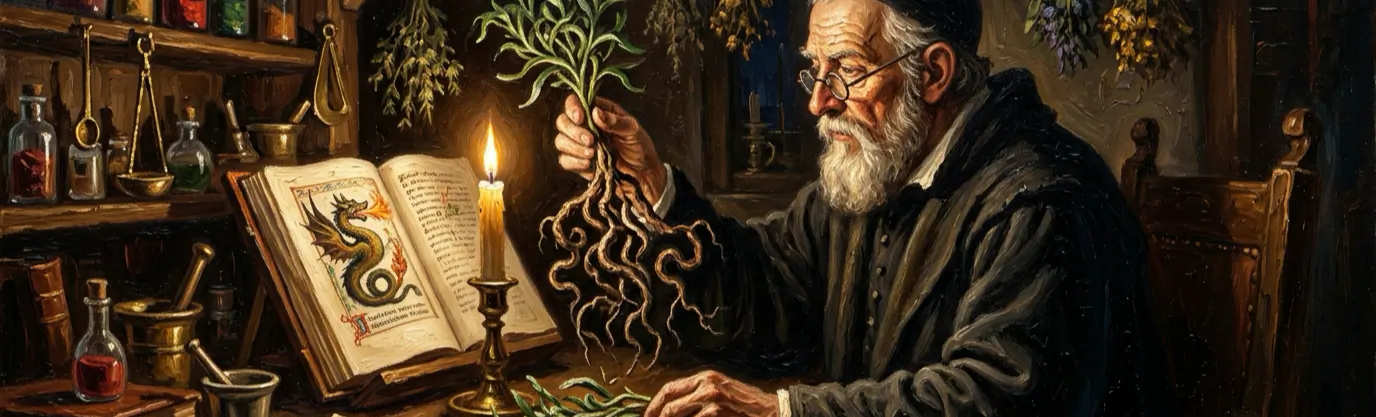
18.Why did ancient botanists name French tarragon with a word meaning little dragon?
Correct Answer: A. Its roots resemble coiling serpents
Explanation: The common culinary herb tarragon carries the formal scientific name Artemisia dracunculus, which translates from Latin and Arabic as 'little dragon'.
Ancient and medieval herbalists observed that the plant's tangled underground root system twisted and coiled precisely like a miniature, writhing mythological dragon.
Under the prevailing Doctrine of Signatures, folk doctors claimed that any plant with serpent-like roots was nature's designated cure for bites from venomous vipers, mad dogs, and mythical sea monsters.

19.What modern academic honor derives directly from ancient Roman bay laurel leaf crowns?
Correct Answer: D. Baccalaureate degrees
Explanation: In ancient Greece and Rome, crowns woven from fragrant bay laurel leaves (Laurus nobilis) were bestowed upon conquering emperors, Olympic athletes, and celebrated poets as supreme symbols of triumph.
The word 'baccalaureate' (as in a bachelor's degree) originates from the Latin terms 'bacca' (berry) and 'laureatus' (crowned with laurel), symbolizing academic achievement.
Similarly, the modern word 'poet laureate' preserves the exact classical Roman tradition of crowning cultural champions with evergreen bay leaves.

20.Why did medieval European farmers hang dense bunches of dried chives across kitchen rafters?
Correct Answer: C. To ward off wicked witches
Explanation: Centuries ago, European farm cottages routinely featured massive purple bouquets of dried flowering chives hanging suspended from ceiling beams and doorway lintels.
Rural folk superstition held that the sharp, sulfurous aroma of the allium family would baffle wandering evil spirits, repel blood-sucking vampires, and prevent wicked witches from casting hexes on farm animals.
On a purely practical level, the pungent dried chives also successfully repelled beetles, moths, and grain weevils from infesting the family's winter grain stores.

21.Why did ancient Greeks and Romans plant fragrant sweet marjoram upon cemetery graves?
Correct Answer: B. To ensure peaceful eternal sleep
Explanation: To the ancient Greeks, sweet marjoram was the revered 'joy of the mountains', said to have been created and scented directly by Aphrodite, the goddess of love and beauty.
Whenever a beloved relative passed away, mourners immediately sowed sweet marjoram upon the burial plot, firmly believing that if the herb thrived, the soul of the departed was resting in serene, blissful peace.
Conversely, if the marjoram withered or failed to take root, families worried that the deceased was enduring a restless, troubled afterlife in the underworld.

22.What does the Greek word origin of the pizza herb oregano literally translate to?
Correct Answer: A. Joy of the mountain
Explanation: The word 'oregano' traces its etymological lineage back to classical Greek roots: 'oros', meaning mountain or hill, and 'ganos', meaning joy, brightness, or delight.
Ancient Mediterranean travelers marveled at the sight of rolling rocky hillsides blanketed with carpets of flowering wild oregano, shimmering under the sun and perfume-scenting the breezy hillside air.
While modern diners celebrate oregano as an essential herb on cheesy Neapolitan pizza, the Greeks originally used the 'mountain joy' to crown newlyweds with wreaths of marital bliss.

23.How did ancient Southeast Asian warriors use stalks of aromatic lemongrass before battle?
Correct Answer: D. Polished swords against rust
Explanation: In ancient Thailand, Cambodia, and the Malay Archipelago, soldiers and bladesmiths relied on fresh stalks of lemongrass (Cymbopogon) to polish and preserve steel and iron swords.
The fragrant natural oils in lemongrass provided an invisible protective barrier that shielded heavy swords, spears, and kris daggers from catastrophic jungle humidity and rust during rainy campaigns.
As a marvelous bonus, rubbing lemongrass along their weapons and uniforms cloaked warriors in a strong citronella scent that repelled swarms of jungle mosquitoes during swamp patrols.

24.Which everyday activity gives the fragrant herb lavender its Latin botanical root word?
Correct Answer: C. Washing and bathing
Explanation: The word 'lavender' derives from the Latin verb 'lavare', which translates directly as 'to wash'.
Wealthy citizens of the Roman Empire poured generous quantities of crushed lavender leaves and oils into public thermas and luxurious marble bathhouses, valuing both its soothing floral perfume and natural antimicrobial properties.
During the Middle Ages, washerwomen who did laundry in lavender-infused streams were known as 'lavenders', and clean linens were dried directly on wild lavender bushes to maintain a fresh scent.
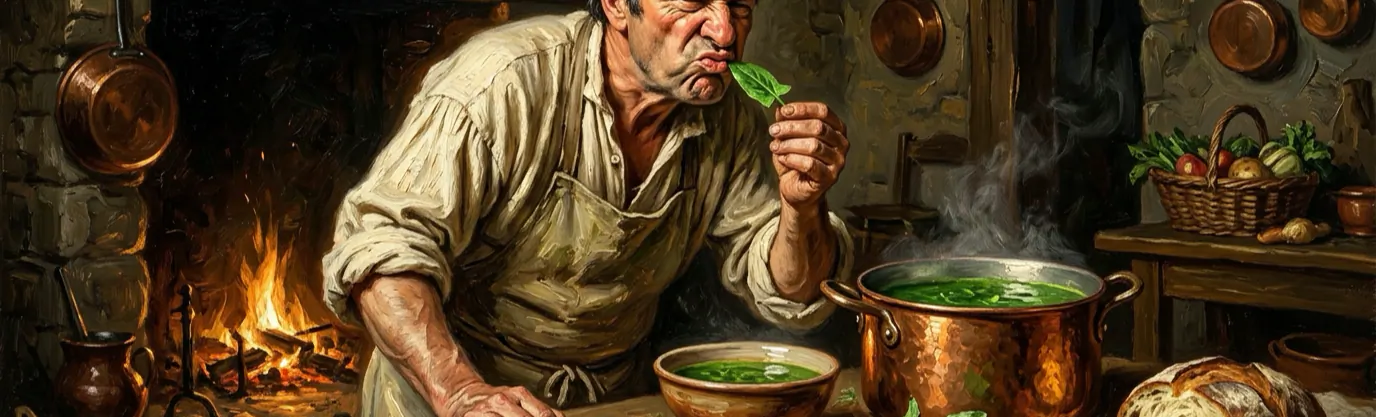
25.Which natural acid gives garden sorrel its intensely sour, mouth-puckering lemon flavor?
Correct Answer: B. Oxalic acid
Explanation: Bite into a tender green leaf of common French sorrel (Rumex acetosa) and you will experience an astonishing burst of sour, tart tang that tastes just like fresh lemon juice.
This mouth-puckering sharpness is caused by high concentrations of natural oxalic acid, the same potent compound historically extracted to polish tarnished silver and remove rust from boiler plates.
Chefs love folding sorrel into creamy sauces for rich fish like salmon, because the sharp oxalic acidity naturally cuts through heavy fats without curdling dairy cream.

26.On which pagan festival day was St. John's Wort traditionally gathered to repel demons?
Correct Answer: A. Midsummer's Eve
Explanation: St. John's Wort (Hypericum perforatum) blooms with vibrant golden-yellow flowers around June 24, the traditional feast day of Saint John the Baptist and the ancient pagan Midsummer Solstice.
Medieval villagers stayed awake all night on Midsummer's Eve to harvest the blooming herb while chanting prayers, believing the yellow sap possessed divine solar magic capable of banishing evil spirits and witches.
Sprigs were hung over every doorway, bedstead, and chimney mantle to protect homes from sudden lightning strikes, poltergeists, and midnight demonic visitations.

27.Which celery-scented culinary herb was brewed by ancient Romans as an all-purpose cordial?
Correct Answer: C. Lovage
Explanation: Lovage (Levisticum officinale) is a towering, leafy heirloom herb that packs a massive punch of flavor resembling concentrated celery, parsley, and warm anise all at once.
In imperial Rome, apician chefs seasoned nearly every stew and broth with lovage seeds, while Roman long-distance travelers drank boiled lovage cordials to stave off upset stomachs and motion sickness.
In medieval Germany and Central Europe, romantic maidens also slipped crushed lovage into the drinks of reluctant bachelors, firmly believing it was an irresistible love potion.

28.Why did medieval knights float starry borage flowers in their wine cups before battle?
Correct Answer: B. To banish gloom and fear
Explanation: The bright blue, star-shaped blossoms of borage (Borago officinalis) have been linked to emotional fortitude since classical Roman antiquity, inspiring the ancient Latin adage: 'Ego borago gaudia semper ago' (I, borage, always bring courage).
Medieval knights and crusaders systematically floated handfuls of borage flowers in their heavy wine flagons before charging into ferocious battles, confident the plant would banish paralyzing terror and gloom.
Fascinatingly, modern biochemical analysis has revealed that borage stimulates the adrenal glands, providing a mild, verified surge of adrenaline that helped ancient soldiers face danger.

29.Why did traditional English cottage gardeners affectionately nickname chamomile the plant doctor?
Correct Answer: D. It revived sickly neighboring plants
Explanation: For centuries in traditional English cottage gardening, delicate daisy-flowered chamomile was celebrated under the affectionate moniker 'the plant doctor'.
Old gardeners observed that planting chamomile alongside drooping, sickly shrubs or failing vegetables often caused the struggling neighbors to perk up, regain vibrant green leaves, and thrive.
Botanists today suspect that chamomile's root exudates and natural volatile oils help discourage pathogenic soil molds while attracting beneficial predatory insects that defend companion crops.

30.Which South American indigenous people used sweet stevia leaves centuries before modern sweeteners?
Correct Answer: A. Guaraní people
Explanation: Long before multinational food corporations marketed zero-calorie stevia packets, the indigenous Guaraní people of Paraguay and southern Brazil harvested the sweet shrub they named 'ka'a he'ê' (sweet herb).
For well over 1,500 years, Guaraní healers used the hyper-sweet leaves to mask the intense bitterness of medicinal remedies and to naturally sweeten their traditional yerba mate tea gourd infusions.
The plant's active steviol glycosides are up to 300 times sweeter than cane sugar while having virtually zero effect on human blood glucose levels.
31.Which common golden garden flower petal was historically used as poor man's saffron?
Correct Answer: C. Calendula marigold
Explanation: Because true saffron threads harvested from Crocus sativus have consistently been the most expensive agricultural spice on Earth, budget-minded cooks through the ages needed a clever substitute.
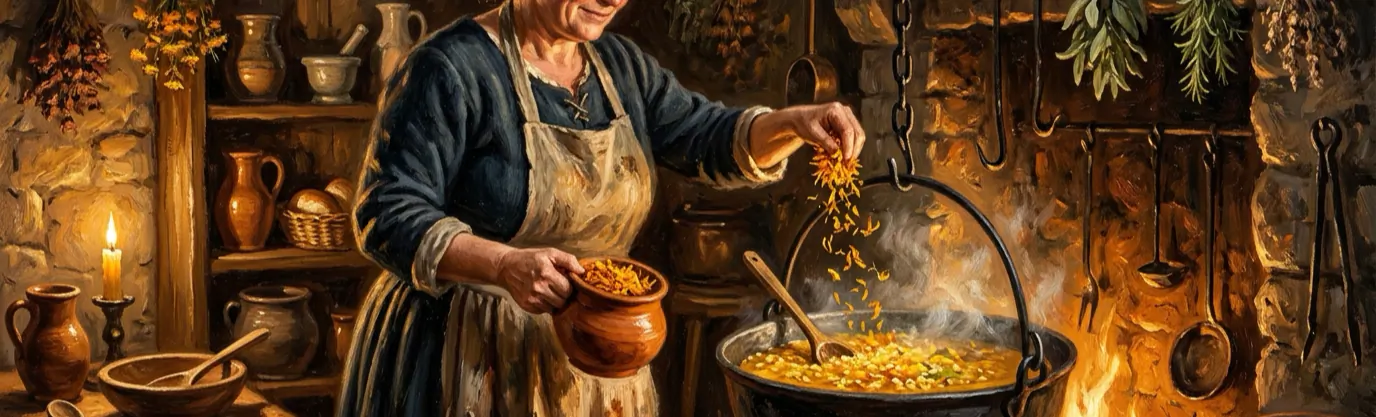
Medieval European home cooks dried and crumbled the brilliant orange-yellow petals of Calendula officinalis (pot marigold), stirring them into broths, cheeses, and rice to replicate saffron's golden glow.
While calendula petals delivered the same stunning yellow hue and subtle peppery note, it cost a tiny fraction of saffron, cementing its reputation as 'poor man's saffron'.

32.Why were fragrant makrut lime trees traditionally planted around raised Southeast Asian homes?
Correct Answer: D. To deter venomous snakes
Explanation: In rural villages across Thailand, Cambodia, and Malaysia, families traditionally cultivated makrut lime trees directly around the stilts of wooden raised homes.
Folk wisdom taught that the sharp, hyper-concentrated citrus oils in the crinkled double-leaves and bumpy rinds created an invisible scented barricade that irritated the sensory pits of venomous pit vipers and cobras.
Beyond reptilian defense, the fragrant leaves remain one of the most indispensable aromatic pillars of Southeast Asian cuisine, providing the electric citrus soul of tom yum soup.

33.Why did sailors and colonists pack their sleeping mattresses with dried European pennyroyal mint?
Correct Answer: B. To kill biting fleas
Explanation: European pennyroyal (Mentha pulegium) is a creeping member of the mint family whose Latin species name, 'pulegium', translates directly to 'flea'.
In the days of wooden sailing galleons and dusty frontier cabins, travelers stuffed their straw mattresses and sea-chests with dried pennyroyal because its high concentration of pulegone strongly repelled biting fleas and lice.
While highly effective as an insect deterrent, pennyroyal essential oil is dangerously toxic if ingested, making it an herb strictly reserved for pest control and external folklore.

34.Why was the culinary herb savory strictly forbidden in medieval European monastery gardens?
Correct Answer: A. It was deemed an aphrodisiac
Explanation: In the Middle Ages, strict European monastic orders banned monks and nuns from cultivating summer and winter savory (Satureja) in their cloistered herb gardens.
Ancient Roman and medieval herbalists classified savory as a fiery, potent aphrodisiac capable of exciting uncontrollable carnal passions and destroying holy vows of celibacy.
The botanical name 'Satureja' is linked directly to mythological satyrs, the lustful, goat-legged companions of Dionysus who supposedly sustained their wild revelries on the pungent, peppery herb.

35.Which biblical angel supposedly revealed the healing power of angelica in a monk's dream?
Correct Answer: C. Archangel Michael
Explanation: The majestic, sweet-scented herb Angelica archangelica owes its heavenly botanical name to a miraculous 10th-century Christian legend during a devastating outbreak of bubonic plague.
Folklore claims that the Archangel Michael appeared in a vivid dream to a devout Benedictine monk, revealing that the roots of the wild umbellifer held the secret to curing the deadly pestilence.
From that day forth, Europeans chewed raw angelica roots, wore them in protective pouches around their necks, and candied its green stalks as confectionary delights that persist in French bakeries today.

36.Which miraculous culinary herb was harvested to total extinction by the ancient Romans?
Correct Answer: D. Silphium
Explanation: In ancient Rome, no herb or spice was more prized than silphium, a wild fennel-like plant that grew exclusively along a narrow coastal strip in Cyrene (modern-day Libya).
Romans valued silphium so intensely as an aphrodisiac, medicine, and exquisite seasoning that the Roman treasury literally stored stockpiles of its resin alongside gold bullion.
Because it resisted all human attempts at cultivation and was ravenously overharvested by traders and grazed upon by livestock, silphium completely vanished from the earth by the 1st century CE, with Emperor Nero supposedly receiving the last surviving stalk as a curiosity.