
Ocean Trivia: How Deep Does Your Sea Knowledge Go?
Forget memorizing basic ocean names—explore 40 wild stories behind 11,500-foot underwater waterfalls, sun-hot shrimp claws, and the planet's deepest marine mysteries.
Most ocean quizzes put you to sleep asking which ocean is the biggest. The real story of Earth's seas is infinitely stranger: the planet's largest waterfall actually plunges 11,500 feet underwater between Greenland and Iceland, 28,800 yellow bath-toy ducks spilled in 1992 mapped global ocean currents for decades, and a single microscopic marine bacterium discovered in 1986 generates the oxygen for one in every five breaths you take.
From the 1960 Trieste submersible cracking a window at the bottom of the Mariana Trench and 400-year-old Arctic sharks to two-inch pistol shrimp snapping bubbles nearly as hot as the Sun, test your maritime knowledge with 40 short, punchy, and verified Ocean Trivia Questions & Answers below!
1.Where is the largest waterfall on planet Earth actually located?
Show Answer & Explanation
Correct Answer: C. Underwater between Greenland and Iceland
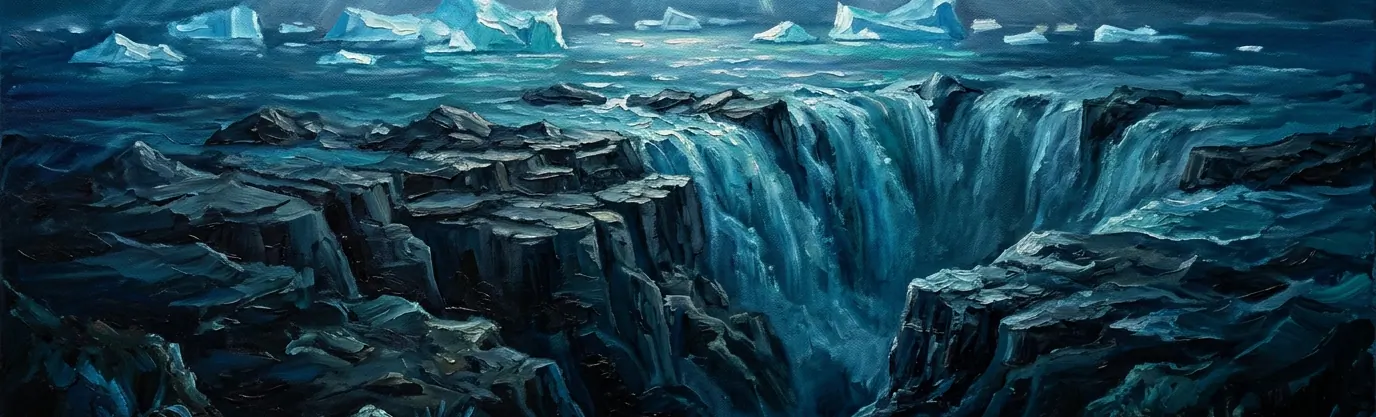
Explanation: Ask almost anyone to name the largest waterfall on Earth and they will say Venezuela's 3,212-foot Angel Falls or Victoria Falls on the Zambezi River. In reality, those land waterfalls are dwarfed by a colossus hiding completely underwater: the Denmark Strait cataract between Greenland and Iceland!
Where the freezing, super-dense water of the Nordic Seas flows southward and meets the warmer, lighter water of the Irminger Sea in the Atlantic, the heavier cold water plunges straight down a submarine cliff drop of 11,500 feet (3,505 meters)—more than three and a half times the height of Angel Falls!
Even more mind-boggling is its volume: the Denmark Strait cataract pours roughly 123 million cubic feet (3.5 million cubic meters) of water per second down the sea-floor escarpment—more than 2,000 times the average flow of Niagara Falls!
2.How did 28,800 yellow bath toys spilled in 1992 help oceanographers?
Show Answer & Explanation
Correct Answer: A. They mapped global ocean currents
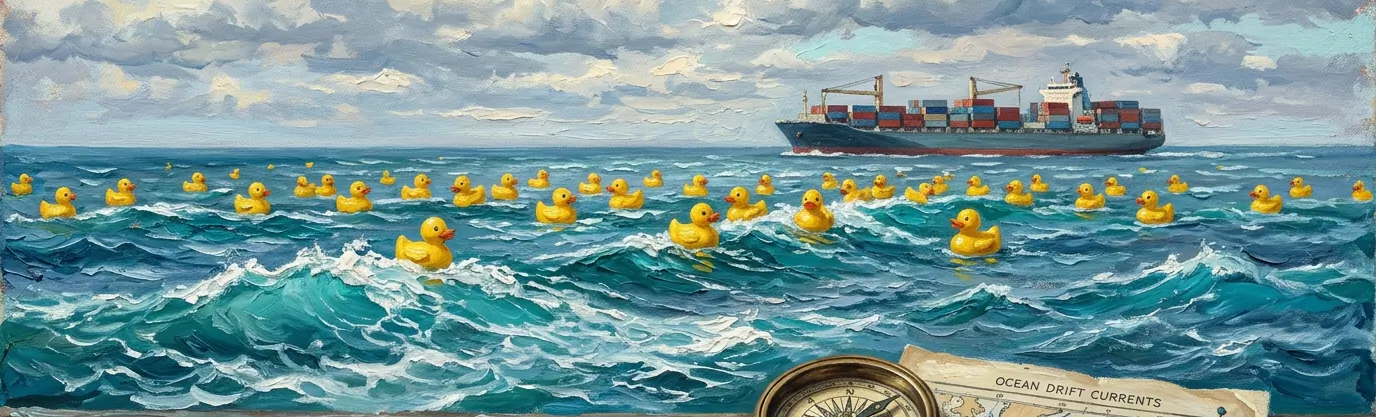
Explanation: On a stormy night in January 1992, the cargo ship *Ever Laurel* was tossed by hurricane-force waves in the North Pacific on its way from Hong Kong to Tacoma, Washington, tumbling twelve steel shipping containers overboard—one of which burst open and released 28,800 plastic bath toys ("Friendly Floatees": yellow rubber ducks, blue turtles, red beavers, and green frogs)!
Unlike sealed drift bottles that often sink when barnacles weigh them down, the hollow, hole-free plastic bath toys were virtually indestructible. Oceanographer Curtis Ebbesmeyer immediately began tracking beachcomber sightings around the globe to calibrate computer models of surface ocean currents.
While thousands of ducks circled the North Pacific Subpolar Gyre between Alaska and Japan in three-year loops, others drifted north through the narrow Bering Strait, froze into the Arctic pack ice, drifted 2,000 miles over the North Pole, and washed ashore on the beaches of Maine, Ireland, and Scotland fifteen years later!
3.What startled explorers Jacques Piccard and Don Walsh inside Challenger Deep in 1960?
Show Answer & Explanation
Correct Answer: D. Their outer plexiglass window cracked
Explanation: On January 23, 1960, Swiss oceanographer Jacques Piccard and U.S. Navy Lieutenant Don Walsh squeezed inside the cramped steel pressure sphere of the bathyscaphe *Trieste* to attempt humanity's first descent to Challenger Deep—the deepest known point in the Mariana Trench nearly seven miles down.
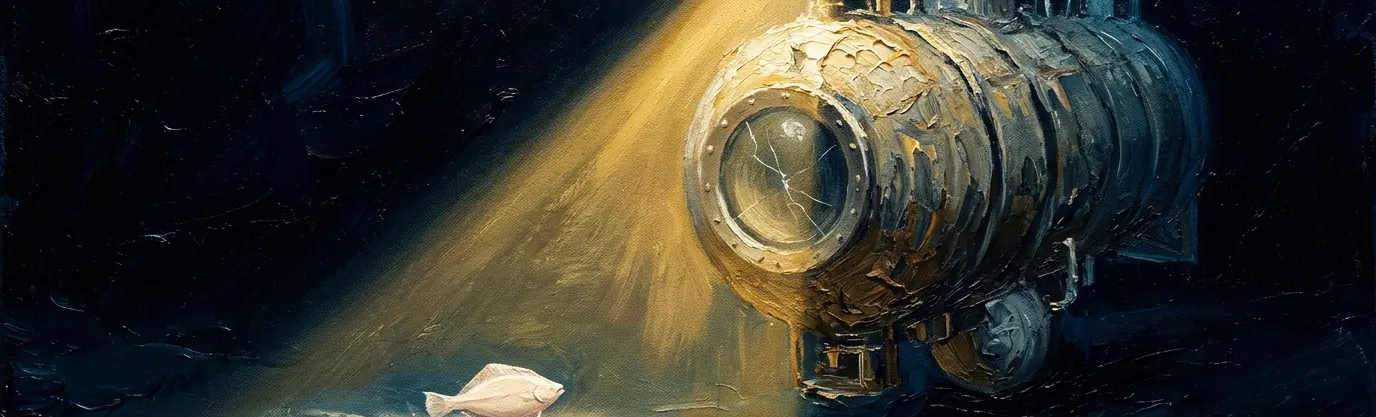
At a depth of 30,000 feet, under crushing water pressure exceeding six tons per square inch, a violent, gunshot-like *BANG* shook the entire vessel! Checking the instrument hull, Piccard and Walsh discovered to their horror that the outer plexiglass window pane in the entrance tunnel had cracked right across!
Remarkably, the two men calmly agreed that the main inner cone-shaped viewport would hold and continued dropping to the 35,814-foot (10,916-meter) seafloor—where their floodlights revealed a flatfish resting on the ivory diatom ooze, proving that vertebrate life could survive even at the very bottom of the ocean!

4.Roughly how much dissolved gold floats inside the world's ocean water?
Show Answer & Explanation
Correct Answer: B. About twenty million tons
Explanation: According to data from the National Oceanic and Atmospheric Administration (NOAA) and trace-metal geochemists, the world's oceans hold roughly twenty million tons of dissolved gold—plus millions more tons embedded in seafloor rock undissolved—worth well over a quadrillion dollars at modern bullion prices!
Before you grab a bucket and head to the beach, there is a catch: that gold is diluted to minuscule concentrations of parts per trillion (roughly one gram of gold for every 100 million metric tons of Atlantic and Pacific seawater).
After World War I, Nobel Prize-winning German chemist Fritz Haber famously spent years sailing the Atlantic aboard the research liner *Meteor* with a floating laboratory, attempting to electrochemically filter enough dissolved gold out of seawater to pay off Germany's entire war reparations—only to abandon the quest after discovering ocean gold was a thousand times more dilute than early estimates claimed!
5.How does the widest span of the Pacific Ocean compare to the Moon?
Show Answer & Explanation
Correct Answer: A. Over five full Moons wide
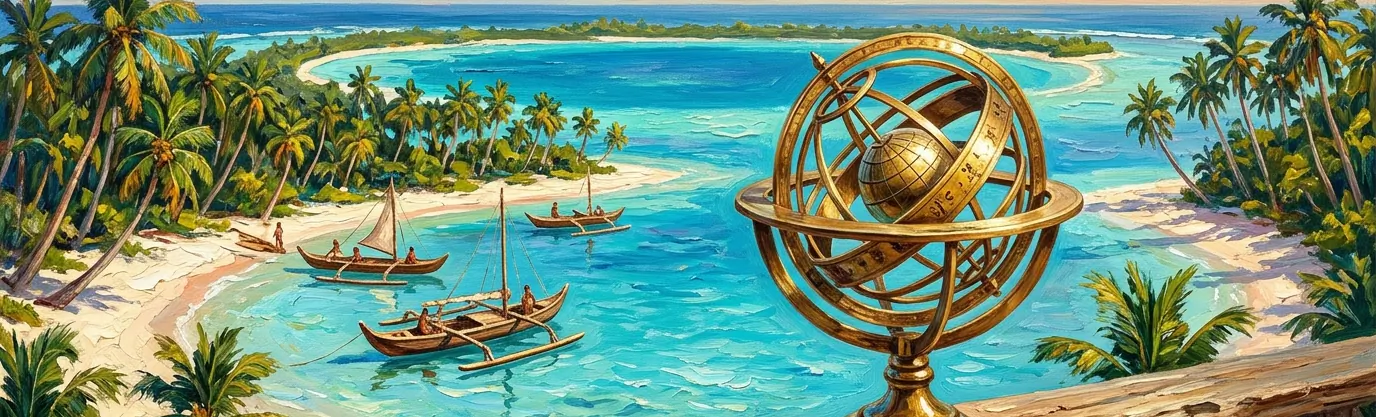
Explanation: Covering roughly 63.8 million square miles (165.2 million square kilometers)—nearly one-third of Earth's entire surface—the Pacific Ocean is larger than every single continent and island on planet Earth combined, with room to spare for another Africa!
At its widest equatorial stretch between the coast of Colombia in South America and the Malay Peninsula in Southeast Asia, the Pacific spans an astonishing 12,300 miles (19,800 kilometers) halfway around the world.
Since Earth's Moon has a diameter of just 2,159 miles (3,474 kilometers), you could line up more than five full Moons side-by-side across the widest part of the Pacific Ocean without touching land on either side!
6.Why do deep-sea submarines sometimes encounter lakes with shorelines on the ocean floor?
Show Answer & Explanation
Correct Answer: C. Super-salty brine sinks into basins
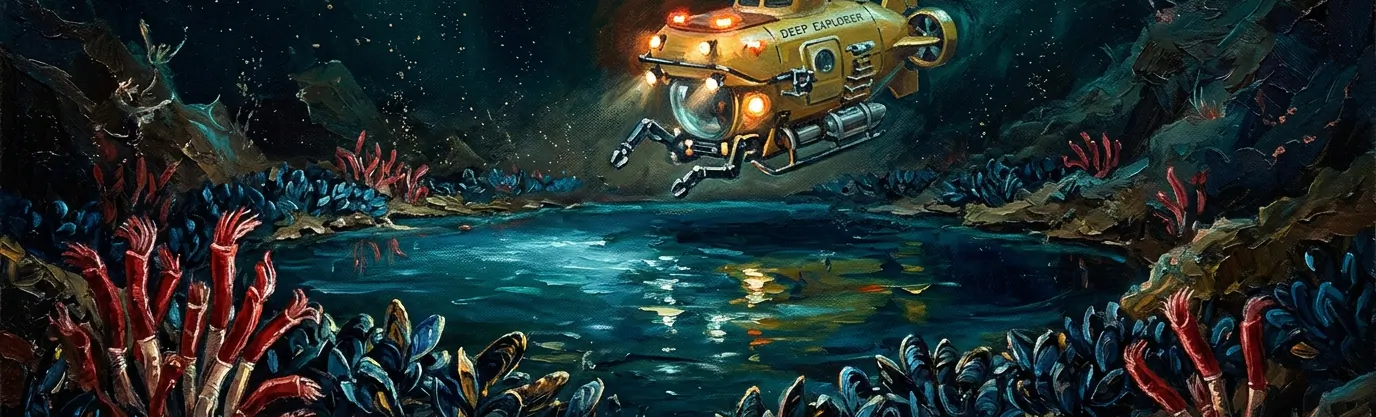
Explanation: Thousands of feet beneath the Gulf of Mexico, the Red Sea, and the Mediterranean, deep-sea submersible pilots regularly come across surreal "lakes" and "rivers" resting right on the bottom of the ocean—complete with distinct shorelines, sandy beaches, and slow-rolling waves lapping against the banks!
These underwater lakes—nicknamed "Jacuzzis of Despair" by marine biologists—form where ancient buried salt deposits from millions of years ago dissolve into seeping pore water, creating a dense brine four to eight times saltier than normal seawater.
Because the hypersaline brine is so heavy and dense, it refuses to mix with the overlying ocean water; when a research submarine tries to dive into a brine pool, the sub literally bounces and floats on top of the underwater lake like a rowboat! Meanwhile, the toxic, oxygen-free brine pickles any crab or fish that wanders in, while chemosynthetic mussel beds ring the "shoreline" feeding on methane gas!
7.What produces the oxygen for roughly one in every five human breaths?
Show Answer & Explanation
Correct Answer: B. One tiny ocean bacterium species
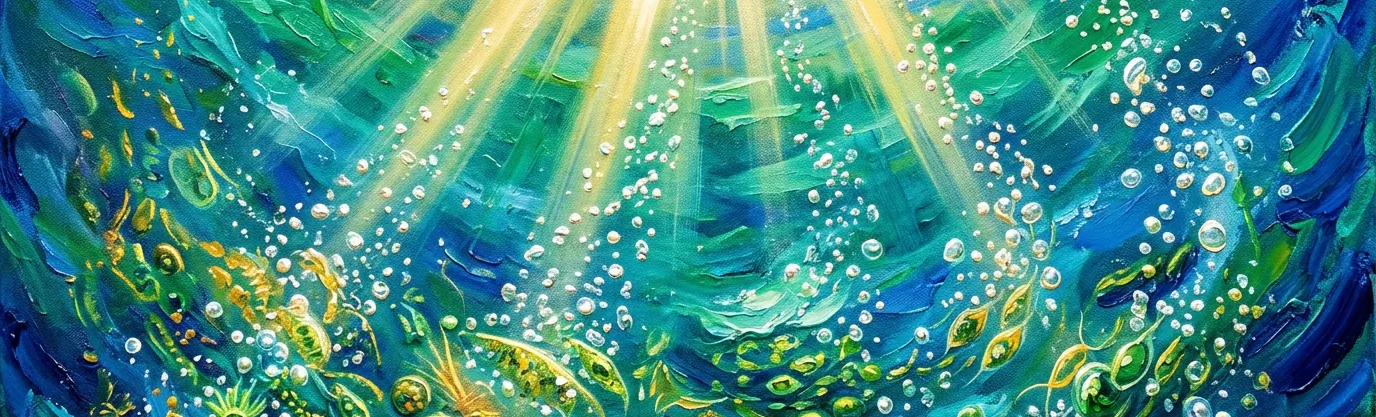
Explanation: Take five deep breaths right now: while land trees and rainforests get almost all the credit for Earth's oxygen, roughly half of our planet's oxygen comes from the ocean—and one out of every five breaths you take is generated by a single microscopic marine organism called *Prochlorococcus*!
Measuring less than a thousandth of a millimeter across (twenty thousand of them could fit side-by-side across a fingernail), *Prochlorococcus* is a photosynthetic cyanobacterium so tiny that oceanographers didn't even know it existed until MIT scientist Sallie "Penny" Chisholm discovered it using shipboard laser flow cytometry in 1986!
With an estimated three octillion ($3 imes 10^{27}$) individuals drifting across the sunlit tropical and subtropical oceans, *Prochlorococcus* is the most abundant photosynthetic organism on Earth, quietly powering the global marine food web and atmosphere!
8.How could low-frequency fin whale songs cross thousands of miles before shipping noise?
Show Answer & Explanation
Correct Answer: D. Trapped inside deep sound channels
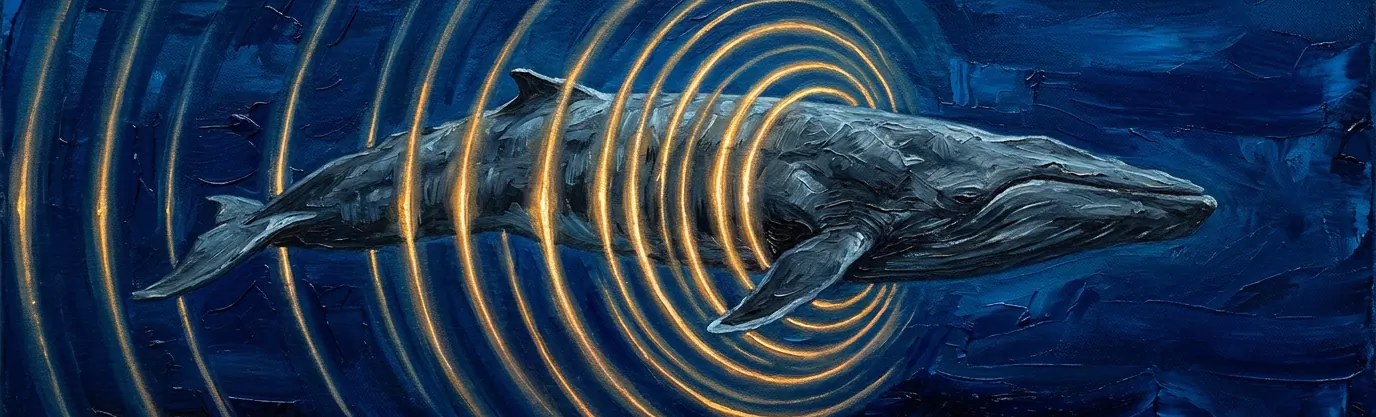
Explanation: In the 1940s, geophysicist Maurice Ewing discovered a remarkable acoustic quirk of the world's oceans at depths around 2,600 to 3,300 feet (800–1,000 meters), where cooling water temperatures from above meet rising water pressure from below.
At that exact depth—known as the SOFAR (Sound Fixing and Ranging) channel—sound travels slower than in the warmer water above or the higher-pressure water below. As a result, sound waves that try to escape upward or downward get bent (refracted) right back into the channel, trapping the sound wave horizontally like light inside a fiber-optic cable without losing energy against the sea surface or seafloor!
Long before the U.S. Navy used the SOFAR channel to listen for downed pilots and submarines across entire ocean basins, baleen whales like blue whales and fin whales evolved 20-Hz bass vocalizations tuned to the exact frequency of the deep sound channel to communicate across thousands of miles!
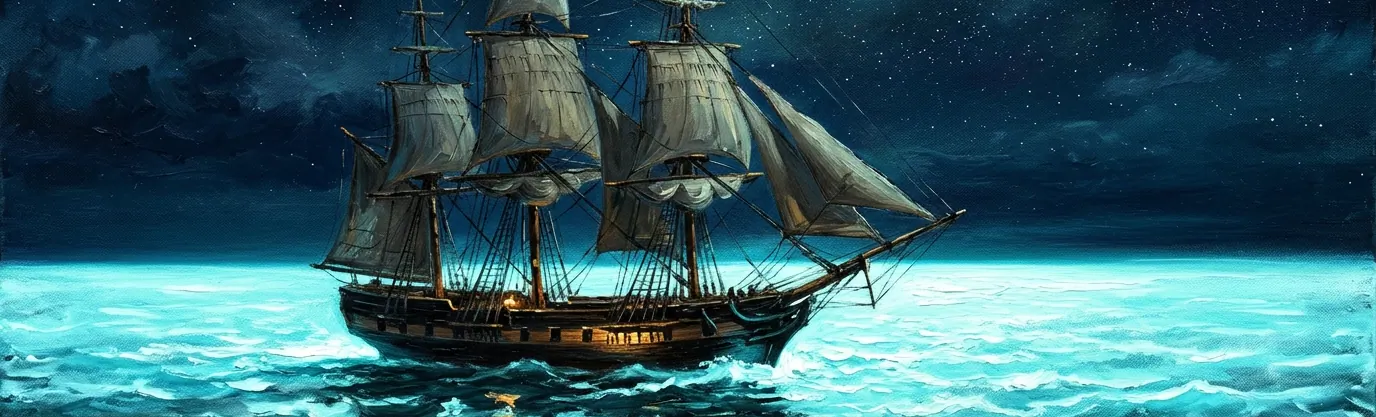
9.What causes sailors' 'milky seas' that glow bright enough to spot from space?
Show Answer & Explanation
Correct Answer: A. Trillions of glowing bacteria
Explanation: For centuries, mariners sailing the Indian Ocean and waters off Indonesia recorded eerie logbook entries describing how the black nighttime sea suddenly turned chalky, glowing white from horizon to horizon—as if their ship were sailing across a moonlit field of freshly fallen snow, famously described by Jules Verne in *Twenty Thousand Leagues Under the Seas*.
Unlike ordinary coastal bioluminescence caused by dinoflagellate plankton that only flash for a second when waves or fish disturb the water, a "milky sea" glows with a steady, unbroken cyan-white light even in dead-calm water and can cover 39,000 square miles (the size of Kentucky)—large enough to be photographed from weather satellites in space!
When researchers matched satellite images with water samples collected by the merchant vessel *S.S. Lima*, they discovered the culprit: astronomically vast colonies of luminous *Vibrio harveyi* bacteria living on floating microalgae, which switch on a continuous chemical glow ("quorum sensing") once their population hits critical density to attract fish that eat them!
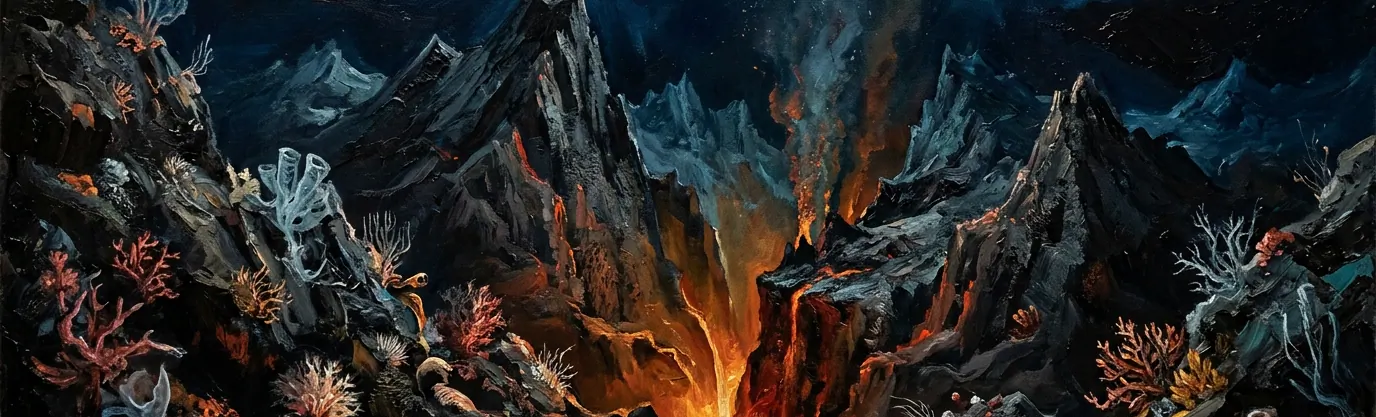
10.How much of Earth's 40,000-mile-long Mid-Ocean Ridge mountain system sits underwater?
Show Answer & Explanation
Correct Answer: C. About ninety percent
Explanation: If you drained all the water out of Earth's oceans tomorrow, the most dramatic feature on the globe would be the Mid-Ocean Ridge—a continuous 40,389-mile (65,000-kilometer) volcanic mountain chain that wraps around the planet through every ocean basin like the stitched seam on a baseball!
Roughly 90% of this colossal mountain range lies completely submerged thousands of feet beneath the waves (breaching the surface only in rare volcanic spots like Iceland and the Azores), yet it is more than four times longer than the Andes, the Rocky Mountains, and the Himalayas combined!
Even though it is the largest geological feature on Earth, humanity had no idea the continuous Mid-Ocean Ridge existed until the 1950s, when oceanographic cartographer Marie Tharp painstakingly plotted tens of thousands of sonar depth soundings by hand and discovered both the mountain chain and its central rift valley—proving continental drift and plate tectonics!

11.Why do beachcombers earn fortunes finding waxy gray lumps of whale 'ambergris'?
Show Answer & Explanation
Correct Answer: B. Luxury perfumes use it
Explanation: Nicknamed "floating gold," a single basketball-sized lump of genuine whale ambergris washed up on a beach can legally sell in parts of Europe and Asia for over $200,000—even though it starts life in the digestive tract of a sperm whale!
A single sperm whale devours thousands of deep-sea squid every week, each armed with a razor-sharp, indigestible chitin beak. In roughly 1% of sperm whales, instead of regurgitating the beaks, the whale's intestines coat the sharp beaks in a protective, fatty cholesterol secretion called ambergris (*ambre gris*, Old French for "gray amber").
Freshly expelled ambergris smells foul, but after floating across sunlit, salty ocean waves for ten to thirty years, oxidation transforms it into a hard, marbled gray-gold stone with a sweet, earthy, marine aroma and a molecular compound (*ambrein*) that locks delicate floral scents onto human skin for days in haute-couture perfumes!
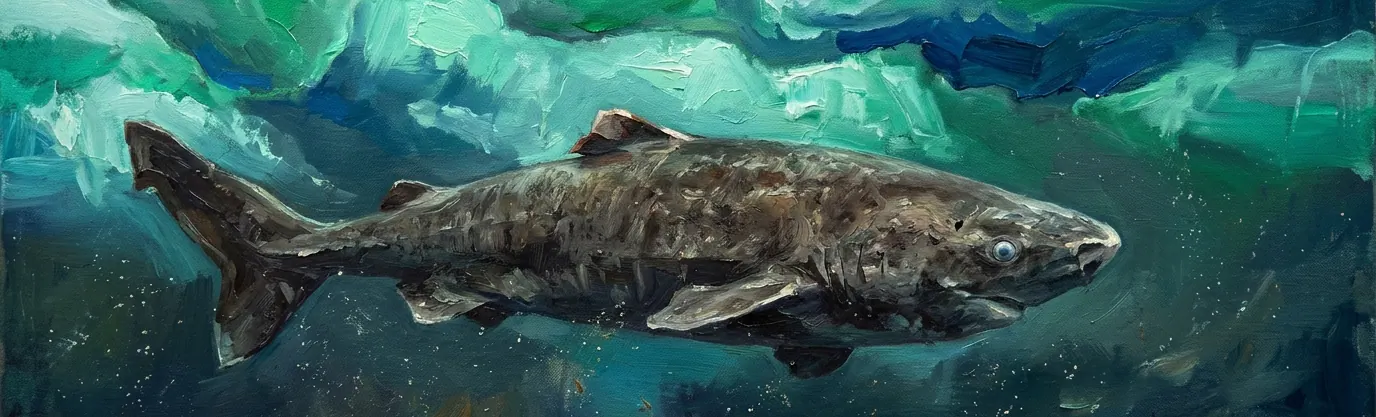
12.How did marine biologists prove Arctic Greenland sharks live up to 400 years?
Show Answer & Explanation
Correct Answer: D. Radiocarbon-dating their eye lenses
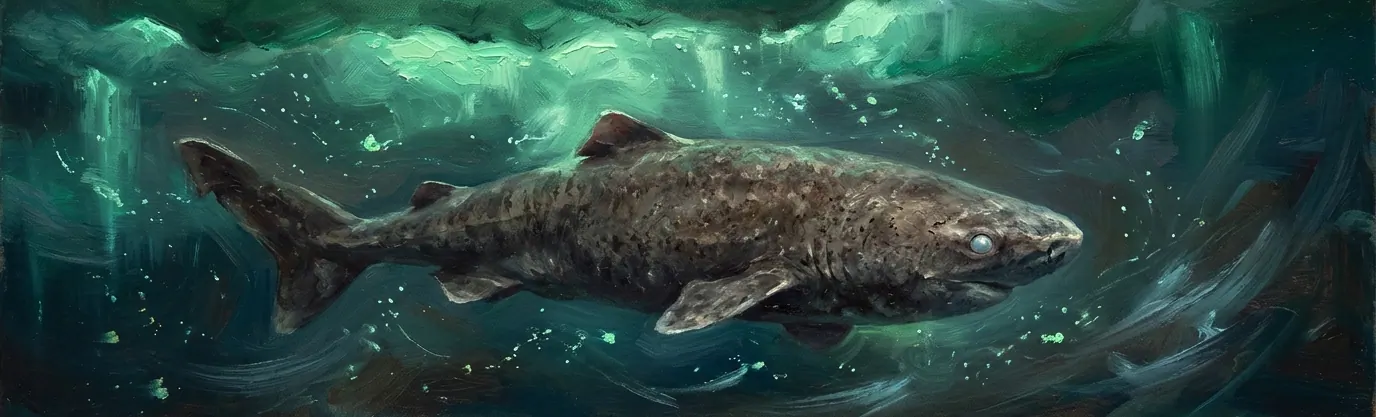
Explanation: Cruising slowly through near-freezing Arctic and North Atlantic depths at barely half a mile per hour, the twenty-foot Greenland shark (*Somniosus microcephalus*) is the longest-living vertebrate animal ever documented by science—capable of living for roughly four centuries!
Normally, scientists age fish by counting seasonal growth rings in calcium ear stones (*otoliths*) or calcified backbones, but Greenland sharks have soft, rubbery cartilage skeletons with no growth rings at all.
In 2016, University of Copenhagen marine biologist Julius Nielsen solved the puzzle by examining the center of the sharks' eye lenses, which are made of metabolically inert crystalline proteins formed before the shark is born that never change for the rest of its life. By radiocarbon-dating those embryonic eye proteins against the 1950s Cold War nuclear bomb-test carbon pulse, his team proved the largest female shark was roughly $392 pm 120$ years old—meaning it was swimming in the ocean when the *Mayflower* sailed!

13.Why does Canada's Bay of Fundy experience fifty-three-foot tides twice every day?
Show Answer & Explanation
Correct Answer: A. The bay sloshes in resonance
Explanation: Every twelve hours and twenty-five minutes between the Canadian provinces of New Brunswick and Nova Scotia, more than 160 billion tons of seawater—more than the combined daily freshwater flow of every single river on Earth—rushes in and out of the funnel-shaped Bay of Fundy, raising and lowering the water level by up to 53.5 feet (16.3 meters)!
At low tide at Hopewell Rocks, visitors walk dry-shod across the muddy ocean floor beneath four-story sandstone "flowerpot" cliffs; six hours later, kayaks paddle right around the tops of those exact same cliffs!
Why are Fundy's tides so extreme compared to the three-foot average tide elsewhere? Just like water sloshing back and forth in a bathtub when you push it at the exact right rhythm, the length and depth of the Bay of Fundy give it a natural oscillation period (*seiche*) of roughly 12.4 hours—matching the exact 12-hour-25-minute gravitational pull of the Moon to amplify the tide through coastal resonance!
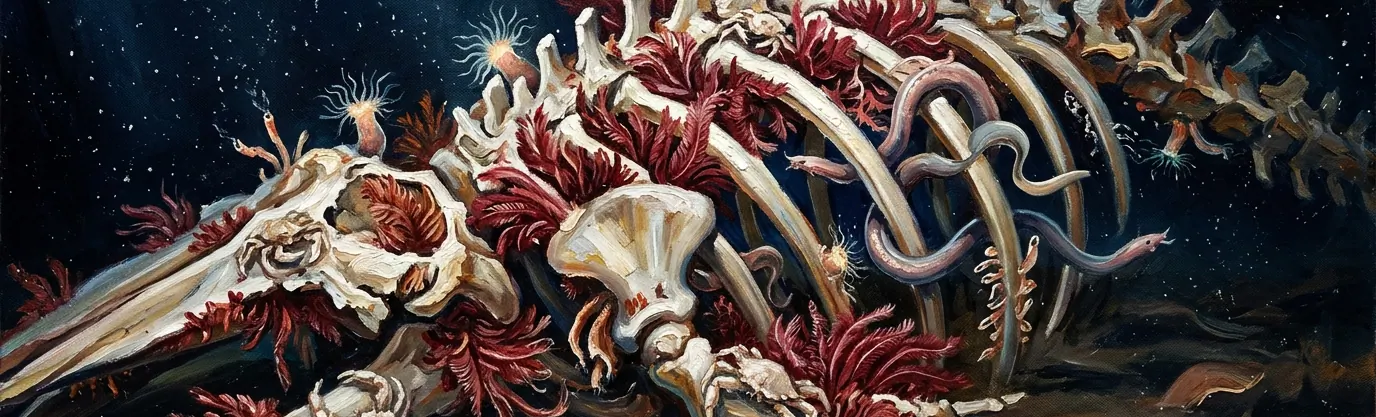
14.How long can a single sunken whale carcass feed deep-sea floor ecosystems?
Show Answer & Explanation
Correct Answer: B. Fifty to a hundred years
Explanation: Across the cold, pitch-black desert of the deep abyssal ocean floor, food usually drifts down as tiny flakes of "marine snow"—until a forty-ton whale dies near the surface and sinks to the bottom, delivering two thousand years' worth of normal seafloor nutrients in a single afternoon!
Known to oceanographers as a "whale fall," a single whale carcass creates a bustling deep-sea oasis that evolves through four distinct ecological stages lasting fifty to one hundred years! First, sleeper sharks and hundreds of slime-coated hagfish strip away the blubber and muscle over several months.
Next, dense carpets of bristle worms and crabs feast on the enriched sediment around the skeleton for years—followed by bizarre mouthless, gutless "zombie worms" (*Osedax*) that sprout crimson root plumes secreting acid to drill into the whale bones and digest the trapped bone-marrow fats for decades, alongside sulfur-oxidizing bacteria that turn the skeleton into a living reef!
15.Why are the waves in the Drake Passage south of South America monstrous?
Show Answer & Explanation
Correct Answer: D. Currents circle Antarctica without land
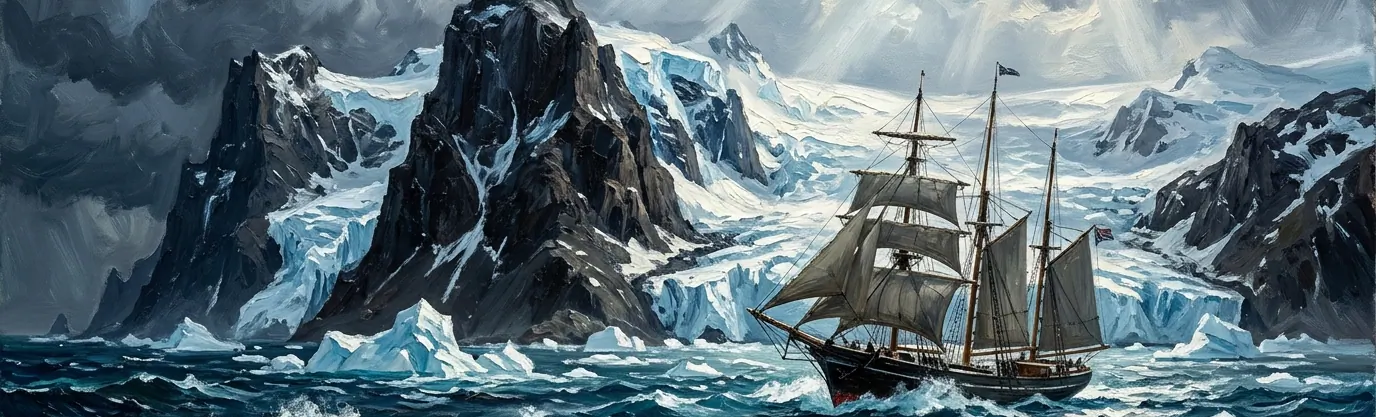
Explanation: Dreaded by sailors for four centuries as the "Drake Shake," the 500-mile-wide Drake Passage between South America's Cape Horn and the South Shetland Islands of Antarctica regularly whips up forty-to-sixty-foot storm waves and hurricane-force gusts.
Take a globe and trace your finger along the 60th parallel of south latitude: it is the only latitude band on planet Earth where zero continents or landmasses block the ocean! As a result, westerly winds ("the Screaming Sixties") and ocean swells race completely around the globe with unlimited fetch, building up monumental momentum.
Forced to squeeze through the narrow bottleneck between the Andes mountains of Tierra del Fuego and the Antarctic Peninsula, the Antarctic Circumpolar Current—the strongest ocean current on Earth—pumps roughly 135 million cubic meters of water per second through the Drake Passage, more than a hundred times the flow of all the world's rivers combined!
16.What will completely consume the iron hull of the RMS Titanic within decades?
Show Answer & Explanation
Correct Answer: C. Rust-eating icicle bacteria
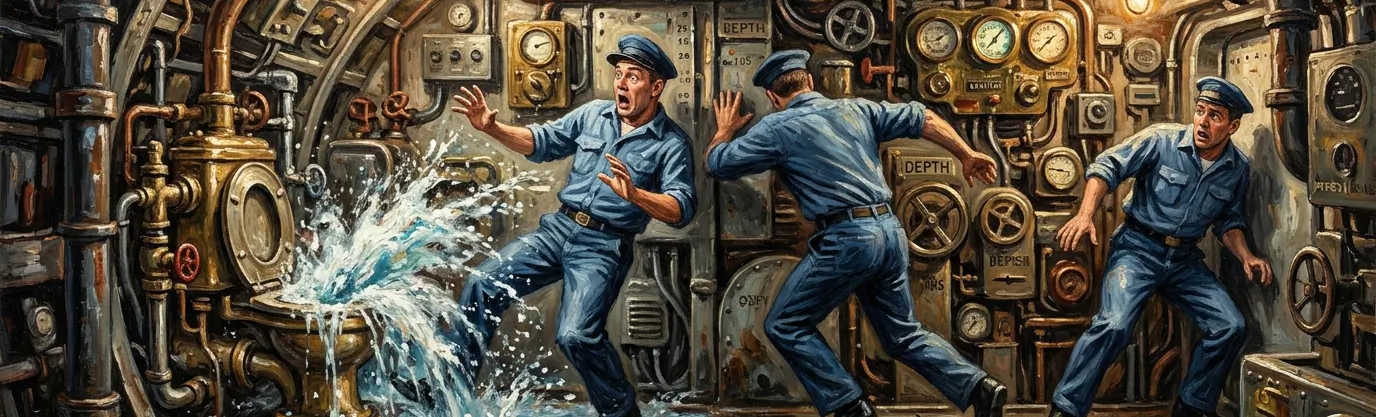
Explanation: When oceanographer Robert Ballard discovered the wreck of the *RMS Titanic* sitting 12,500 feet beneath the North Atlantic in 1985, the ship's wrought-iron hull and grand promenade decks were draped in eerie, fragile orange-brown stalactites that Ballard named "rusticles" (rust icicles).
Though they look like mineral icicles, rusticles are actually complex, porous living communities built by specialized iron-oxidizing microorganisms—including a previously unknown species isolated from the wreck in 2010 and officially named *Halomonas titanicae*!
Because the deep sea lacks sunlight, these bacteria get their energy by chemically eating the metallic iron out of the *Titanic*'s steel plates and rivets, converting nearly 400 pounds of iron into brittle rust powder every single day that drifts away in the current—meaning much of the famous liner's upper hull will collapse into a rust stain on the seafloor within the next few decades!
17.What happens when a two-inch pistol shrimp snaps its oversized claw shut?
Show Answer & Explanation
Correct Answer: A. A sun-hot shockwave bubble pops
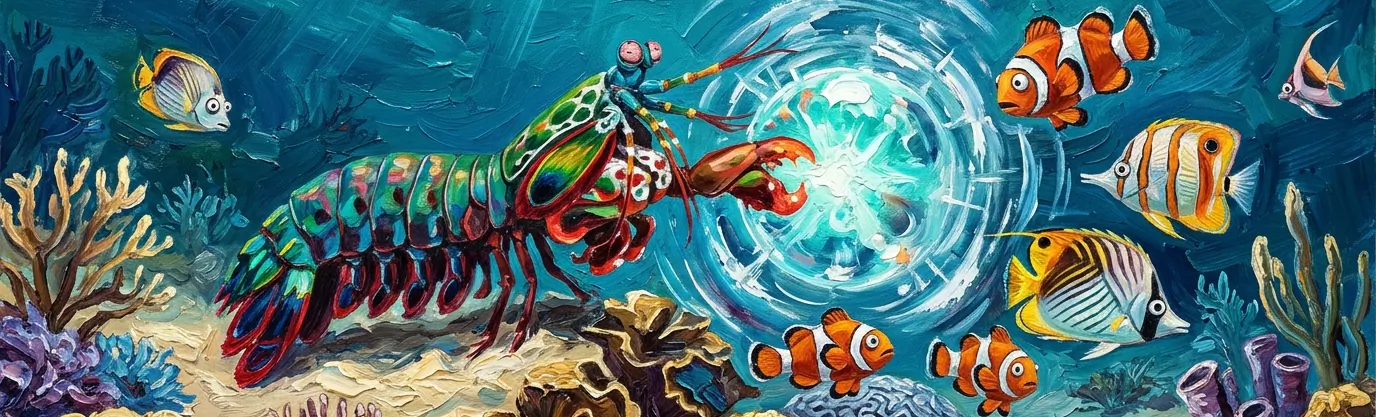
Explanation: Barely two inches long, the snapping shrimp (or pistol shrimp, family *Alpheidae*) looks harmless apart from one comically oversized claw—yet when colonies of them snap their claws on tropical reefs, the crackle is so loud it used to deafen World War II submarine sonar operators!
Contrary to popular belief, the deafening 218-decibel bang is not the sound of the two halves of the claw hitting each other. Instead, a plunger on the upper claw snaps into a socket at 60 miles per hour, shooting a high-speed jet of water that drops local water pressure so fast it tears open a vacuum vapor cavity—a cavitation bubble!
As that microscopic bubble collapses a millisecond later, the implosion unleashes a lethal shockwave that knocks out passing crabs and small fish, emits a split-second flash of light (*shrimp-luminescence*), and briefly heats the pinpoint center of the collapsing bubble to over 8,000°F (4,400°C)—nearly as hot as the surface of the Sun!
18.When does the largest mass animal migration on planet Earth take place?
Show Answer & Explanation
Correct Answer: B. Every single night at sunset
Explanation: When we think of great animal migrations, we picture millions of wildebeest crossing the Serengeti or Arctic terns flying pole to pole once a year. In terms of sheer biomass and numbers, however, the largest animal migration on Earth happens every single night across every ocean on the planet!
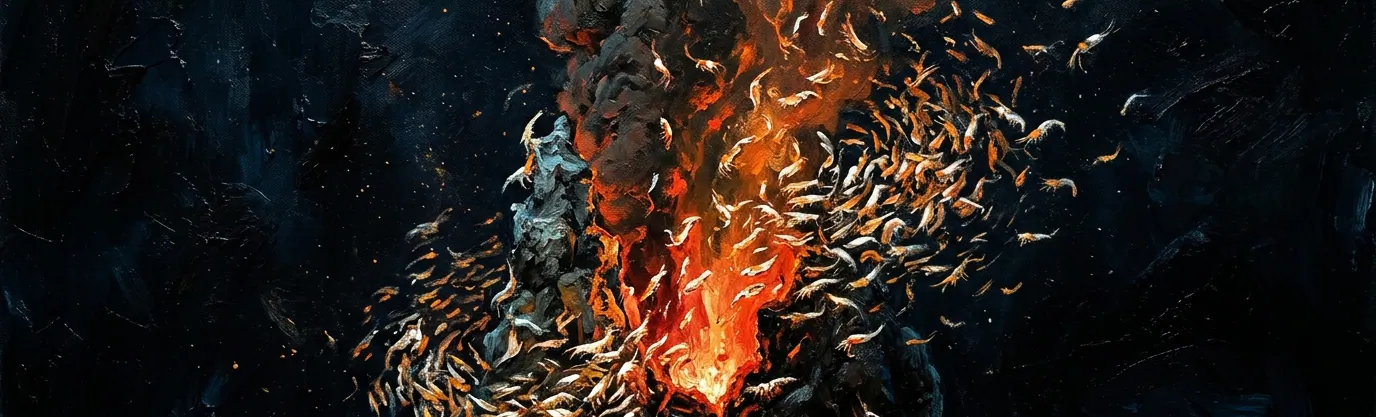
Known as Diel Vertical Migration (DVM), the spectacle begins as soon as the sun sets: up to ten billion tons of deep-sea creatures—lanternfish, bristlemouths, squid, krill, copepods, and jellyfish hiding in the dark "Twilight Zone" (650 to 3,300 feet down) to avoid daytime predators—swim upward into the sunlit surface waters to feast on microscopic plankton under cover of darkness!
Just before dawn breaks, all those trillions of animals dive thousands of feet back down into the dark abyss—in such dense, planet-spanning swarms that World War II sonar operators mistook their rising bodies for a "false seafloor" moving up and down every twelve hours!
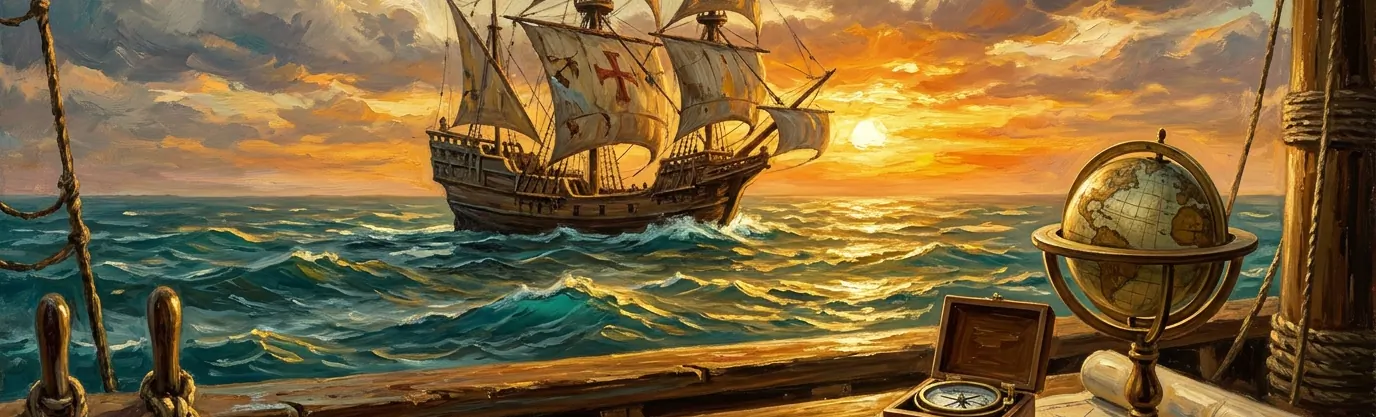
19.How did Victorian sailors aboard HMS Challenger first measure the Mariana Trench in 1875?
Show Answer & Explanation
Correct Answer: D. Lowering five miles of rope
Explanation: Between 1872 and 1876, the British corvette *HMS Challenger* sailed 68,890 nautical miles around the globe on the expedition that founded modern oceanography—discovering 4,700 new marine species and mapping the ocean basins long before electronic sonar existed.
On March 23, 1875, at Station 225 in the western Pacific between Guam and Palau, the crew stopped to take a depth sounding the old-fashioned Victorian way: paying out miles of one-inch-thick Italian hemp rope weighted with 400 pounds of iron sinkers over the side of the wooden ship and watching for the spool to slow down when the weight hit bottom!
To the astonishment of the scientists on board, the hemp line kept unspooling for hours until it finally slackened at 4,475 fathoms—26,850 feet (8,184 meters, over five miles deep!)—giving humanity its very first glimpse of the Mariana Trench, whose deepest abyss is named the Challenger Deep in the ship's honor!
20.Roughly how many harmless marine viruses float inside a single teaspoon of seawater?
Show Answer & Explanation
Correct Answer: C. Around fifty million
Explanation: Next time you accidentally swallow a mouthful of ocean water while swimming at the beach, consider this: a single five-milliliter teaspoon of ordinary surface seawater contains roughly fifty million (ten million per milliliter) marine viruses!
Don't panic—nearly all of these ocean viruses are *bacteriophages* (and *cyanophages*) that are completely harmless to humans and animals because they exclusively infect marine bacteria and single-celled algae!
In fact, we couldn't survive without them: across the global ocean, marine viruses burst open and recycle roughly 20% of all ocean bacteria every single day in a process called the "viral shunt," releasing vital dissolved carbon, iron, and nutrients back into the upper water column to fertilize the phytoplankton that produce half of Earth's oxygen!
21.How did naval officer Matthew Fontaine Maury shave six weeks off 1850s sailing voyages?
Show Answer & Explanation
Correct Answer: A. Charting thousands of old logbooks
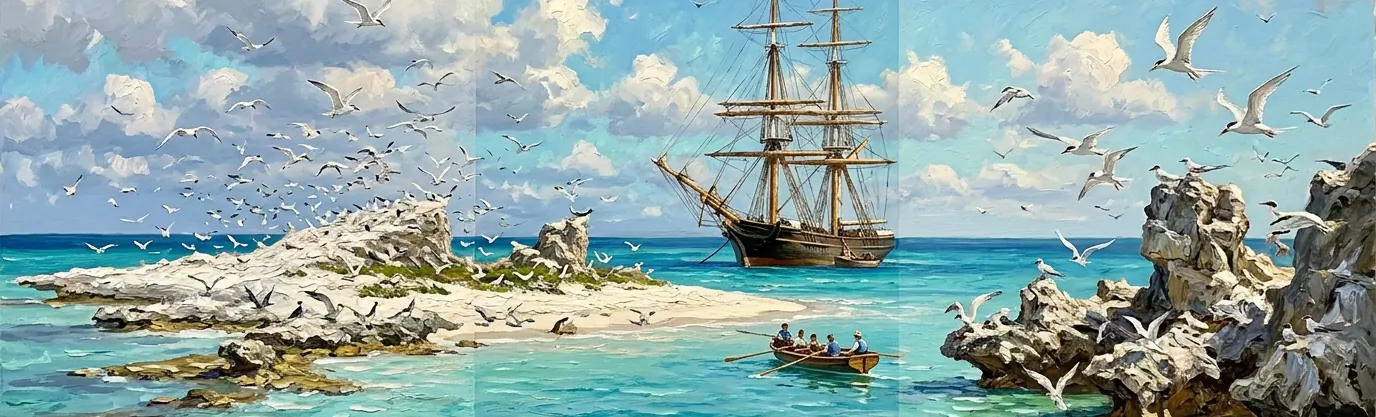
Explanation: After a stagecoach accident in 1839 left U.S. Navy Lieutenant Matthew Fontaine Maury permanently lame and unfit for sea duty, the Navy placed him in charge of the Depot of Charts and Instruments in Washington, D.C.—where he found thousands of dusty, forgotten wooden sea chests stuffed with decades of old U.S. Navy captains' logbooks.
Maury realized that those thousands of daily entries recording wind direction, ocean currents, and water temperature held a hidden map of the ocean's highways. Recruiting sea captains and New Bedford whalers worldwide to send him standardized observations, Maury published his revolutionary *Wind and Current Charts* in 1847.
Previously, sailing ships had fought headwinds along straight-line routes out of sheer habit; by following Maury's seasonal wind and current lanes instead, clipper ships instantly shaved an astonishing forty-seven days off the voyage from New York around Cape Horn to San Francisco—earning Maury the title "Pathfinder of the Seas"!
22.How does the tiny 'immortal jellyfish' escape dying of old age?
Show Answer & Explanation
Correct Answer: B. Turning back into a baby
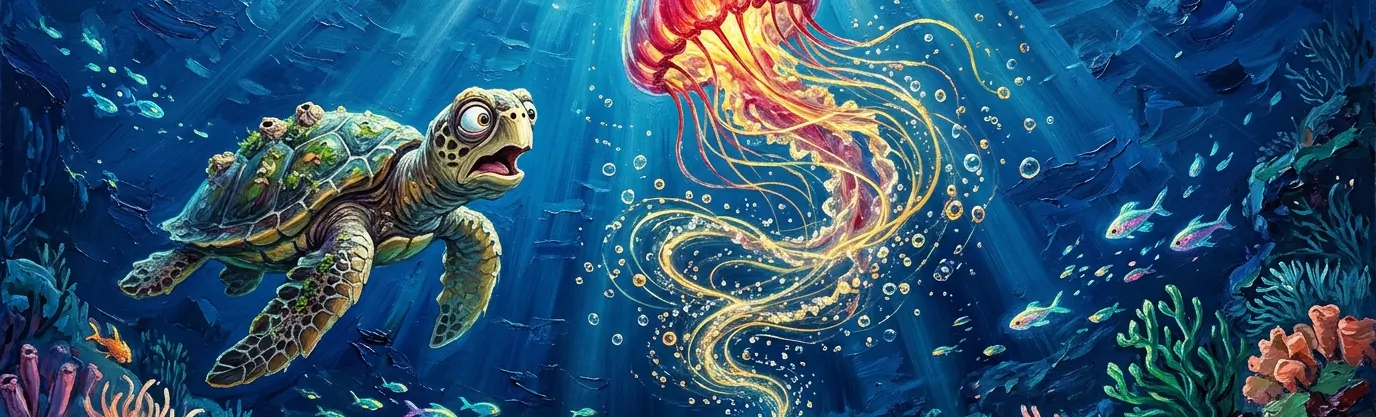
Explanation: No bigger than a human pinky fingernail (about 4.5 millimeters across), the bell-shaped hydrozoan *Turritopsis dohrnii*—popularly known as the "immortal jellyfish"—possesses a biological superpower that sounds like pure science fiction.
Like all jellyfish, it begins life as a drifting larva (*planula*) that settles on the seafloor, grows into a branching stationary polyp colony, and buds off free-swimming adult medusa jellyfish. For every other jellyfish species, once the adult medusa reproduces, it grows old and dies.
When an adult *Turritopsis dohrnii* suffers starvation, temperature shock, physical injury, or old age, however, it refuses to die! Instead, it resorbs its tentacles, sinks to the ocean floor, and uses a cellular reprogramming process called *transdifferentiation* to transform its specialized adult muscle and nerve cells right back into a juvenile polyp colony—effectively turning an elderly adult back into an infant over and over again!
23.Why did oceanographers dismiss sailors' tales of 85-foot 'rogue waves' until New Year's 1995?
Show Answer & Explanation
Correct Answer: D. Linear math said they're impossible
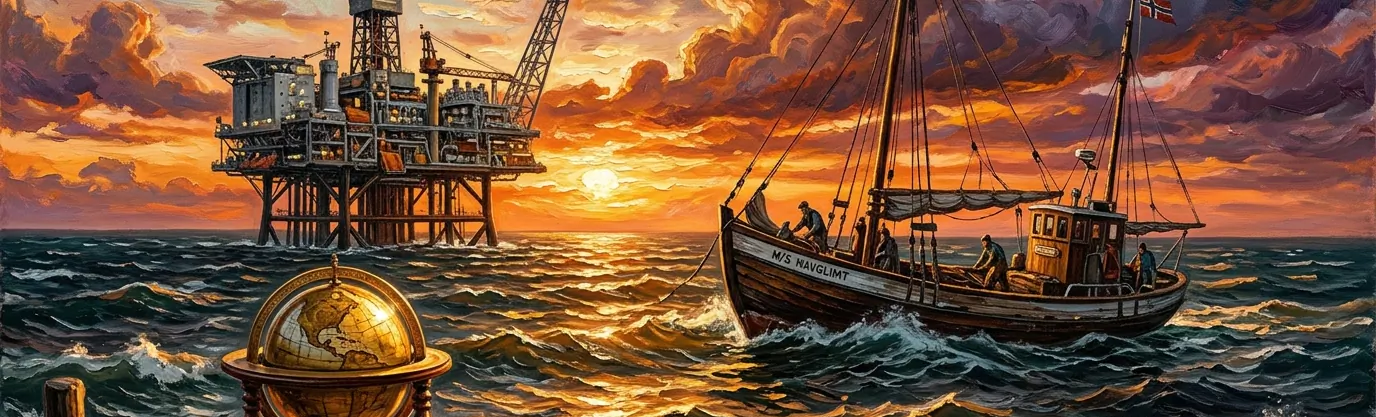
Explanation: For centuries, surviving sea captains returned to port with terrifying stories of vertical, eighty-to-one-hundred-foot "walls of water" and "holes in the sea" appearing out of nowhere to snap steel supertankers in half. Standard oceanographers politely dismissed them as mariners' exaggerations because classical linear wave-height mathematics predicted a wave that tall should occur only once every 10,000 years!
Then on New Year's Day—January 1, 1995—the unmanned Draupner E gas platform in the North Sea off Norway was riding out a storm of thirty-eight-foot waves when a downward-pointing laser wave-recorder bolted to the rig's underside measured an isolated monster wave cresting at 84 feet (25.6 meters)!
Christened the "Draupner Wave" (or New Year's Wave), that indisputable laser trace proved overnight that rogue waves are real, driven by nonlinear constructive wave interference and opposing ocean currents focusing energy into a single towering peak!
24.How slow does a diving blue whale's car-sized heart beat at deep depths?
Show Answer & Explanation
Correct Answer: A. Just two beats per minute
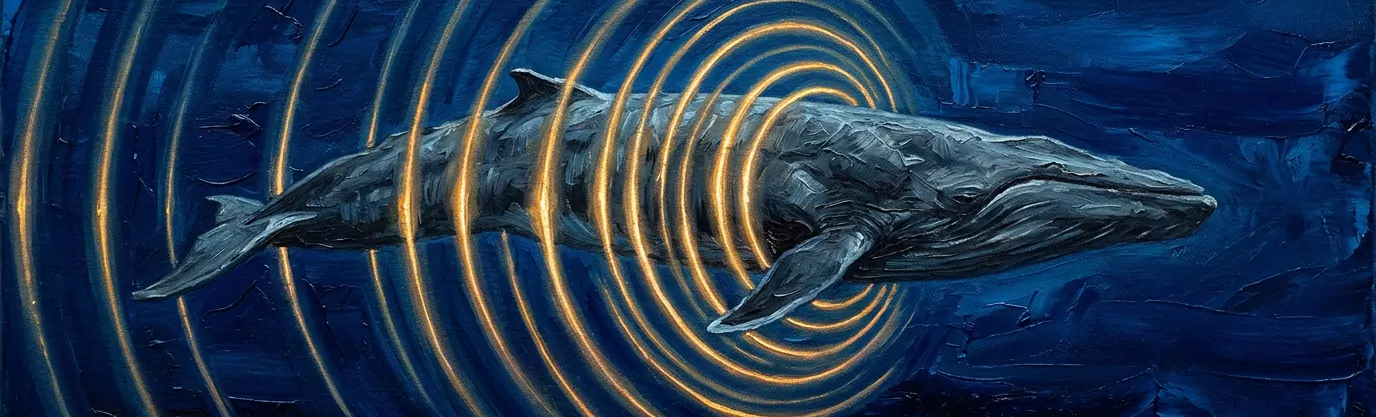
Explanation: Growing up to 100 feet long and weighing up to 200 tons, the blue whale (*Balaenoptera musculus*) is the largest animal ever to live on Earth—powered by a four-hundred-pound heart the size of a small golf cart or Volkswagen Beetle that pumps sixty gallons of blood with a single beat!
In 2019, marine biologists from Stanford University managed for the very first time to attach a non-invasive suction-cup electrocardiogram (ECG) tag to the back of a wild seventy-foot blue whale in California's Monterey Bay to record its heart rate during an entire day of deep feeding dives.
When the whale dove 600 feet down to lunge-feed on krill, its heart slowed right down through extreme diving bradycardia to conserve oxygen—beating an astonishingly slow two to four times per minute at the bottom of the dive, before racing back up to thirty-seven beats per minute at the surface!
25.Why do 2,400-year-old Greek wooden shipwrecks sit perfectly intact on the Black Sea floor?
Show Answer & Explanation
Correct Answer: C. Deep water lacks any oxygen
Explanation: In almost every ocean on Earth, a wooden ship that sinks to the bottom has its oak planks, masts, and steering oars devoured within a few years by wood-boring bivalve mollusks called shipworms (*Teredo navalis*) and aerobic microbes.
In the Black Sea between southeastern Europe and Turkey, however, fresh river water from the Danube and Dnieper floats as a light upper lid over dense, salty Mediterranean water pouring in through the Bosporus—preventing the deep water below 500 feet (150 meters) from ever mixing with surface air!
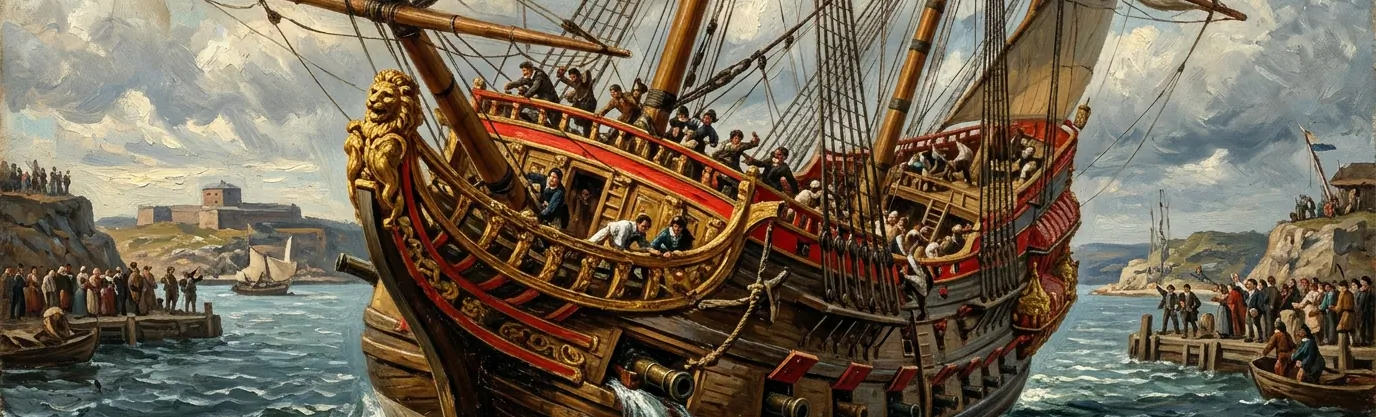
Because the bottom 90% of the Black Sea is completely *anoxic* (containing zero dissolved oxygen), no shipworms or wood-rotting organisms can survive there! In 2018, the Black Sea Maritime Archaeology Project filmed a 2,400-year-old ancient Greek merchant vessel from 400 BCE resting a mile down with its wooden mast still standing upright, its rudders in place, and coils of rope intact—looking just like the painting on Odysseus's Siren Vase!
26.Why is the blood of marine horseshoe crabs bright baby-blue instead of red?
Show Answer & Explanation
Correct Answer: B. It uses copper, not iron
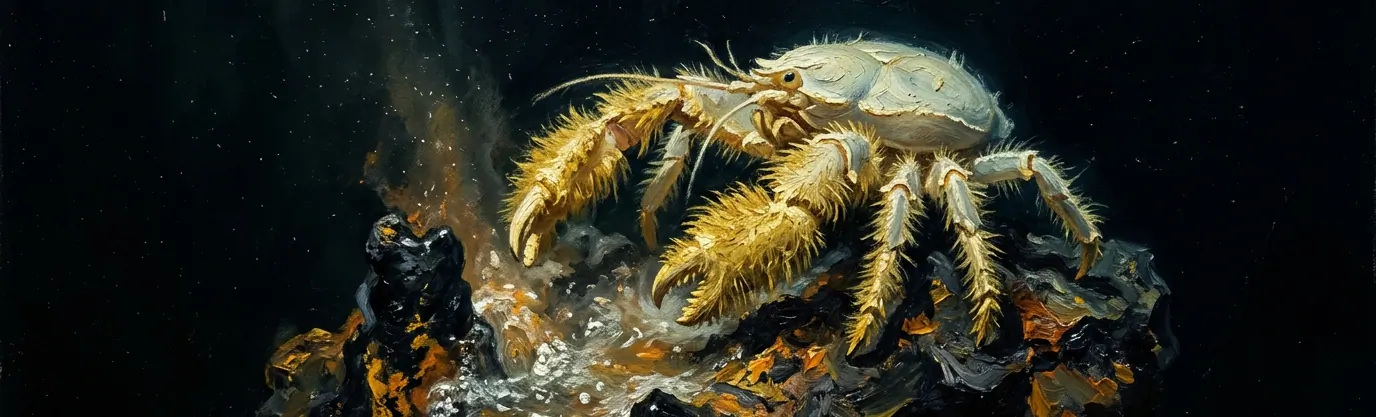
Explanation: Having scuttled across shallow coastal mudflats for more than 445 million years—predating the dinosaurs by over two hundred million years—the Atlantic horseshoe crab (*Limulus polyphemus*) has saved hundreds of millions of human lives thanks to its milky, bright baby-blue blood!
Human blood is red because our hemoglobin proteins use iron atoms to bind oxygen, and iron turns red when oxidized. Horseshoe crabs (along with octopuses and lobsters) use a different oxygen-carrying protein called *hemocyanin*, which relies on two copper atoms at its core—and just like the Statue of Liberty, copper turns blue-green when exposed to oxygen!
Even more remarkable, instead of white blood cells that fight infection, horseshoe crab blood contains specialized cells called *amebocytes* (Limulus Amebocyte Lysate, or LAL) that instantly freeze into a solid gel the second they touch one part per trillion of bacterial endotoxin—which is why pharmaceutical labs have used it since the 1970s to test vaccines, IV drips, and pacemakers for contamination!
27.Which freezing Southern Ocean fish is the only vertebrate with crystal-clear colorless blood?
Show Answer & Explanation
Correct Answer: D. The Antarctic crocodile icefish
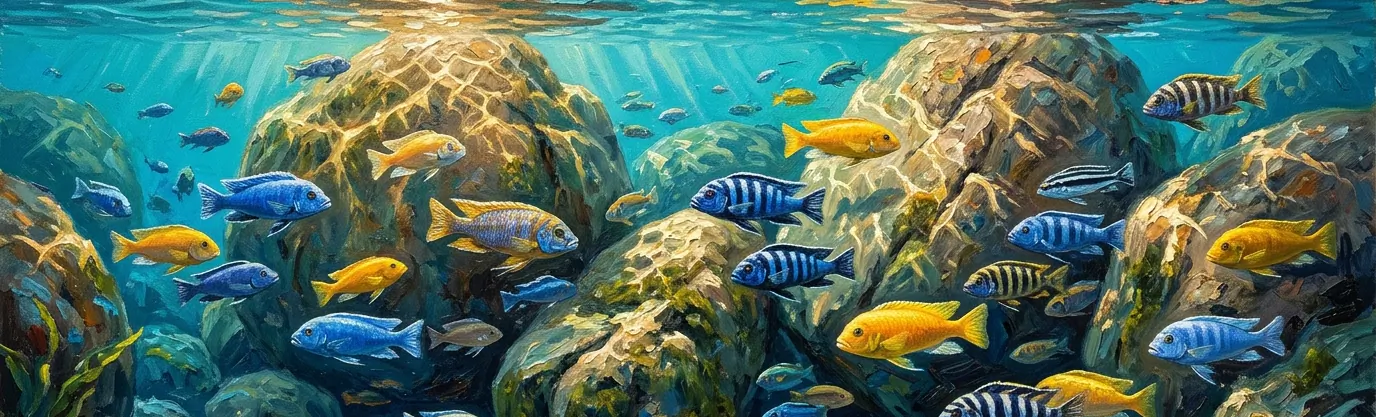
Explanation: When Norwegian zoologist Ditlef Rustad pulled a pale, ghostly fish with a long toothy snout out of the sub-zero waters off Antarctica's Bouvet Island in 1928 and sliced it open, he couldn't believe his eyes: the fish's blood wasn't red at all—it was as transparent and colorless as water!
Belonging to the family *Channichthyidae*, the sixteen species of Antarctic crocodile icefish are the only known vertebrate animals on Earth whose adults possess zero red blood cells and zero hemoglobin!
How can a vertebrate survive without red blood cells? Because gases dissolve nearly twice as well in icy $-1.8^circ ext{C}$ ($28.8^circ ext{F}$) Southern Ocean water as in warm tropical seas, the water is super-saturated with oxygen—and the icefish evolved an oversized heart, wide blood vessels, antifreeze glycoproteins, and scaleless skin to absorb oxygen straight out of the freezing water into its clear blood plasma!
28.How fast do tsunami waves travel across the deep open ocean before landfall?
Show Answer & Explanation
Correct Answer: A. Fast as a commercial jetliner
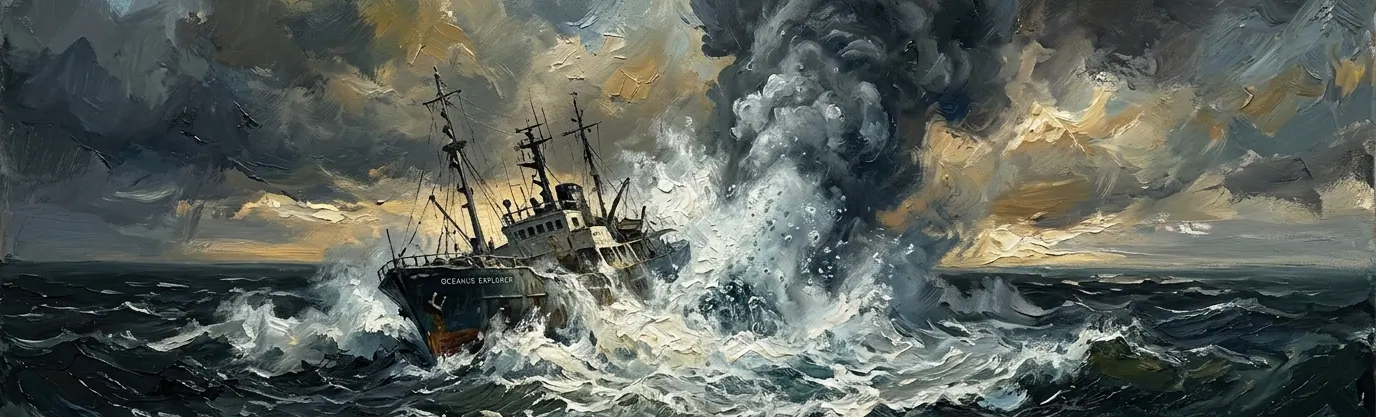
Explanation: Unlike ordinary wind-driven surfing waves that only stir the top few dozen feet of water and travel at 15 to 35 miles per hour, a tsunami triggered by an undersea earthquake or landslide moves the entire three-mile-deep column of ocean water from the seafloor to the surface!
Because the speed of a long-wavelength water wave depends directly on the square root of the water depth ($v = sqrt{g imes d}$), in the 15,000-foot-deep Pacific Ocean a tsunami races across the basin at 500 to 600 miles per hour (800 to 965 km/h)—the exact cruising speed of a Boeing 747 or Airbus jetliner!
Out in the deep ocean, a sailor on a fishing boat wouldn't even notice the tsunami passing underneath because its crest is spread out over a hundred miles and rises barely two or three feet high—until the front of the wave hits shallow coastal water, brakes to 30 mph, and piles the trailing energy up into a devastating wall of water!
29.Why can a ship sail right through the Great Pacific Garbage Patch without noticing?
Show Answer & Explanation
Correct Answer: C. Most plastic is confetti-sized specks
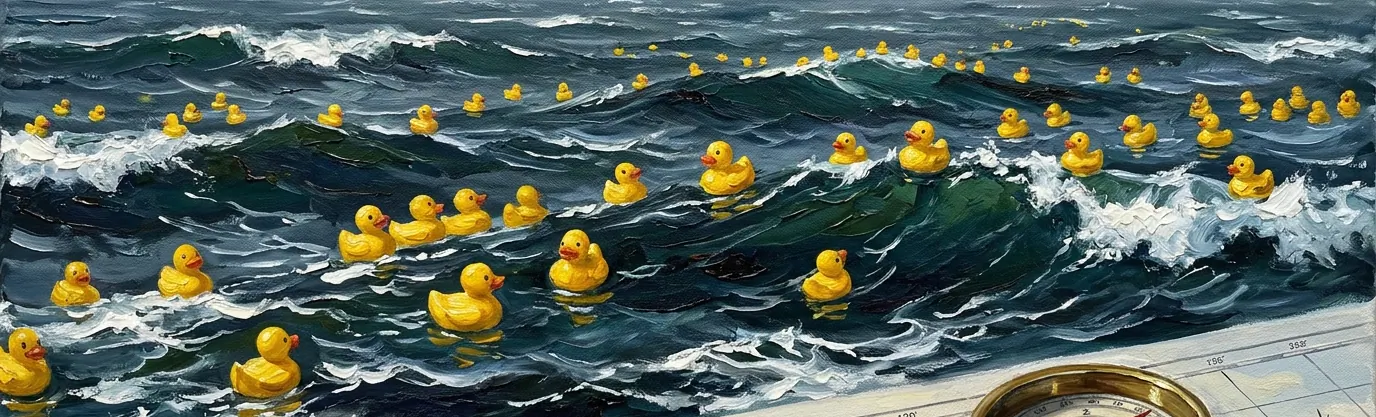
Explanation: Thanks to sensationalized headlines calling the Great Pacific Garbage Patch a "floating island of trash twice the size of Texas," many people picture a solid mountain of plastic bottles and garbage bags between California and Hawaii that you could walk across or photograph from the International Space Station.
In reality, you cannot see the Great Pacific Garbage Patch from space—and you can sail a yacht right through the middle of the North Pacific Subtropical Gyre without seeing a solid mat of garbage!
Instead of an island, the swirling ocean gyre acts like a giant blender where ultraviolet sunlight and pounding waves shatter plastics into an estimated 1.8 trillion tiny, confetti-sized microplastic particles suspended throughout the upper water column like a cloudy pepper soup, mixed with heavier ghost fishing nets drifting just below the surface!
30.Where does up to seventy percent of tropical white beach sand actually come from?
Show Answer & Explanation
Correct Answer: B. Parrotfish pooping crunched coral rock
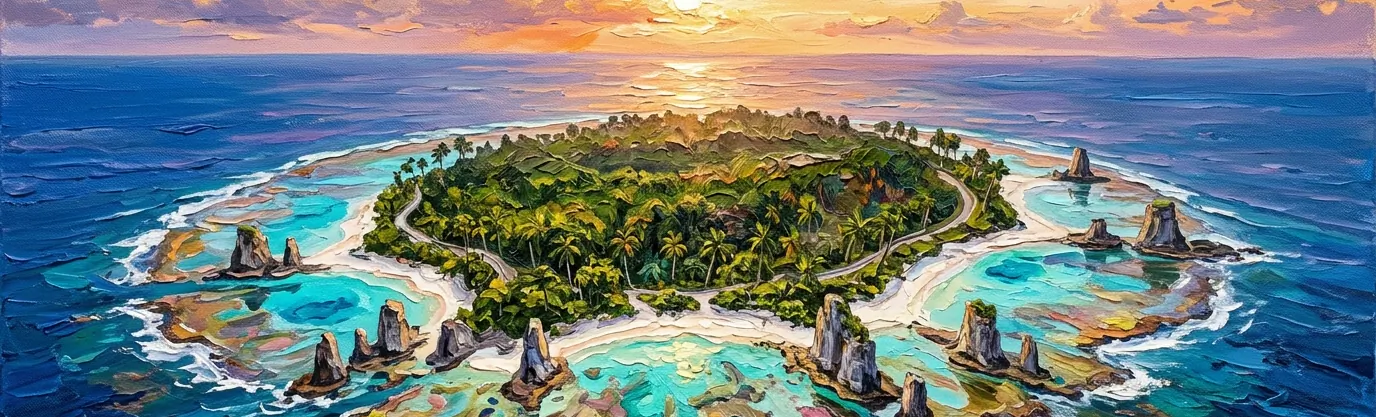
Explanation: Next time you sink your toes into the powdery, postcard-perfect white sand of a beach in Hawaii, the Maldives, or the Caribbean, thank a school of brightly colored parrotfish—because up to 70% of that tropical white sand has passed right through a parrotfish's digestive tract!
Parrotfish get their name from their fused, bird-like teeth arranged into a rock-hard beak strong enough to bite chunks right out of limestone coral skeletons as they graze on microscopic algae growing inside the reef.
After biting off a mouthful of coral rock, the parrotfish grinds the limestone down inside its throat using a second set of crusher plates called a *pharyngeal mill*, digests the algae, and excretes clouds of fine, snow-white calcium carbonate sand—with a single giant humphead parrotfish pooping up to 800 pounds (360 kilograms) of pristine beach sand every single year!
31.Where do the Atlantic and Indian Oceans officially meet at Africa's southernmost tip?
Show Answer & Explanation
Correct Answer: D. Cape Agulhas, not Good Hope
Explanation: Millions of tourists visit the dramatic cliffs of the Cape of Good Hope just south of Cape Town believing they are standing at the southernmost tip of the African continent and watching the Atlantic and Indian Oceans crash together.
Look at a map of South Africa, however, and follow the coastline ninety miles farther southeast: the coastline keeps dipping southward to the rocky, windswept headland of Cape Agulhas (*Cabo das Agulhas*—Portuguese for "Cape of Needles," named by fifteenth-century navigators because magnetic compass needles pointed due true north there with zero magnetic declination)!
Located at $34^circ 50' ext{S}$, $20^circ 00' ext{E}$, Cape Agulhas is both the true geographic southernmost point of Africa and the official boundary line defined by the International Hydrographic Organization where the Atlantic Ocean ends and the Indian Ocean begins!
32.Which 'extinct' lobe-finned fish from dinosaur times turned up in a 1938 fish haul?
Show Answer & Explanation
Correct Answer: A. The deep-sea coelacanth
Explanation: For more than a century after paleontologist Louis Agassiz named the fossil fish group *Coelacanth* in 1839, every textbook on Earth stated with certainty that these ancient lobe-finned fishes—closely related to the four-legged ancestors that first crawled onto land 390 million years ago—had gone completely extinct alongside the dinosaurs 66 million years ago!
Then on December 22, 1938, thirty-one-year-old museum curator Marjorie Courtenay-Latimer received a phone call from trawler captain Hendrik Goosen in East London, South Africa, inviting her to check a pile of sharks and rays dredged up near the Chalumna River mouth.
Sticking out from the pile was a five-foot, 127-pound, iridescent steel-blue fish with limb-like fleshy fins that walked like legs! In the most famous zoological discovery of the twentieth century, ichthyologist J.L.B. Smith confirmed it was a living coelacanth—and tagged it *Latimeria chalumnae* in Courtenay-Latimer's honor!
33.How does the chambered nautilus rise and sink without swimming fins?
Show Answer & Explanation
Correct Answer: C. Pumping water from shell chambers
Explanation: Swimming through deep Indo-Pacific coral reef slopes just as its ancestors did 500 million years ago, the chambered nautilus is a living cephalopod cousin of octopuses and squid that still wears a gorgeous logarithmic spiral external shell divided into up to thirty sealed inner chambers (*camerae*).
While the nautilus lives only inside the outermost front chamber, a thin fleshy tube of living tissue called the *siphuncle* runs like a wick straight through the center of all the rear sealed chambers.
To achieve neutral buoyancy and hover effortlessly at 1,000 feet down without wasting energy swimming, the nautilus does not pump gas into its shell—instead, its siphuncle actively pumps salt ions out of the chamber fluid so seawater drains out by osmosis into the blood, leaving behind a low-pressure gas mixture that acts exactly like the ballast tanks of the submarines named *Nautilus* in its honor!
34.How fast can giant kelp forests off California grow in a single sunny day?
Show Answer & Explanation
Correct Answer: B. Up to two feet daily
Explanation: Looking like towering underwater redwood forests, canopies of giant kelp (*Macrocystis pyrifera*) along the cool, nutrient-rich Pacific coast from California to Baja and South America are not actually plants at all—they are giant brown macroalgae (protists) anchored to rocky reefs by root-like *holdfasts*.
To keep their leafy blades stretched up toward the sunlight, giant kelp grow small, gas-filled flotation bladders called *pneumatocysts* at the base of every frond.
Under ideal springtime conditions with clear sunlight and cold upwelled nutrients, giant kelp is one of the fastest-growing organisms on planet Earth—shooting upward by up to two feet (60 centimeters) every single day to reach heights of 150 feet (45 meters) in a single season!
35.Which ocean creature produces 230-decibel clicks louder than a rocket launch?
Show Answer & Explanation
Correct Answer: D. The sperm whale
Explanation: Although the blue whale is the largest animal on Earth, the title of loudest living animal on the planet belongs to the largest toothed predator in the ocean: the sixty-foot sperm whale (*Physeter macrocephalus*)!
A third of a sperm whale's entire body length is taken up by its massive, block-shaped head, which houses the *spermaceti organ* and "junk"—an acoustic oil-filled focusing lens and sound generator known as the "monkey's muzzle" (phonic lips).
When hunting giant squid a mile down in pitch-black water, a sperm whale forces air through its phonic lips to fire directional echolocation clicks reaching 230 to 236 decibels underwater—louder than standing next to a Saturn V rocket launch on land, and powerful enough that professional divers swimming near clicking sperm whales report feeling their bodies heat up and vibrate from the sound pressure alone!
36.How many color-detecting photoreceptor types pack a mantis shrimp's compound eyes?
Show Answer & Explanation
Correct Answer: A. Twelve to sixteen
Explanation: Human eyes see the entire rainbow of visible light using just three types of color-detecting cone cells on our retinas: red, green, and blue (which our massive visual cortex blends together to distinguish millions of shades).
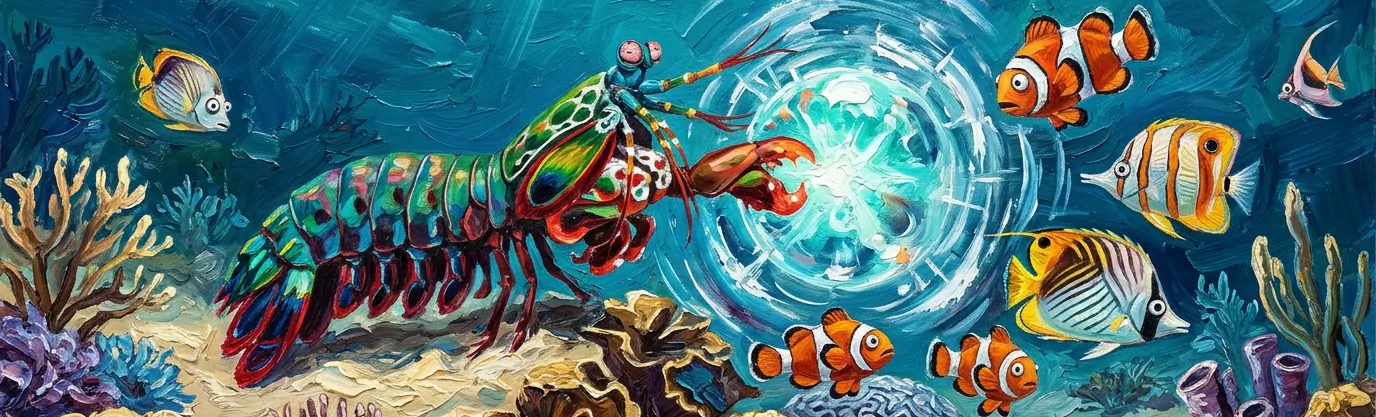
Perched on independent mobile stalks that can rotate in three dimensions, the compound eyes of the peacock mantis shrimp (*Odontodactylus scyllarus*) boast an astonishing twelve to sixteen different types of color photoreceptors—spanning not only human visible light, but deep into ultraviolet (UV) and both linear and circularly polarized light!
Why does a crustacean have four times as many color channels as a human? Instead of using a huge brain to compare ratios of three signals the way we do, the mantis shrimp's twelve narrow-band receptors act like instant hardware barcode scanners—allowing its tiny brain to recognize flashy coral-reef predators and glowing mates in a fraction of a millisecond without slowing down to think!
37.Roughly how long does one drop of seawater take to ride the global conveyor?
Show Answer & Explanation
Correct Answer: C. About one thousand years
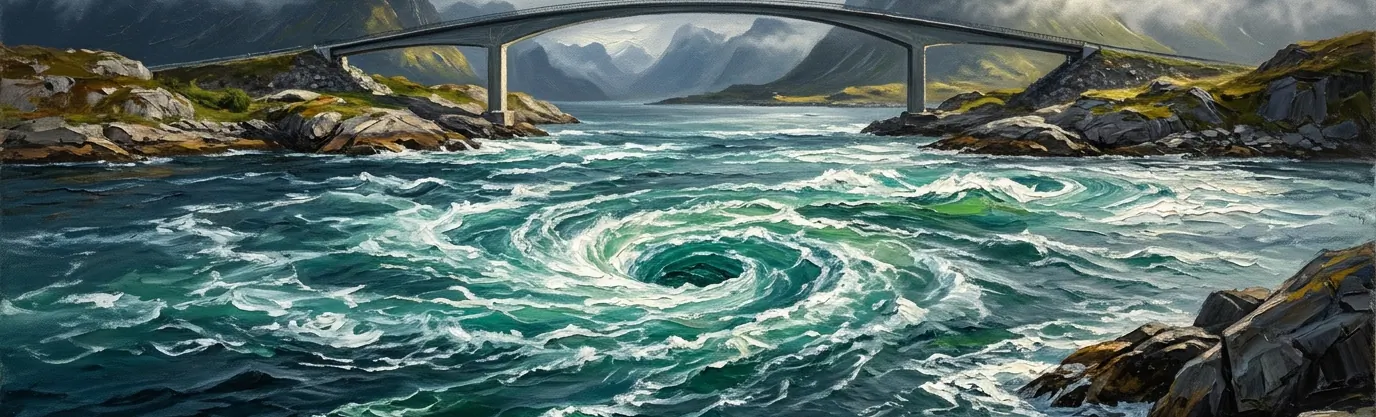
Explanation: Every ocean on Earth is linked together into a single, continuous planetary river known to oceanographers as the Global Ocean Conveyor Belt—or *thermohaline circulation* (from the Greek *thermo* for heat and *haline* for salt).
The conveyor's engine starts in the freezing polar seas near Greenland, Norway, and Antarctica: when sea ice freezes, it leaves its salt behind in the surrounding liquid water, making the icy surface water so cold, salty, and heavy that it plunges miles straight down to the abyssal seafloor!
From the North Atlantic bottom, that deep cold current creeps south past the Equator, loops around Antarctica into the deep Indian and Pacific basins, slowly wells back up to the sunlit surface, and returns via warm surface currents like the Gulf Stream—taking a single drop of seawater roughly 1,000 years to complete one full circuit around the globe!
38.Besides holding paws while sleeping, what do sea otters keep in underarm skin pockets?
Show Answer & Explanation
Correct Answer: B. Their favorite clam-cracking rock
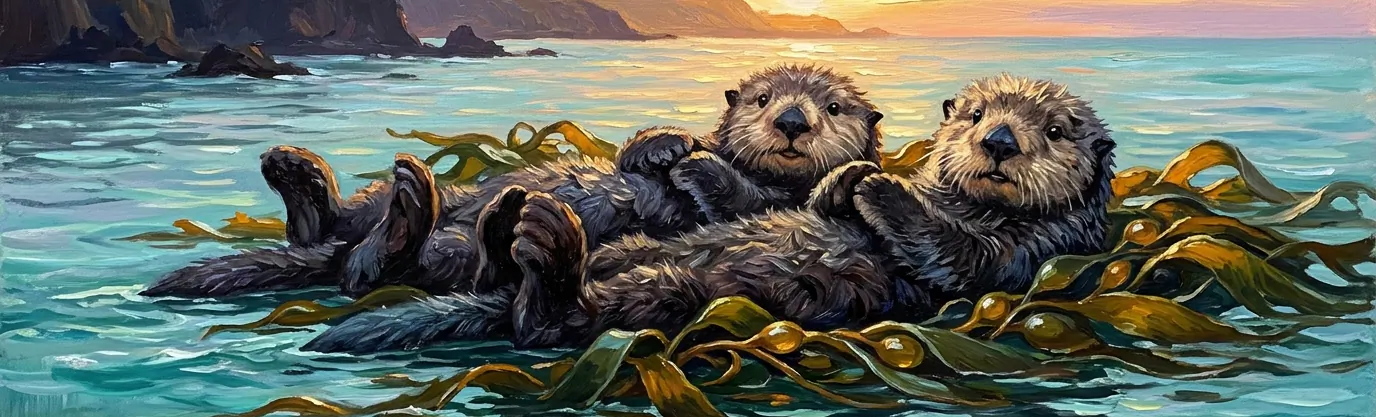
Explanation: Floating on their backs in tangled "rafts" anchored in kelp forests and holding paws so they don't drift apart in their sleep, sea otters (*Enhydra lutris*) boast the densest fur in the animal kingdom—up to one million hairs per square inch!
Even more endearing, underneath each front foreleg a sea otter has a loose, built-in pouch of skin stretching across its chest like a natural hoodie pocket (with most right-pawed otters preferring their left pocket).
When diving to the seafloor, sea otters use that underarm pocket not only to stash extra purple sea urchins, crabs, and clams to bring to the surface, but also to carry their favorite fist-sized stone anvil or hammer rock—making them one of the only marine mammals to keep and reuse personal stone tools for cracking open tough abalone and mussel shells on their chests!
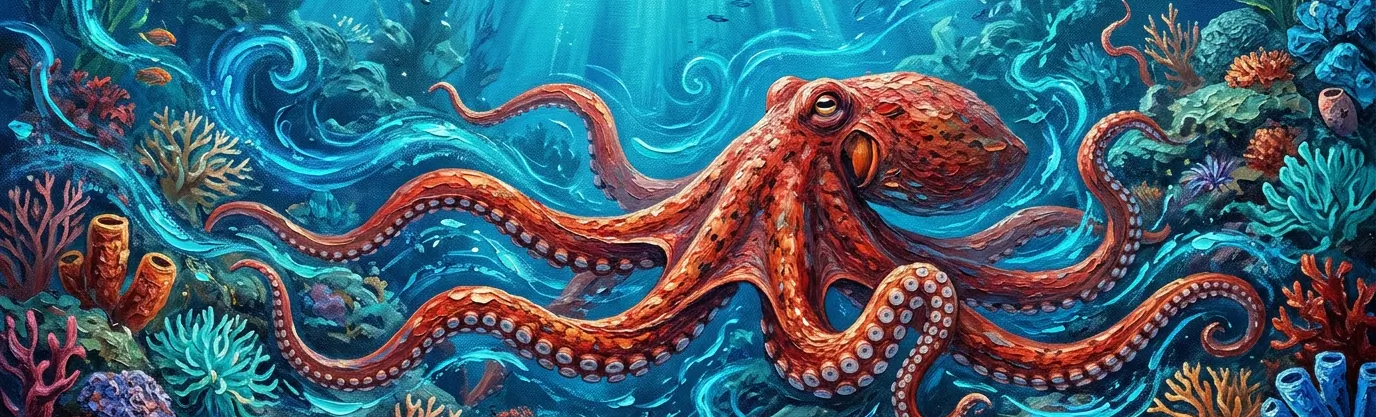
39.Which deep-sea predator possesses eleven-inch eyes as big as basketballs?
Show Answer & Explanation
Correct Answer: D. The colossal squid
Explanation: Living half a mile down in the freezing, pitch-black waters of the Southern Ocean around Antarctica, the colossal squid (*Mesonychoteuthis hamiltoni*)—which weighs up to 1,100 pounds and arms its tentacles with swiveling three-pointed hooks—possesses the largest eyes of any animal ever discovered on Earth!
Measuring up to eleven inches (27 to 30 centimeters) across—the size of a regulation basketball or dinner plate, with a pupil three-and-a-half inches wide—each eye is larger than the head of an adult human!
Why evolve basketball-sized eyes in a deep-sea realm where zero sunlight penetrates? Swedish vision scientists discovered that colossal squid don't use their huge eyes to spot tiny fish—instead, the giant lenses gather faint bioluminescent flashes triggered when their mortal enemy, a hunting sperm whale, swims through clouds of glowing deep-sea plankton over 400 feet away!
40.Measured from its seafloor base, which volcano is over a mile taller than Everest?
Show Answer & Explanation
Correct Answer: C. Hawaii's Mauna Kea
Explanation: Mount Everest holds the crown as Earth's *highest* mountain above sea level because it starts its final climb from the already-elevated Tibetan Plateau and peaks at 29,032 feet (8,849 meters) above the ocean surface.
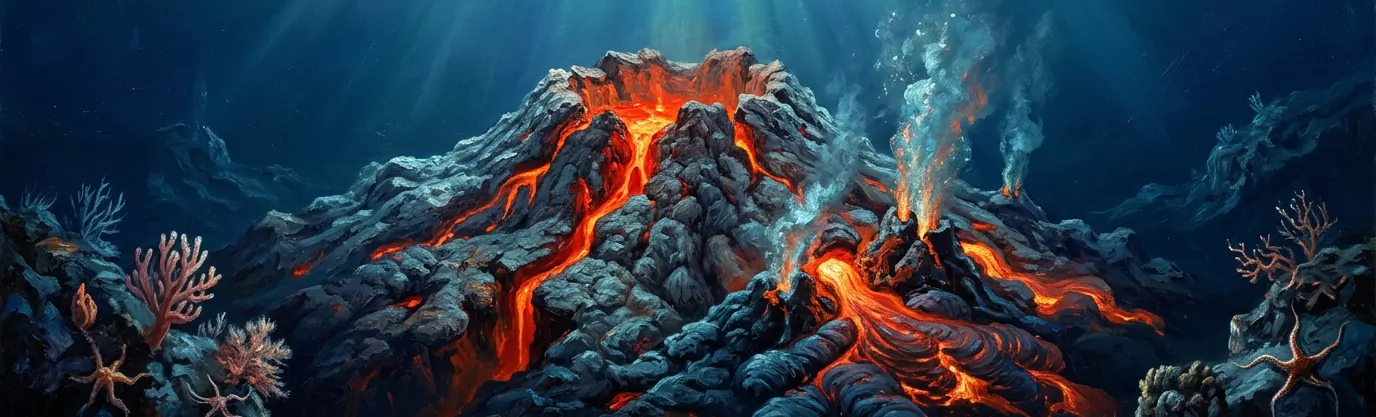
If you measure a mountain's true *tallness* from the actual base where it begins rising to its summit peak, however, the undisputed champion of planet Earth sits in the middle of the Pacific Ocean: the dormant shield volcano Mauna Kea on the Big Island of Hawaii!
While Mauna Kea's snow-dusted summit rises 13,796 feet (4,205 meters) above the Pacific waves, an additional 19,700 feet (6,000 meters) of the mountain's massive basalt flanks plunge straight down to the Hawaiian Trough seafloor—giving Mauna Kea a total base-to-peak height of roughly 33,500 feet (10,210 meters), beating Mount Everest by nearly a full mile!
Did You Know? Fascinating Facts
- Earth's largest waterfall is completely underwater: the Denmark Strait cataract between Greenland and Iceland drops cold Arctic water 11,500 feet (more than three times the height of Angel Falls) at 123 million cubic feet per second!
- At its widest point between Indonesia and the coast of Colombia, the Pacific Ocean spans 12,300 miles (19,800 km)—wide enough to fit more than five full Moons lined up side-by-side!
- Up to 70% of the fine white sand on tropical coral beaches is actually digested coral rock excreted by parrotfish—a single giant humphead parrotfish can poop up to 800 pounds of white beach sand a year!